
Why Russian Literature Still Shapes Everyday Thinking
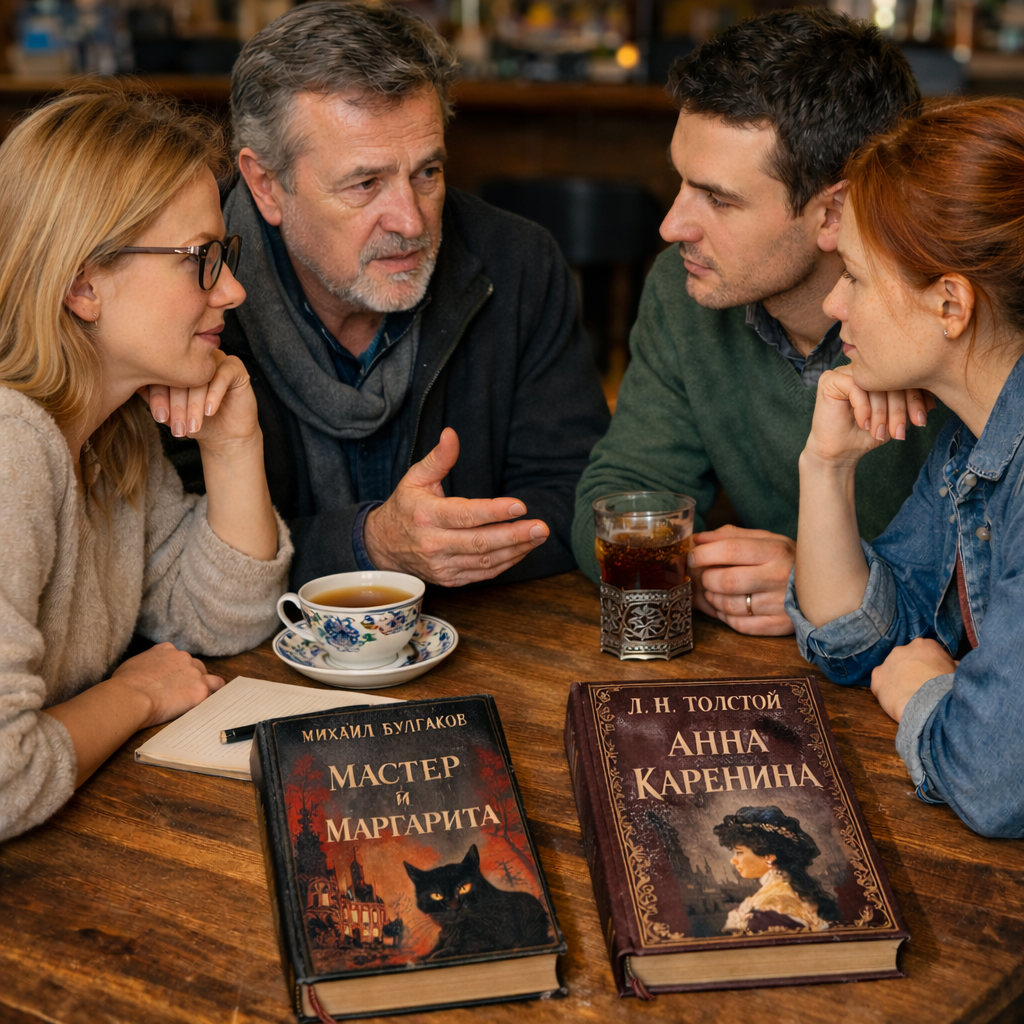
In a country where conversations about love quickly turn into reflections on fate, where discussions about politics often drift toward questions of morality, and where ordinary people casually quote nineteenth-century novels as if they were proverbs, literature is not simply an art form in Russia—it is one of the primary ways people think about life itself.
For centuries, Russian literature has functioned as something far greater than storytelling. It has served as a moral classroom, philosophical arena, and cultural mirror through which generations of Russians have tried to understand themselves and their society. While many cultures celebrate their writers, few have placed literature so deeply at the center of national consciousness. In Russia, novelists have often been regarded not just as artists but as moral authorities, capable of articulating the deepest dilemmas of the human condition.
From the poetry of Alexander Pushkin to the psychological dramas of Fyodor Dostoevsky, from the sweeping historical vision of Leo Tolstoy to the quiet, subtle realism of Anton Chekhov, Russian literature has explored themes that resonate far beyond the pages of books. These works ask questions that remain central to everyday life: What does it mean to live with dignity? How should individuals confront injustice? Is suffering inevitable—or meaningful? Can human beings truly change themselves?
The remarkable thing is that these questions are not confined to academic discussions or literary studies. They still influence how people in Russia talk about relationships, justice, personal responsibility, and national identity. Even those who rarely read novels today have grown up with these stories in school and carry their themes and references into adulthood.
In this sense, Russian classical literature functions almost like a shared cultural operating system—a body of stories, characters, and moral frameworks that shape how many Russians interpret everyday experiences.
Understanding why Russian literature still shapes everyday thinking requires looking at three key factors: its central role in education, the enduring influence of major writers, and the way literary ideas and quotations have become woven into daily speech and cultural identity.
Literature at the Heart of Russian Education
One of the most important reasons Russian literature continues to shape everyday thinking is that nearly every Russian encounters it during childhood and adolescence.
Unlike in many countries where literature is treated as one component of language education, Russian schools treat literature as a separate subject with its own intellectual and moral significance. From primary school through high school, students study classic works not simply to appreciate style or storytelling but to explore ethical dilemmas and philosophical questions.
The Russian literature curriculum focuses heavily on nineteenth-century authors who are considered the foundation of national culture. Students typically study works by:
Alexander Pushkin
Nikolai Gogol
Leo Tolstoy
Fyodor Dostoevsky
Anton Chekhov
Mikhail Lermontov
These writers are presented as voices who helped shape the intellectual and moral identity of the nation. Teachers often encourage students to discuss not only the plot of a story but also the ethical questions behind it.
For example, students reading Dostoevsky’s Crime and Punishment are asked to consider whether guilt is inevitable after committing wrongdoing. When studying Tolstoy’s War and Peace, they may explore how historical events are shaped by individuals and collective forces.
Educational research emphasizes that literature in Russia has long been seen as a tool for developing moral consciousness, empathy, and critical thinking. Reading the classics is believed to strengthen language skills while also helping students understand the historical and spiritual traditions of their country.
Even as reading habits change in the digital age, this educational system ensures that most Russians grow up with a shared knowledge of classic literary works. The result is a cultural environment where literary references remain widely recognizable.
Russian Literature as a Cultural Identity
Beyond the classroom, Russian literature has played an important role in shaping national identity.
During the nineteenth century, Russia experienced profound social and intellectual changes. Questions about modernization, Western influence, religion, and national destiny dominated public debates. Because political discussion was often restricted, literature became a crucial platform for exploring these issues.
Writers were not merely entertainers; they were public intellectuals whose works influenced social and philosophical debates.
In this environment, literature came to represent something uniquely Russian. Writers explored themes such as spiritual struggle, social justice, and the relationship between the individual and society. These themes resonated deeply with readers and became central elements of the Russian cultural imagination.
Over time, literature became associated with the idea that Russian culture possesses a distinctive moral and philosophical depth. Classic works were seen not only as artistic achievements but also as expressions of the nation’s soul.
This tradition continues today. Russian literary classics remain widely respected as cultural treasures and symbols of national heritage.
Literature in Everyday Language
One of the most fascinating ways Russian literature influences daily life is through language.
Many phrases from classic works have become so familiar that they function almost like proverbs. People quote lines from poetry and novels to describe everyday situations, often without explicitly mentioning the original author.
For example, phrases from Pushkin’s famous novel in verse Eugene Onegin are often used ironically to comment on someone’s behavior. Similarly, lines from the poet Mikhail Lermontov are quoted to express frustration with petty insults or social hypocrisy.
These quotations work because the audience is expected to recognize the reference. When someone uses a literary line in conversation, it communicates not only the literal meaning but also the emotional and cultural associations attached to the original text.
This habit reflects the broader assumption that literature contains insight into real life. Russian speakers frequently turn to literary language when describing complicated emotions, ethical dilemmas, or moments of irony.
Dostoevsky and the Psychology of Moral Responsibility
Among all Russian writers, Fyodor Dostoevsky may have had the deepest impact on everyday thinking about morality and human nature.
Dostoevsky’s novels explore the psychological consequences of crime, guilt, and moral responsibility. His characters often struggle with profound existential questions: Can people justify wrongdoing if they believe they are serving a higher purpose? Is redemption possible after committing evil?
In Crime and Punishment, the protagonist Raskolnikov commits murder while believing himself intellectually superior to conventional morality. Yet after the crime, he experiences overwhelming guilt and psychological torment.
Dostoevsky suggests that human beings cannot escape moral responsibility. Even when individuals attempt to justify wrongdoing through ideology or logic, their conscience ultimately demands accountability.
Another recurring theme in Dostoevsky’s work is the idea that suffering can lead to moral transformation. Pain, in this sense, is not merely destructive; it can also reveal deeper truths about the self and the world.
These ideas continue to resonate in modern discussions about justice, punishment, and personal responsibility.
Tolstoy and the Ethics of Conscience
If Dostoevsky explored psychological guilt, Leo Tolstoy focused on questions of conscience and social responsibility.
Tolstoy believed that genuine moral change must come through personal transformation rather than political force. His later writings promoted radical ideas about nonviolence, social equality, and spiritual renewal.
Tolstoy’s ethical philosophy influenced social movements advocating peaceful resistance and moral reform.
In War and Peace, Tolstoy also presents a powerful philosophy of history. Rather than attributing historical events to the actions of great leaders, he suggests that history emerges from countless individual decisions and social forces.
This perspective challenges the traditional view that history is shaped primarily by powerful figures.
Chekhov and the Drama of Everyday Life
Anton Chekhov approached human experience from a different angle.
Instead of focusing on dramatic moral conflicts, Chekhov examined the quiet tragedies and subtle frustrations of everyday life. His stories often depict ordinary people struggling with boredom, missed opportunities, and complicated relationships.
Chekhov’s genius lies in his ability to reveal the emotional depth hidden within seemingly ordinary situations. His characters often experience profound inner conflicts that are never fully resolved.
This style encourages readers to pay attention to the subtle psychological currents beneath everyday interactions.
Pushkin and the Birth of Modern Russian Literature
Alexander Pushkin occupies a unique place in Russian culture. Often described as the founder of modern Russian literature, he helped shape the language and literary traditions that later writers would develop.
Pushkin’s works combined elements of classical poetry with the rhythms of everyday speech, creating a literary language that felt both elegant and natural.
His influence is so profound that many Russians refer to him simply as “our everything.”
Pushkin’s characters, plots, and phrases remain embedded in Russian cultural memory.
Russian Literature in the Digital Age
In modern Russia, reading habits have changed significantly.
Television, social media, and digital entertainment have reduced the amount of time many people spend reading books. Surveys indicate that a large percentage of adults rarely read literature regularly.
Yet the symbolic importance of classic literature remains remarkably strong.
School curricula continue to emphasize the classics, and literary references remain part of cultural conversation.
Even individuals who prefer modern entertainment often recognize major literary characters and themes.
Why Russian Literature Still Matters
Ultimately, Russian literature endures because it addresses questions that remain universal.
The works of Pushkin, Tolstoy, Dostoevsky, and Chekhov continue to resonate because they explore fundamental aspects of the human condition: guilt, love, justice, suffering, and hope.
Their stories offer a vocabulary for thinking about life’s deepest dilemmas.
For many Russians, these writers still provide guidance when confronting difficult moral choices or interpreting the complexities of human experience.
FAQs
Why is Russian literature considered so important?
Russian literature is widely regarded as important because it explores profound philosophical and moral questions about human life.
Why do Russians quote literature in everyday speech?
Many literary works are taught in school, making famous lines widely recognizable.
Is Russian literature still taught in schools?
Yes. Classic writers remain central to the national curriculum.
Which Russian writers are the most influential?
Pushkin, Tolstoy, Dostoevsky, and Chekhov are often considered the most influential figures.
Learn Russian and Explore Its Literary World
If you want to truly understand Russian culture, learning the language itself is one of the most rewarding steps you can take.
At Polyglottist Language Academy, we offer Russian language classes that help students explore not only grammar and vocabulary but also the cultural traditions behind the language.
Our classes include:
Small group instruction
Personalized learning
Online and in-person options
Cultural insights into Russian history and literature
Sign up today and begin your journey into the Russian language and its extraordinary literary heritage.
Explore More Articles on Our Blog
You may also enjoy: