
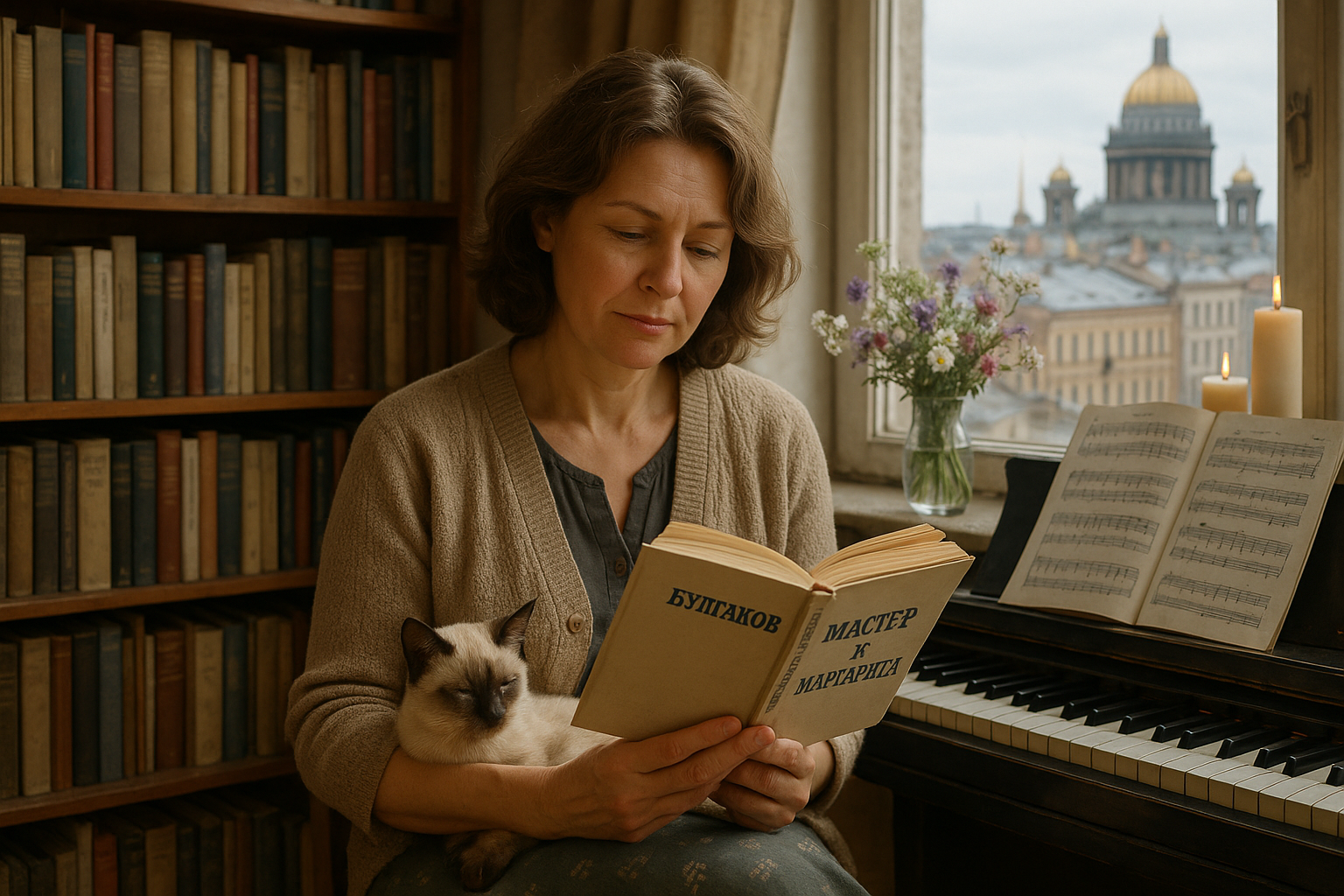
In a world increasingly saturated with surface-level content, hot takes, and thirty-second reels, the act of slowing down to read a 900-page novel about a philosophical existential crisis might seem not only quaint, but radical. Yet time and again, readers who dare to enter the sprawling, soul-searching, and often harrowing pages of Russian literature report something surprising: they emerge changed—not just entertained or informed, but somehow deeper. The question is not merely whether Russian literature is great (it is), but whether reading it has the power to fundamentally reshape how we think, feel, and interpret the world around us. And the answer, for many, is a resounding yes.
Russian literature, especially the golden age works of the 19th and early 20th centuries, doesn’t just tell stories—it probes the darkest corners of human nature, challenges assumptions, and wrestles with the ultimate questions of existence. Its characters are not content to fall in love, win a battle, or suffer a tragedy; they must ask why, and what does it mean, and how should one live. Reading Russian novels is like entering into a prolonged, intense dialogue—not just with the characters, but with the author, with history, with the universe.
This is not literature as escape, but literature as engagement. And in that engagement lies the opportunity for intellectual and emotional transformation. Russian literature doesn’t offer easy answers—it forces us to live with difficult questions. And in doing so, it stretches the mind and deepens the soul.
In this article, we’ll explore how Russian literature functions not just as art or history, but as a powerful tool for philosophical growth. We’ll look at the specific traits that set it apart, examine key works and authors, and consider why—centuries later—these books continue to provoke, challenge, and inspire readers to become not just better readers, but better thinkers.
I. The Russian Tradition of Philosophical Storytelling
Unlike much of Western fiction, which often prioritizes plot and resolution, Russian literature has always leaned toward the philosophical. Its great writers saw fiction as a means of engaging with moral, social, and spiritual dilemmas. Dostoevsky, Tolstoy, Turgenev, Chekhov, and their peers weren’t simply storytellers—they were ethical provocateurs and existential analysts.
In Dostoevsky’s work, for instance, the plot is frequently subordinated to philosophical confrontation. The Brothers Karamazov contains some of the most profound theological debates ever written, including Ivan Karamazov’s infamous rejection of a God who allows innocent suffering. Notes from Underground reads less like a novel and more like a manifesto of psychological rebellion. The narrator is not there to charm or entertain you—he’s there to challenge everything you believe about free will, reason, and dignity.
Tolstoy, on the other hand, was obsessed with how people should live. After writing War and Peace and Anna Karenina, he underwent a spiritual crisis that led him to reject materialism and social status. His later fiction—The Death of Ivan Ilyich, Resurrection, Hadji Murat—is imbued with a raw moral urgency that forces readers to confront their own hypocrisies, fears, and complacencies.
These writers didn’t use fiction to provide comfort. They used it to force a reckoning.
II. Themes That Force Reflection
So what is it, exactly, about Russian literature that prompts such deep introspection? It’s not just the writing style, though the prose is often hauntingly beautiful. It’s the recurring themes—many of which deal with the fundamental aspects of being human:
Suffering and Redemption: Russian authors frequently explore suffering not as a punishment, but as a path to transformation. This theme runs through everything from Crime and Punishment to The Gulag Archipelago.
Free Will vs. Fate: Are we truly free to shape our lives, or are we bound by unseen forces—psychological, historical, spiritual? This tension defines many Russian plots.
The Nature of Good and Evil: Russian characters are rarely “good” or “bad.” They are torn, conflicted, and evolving. They commit terrible acts and then wrestle with guilt, repentance, or defiance.
The Individual vs. Society: Russian writers often question the individual’s role in a corrupt or indifferent society. Are we responsible for others? Can we change the world, or only ourselves?
Faith and Doubt: Religion is omnipresent in Russian literature, but rarely unquestioned. Characters doubt, challenge, and reinterpret faith in ways that reflect their inner turmoil.
These themes are not simply presented—they are interrogated, embodied, and torn apart by richly complex characters. Readers are not allowed to be passive. They must choose sides, shift perspectives, and re-evaluate their own beliefs.
III. Deep Characters, Deep Thinking
One of the most striking features of Russian literature is its psychological depth. Characters are not just names on a page; they are walking philosophies, moral battlegrounds, contradictions made flesh. Take, for example, Raskolnikov in Crime and Punishment. A young man commits murder believing he’s justified—only to descend into guilt, paranoia, and spiritual agony. He embodies a philosophical experiment: what happens when a man tries to live outside moral law?
Or Prince Myshkin in The Idiot—a man so pure and good that society cannot handle him. His innocence exposes the cruelty, hypocrisy, and cynicism of those around him. He is a kind of Christ figure, but one doomed to fail in a corrupt world.
These characters are not just people. They are mirrors. They make you ask: What would I have done? What do I believe? Where do I see myself in this web of despair and hope?
And because Russian literature often avoids traditional happy endings, readers are left with uncertainty. This ambiguity forces us to think—not just about the characters’ fates, but about our own.
IV. The Role of Historical and Cultural Context
To truly understand and engage with Russian literature, one must also grapple with the historical and cultural context in which it was written. Imperial oppression, serfdom, revolution, war, exile, and censorship are not just background—they are part of the text.
Reading Doctor Zhivago or The Master and Margarita isn’t just a literary experience—it’s a historical immersion. These books ask you to imagine what it’s like to live under tyranny, to maintain your humanity in a system designed to crush it.
This historical weight adds a layer of moral urgency to the reading experience. The philosophical questions posed by Russian literature are not hypothetical—they are lived. This makes the reflection more immediate, more personal, and more transformative.
V. Language That Slows You Down
Another key reason Russian literature deepens thought is its style. Even in translation, Russian prose tends to be dense, layered, and meditative. The novels are long—not just because of plot, but because they dwell on ideas. Dialogue stretches for pages. A character’s internal monologue might span an entire chapter.
This slowness is a gift. It demands presence. You can’t skim a Tolstoy novel. You have to sit with it, absorb it, live inside it. In doing so, your thinking naturally slows, deepens, and becomes more reflective.
Reading becomes a kind of discipline—not unlike meditation or philosophical inquiry. It’s less about reaching the end and more about the experience of thought itself.
VI. Modern Echoes and Contemporary Relevance
It would be a mistake to think of Russian literature as merely historical or old-fashioned. In fact, its themes feel more urgent than ever in today’s chaotic, morally gray, and emotionally fragmented world. Questions about identity, justice, faith, and meaning are more pressing than ever—and Russian literature offers a powerful lens through which to explore them.
Contemporary writers like Ludmila Ulitskaya, Vladimir Sorokin, and Guzel Yakhina are continuing this tradition—combining narrative with deep ethical inquiry. Their work shows that the Russian literary tradition is not dead. It is evolving.
Moreover, reading Russian literature teaches readers to embrace ambiguity, resist easy answers, and listen for nuance—skills that are desperately needed in today’s polarized discourse.
FAQs
Is Russian literature really that hard to read? Some of it is challenging due to its length and depth, but many works are very accessible—especially with good translations. The key is to read slowly and reflectively.
Where should I start if I’m new to Russian literature? Good starting points include The Death of Ivan Ilyich (Tolstoy), Notes from Underground (Dostoevsky), A Day in the Life of Ivan Denisovich (Solzhenitsyn), and Chekhov’s short stories.
Do I need to know Russian history to appreciate the books? Not necessarily, but it helps deepen your understanding. Many editions include helpful introductions and footnotes.
Can Russian literature really change how I think? Absolutely. It challenges assumptions, introduces new perspectives, and cultivates deeper empathy and reflection.
Why is suffering such a big theme? Because Russian history and Orthodox Christianity both emphasize the redemptive and revelatory power of suffering. It’s a central motif in the Russian worldview.
Learn Russian, Read Deeper
If you’re ready to experience these texts in their full power, why not learn to read them in the original language? At Polyglottist Language Academy, we offer engaging Russian courses that go far beyond grammar. Our expert instructors guide you through the cultural, historical, and literary dimensions of the language—so you don’t just speak Russian, you think in Russian.
Whether you're just starting out or ready to dive into Tolstoy in the original, we have a class for you.
Sign up today and discover how learning Russian—and reading Russian literature—can change your mind and enrich your life.
Want to explore more about Russian language and culture?
Check out our full collection of articles on the Polyglottist Language Academy Blog, where we dive into everything from why fluent Russian isn’t fast Russian to how to survive a Russian toast and what it’s like to be the only foreigner in a Russian dacha community. Whether you're curious about grammar tips, cultural faux pas, or how Russians navigate public space, our blog offers fresh, engaging insights to support your learning journey.