A DAY AT DOM KNIGI: BOOKSTORES, COFFEE, AND KAZAN CATHEDRAL IN ST. PETERSBURG
Why Bookstores Have Replaced Libraries for Many of Us
I spent a considerable part of my teenage and adult life in libraries because I love books. For years, I quietly wondered whether libraries might one day solve the two things that make long hours there uncomfortable: enforced silence and the complete absence of food and drinks. Both are forbidden for obvious reasons, but they are also precisely the things that make extended stays difficult.
At some point, a different kind of space emerged—one that solved both problems at once. Bookstores evolved from places where you simply bought books into public spaces where you could linger. You could take a book from a shelf, sit in a comfortable chair, drink coffee, talk softly with friends, and stay for hours. Whoever first came up with this idea was brilliant. It must improve sales—after all, nearly every major bookstore now follows this model—even though I’m certain many visitors, myself included, sometimes leave without buying a single book.
Bookstores as One of My Favorite Travel Rituals
While traveling, visiting local bookstores has become one of my favorite rituals. I love browsing books in languages I don’t understand, watching what others pick up, quietly guessing at their interests, and sampling the café offerings. If I’m lucky, I even hope for a table by a window with a view.
Some of my fondest memories are tied to bookstores rather than landmarks. I still remember a long afternoon spent in a vast bookstore in Portland, where my then-boyfriend and I wandered in after visiting a few breweries and ended up staying for hours. That mixture of books, conversation, and the gentle permission to linger has stayed with me.
I brought all of those habits—and hopes—with me to Saint Petersburg.
Starting the Day at Dom Knigi on Nevsky Prospekt
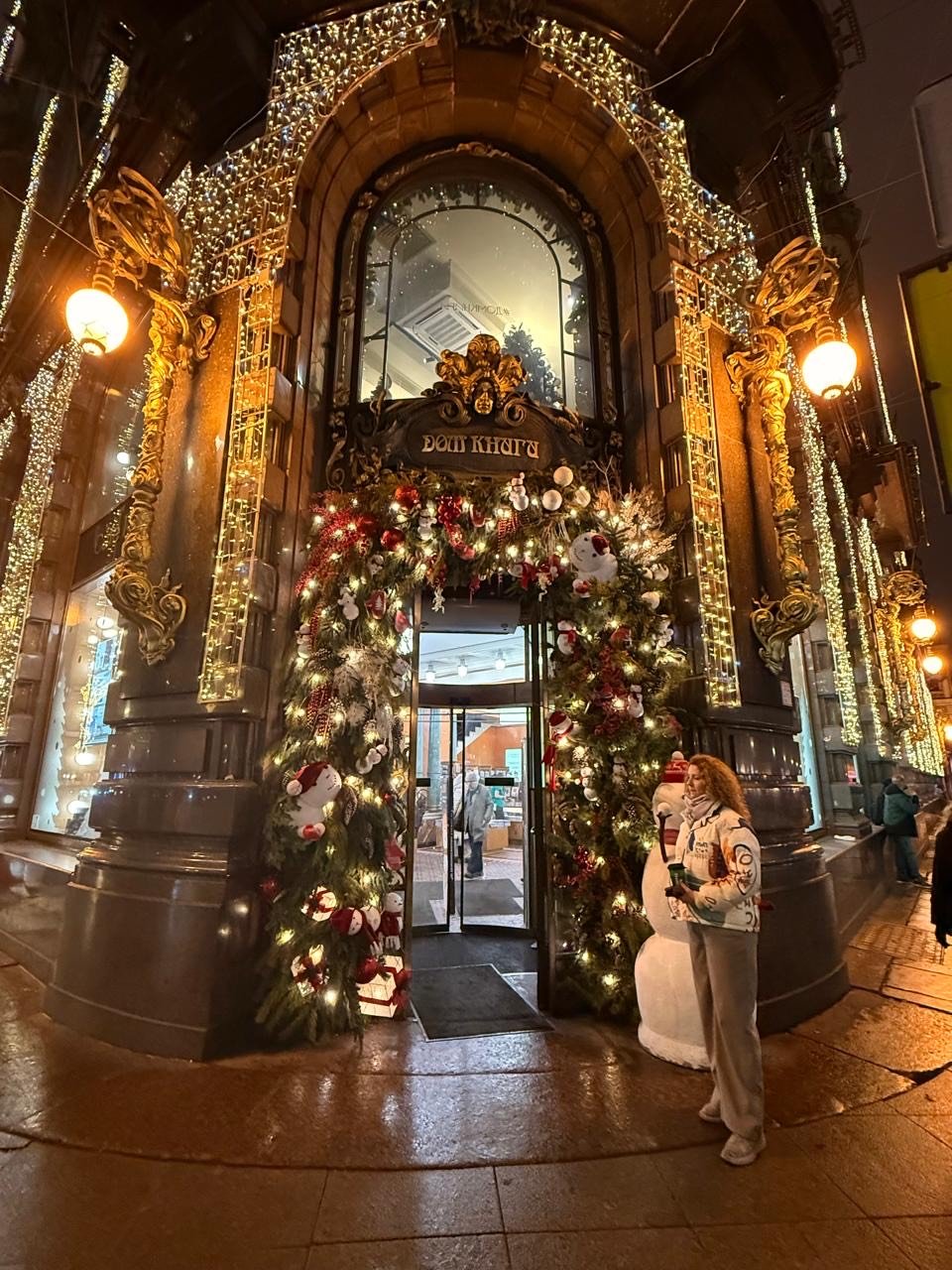
In Saint Petersburg, there was only one obvious place to begin: Dom Knigi, also known as the House of Books, located directly on Nevsky Prospekt. I had read about this iconic bookstore before arriving and decided it would be the perfect place to start my day.
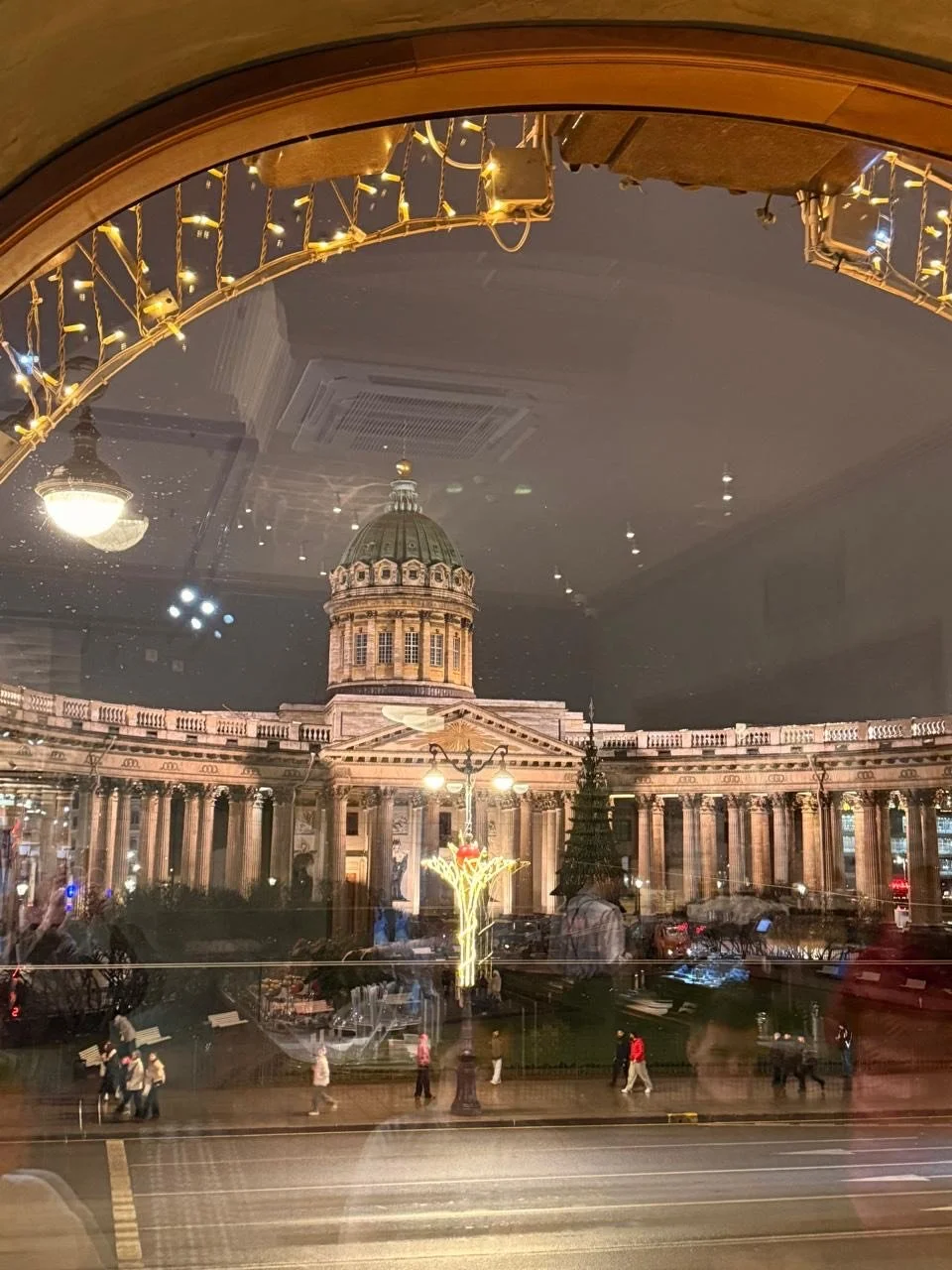
Dom Knigi goes even further than most bookstores by housing a full restaurant inside. Reviews of the restaurant were mixed, so I opted for a simpler plan: coffee and pastries. What I really hoped for was a table by the window overlooking Kazan Cathedral, one of the city’s most striking landmarks.
Browsing Books About the City Itself
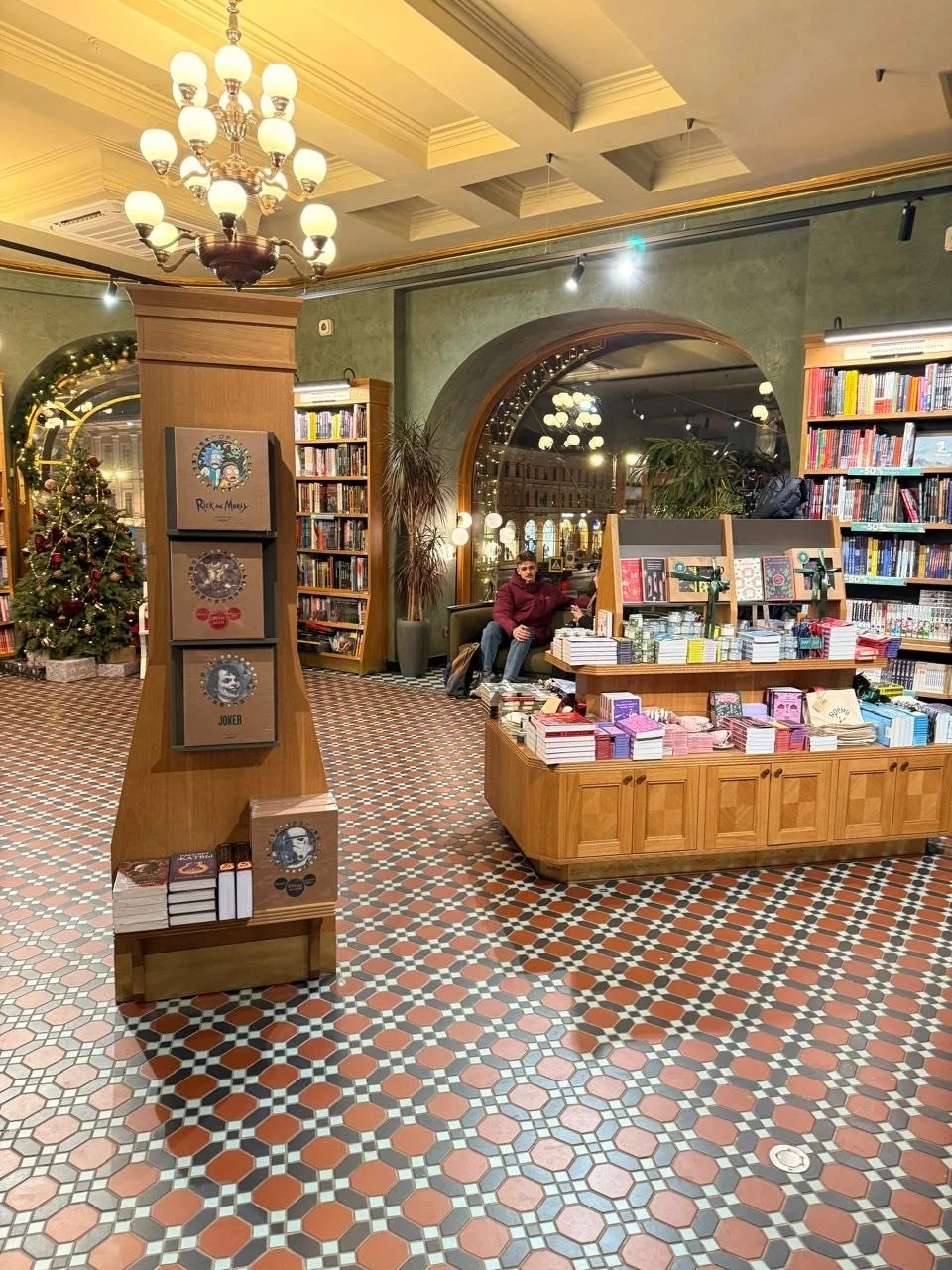
The first floor of Dom Knigi felt familiar—much like large bookstores anywhere in the world. Near the entrance, a prominent display featured books about Saint Petersburg itself. I lingered there, flipping through several volumes and briefly entertaining the idea of buying one.
But what would I do with a book in a language I don’t speak?
From what I already knew, Saint Petersburg has a complicated history: two centuries as the Russian capital, followed by revolution, renaming, upheaval, and reinvention. As I turned the pages of one book that seemed to trace that story, I found myself thinking of Cursed Days by Ivan Bunin, which I had read some time ago—though I later realized Bunin was writing about Moscow rather than Saint Petersburg. Still, the association felt natural.
A Bookstore Shaped by History
What makes Dom Knigi especially compelling is not just what it sells, but where it exists. The building itself carries history that feels inseparable from the experience of being inside it. Located in the former Singer House, the structure is one of the most recognizable on Nevsky Prospekt, with its elegant façade and distinctive glass dome. Even before stepping inside, it feels like a place designed to hold stories.
Walking through the bookstore, I was aware that this space has witnessed enormous changes—imperial Saint Petersburg, revolution, Soviet years, and the city’s present-day reinvention. Unlike modern bookstores built from scratch, Dom Knigi feels layered. You don’t simply browse books here; you move through a building that has absorbed decades of readers, conversations, and shifting cultural moods. That awareness changes how you linger. You move more slowly, speak more quietly, and notice details you might otherwise overlook.
From Books to People: Observing Dom Knigi
I was pulled out of my thoughts when someone accidentally brushed past my shoulder, and I made my way upstairs. There, long shelves stretched across the floor, filled almost entirely with books in Russian. The sheer volume was overwhelming. Trying to guess what each book might be about felt more frustrating than pleasurable, so instead of engaging with the titles, I chose to admire the scene from a distance.
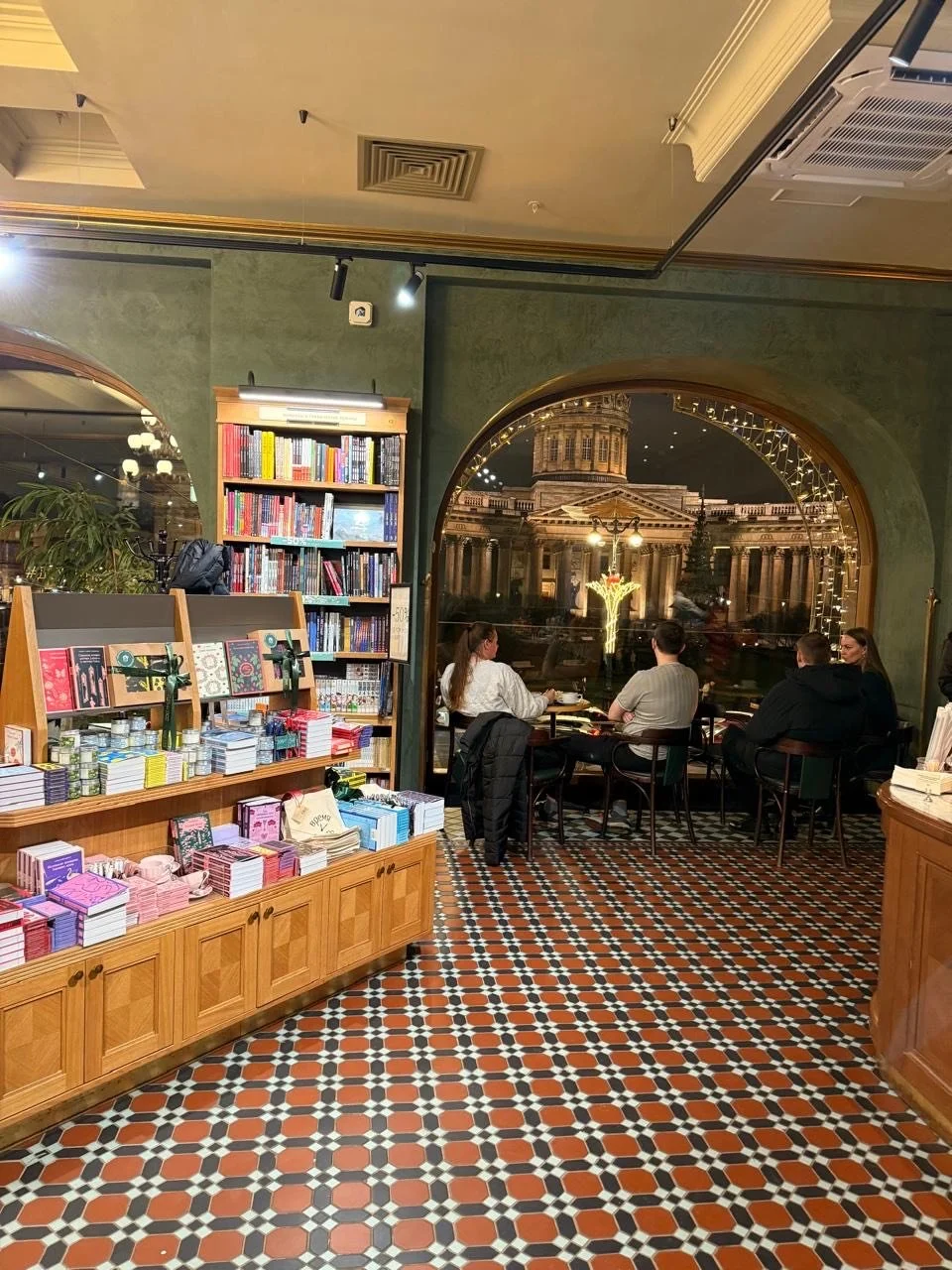
I returned to my original plan—coffee and something sweet—and, to my quiet delight, managed to secure a table by the window. From there, Dom Knigi transformed completely. With Kazan Cathedral framed outside the glass and the slow movement of people below, the bookstore became exactly what I had hoped for: not merely a place to buy books, but a space to sit, observe, and let the city unfold at its own pace.
Since reading the books themselves wasn’t really an option, I turned my attention to the readers. Bookstores reveal people in a particular way. Some arrived with clear purpose, heading straight for specific shelves. Others wandered without direction, pulling books out almost absentmindedly, as if guided by instinct rather than intention. I watched people settle into chairs, flip through pages, close books again without hesitation, and return them carefully to their place.
Some came alone and stayed for a long time. Others met friends and spoke in low voices, leaning close over cups of coffee. No one seemed rushed or self-conscious about lingering. From my seat by the window, Dom Knigi felt less like a commercial space and more like a public living room—a place where reading, thinking, and simply being were all equally acceptable ways to spend an afternoon.
Continue Exploring Saint Petersburg with Greta
If you’d like to keep following Greta’s journey through Saint Petersburg, you can continue with other pieces in this winter series. Each article focuses on a different layer of daily life—walking the city in December, settling into an apartment, or discovering spaces that quietly shape everyday routines.
Why Russian Bakeries Matter In St. Petersburg: Pekarni, Rum Baba, And Everyday Life
MY FIRST 24 HOURS IN ST. PETERSBURG: NEVSKY PROSPECT, TOO MUCH TEA, AND RUSSIAN DONUT “PISHKA”
Where To Stay In Downtown St. Petersburg: A Real Apart Hotel Experience
Walking In Saint Petersburg In December: A Winter City That Has Adapted
My First Morning In St. Petersburg: Snow, Silence, And The Smell Of Fresh Bread
Understanding the City Through Language
Spending time in places like Dom Knigi often makes one thing clear: observation can take you far, but language takes you deeper. Understanding conversations around you, reading titles on shelves, or catching small details in everyday exchanges can completely change how a city feels.
At Polyglottist Language Academy, we offer Russian classes that focus on real-life usage—listening, speaking, and cultural context—rather than abstract grammar alone. Our goal is to help students engage with Russian as it’s actually lived and spoken today.
If Saint Petersburg and its everyday spaces spark your curiosity, learning Russian can be a natural next step.
👉 Explore our Russian classes at Polyglottist Language Academy