
MY FIRST 24 HOURS IN ST. PETERSBURG: NEVSKY PROSPECT, TOO MUCH TEA, AND RUSSIAN DONUT “PISHKA”
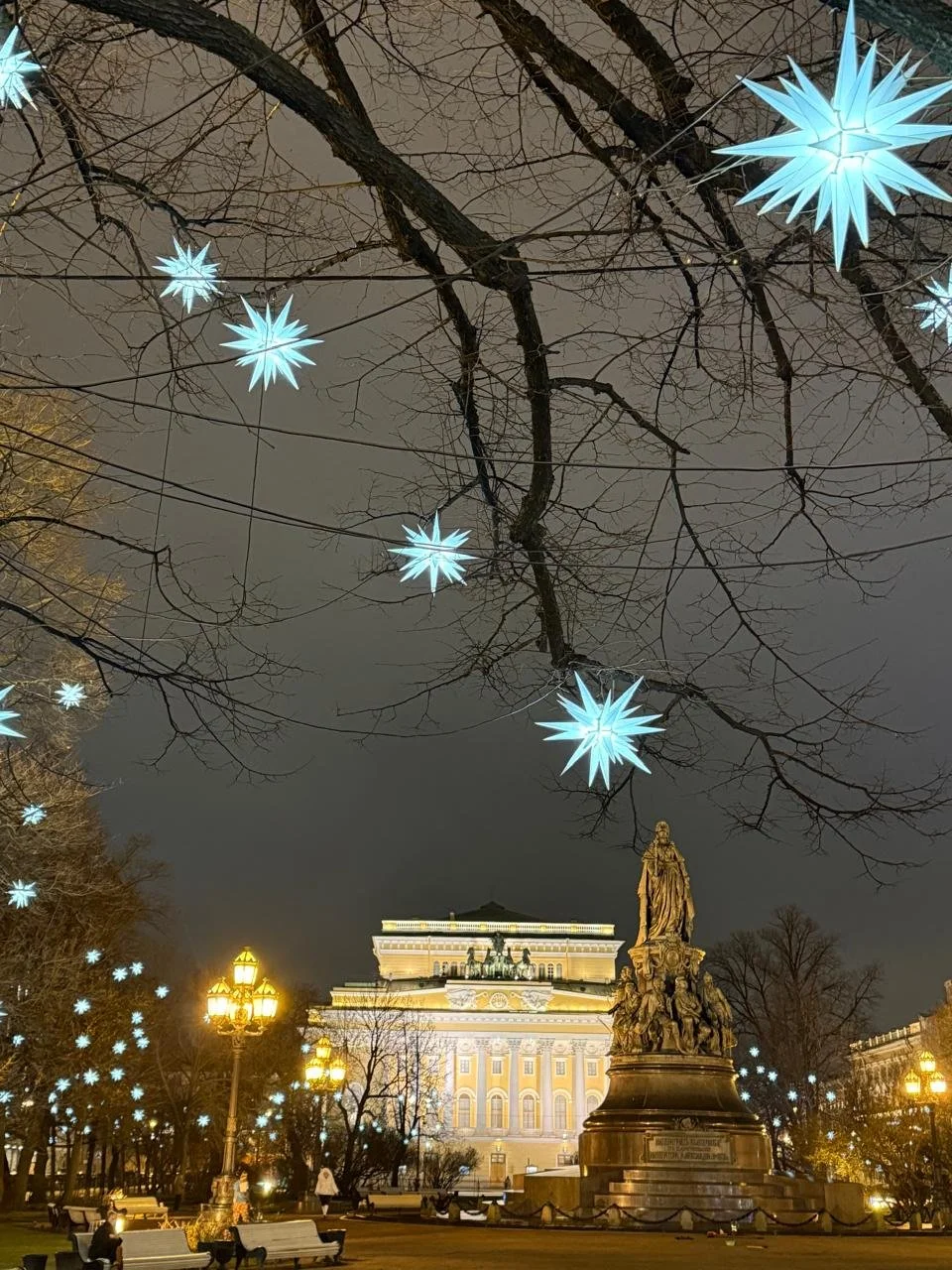
First Impressions of Saint Petersburg in winter
I had been carrying Saint Petersburg inside me long before I ever arrived—an inexplicable mixture of curiosity, pressure, and a vague sense of obligation. People spoke of this city with a kind of reverence, as if loving it was a requirement of good taste and cultural literacy. I had heard its reputation whispered through Russian novels, travelers’ stories, and late-night conversations: the elegant museums, the imperial façades, the canals, the silver light. Yet the truth was that Saint Petersburg remained a complete mystery to me, a place whose shadows and brilliance I had never been able to imagine fully.
Even in the days leading up to my trip, I felt something like apprehension. What if the city I was "supposed" to love left me cold? What if I didn’t feel the magic everyone else seemed to experience? I already had one such confession on my record—once admitting that Rome hadn’t captured me, and facing scorn for it—and I wasn’t sure I was ready to risk that again. But this winter journey was not only about travel; it was about honesty, curiosity, and letting myself experience a city without predetermined expectations.
So I booked a last-minute ticket and flew to Saint Petersburg in January, hoping to see the city under snow, hoping to feel that elusive spark that had escaped me in other places. It would be the first 24 hours of a month-long stay—a month that, I hoped, might unravel the mysteries I had carried for so long.
The Weight of Expectations: Literature, Illusions, and My First Impressions of Saint Petersburg
Saint Petersburg has always been a city of ideas—of writers, dreamers, and people who believed the city could mean more than what it was. I had heard scattered mentions of its streets, squares, and monuments; I had read sprawling 19th-century novels that painted the city with melancholy, grandeur, and endless philosophical tension. Yet nothing in those pages helped me truly understand it. Everything I read felt strangely disconnected from the modern world, as if those versions of Saint Petersburg had dissolved long ago into snow and ink.
And still, I felt obligated to love this place. We do this with certain cities—Paris, London, Rome, New York—as if failing to adore them is a personal flaw rather than a matter of taste. “Everyone loves them,” people say, and so we convince ourselves we must too. But the fear lingered quietly: What if I didn’t love Saint Petersburg? What if this city, this myth, failed to speak to me?
Literature only intensified this pressure. Gogol, for instance, had etched Saint Petersburg into the Russian psyche with his strange mixture of humor, darkness, and surrealism. His story Nevsky Prospekt famously describes the city’s main avenue as a shimmering, seductive place where illusions flourish and danger hides beneath polished surfaces. His Saint Petersburg is a city of theatrical façades, of glittering lies, of shadows that follow too closely.
But I wasn’t in a novel. I was here, in real winter air, in a city lit by festive lights and icy breath, trying to discover what this place actually felt like—beyond obligation, beyond myth, beyond fear.
A Chaotic Arrival and a City Dressed for Winter Light
As with many unplanned trips, my first day was unforgivably chaotic. I arrived at an aparthotel just five minutes from Moscow Train Station, dragging my suitcase across a patchwork of ice and slush, wondering whether this was a terrible or brilliant idea. Within minutes of stepping inside, I realized I had chosen the perfect location. It was close enough to Nevsky Prospekt and several major avenues to feel central, yet tucked away from the constant rush so it felt surprisingly calm.
By four o’clock, Saint Petersburg had already surrendered to darkness. Winter here is decisive and unapologetic: days are brief, almost symbolic, while nights expand luxuriously, swallowing the city in deep navy light. Yet the moment the sun set, something extraordinary happened. The city awakened—not with the cold silence I expected, but with a glow of warmth and festivity.
Every street shimmered with decorative lights. Every building façade seemed dressed for celebration. Every shop window sparkled with garlands, ornaments, and enough illumination to rival a midsummer noon in any other country. I soon noticed a curious paradox: Saint Petersburg is actually brighter after sunset than during its cloudy winter days.
Walking through the city felt like stepping into a luminous snow globe. The New Year decorations—which Russians take far more seriously than Christmas—added a glittering frame to the city’s classical architecture. It was breathtaking in a way I wasn’t prepared for, and I found myself wondering how impossibly dark life must have been here before electricity existed.
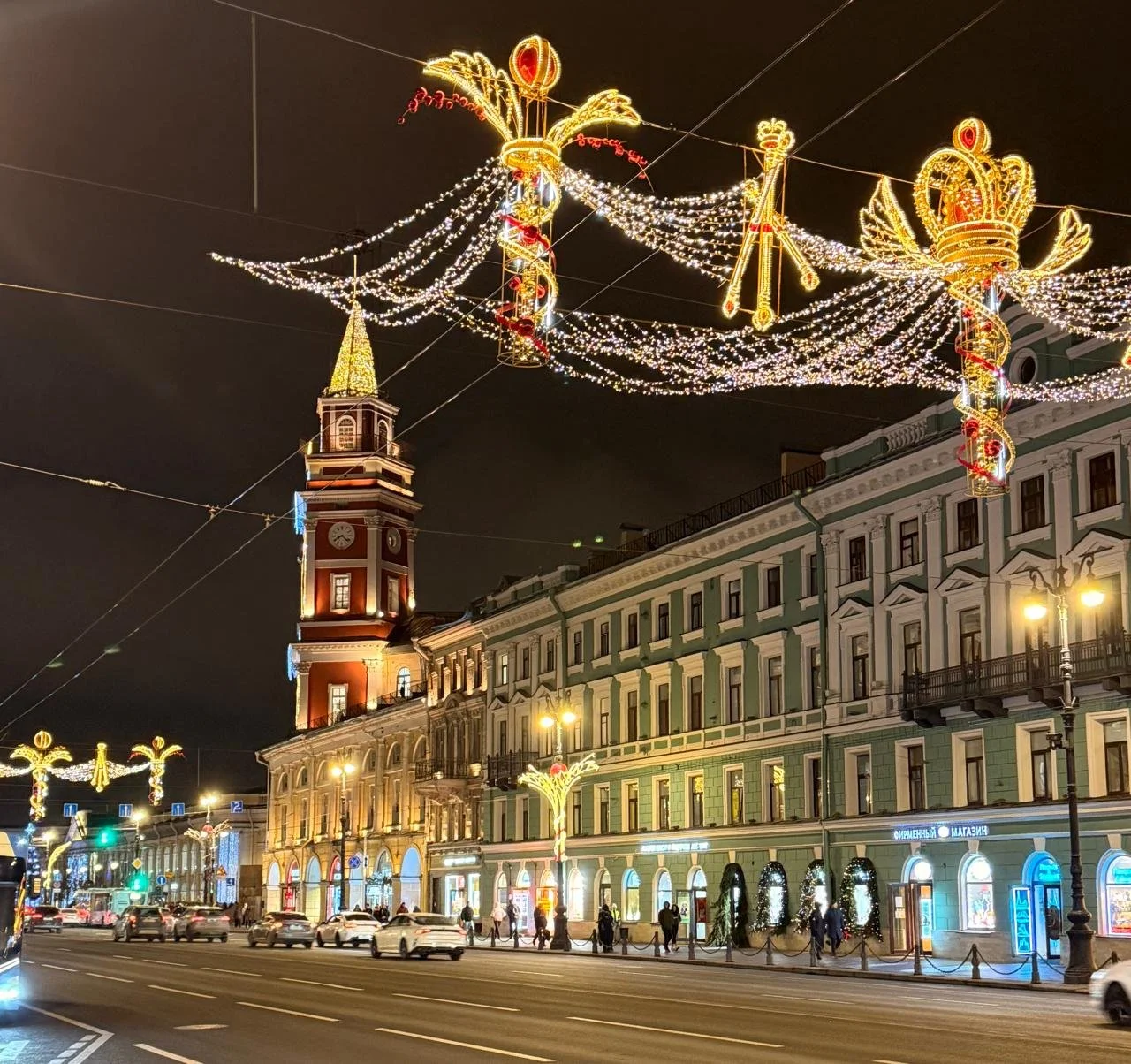
Walking Into the Heart of the City: Nevsky Prospekt at Night
Without purpose or direction, I wandered until I found myself on Nevsky Prospekt, the city’s most famous and storied avenue. I had imagined this moment so many times, but nothing compared to seeing it illuminated on a December evening, bustling with people, music, and winter energy.
To my surprise, I felt instantly comfortable here. Not dazzled or overwhelmed, but soothed—almost as if Nevsky was a street I had known my whole life. This was quite different from Gogol’s portrayal. In his story, Nevsky Prospekt is a place of illusions, a glittering façade hiding danger, seduction, and moral disorientation. “Most deceitful of all is Nevsky Prospekt when night falls,” he warns.
But standing there in real winter darkness, surrounded by lights, street musicians, and the comforting rhythm of people going about their lives, I felt none of that deception. The street was alive, warm, and surprisingly human.
I could have spent days—weeks even—wandering up and down this one avenue. Every café, bakery, and small shop seemed to tell its own story. Every window invited me to pause and look. Every passing face offered a glimpse into the city’s soul. And as the night deepened, street musicians began gathering in clusters, their melodies weaving into the hum of winter traffic.
On the first day in a new city, ambition is unnecessary. Walking, listening, sitting—these are accomplishments. So I decided to do just that: find a warm café, drink tea, choose a pastry, and let myself feel the rhythm of Saint Petersburg.
The Tea Culture That Surprised Me
In every café I visited, I was astonished by the reverence for tea. Russians do not treat it as a casual beverage; here, tea is an institution. Many cafés even have separate tea menus—some as long and detailed as wine lists—filled with blends infused with herbs, berries, citrus, and dried fruits.
Tea is always served properly: in a full teapot, freshly brewed, steaming, accompanied by honey, lemon, or jam. The idea of offering a customer a tea bag would be met with quiet shock, perhaps even offense. Russians, I quickly realized, are true tea connoisseurs. Coffee exists everywhere, of course, but it plays a supporting role. People here drink tea the way others drink wine: slowly, socially, ceremonially.
My hotel, though impeccable in every other respect, only offered a tiny espresso machine producing forgettable coffee. But everywhere else, tea was treated like poetry. I watched people take their time—pouring, sipping, reflecting—often accompanied by an equally important companion: pastries.
This city takes its sweet rituals seriously.
My Unexpected Love Affair With Pishka
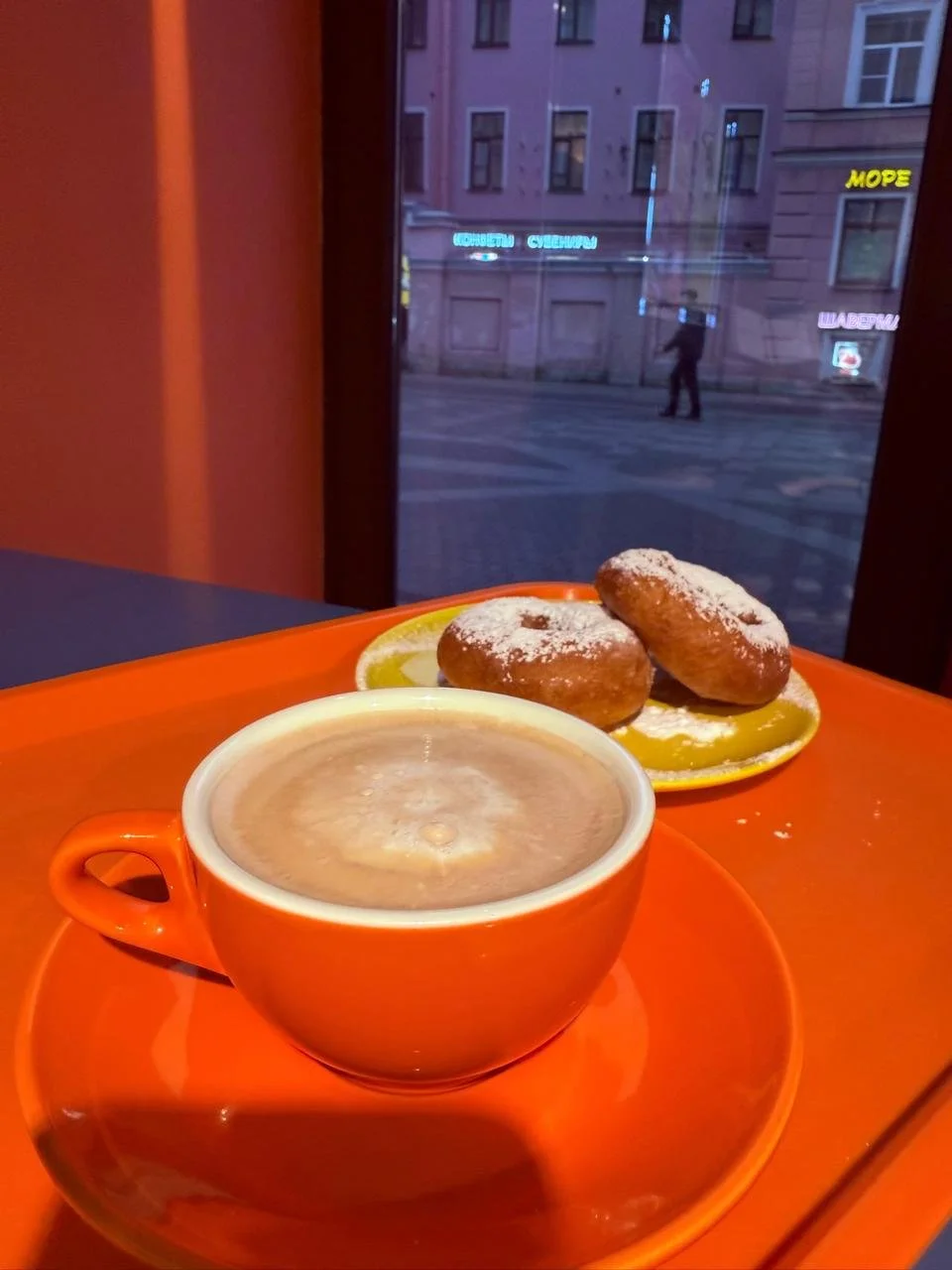
I did not expect to fall in love with a doughnut on my first day in Saint Petersburg. In fact, I don’t even like doughnuts. I avoid them, even. But pishka is no ordinary doughnut.
Pishka, the beloved local speciality, is a simple ring fried to golden perfection, dusted with powdered sugar, and eaten while still warm. The texture is extraordinary—light, airy, slightly oily, delightfully tender. You take one bite and immediately understand why people stand in line for them, even in freezing weather.
There is something disarming about such simplicity. In a city full of imperial palaces, grand museums, and monumental architecture, it was this modest, irresistible doughnut that stole my heart first.
What My First 24 Hours Taught Me About Saint Petersburg
My first day in Saint Petersburg dissolved all my fears. I didn’t have to force myself to love the city; the city simply welcomed me, gently and quietly, as if it had been waiting. The winter lights, the tea culture, the warmth of cafés, the unexpected delight of pishka, the comforting familiarity of Nevsky Prospekt—all of it came together like a whispered invitation to stay longer, walk further, look closer.
Saint Petersburg didn’t overwhelm me with grandeur or demand admiration. Instead, it offered a kind of slow enchantment, a steady unfolding of beauty that felt both subtle and unmistakable.
If this was just the first 24 hours, I could only imagine what the rest of January would bring.
About Greta:
Greta is Polyglottist’s traveler-in-residence, sharing first-person observations on language, culture, and everyday life as she moves from place to place.
If You’d Like to Explore More of Russia Through Language and Culture…
At Polyglottist Language Academy, our Russian classes are built around real-life situations rather than abstract grammar alone. Students learn Russian as it’s actually spoken—in cafés, bakeries, shops, and everyday conversations—so the language feels connected to lived experience, not just textbooks.
If Russian daily life, food culture, and small rituals spark your curiosity, learning the language can be a natural next step.
👉 Explore our Russian classes at Polyglottist Language Academy
Continue Greta’s Journey
Why Russian Bakeries Matter In St. Petersburg: Pekarni, Rum Baba, And Everyday Life
MY FIRST 24 HOURS IN ST. PETERSBURG: NEVSKY PROSPECT, TOO MUCH TEA, AND RUSSIAN DONUT “PISHKA”
A DAY AT DOM KNIGI: BOOKSTORES, COFFEE, AND KAZAN CATHEDRAL IN ST. PETERSBURG
Where To Stay In Downtown St. Petersburg: A Real Apart Hotel Experience
Walking In Saint Petersburg In December: A Winter City That Has Adapted
My First Morning In St. Petersburg: Snow, Silence, And The Smell Of Fresh Bread