Why There Are Bakeries Everywhere
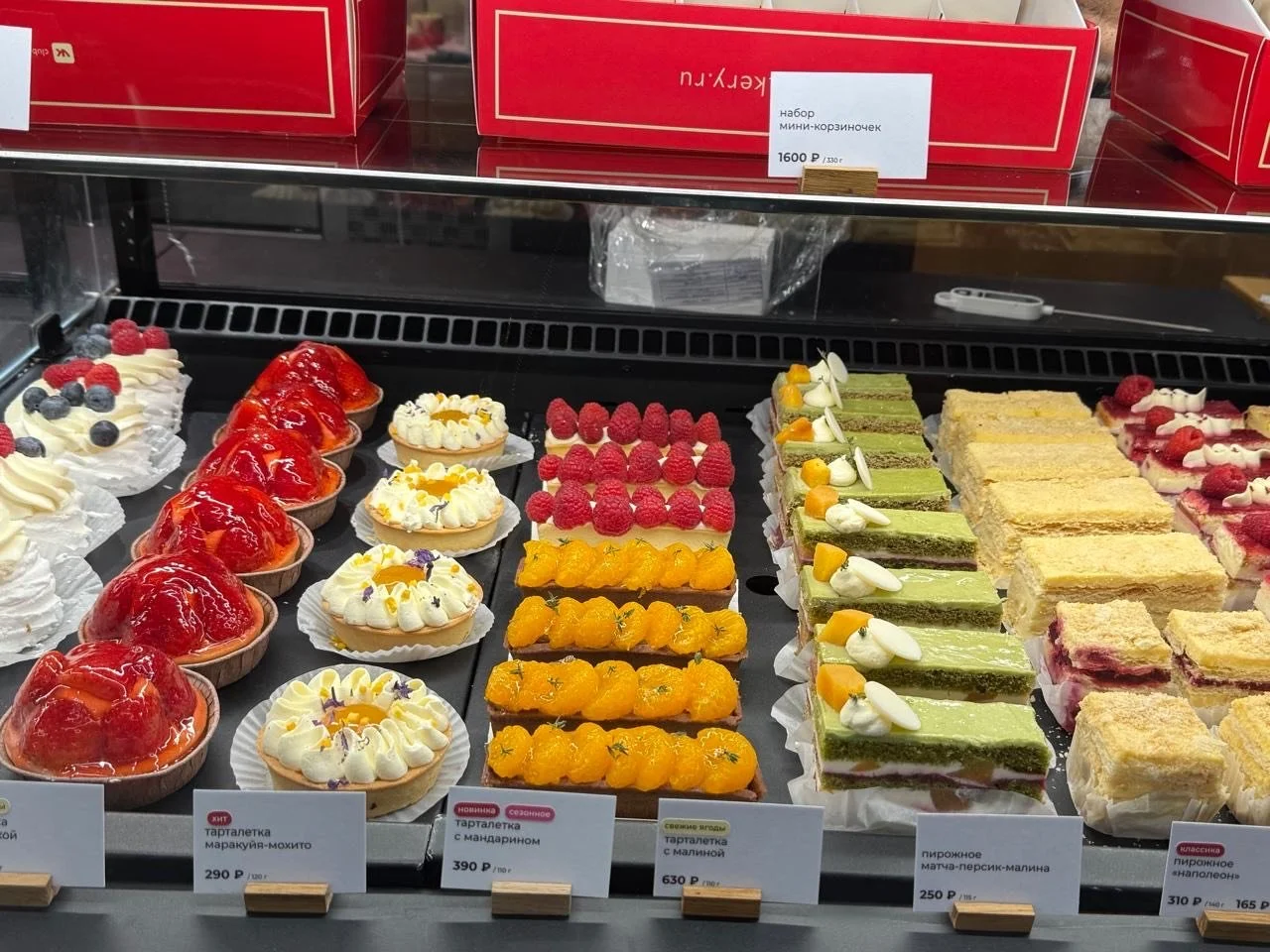
I still don’t know exactly how or why there are so many bakeries—pekarni—in Saint Petersburg. On my very first walk along Nevsky Prospekt, just hours after arriving in Russia, I noticed their constant presence. Bakeries appeared on nearly every block, sometimes even two in the same building. It was impossible to ignore.
At first, I assumed the explanation was simple: perhaps everyone here eats cakes and pastries every day. But the sheer number of bakeries suggested something more. This wasn’t just about food—it felt like part of the city’s daily rhythm.
Pekarni as Social Spaces, Not Just Shops
After stepping into a couple of bakeries at random and lingering in front of the display cases, I began to notice how people actually use these spaces. Russians don’t come to pekarni only to buy pastries and leave. They come to stay.
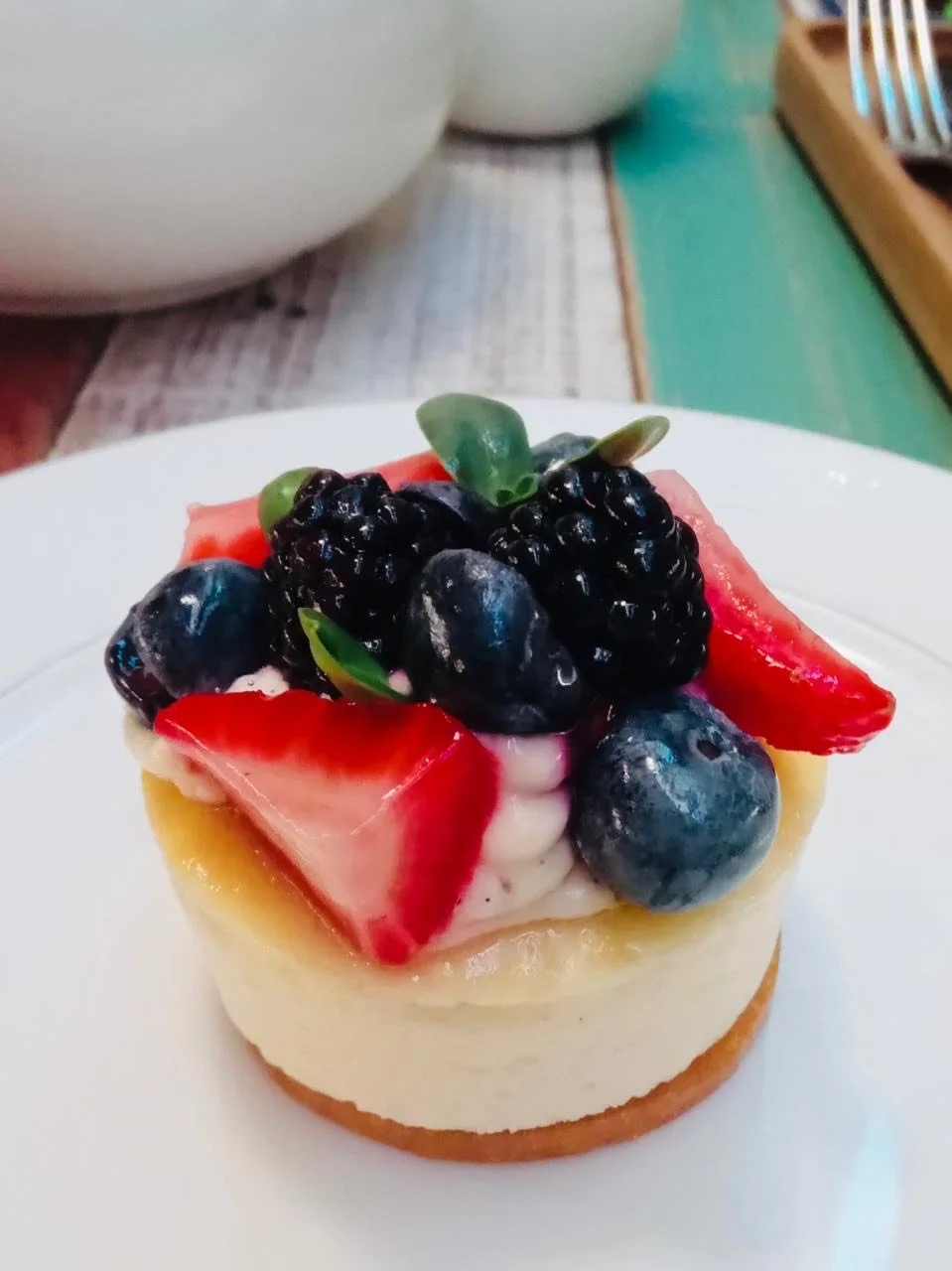
In many ways, bakeries here function like coffee shops—except the focus is reversed. In other countries, pastries often accompany coffee. In Saint Petersburg, coffee (and sometimes enormous teapots) accompanies cake. People order a single slice, a cup of coffee or tea, and settle in. They read, talk, work, and watch the city pass by outside the window.
What surprised me most was the scale of choice. The variety of cakes, pastries, and desserts is almost overwhelming. Moving from one bakery to another, I kept asking myself the same questions: Is it really profitable to bake so many things? Do they sell all of this by the end of the day? Or is competition so fierce that bakeries are forced to offer endless options just to survive?
Sitting Down to Observe—and to Taste
After wandering from bakery to bakery and asking myself far too many questions about supply, demand, and competition, I finally did what everyone else seemed to be doing. I chose a cake, ordered coffee, and sat down. The decision felt less like a break and more like a small initiation—an unspoken agreement to stop analyzing and simply participate.
From my seat by the window, the bakery revealed itself differently. People came in with the confidence of regulars, barely glancing at the display before ordering. Others stood for a long time, weighing options carefully, as if choosing a cake were an important, almost personal decision. Outside, pedestrians passed by quickly, coats pulled tight against the cold, while inside time slowed to a gentler rhythm. Cups were lifted, forks hovered, conversations unfolded without urgency.
It became clear that sitting down was essential to understanding these places. Bakeries in Saint Petersburg are not designed for takeaway alone; they invite you to stay. To taste slowly. To watch. To let the street and the room exist together for a moment. Only then did choosing a cake feel meaningful—not as an indulgence, but as a way of joining the quiet, everyday life happening around me.
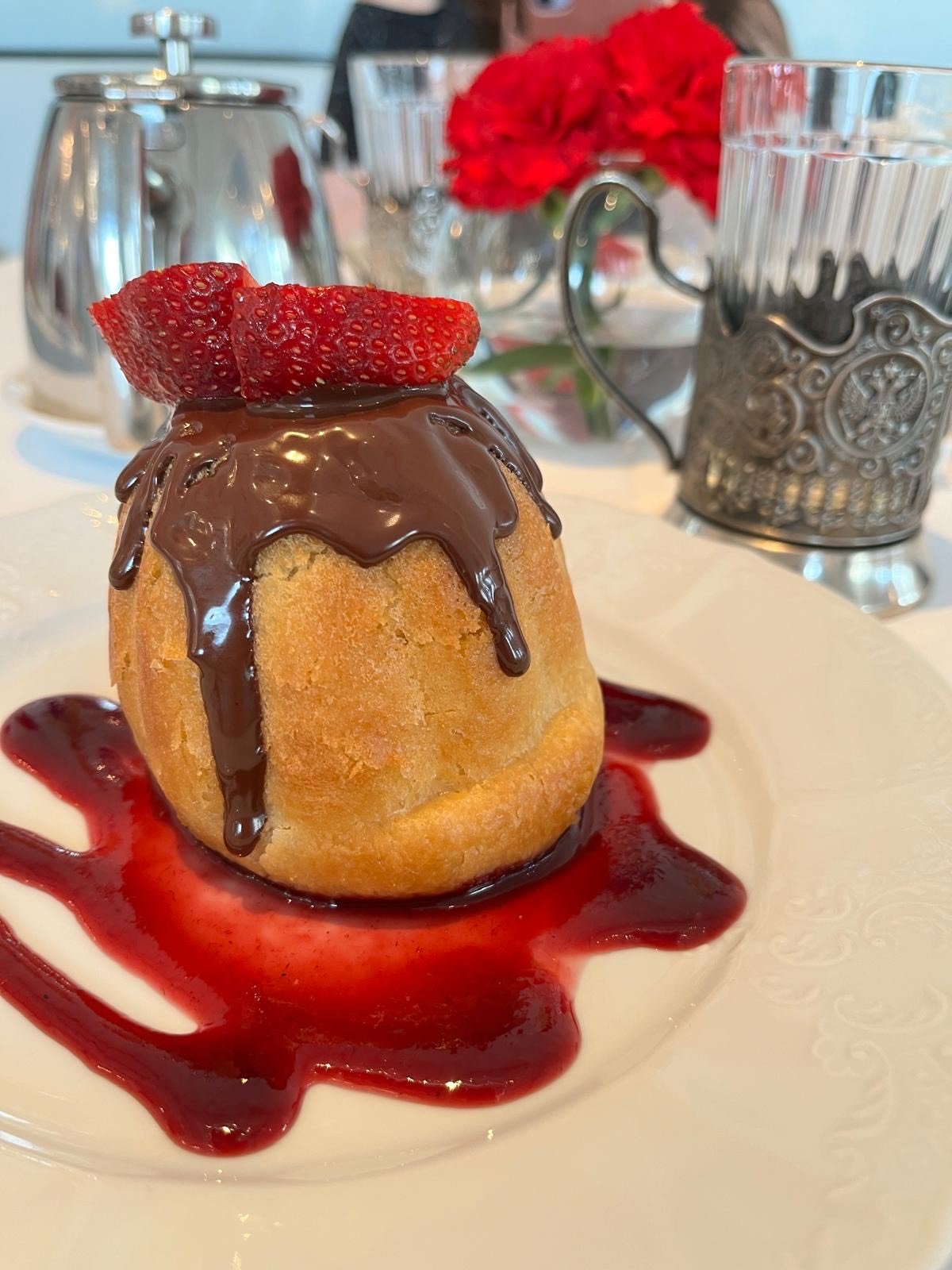
Surrounded by carefully decorated cakes, I chose rum baba for the way it combined visual elegance with substance—glossy, richly soaked, and rooted in a long pastry tradition.
Rum Baba: A Dessert With a Past
I chose rum baba, a cake I had seen repeatedly in bakery displays across the city. Unlike the delicate, airy desserts that often dominate modern pastry cases, rum baba looks unapologetically traditional. Big, glossy, and deeply soaked, it carries the quiet confidence of something that has survived many food trends without needing to reinvent itself.
The cake arrived glistening, saturated with syrup infused with rum, its surface almost reflective under the bakery lights. One bite was enough to understand why it endures. The texture was soft and elastic, dense without being heavy, absorbing the syrup completely while still holding its shape. The flavor wasn’t aggressively sweet; instead, it unfolded slowly—yeast, sugar, alcohol, and time working together. It felt less like a dessert designed to impress and more like one meant to be trusted.
Rum baba invites a slower kind of attention. Dense yet tender, it is eaten in small, deliberate bites, often alongside coffee or tea and nothing else. Sitting by the window and watching people drift in and out, the cake felt perfectly at home in Saint Petersburg bakeries—grounded, familiar, and quietly indulgent, a dessert that rewards presence rather than speed.
What You Learn About Russian Life in a Bakery
If you want to observe Russian daily life quietly, a bakery is one of the best places to do it. Sitting there for a while, patterns begin to emerge.
The first thing I noticed was how often women came in pairs. At nearly every table, two women sat together—talking, laughing, leaning toward each other with a familiarity that suggested long friendships. If I understood Russian, I’m sure I would have overheard life stories unfolding between sips of tea and bites of cake.
At other tables, young men and middle-aged women sat alone, laptops open, completely absorbed in their work. Many of them were clearly working online. A pekarni is an ideal place for that: warm, welcoming, never rushed, and socially acceptable to occupy for hours with just a slice of cake and a drink.
More Than Just Bakeries
By the time I finished my coffee, it was clear that Russian bakeries in Saint Petersburg are not simply about selling pastries. They are social spaces, workspaces, meeting points, and quiet refuges from the street. They reflect a culture that values time spent together—and time spent alone—without pressure.
Walking back outside, I began to notice bakeries even more than before. And instead of wondering why there are so many, I found myself thinking that perhaps the real question is how a city can function without them.
Continue Exploring Saint Petersburg with Greta
If you’d like to keep following Greta’s journey through Saint Petersburg, you can continue with other stories that explore the city through everyday rituals rather than landmarks alone. Each article focuses on a different layer of daily life—walking the streets in winter, settling into an apartment, discovering bookstores and bakeries, and observing how the city reveals itself slowly over time.
MY FIRST 24 HOURS IN ST. PETERSBURG: NEVSKY PROSPECT, TOO MUCH TEA, AND RUSSIAN DONUT “PISHKA”
A DAY AT DOM KNIGI: BOOKSTORES, COFFEE, AND KAZAN CATHEDRAL IN ST. PETERSBURG
Where To Stay In Downtown St. Petersburg: A Real Apart Hotel Experience
Walking In Saint Petersburg In December: A Winter City That Has Adapted
My First Morning In St. Petersburg: Snow, Silence, And The Smell Of Fresh Bread
Understanding Russian Through Everyday Places
Spending time in bakeries like these makes one thing especially clear: language lives in ordinary spaces. It’s in how people order, how they greet each other, how they linger, work, and talk over cake and coffee. Observing can take you far—but understanding the words around you adds an entirely new layer.
At Polyglottist Language Academy, our Russian classes are built around real-life situations rather than abstract grammar alone. Students learn Russian as it’s actually spoken—in cafés, bakeries, shops, and everyday conversations—so the language feels connected to lived experience, not just textbooks.
If Russian daily life, food culture, and small rituals spark your curiosity, learning the language can be a natural next step.
👉 Explore our Russian classes at Polyglottist Language Academy