
How Russian Writers Explore Death Like No One Else
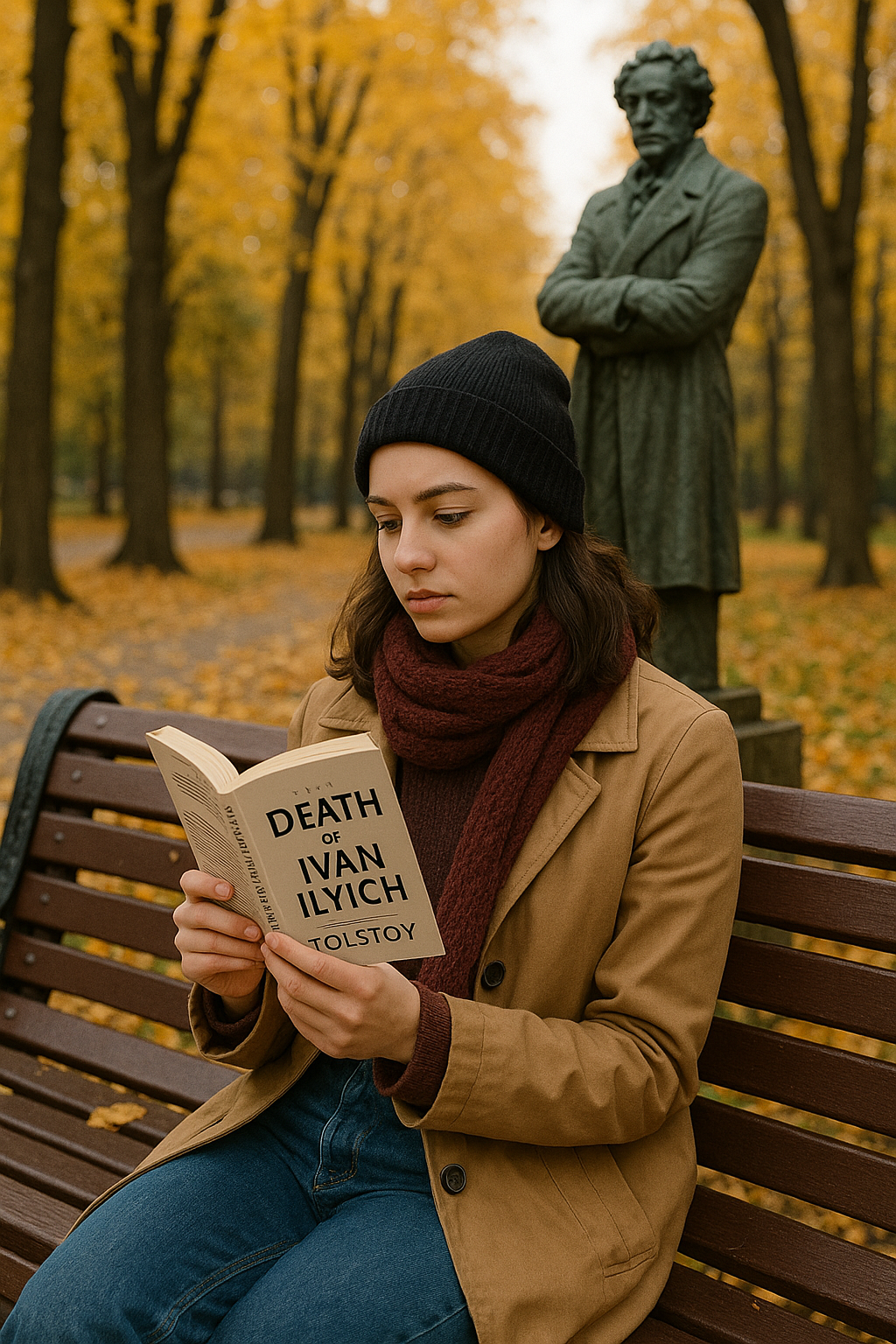
Some cultures treat death with reverence, some with fear, some with silence—but Russian literature holds death up like a mirror, daring us to stare into it until we see ourselves more clearly. Death in Russian novels is not simply an event, an ending, or a plot device; it is a presence, a force, a psychological storm that churns beneath the surface of daily life. In the hands of Russian writers, death becomes a philosophical battleground, a spiritual reckoning, a moral indictment, and sometimes—paradoxically—a source of meaning. Where Western novels might kill off a character to evoke pity or shock, Russian literature makes death the centerpiece of a meditation on the human condition.
Why is this? Why do Russian authors return, again and again, to the edge of the grave to ask their most profound questions? Is it something about the Russian soul, so deeply shaped by history, war, suffering, and religion? Or is it the particular literary tradition that grew out of the 19th century and has never quite let go of the themes of guilt, redemption, eternity, and the absurd? Whether it’s Dostoevsky’s condemned men awaiting execution, Tolstoy’s characters wrestling with the emptiness of wealth and fame, or Chekhov’s quietly dying patients, death in Russian fiction is never cheap—it is always personal, metaphysical, and transformative.
This article explores how Russian writers, from the 19th century to today, treat death with a unique kind of gravity and imagination. We’ll examine the role of death in the works of Dostoevsky, Tolstoy, Turgenev, Bulgakov, and other masters, and uncover what their portrayals of dying reveal about life, morality, and what it means to be truly alive.
1. Dostoevsky: Death as Existential Catalyst
No one writes about death quite like Fyodor Dostoevsky. His obsession with mortality is inseparable from his personal experiences: his own near-execution by firing squad in 1849 (commuted at the last moment), his epilepsy, his gambling addiction, and the constant awareness of sin and salvation. In his works, death is often a lens through which every other aspect of life is scrutinized.
In The Idiot, Prince Myshkin speaks of a man standing before a guillotine who, in his final seconds, realizes he is still alive and capable of hope, regret, and beauty. In Crime and Punishment, the murder is not the climax but the beginning of a slow spiritual death that Raskolnikov must confront and reverse. In The Brothers Karamazov, the death of the child Ilyusha is unbearably intimate, serving as a meditation on suffering and innocence.
For Dostoevsky, death is not just a personal end; it is a revelation. His characters often come to the edge of death only to see their lives with new clarity. In this way, death becomes a teacher—not of despair, but of redemption.
2. Tolstoy: The Terror of a Meaningless Death
Leo Tolstoy's treatment of death is equally profound, though rooted more in moral clarity and social critique than in the raw psychological terror of Dostoevsky. In The Death of Ivan Ilyich, Tolstoy offers one of the most harrowing and quiet portrayals of death in Western literature. Ivan, a successful judge, becomes terminally ill and is forced to confront the banality and emptiness of the life he thought was "proper."
What makes this novella devastating is how ordinary Ivan’s life is—and how unexamined. It is not the pain that terrifies him, but the realization that he has lived falsely, for appearances, for status, for routine. Death, in this case, is a mirror revealing the moral bankruptcy of modern life.
Tolstoy, especially in his later years, was obsessed with finding a moral and spiritual way to live in the face of death. His Christian anarchism and pacifism grew out of his conviction that only by living truthfully and lovingly can one die peacefully. For Tolstoy, a good death is the result of a good life—and few of his characters achieve either.
3. Turgenev: Death as Elegy
Ivan Turgenev approaches death not with the intensity of Dostoevsky or the moralism of Tolstoy, but with lyrical melancholy. In Fathers and Sons, the character Bazarov dies not in battle or spiritual crisis, but in a quiet, undramatic way, from an infection. And yet this death is anything but trivial—it is deeply human, painfully understated, and quietly heartbreaking.
Turgenev often portrays death as something that humbles the proud and dignifies the forgotten. His stories are full of fading lives, lost loves, and the ache of things unsaid. Unlike Dostoevsky or Tolstoy, he is less interested in death as a moral or religious reckoning and more in its emotional resonance.
In a way, Turgenev’s literature is a long goodbye. His characters rarely rage against the dying of the light—they simply watch it dim, with sadness and grace.
4. Chekhov: Death as a Whisper
Anton Chekhov, a doctor by training and a master of the short story, understood the body’s fragility better than most writers. In his stories, death rarely arrives with drama. Instead, it creeps in silently, as life continues around it. A dying character might cough offstage, or mention a diagnosis without emotion. Death is part of the fabric of Chekhov’s world—not sensational, but omnipresent.
In Ward No. 6, The Lady with the Dog, or The Cherry Orchard, death is a presence that shapes character choices, even if it’s never explicitly named. It exists in the pauses, the silences, the unspoken regrets. For Chekhov, death is not about revelation or punishment—it’s about time, loss, and the unbearable beauty of ordinary moments slipping away.
Chekhov’s gift was to make the reader feel death without pointing at it directly. His stories suggest that we are always dying, even as we live—and that awareness is what gives life its poignancy.
5. Bulgakov: Death and the Devil
In the 20th century, Mikhail Bulgakov brought a darker, surreal edge to the theme of death. In The Master and Margarita, death is entangled with magic, madness, bureaucracy, and satire. The devil—Woland—comes to Moscow not to destroy but to reveal the truth about a society spiritually dead.
Characters in Bulgakov’s world are executed, humiliated, or disappear mysteriously, but death is not always the final end. Sometimes it is a release, as in the final fate of the Master and Margarita, who are granted "peace" rather than heaven. Bulgakov’s version of death is theatrical, ironic, and philosophical. He reminds us that not all death is tragic—some is liberation from an unbearable life.
For Bulgakov, to write about death was to mock the absurdity of a society that feared it yet caused it indiscriminately. His satire reveals how a culture that censors the truth inevitably invites the kind of death that destroys meaning.
6. Death in Soviet and Post-Soviet Literature
Under Soviet rule, death became political. Writers like Aleksandr Solzhenitsyn, Varlam Shalamov, and Anna Akhmatova explored death in the context of the Gulag, war, and repression. In One Day in the Life of Ivan Denisovich and The Gulag Archipelago, Solzhenitsyn wrote about slow death—death by hunger, cold, and ideology.
Shalamov’s Kolyma Tales are perhaps the most brutal. His stories detail how death in the camps was no longer personal or noble—it was industrial, anonymous, and senseless. But even here, the act of remembering, of bearing witness, becomes an act of resistance against death’s erasure.
In post-Soviet literature, writers like Ludmila Ulitskaya and Vladimir Sorokin continue to grapple with the legacy of death—both personal and collective. Their works are haunted by the memory of mass suffering, even as they explore new ways of speaking about life, identity, and survival.
7. Why It Matters: What Russian Literature Teaches Us About Dying (and Living)
So why does death matter so much in Russian literature—and why should we care? Because in facing death, these writers force us to face what we most often try to avoid. They strip away the distractions of modern life and ask: What does it mean to be human? What makes a life worthwhile? What does it mean to die well?
Russian literature does not flinch. It sits with the dying. It weeps with the grieving. It forces us to reflect, not escape. In doing so, it offers something rare: not just beauty or drama, but truth.
In a world that often avoids discussing death, Russian literature brings it to the center—not to glorify it, but to illuminate the meaning of life itself.
FAQs
Q: Why is death such a central theme in Russian literature?
A: Russia's turbulent history, Orthodox spirituality, and philosophical tradition all contribute to the emphasis on mortality. Writers use death to explore the soul, morality, and the meaning of life.
Q: Is Russian literature depressing because it focuses on death?
A: While it can be emotionally intense, Russian literature uses death not to promote despair, but to provoke reflection, awareness, and sometimes, transformation.
Q: Which Russian novels are best to start with if I'm interested in this theme?
A: The Death of Ivan Ilyich (Tolstoy), Crime and Punishment (Dostoevsky), and Ward No. 6 (Chekhov) are excellent entry points.
Q: Are there modern Russian authors who still write about death in this way?
A: Yes. Writers like Ludmila Ulitskaya, Zakhar Prilepin, and Guzel Yakhina continue to explore themes of memory, loss, and death with fresh perspectives.
Q: Do I need to read these books in Russian to appreciate them fully?
A: Not at all. Many high-quality translations exist, but learning Russian allows you to feel the nuances and emotional rhythms of the original language.
Final Thoughts
If this article has sparked your curiosity, maybe it’s time to go deeper. At Polyglottist Language Academy, we don’t just teach Russian—we help you experience the world through its literature, culture, and soul. Whether you’re a complete beginner or an advanced reader looking to engage with Dostoevsky in the original, our courses are designed to connect language with life.
Join one of our online or in-person Russian classes and discover why language learning is so much more than memorizing vocabulary—it’s about seeing the world through new eyes.
Want to explore more about Russian language and culture?
Check out our full collection of articles on the Polyglottist Language Academy Blog, where we dive into everything from why fluent Russian isn’t fast Russian to how to survive a Russian toast and what it’s like to be the only foreigner in a Russian dacha community. Whether you're curious about grammar tips, cultural faux pas, or how Russians navigate public space, our blog offers fresh, engaging insights to support your learning journey.