
Few foods inspire such passionate debates in Russian households as dumplings. Whether you grew up in Moscow, Siberia, Kiev, or Minsk, you’ve likely had long conversations about whether pelmeni or vareniki deserve the crown of dumpling supremacy. These two iconic dishes look similar on the surface—both are boiled pockets of dough with savory or sweet fillings—but their cultural weight, regional origins, and even the way they’re eaten reveal fascinating differences. To dismiss them as “Russian ravioli” or “Slavic pierogi” is to miss the centuries of tradition, family stories, and culinary pride that shape the pelmeni-versus-vareniki divide.
Across the vast territory of Russia and its neighboring Slavic countries, dumplings are not merely comfort food; they are culinary identity. Pelmeni are Siberia’s gift to the Russian table, small and meat-filled, designed to withstand harsh winters and provide nourishment for hunters, workers, and travelers. Vareniki, with their Ukrainian roots, offer endless variety: potatoes, cottage cheese, mushrooms, cherries, even poppy seeds. They are festive, versatile, and beloved for their ability to bridge the line between hearty meal and indulgent treat. Families argue good-naturedly about which dumpling reigns supreme, but in truth, both pelmeni and vareniki represent different sides of the same story: how food expresses culture, geography, and family life.
If you sit at a Russian dinner table and the topic of dumplings comes up, you’ll quickly see sparks fly. Someone will swear pelmeni are “real dumplings” because they must contain meat. Another will insist vareniki are superior because they can be eaten sweet or savory, giving them more personality. Grandmothers will argue over dough thickness, filling ratios, and the “right” way to seal the edges. Younger generations might add that store-bought pelmeni are a lifesaver for busy weeknights, while vareniki remain tied to homemade, holiday traditions. What seems like a lighthearted food debate is actually a window into Russian and Ukrainian cultural values, migration patterns, and even survival strategies in cold climates.
This article will explore the great pelmeni vs. vareniki debate in depth. We’ll look at their origins, ingredients, cultural symbolism, and regional variations. We’ll highlight how each dish is prepared, how it’s eaten, and why it matters so deeply to the people who grow up with them. And for language learners, we’ll sprinkle in some useful Russian vocabulary along the way, so the next time you visit a Russian restaurant—or better yet, a Russian home—you’ll know exactly what to order and how to talk about it.
The Origins of Pelmeni
Pelmeni are strongly associated with Siberia, where they were originally developed as a practical, portable food. Their name likely comes from the Komi-Permyak and Udmurt languages of the Ural region: pel’ meaning “ear” and nyan’meaning “bread”—literally “ear-shaped bread.” Hunters and travelers in Siberia would make large batches of pelmeni during the winter months, freeze them outdoors, and carry them as provisions. Frozen solid, pelmeni could be easily boiled in water or broth over a campfire, providing quick and nourishing meals.
As they spread westward, pelmeni became a staple across Russia. Their defining features are small size, thin dough, and a filling made exclusively of raw minced meat (often beef, pork, lamb, or a combination). The meat cooks inside the dough during boiling, releasing savory juices that make pelmeni distinct from other dumplings. They are typically served with sour cream, vinegar, butter, or broth—simple accompaniments that highlight the flavor of the meat.
The Origins of Vareniki
Vareniki, by contrast, are deeply tied to Ukrainian culinary tradition. The word comes from varit’ (to boil), reflecting their method of preparation. Unlike pelmeni, vareniki are larger, with thicker dough, and can be filled with an astonishing variety of ingredients: mashed potatoes, cottage cheese (творог), sauerkraut, mushrooms, cherries, or sweet fillings like poppy seeds and berries.
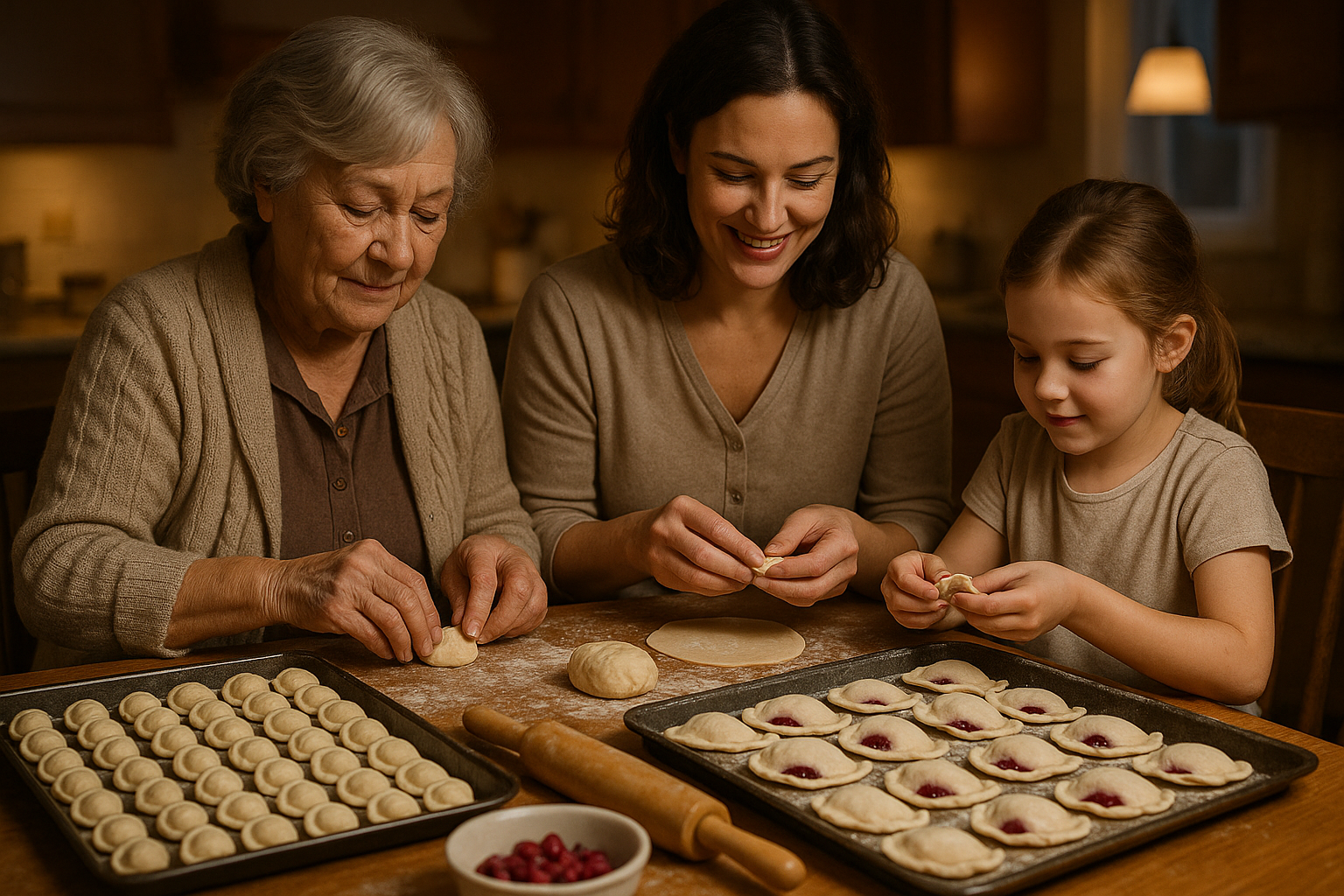
Vareniki have long been associated with celebrations, harvest festivals, and family gatherings. They are often made in large batches, with multiple generations of women working together at the kitchen table, chatting and laughing as they pinch dough and prepare fillings. In Ukrainian folklore, vareniki symbolize abundance and comfort; some even appear in folk songs and poems as symbols of national pride.
Pelmeni vs. Vareniki: Key Differences
While they may look alike, pelmeni and vareniki differ in several important ways:
Feature Pelmeni Vareniki
Origin Siberia, Russia Ukraine
Size Small Larger
Dough Thin Thicker
Filling Always raw meat (beef, pork, lamb, game) Wide variety: potatoes, cheese, mushrooms, fruit, etc.
Cooking method Boiled (sometimes fried after) Boiled (sometimes baked or steamed)
Serving style With sour cream, butter, vinegar, or broth. With sour cream, butter, fried onions, or sugar (for sweet types)
Symbolism Practical, survival food Festive, celebratory food
How They Are Made
Pelmeni
Dough: Simple flour, water, eggs, and salt. Rolled thin.
Filling: Raw ground meat mixed with onions, salt, and pepper.
Assembly: Dough circles are filled with a small spoonful of meat, then folded into half-moons and pinched into ear-shaped dumplings.
Cooking: Boiled in salted water or broth until they float. Sometimes fried in butter after boiling for crispiness.
Vareniki
Dough: Slightly thicker, sometimes made with milk or kefir for softness.
Filling: Mashed potatoes, cheese, mushrooms, cherries, or sweet blends.
Assembly: Larger circles of dough folded over the filling, sealed in a half-moon shape.
Cooking: Boiled until they rise, sometimes finished with fried onions, butter, or sugar.
Cultural Symbolism
Pelmeni represent practicality, endurance, and survival. They are associated with Siberia’s cold, vast landscapes, hunters, and the ability to store food for months. They are more often an everyday meal, quick and sustaining.
Vareniki represent abundance, tradition, and festivity. They are tied to holidays, weddings, and family gatherings. Sweet varieties make them versatile, crossing the line from main dish to dessert.
Regional Variations
In Siberia, pelmeni fillings may include game meat like venison or elk.
In Central Russia, store-bought pelmeni have become ubiquitous, eaten by students and workers as quick meals.
In Ukraine, vareniki with cherries are especially beloved during summer.
In Poland, the close cousin of vareniki is pierogi, often stuffed with potatoes and cheese.
In Belarus, potato-filled dumplings resemble vareniki but with local twists.
Vocabulary for Food Lovers
Пельмени (pel’meni) – meat dumplings
Вареники (vareniki) – dumplings with varied fillings
Тесто (testo) – dough
Фарш (farsh) – ground meat
Творог (tvorog) – cottage cheese
Вишня (vishnya) – cherry
Сметана (smetana) – sour cream
Eating Rituals
Pelmeni are often eaten late at night, especially among students, since frozen pelmeni are quick to cook. They are associated with practicality and hunger relief. Vareniki, on the other hand, are associated with leisure, holidays, and homemade abundance. They are prepared slowly, with care, and savored with family.
Which One Wins?
There is no clear winner in the pelmeni vs. vareniki debate. Each dumpling represents something distinct: pelmeni, the rugged Siberian tradition of survival and sustenance; vareniki, the festive Ukrainian tradition of variety and abundance. Together, they tell the story of how food reflects history, geography, and identity across the Slavic world.
FAQs
Q: Are pelmeni and vareniki the same as pierogi?
Not exactly. Pierogi are closer to vareniki, with varied fillings, but pelmeni are unique for their meat-only filling and Siberian origins.
Q: Can pelmeni be sweet?
Traditionally, no. Pelmeni are always savory and meat-based.
Q: What sauces are used with these dumplings?
Sour cream is the classic choice, but pelmeni may also be eaten with vinegar or broth, while vareniki may include fried onions, butter, or sugar (for sweet versions).
Q: Which are easier to make at home?
Vareniki are simpler since the filling is pre-cooked or raw vegetables/fruits. Pelmeni require raw meat and precise sealing.
Q: Can I buy pelmeni and vareniki frozen?
Yes. In Russia and abroad, both are available in supermarkets, though many insist homemade is far superior.
Q: Which dumpling is healthier?
It depends on the filling. Vareniki with potatoes or fruit can be lighter; pelmeni with fatty meats are more calorie-dense.
Q: Do Russians eat vareniki and pelmeni together?
Not usually. They are distinct dishes with separate cultural contexts.
Conclusion: Dumplings as Cultural Identity
Pelmeni and vareniki may look like cousins, but they embody very different culinary traditions. One is Siberia’s survival food, the other Ukraine’s celebratory dish. Both, however, show how dumplings in Russia and neighboring countries are not just about eating—they are about memory, belonging, and the ways families connect across generations.
At Polyglottist Language Academy, we know that food and language are deeply connected. If you want to go beyond menus and recipes and truly connect with Russian culture, we invite you to sign up for our Russian classes today.