
Introduction
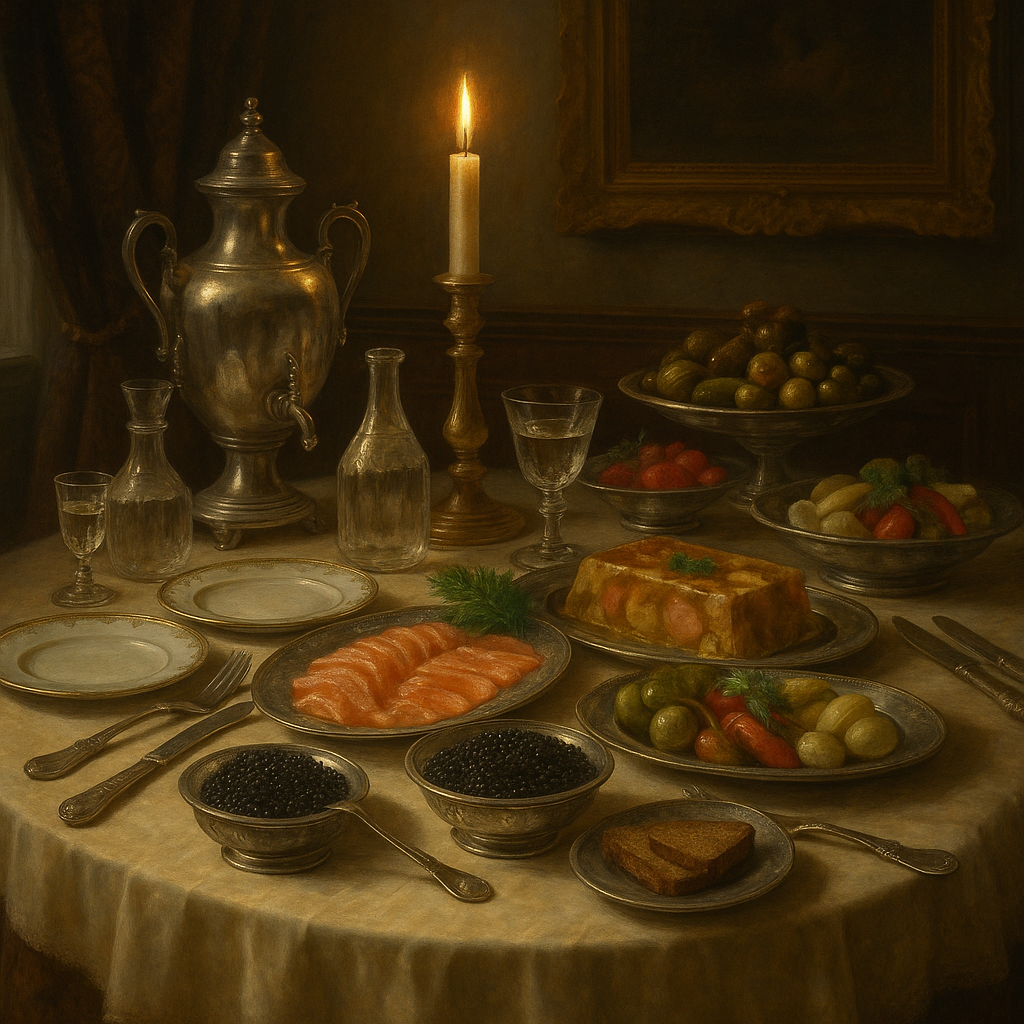
There are few traditions that reveal the heart of Russian culture and history more vividly than the zakuski table, that grand spread of appetizers which, in the 19th century, became both a culinary art form and a social ritual, shimmering with caviar, gleaming aspics, delicate smoked fish, and an abundance of pickled vegetables—all served in an atmosphere of aristocratic indulgence where food was not simply nourishment but a stage for prestige, hospitality, and identity.
In Russian aristocratic life of the 1800s, meals were not hurried affairs but carefully orchestrated events that reflected both the grandeur of the host and the nation’s complex cultural identity, balancing Western European influences with uniquely Slavic traditions. The zakuski table stood at the intersection of these worlds: inspired by the French hors d’oeuvres and German cold buffets, yet unmistakably Russian in scale, flavors, and spirit. It was more than an appetizer course—it was a proclamation of abundance, an overture to the feast, and, often, a mirror of the empire’s wealth and its sprawling geography.
To enter a 19th-century Russian aristocrat’s dining room at the height of the zakuski ritual was to step into a scene of gleaming silver, crystal decanters filled with vodka and bitters, glittering bowls of black caviar, towering dishes of aspic studded with meats and vegetables, and an astonishing variety of pickled, smoked, and marinated offerings. Guests would linger here, sampling delicacies and toasting with vodka, before ever moving on to the hot dishes of the main feast. It was the social hub of the meal, a place of introductions, conversation, and ritual toasts, embodying the Russian art of hospitality.
This article will take you deep into the world of 19th-century zakuski: the foods themselves, the social meaning of the table, the cultural and literary references that immortalized it, and the lasting influence this tradition has had on Russian dining. Along the way, we will meet the caviar merchants, the French-trained chefs, and the noble hosts who made zakuski central to Russian identity, and we’ll uncover why this ritual is still alive in modern Russia—though transformed for new times.
The Origins and Meaning of Zakuski
What Does Zakuski Mean?
The word zakuski (закуски) literally translates to “things to bite after,” a reference to small dishes meant to accompany strong drinks like vodka. But in 19th-century Russia, the meaning expanded far beyond this modest definition. Zakuski came to refer to a lavish spread of appetizers, often the most spectacular part of a noble banquet.
European Influences, Russian Expansion
In the 18th and early 19th centuries, Russian aristocrats were deeply influenced by European dining traditions, particularly French cuisine. Many noble households employed French chefs, and menus were often written in French. Yet, the Russian love of variety, abundance, and ritual drinking gave zakuski its distinctive character. Unlike the restrained hors d’oeuvres, the Russian zakuski table was a riot of choices.
Social Rituals Around the Table
Zakuski was not just about eating; it was about lingering, conversing, and toasting. Before the main courses began, guests gathered around the zakuski table with vodka, wine, or liqueurs. Toasts were made to the health of the host, to friendship, to Russia itself. Conversation flowed easily in the informal atmosphere, which contrasted with the more structured main courses to come.
The Foods of the Zakuski Table
Caviar: The Crown Jewel
Black caviar from the sturgeon of the Caspian and Volga rivers was the most prized offering of the zakuski table. Served in crystal bowls or silver dishes, it symbolized luxury and abundance. In aristocratic circles, it was eaten with blini (thin pancakes), butter, or simply by the spoonful, often accompanied by chilled vodka.
Aspic (Kholodets): Culinary Showpiece
Aspic, or kholodets, was another star of the zakuski spread. Made by boiling meat (often veal, poultry, or fish) to extract natural gelatin, then cooling it into a shimmering mold, aspic was as much about appearance as taste. Elaborate versions included vegetables, eggs, or seafood suspended like jewels in the transparent jelly. To the 19th-century Russian elite, aspic was both a sign of refinement and a culinary art form.
Smoked and Pickled Fish
Herring, sturgeon, salmon, and trout were common fixtures, often smoked, salted, or pickled. These hearty flavors paired perfectly with vodka, creating the salty, savory bite needed to balance strong drink. Fish dishes also underscored Russia’s connection to its rivers and seas, celebrating the empire’s natural abundance.
Cold Meats and Game
The zakuski table often featured cold cuts of roasted meats, tongue, ham, or game like venison, boar, or partridge. In aristocratic households, hunting was both a pastime and a marker of status, and serving game at zakuski was a way of showcasing wealth and prowess.
Pickled Vegetables and Mushrooms
Pickling was a quintessential Russian method of preserving food for the long winter. On the zakuski table, one would find jars of cucumbers, tomatoes, cabbage, and wild mushrooms, their tangy bite cutting through the richness of meats and fish. These dishes added color and variety while grounding the table in local tradition.
Salads and Garnishes
While French-style salads, like salade russe (later known as Olivier salad), were introduced in the 19th century, simpler vegetable and potato salads also appeared. Garnishes of fresh herbs, radishes, and onions made the table as visually appealing as it was flavorful.
Vodka and the Zakuski Ritual
No discussion of zakuski is complete without vodka. In the 19th century, vodka was not simply a beverage but a ritual element of hospitality. To greet a guest with bread, salt, and vodka was to honor them. At the zakuski table, vodka was poured in small glasses and consumed in frequent toasts, always accompanied by a bite of zakuska.
Vodka drinking was highly ritualized: one did not sip but drank in a single swallow, followed by immediate eating. The zakuski dishes provided the essential “chaser,” softening the burn of the spirit. This pairing of food and drink created a rhythm of celebration that could last for hours.
Zakuski as a Social and Cultural Symbol
Hospitality and Prestige
For the Russian nobility, the zakuski table was a way to display wealth and generosity. To present a lavish spread was to show respect for guests and to assert one’s social standing. The more varied and abundant the zakuski, the higher the prestige of the host.
Literary References
Writers from Pushkin to Tolstoy referenced zakuski in their works, often as symbols of Russian hospitality and excess. In War and Peace, Tolstoy’s descriptions of aristocratic dining capture the atmosphere of abundance and ritual that characterized zakuski. Dostoevsky, too, often used scenes of food and drink to reveal social dynamics and character psychology.
The Intersection of Cultures
Zakuski symbolized Russia’s dual identity as both European and distinctly Slavic. French techniques might shape the dishes, but the spirit of abundance, the love of pickles, vodka, and ritual drinking marked the table as unmistakably Russian.
The Decline and Transformation of the Aristocratic Zakuski
The grandeur of 19th-century aristocratic zakuski declined after the Russian Revolution of 1917, when the nobility lost its estates and lavish lifestyles. Yet the tradition never disappeared. Zakuski adapted to Soviet life, becoming simpler but no less essential at communal gatherings, New Year’s feasts, and family celebrations. Even today, modern Russian tables often begin with zakuski—though now featuring salads, cured meats, and store-bought pickles alongside traditional favorites.
FAQs about Zakuski
Q: What is the difference between zakuski and hors d’oeuvres?
A: While both are appetizers, zakuski are far more abundant and varied, often presented as a full buffet spread. Hors d’oeuvres are typically smaller and more refined.
Q: Was caviar common for all Russians in the 19th century?
A: No. Caviar was a luxury item reserved for the aristocracy and wealthy merchants. Ordinary Russians rarely had access to it.
Q: How was aspic made in the 19th century?
A: By boiling meats or fish for long periods to release natural gelatin, then cooling the liquid in molds with added meats, vegetables, or eggs for decoration.
Q: Did all zakuski include vodka?
A: Vodka was central to the tradition, though wine and liqueurs were also served. However, the ritual of vodka followed by a bite of zakuska was quintessential.
Q: Are zakuski still served in Russia today?
A: Yes, though in simpler, more modern forms. Salads like Olivier and pickled vegetables remain staples of Russian festive tables.
Q: Was zakuski only for aristocrats?
A: In the 19th century, the lavish aristocratic version was unique to the elite, but more modest forms of zakuski existed in merchant and peasant traditions.
Q: What role did French chefs play in zakuski?
A: Many aristocratic households employed French chefs, who introduced refined techniques and dishes, blending them with Russian traditions.
Q: Why was variety so important in zakuski?
A: Variety signaled abundance, wealth, and hospitality. A wide spread also allowed for endless combinations with vodka toasts.
Conclusion: Zakuski as a Window into Russian Culture
Zakuski in 19th-century Russia was more than food—it was ritual, art, and a reflection of a society that valued abundance, hospitality, and ceremony. The caviar shimmering in crystal, the aspic glistening like glass, the vodka poured into cut-glass tumblers, and the endless toasts that bound hosts and guests together—all of these elements reveal the Russian love of life, celebration, and community.
Though the aristocratic grandeur of the zakuski table has faded into history, its essence remains alive in modern Russian homes, where no celebration begins without small plates, shared laughter, and the rhythm of toasts. To study zakuski is to study Russia itself: its tastes, its history, its identity.
At Polyglottist Language Academy, we know that learning a language is also about tasting, hearing, and living the culture it expresses. If the zakuski table intrigues you, imagine how much richer it becomes when you can understand the Russian toasts, read Tolstoy’s dining scenes in the original, or share in the humor and warmth of Russian hospitality. We invite you to sign up for our Russian classes today and experience not just the words, but the world behind them.
And if you enjoyed this deep dive into 19th-century zakuski, check out our other articles on Russian culture, food, and literature: