
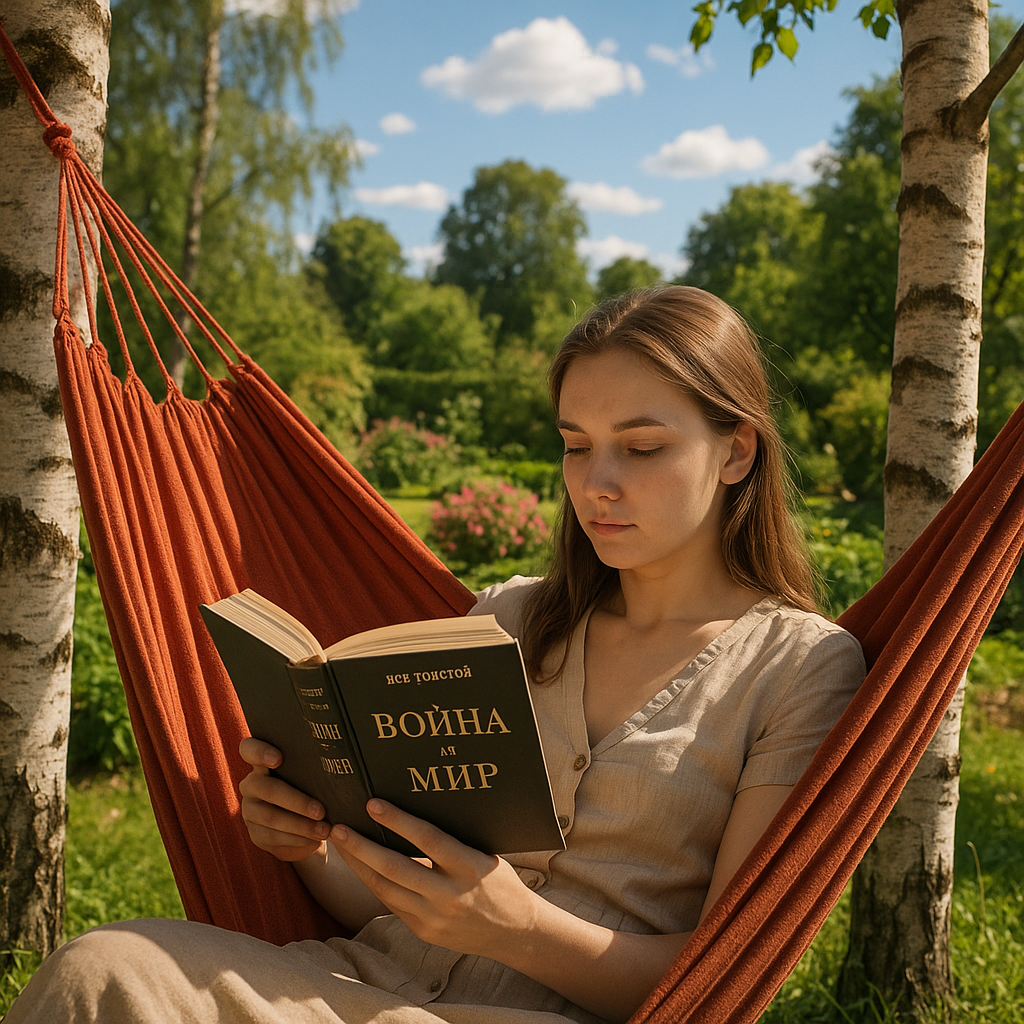
Why the Author of War and Peace Was Russia’s Most Dangerous Man
Introduction: More Than a Bearded Novelist
When most people hear the name Leo Tolstoy, they think of the grand novels—War and Peace, Anna Karenina, maybe The Death of Ivan Ilyich—and picture an aging nobleman with a long white beard, scribbling away on a country estate. They know him as a literary genius, a master of character and moral philosophy, and perhaps one of the greatest novelists to ever live. But the man behind those monumental books was far more radical than most readers realize. Leo Tolstoy wasn’t just a writer—he was a revolutionary thinker whose spiritual transformation, political views, and moral choices made him one of the most subversive voices in 19th-century Russia.
By the end of his life, Tolstoy had become a committed Christian anarchist who rejected state authority, refused to pay taxes, denounced organized religion, and preached a brand of nonviolent resistance that would later influence figures like Mahatma Gandhi and Martin Luther King Jr. He gave up his aristocratic privileges, wore peasant clothing, and tried to live according to his understanding of the Sermon on the Mount—literally. He renounced wealth, the military, and the Orthodox Church. He published incendiary essays calling for the abolition of government, private property, and institutionalized religion. He was eventually excommunicated by the Russian Orthodox Church and monitored by the secret police.
In short, Leo Tolstoy was dangerous—not because he advocated violence, but because he preached such a radical morality that governments and churches feared what would happen if people actually listened.
In this article, we’ll explore the real Leo Tolstoy—the anarchist, the pacifist, the spiritual rebel. We’ll look at how his beliefs developed, what they cost him, and why his legacy as a thinker may be just as important as his legacy as a novelist. If you thought Tolstoy was simply the author of long books about Russian aristocrats, prepare to meet the man who tried to dismantle the entire world order from his kitchen table.
1. From Soldier to Spiritual Seeker
Tolstoy was not born a radical. He was born into the Russian nobility in 1828 and inherited a large estate. He lived the typical life of a privileged young man—gambling, womanizing, drinking, and serving as an officer in the Crimean War. In those years, he was restless and ambitious but still firmly embedded in the structures of power and class.
But something changed after the war. Tolstoy began to see through the illusions of society: the cruelty of war, the emptiness of high society, the hollowness of official religion. He traveled Europe, returned disillusioned, and started to write not just fiction, but moral philosophy. His spiritual crisis intensified as he approached middle age.
By his 50s, Tolstoy experienced what he described in A Confession as a “crisis of meaning.” He no longer saw any purpose in his fame, his wealth, or his status. He became obsessed with death, sin, and the teachings of Jesus—not as abstract theology, but as a guide to daily life. He began to radically change how he lived, how he thought, and what he wrote.
2. Tolstoy the Anarchist
Tolstoy’s later writings explicitly rejected all forms of institutional authority. In his view, governments were based on violence, taxation was a form of robbery, and organized religion had betrayed the message of Christ.
In his political essays—The Kingdom of God Is Within You, What Then Must We Do?, On Anarchy—Tolstoy argued that the state had no moral legitimacy. He believed that no one had the right to govern another, and that obedience to unjust laws was itself immoral. He called for a stateless society based on love, mutual aid, and voluntary cooperation.
Tolstoy’s brand of anarchism was spiritual, not violent. He didn’t believe in revolution through force. Instead, he called for nonviolent noncooperation. His influence can be traced directly to Gandhi, who corresponded with Tolstoy and applied his ideas in India’s independence movement.
3. Tolstoy the Pacifist
One of Tolstoy’s most consistent beliefs was the absolute rejection of violence. He interpreted Jesus’ command to “resist not evil” as a radical call for pacifism—not just abstaining from war, but refusing to kill, harm, or retaliate in any form.
He condemned military service, refused to support wars, and encouraged others to become conscientious objectors. He even urged Russian soldiers to lay down their weapons and embrace the teachings of love and forgiveness.
This stance made him wildly unpopular with the state and church alike. But for Tolstoy, pacifism was not a political position—it was a spiritual necessity. To kill, in any context, was to betray the divine law of love.
4. Tolstoy the Critic of Religion
Though deeply spiritual, Tolstoy was fiercely critical of institutionalized religion. He believed that the Russian Orthodox Church (and most other Christian denominations) had distorted Christ’s message into a tool of state power and social control.
He rejected the sacraments, the priesthood, and the divinity of Jesus—not out of irreverence, but out of conviction that religion should serve truth, not tradition. He saw the true essence of Christianity as love, humility, and nonviolence.
In 1901, the Russian Orthodox Church excommunicated him for heresy. But Tolstoy welcomed the excommunication, viewing it as proof that he had stayed true to the gospel.
5. A Life of Renunciation
Tolstoy didn’t just preach simplicity—he tried to live it. He gave up the rights to many of his published works, refused royalties, wore peasant clothing, learned to plow fields, and tried to do physical labor alongside the serfs on his estate. He gave away money, refused to eat meat, and criticized property ownership.
This life of renunciation caused deep conflict within his own family—especially with his wife, Sofia Tolstaya, who struggled with the consequences of his decisions. Their relationship became increasingly strained, culminating in Tolstoy’s dramatic decision to leave home at age 82, seeking peace in his final days.
He died shortly after, at a rural train station, exhausted and ill—but spiritually unburdened.
6. The Tolstoyan Movement
After his death, Tolstoy’s ideas gave birth to a movement of followers known as Tolstoyans. These communities sprang up in Russia and beyond, attempting to live according to his ideals: simplicity, vegetarianism, pacifism, shared labor, and communal life.
The Russian government suppressed them, but the ideas didn’t die. Gandhi credited Tolstoy’s The Kingdom of God Is Within You as a key inspiration for his philosophy of nonviolent resistance. Martin Luther King Jr. also acknowledged Tolstoy’s role in shaping his own views on civil disobedience.
In this way, Tolstoy’s spiritual rebellion transcended borders and continued to influence global movements for justice and peace.
7. What About War and Peace and Anna Karenina?
It’s important to remember that Tolstoy the radical did not exist separately from Tolstoy the novelist. His later beliefs were rooted in the same moral intuition and emotional sensitivity that shaped his fiction.
War and Peace explores the emptiness of power and the unpredictability of history. Anna Karenina lays bare the contradictions of social conventions and personal happiness. The Death of Ivan Ilyich is one of the most powerful meditations on mortality in world literature.
Even before his spiritual turn, Tolstoy was already asking dangerous questions. His fiction helped him formulate the ethical clarity that would later define his life—and made his nonfiction even more powerful.
8. Why Tolstoy Still Matters
Tolstoy's beliefs may seem extreme to modern readers. Few of us are ready to give up all property or walk away from modern life. But his core message remains deeply relevant: the idea that personal transformation is the root of social change. That love, truth, and nonviolence are not abstract ideals but urgent moral imperatives.
In a world still plagued by war, inequality, and corruption, Tolstoy challenges us to ask uncomfortable questions. What are we complicit in? What violence do we tolerate? What lies do we tell ourselves? His life was not perfect—but it was a sincere attempt to align belief with action.
In that sense, Tolstoy is not just a historical figure. He’s a mirror.
FAQs: Leo Tolstoy’s Radical Legacy
Was Tolstoy really an anarchist?
Yes—he believed that all governments are based on coercion and violence and that they should be replaced by voluntary, loving cooperation among individuals.
Did he support the Russian Revolution?
No. Although he criticized the tsarist regime, he also rejected Marxism and violent revolution. He believed true change must come through inner moral transformation.
Why was he excommunicated?
The Russian Orthodox Church expelled him in 1901 for his unorthodox beliefs, including rejecting the divinity of Christ, the sacraments, and church authority.
What is Tolstoy’s most important nonfiction work?
The Kingdom of God Is Within You is widely considered his most influential work of political and spiritual philosophy. It shaped the thought of Gandhi and many others.
Are there modern Tolstoyans?
Yes. While not a major movement today, there are still individuals and communities inspired by his teachings on nonviolence, simplicity, and spiritual integrity.
Want to Read Tolstoy in the Original?
At Polyglottist Language Academy, we offer online Russian classes for learners who want to experience the depth of Tolstoy’s words without translation. Whether you want to read War and Peace as he wrote it—or dive into his radical essays and letters—we’ll help you get there.
Sign up today and connect with the language, ideas, and soul of one of the most revolutionary minds in literary history.
👉 Join our online and in person Russian classes now
Want to explore more about Russian language and culture?
Check out our full collection of articles on the Polyglottist Language Academy Blog, where we dive into everything from why fluent Russian isn’t fast Russian to how to survive a Russian toast and what it’s like to be the only foreigner in a Russian dacha community. Whether you're curious about grammar tips, cultural faux pas, or how Russians navigate public space, our blog offers fresh, engaging insights to support your learning journey.