
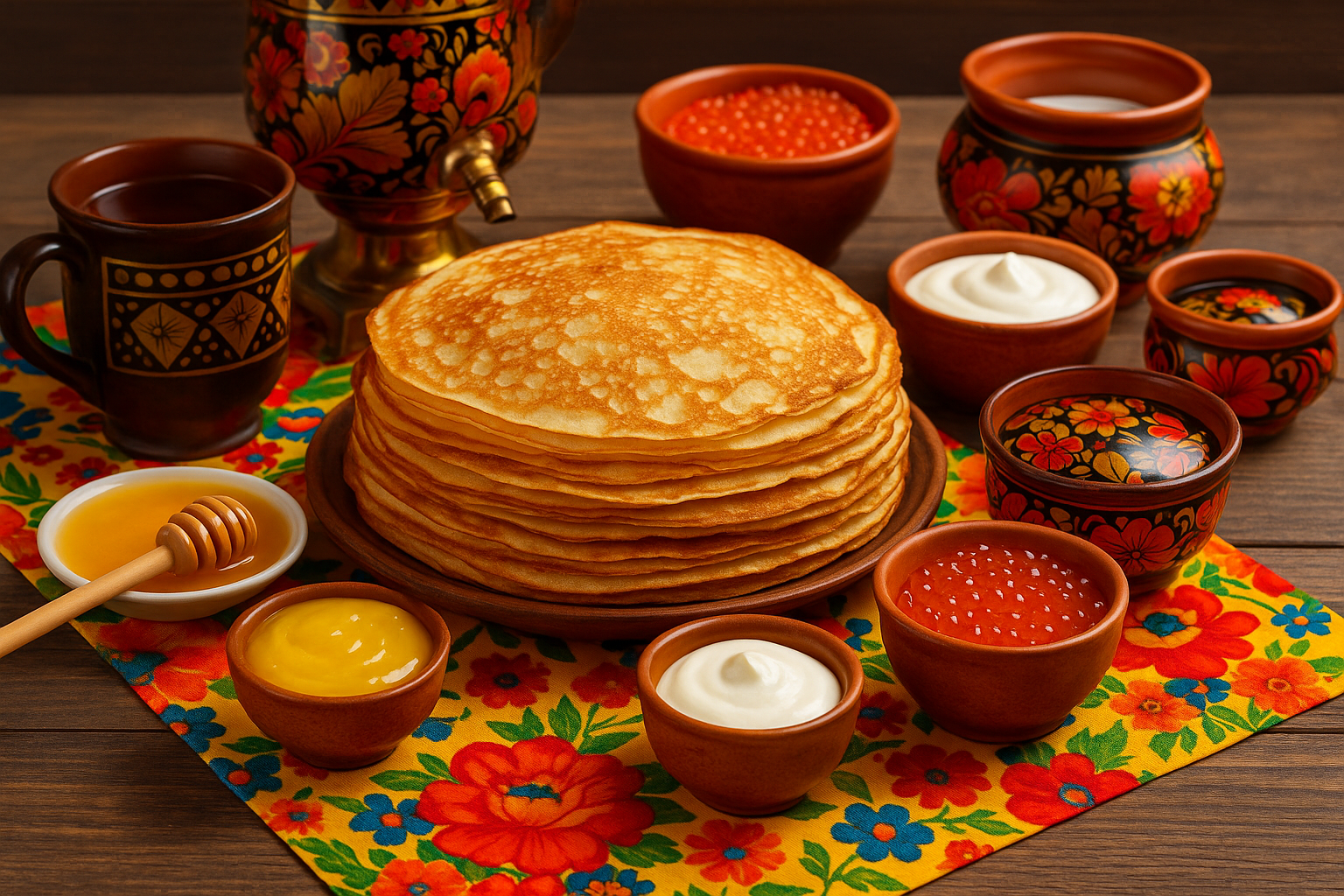
Introduction
Few dishes embody the rhythm of Russian life as completely as the humble blin, whose presence stretches from the ancient pagan rituals that celebrated the return of the sun after a long winter to the bustling brunch tables of today’s cosmopolitan cities, where it appears alongside cappuccinos, smoked salmon, and artisanal jams. With its golden, sun-like shape, the blin has always been more than just food—it is a symbol of continuity, community, and adaptation, carrying within it centuries of history, ritual, and reinvention. What makes blini so fascinating is not only their delicious taste or versatility, but also the way they have remained relevant across radically different eras: in medieval villages where peasants cooked them over wood fires, in the glittering halls of 19th-century aristocrats who topped them with caviar, and now in modern kitchens worldwide where health-conscious cooks adapt them with gluten-free flours or vegan toppings.
The story of blini is, in many ways, the story of Russia itself. Their round shape represented the sun in pre-Christian times, and during Maslenitsa—Russia’s famous “pancake week”—they were eaten in such quantities that the celebration became inseparable from their flavor. Later, Orthodox Christian tradition infused Maslenitsa with new meanings, making it a week of feasting before the solemnity of Lent, yet the blin remained at the center of the ritual table. In Soviet times, blini survived political upheaval and food shortages, adapting to new realities without ever losing their symbolic status. And today, as Russian cuisine enters the global stage, blini are experiencing a renaissance, appearing in restaurants from Paris to Portland, where they are reimagined as both gourmet delicacies and comforting staples.
This article will take you on a 3,000-word journey through the seasons of blini: from their ritual significance in Maslenitsa to their presence in the kitchens of grandmothers, from their starring role in Russian literature to their modern reinvention as part of global brunch culture. Along the way, you’ll discover why blini are far more than pancakes, how their preparation and serving carry layers of cultural meaning, and how learning about them can deepen your understanding of Russian language, history, and identity.
The Origins of Blini
Pagan Roots and Sun Worship
Blini predate Christianity in Russia, tracing their origins back to pagan Slavic rituals that honored the sun. Their round, golden form symbolized warmth, fertility, and the cyclical nature of life. Eating blini during festivals was an act of calling back the sun after harsh winters.
The Arrival of Christianity
When Christianity spread through Kievan Rus’, blini rituals did not disappear; they were simply reinterpreted. Maslenitsa became a bridge between pagan tradition and Christian Lent, and blini remained at its center—now carrying dual meanings of abundance and preparation for fasting.
Blini at Maslenitsa: Russia’s Pancake Week
Maslenitsa, often called “butter week,” is one of the most colorful festivals in Russia, celebrated in the last week before Lent. It is a week-long feast where blini are cooked, served, and shared in endless variations.
Monday: The beginning of festivities, where families prepare dough and plan gatherings.
Tuesday: Visiting friends and relatives, always bringing blini along.
Wednesday (Gourmand’s Day): Tables overflow with blini, often topped with rich fillings like sour cream, butter, and caviar.
Thursday: Outdoor games, sledding, and feasts in public squares, all centered on blini.
Sunday (Forgiveness Sunday): The closing of Maslenitsa, where people eat blini and ask forgiveness from one another before entering Lent.
Blini during Maslenitsa symbolize generosity, hospitality, and the communal joy of sharing food.
Blini in Russian Literature and Culture
Russian writers often used blini as cultural shorthand for tradition, abundance, or family gatherings. Gogol described them with loving detail in Dead Souls, while Chekhov and Tolstoy mentioned them as part of festive scenes. To speak of blini in Russian literature is to evoke the warmth of the hearth, the flavor of celebration, and the spirit of the people.
Even today, proverbs like “Blins are not made without lumps” remind Russians that imperfection is part of life. Such sayings show how blini are deeply embedded in everyday thought and language.
The Evolution of Blini Through the Seasons
Winter: Maslenitsa and Festivity
In winter, blini are inseparable from Maslenitsa. They are served with heavy toppings—caviar, butter, sour cream—to provide warmth and energy during the cold season.
Spring: Renewal and Lent
After Maslenitsa, Russians enter Lent, when dairy and eggs are restricted. But in early spring, the memory of blini lingers, and lighter versions with honey or berry preserves are enjoyed.
Summer: Abundance and Fresh Toppings
Summer brings an abundance of fresh berries, herbs, and vegetables. Blini are rolled with strawberries, blueberries, or fresh cottage cheese, making them refreshing and light.
Autumn: Hearty Harvest
In autumn, blini reflect the harvest season. They are filled with mushrooms, potatoes, and buckwheat—a nod to rustic traditions that keep families nourished as winter approaches.
Blini in the 19th and 20th Centuries
Aristocratic Indulgence
For Russia’s aristocracy, blini became a symbol of opulence. Served with black caviar, salmon, and champagne, they appeared at banquets and balls as a delicacy that bridged peasant food with elite taste.
Soviet Reinvention
In the Soviet era, blini adapted to scarcity. They were made with whatever ingredients were available, often with simple fillings like cabbage or potatoes. Still, blini remained a cultural anchor, showing resilience amid hardship.
Blini on Today’s Brunch Tables
Today, blini have entered the global culinary scene. In Portland, New York, Paris, and London, they appear on brunch menus as a cross between traditional Russian pancakes and modern gourmet fare. They are topped with avocado, vegan spreads, artisanal smoked fish, or even sweet dessert sauces.
Blini have also become part of culinary fusion, inspiring creative dishes in upscale restaurants. Their versatility allows chefs to adapt them to nearly any flavor profile.
How to Make Traditional Russian Blini
Ingredients: flour, eggs, milk, water, butter, salt, sugar, and yeast (optional).
Preparation: Mix batter to a thin consistency—blini are thinner than American pancakes, closer to French crêpes.
Cooking: Pour a thin layer of batter onto a hot, buttered skillet, spreading evenly.
Serving: Traditionally with sour cream, butter, or jam; on special occasions with caviar or smoked salmon.
Blini are less about exact recipes and more about family traditions—each household may have its own way of preparing them.
Blini as a Cultural Experience
For Russians, blini are not just food but also a cultural practice:
Hospitality: Offering blini to guests symbolizes warmth and generosity.
Celebration: From birthdays to weddings, blini mark special moments.
Continuity: Families pass down blini recipes through generations.
For language learners, experiencing blini firsthand offers insight into Russian idioms, traditions, and ways of thinking.
FAQs
Q: Are blini the same as crêpes?
A: Blini are similar to crêpes but often slightly thicker and more rustic. They also carry cultural and symbolic meaning in Russia.
Q: What is the difference between blini and oladyi?
A: Blini are thin and large, while oladyi are small, thick, and fluffy. Both are staples of Russian cooking.
Q: Are blini only eaten at Maslenitsa?
A: No. While they are central to Maslenitsa, blini are eaten year-round in Russia, both for everyday meals and special occasions.
Q: Can blini be made gluten-free or vegan?
A: Yes. Many modern recipes adapt blini with buckwheat, oat, or gluten-free flours, and dairy-free milks.
Q: What drinks pair well with blini?
A: Traditionally, tea, kvass, or vodka. Modern pairings include coffee, sparkling wine, or kombucha.
Q: Do Russians still make blini at home today?
A: Absolutely. Blini remain a family tradition, with both classic and modern adaptations popular across generations.
Q: Are blini always savory?
A: No. Blini can be sweet (with honey, jam, berries) or savory (with mushrooms, meat, caviar, fish).
Q: How long have blini been around?
A: Historical evidence suggests blini have existed for over a thousand years, evolving from pagan rituals into modern cuisine.
Conclusion & Call to Action
Blini are more than just pancakes. They are living symbols of Russian culture—connecting ancient sun worship rituals with Orthodox traditions, bridging aristocratic luxury and peasant resilience, and now finding new life on global brunch tables. Through every season, blini reflect the adaptability and continuity of Russian identity, reminding us that food is one of the most powerful carriers of cultural meaning.
At Polyglottist Language Academy, we believe that learning a language means diving into its traditions, flavors, and ways of life. Our Russian classes don’t just teach grammar and vocabulary; they open the door to cultural experiences like blini, Maslenitsa, and Russian hospitality. Whether you’re a beginner or an advanced learner, studying Russian with us will give you both language skills and cultural insights that enrich your life and career.
👉 Ready to take the next step? Enroll in Russian classes at Polyglottist Language Academy today and discover how language and culture come alive together.
Explore More Articles from Our Blog
If you enjoyed this deep dive into Russian food culture, check out these related articles: