
A Taste of Russia: Street Foods and What to Say When Ordering
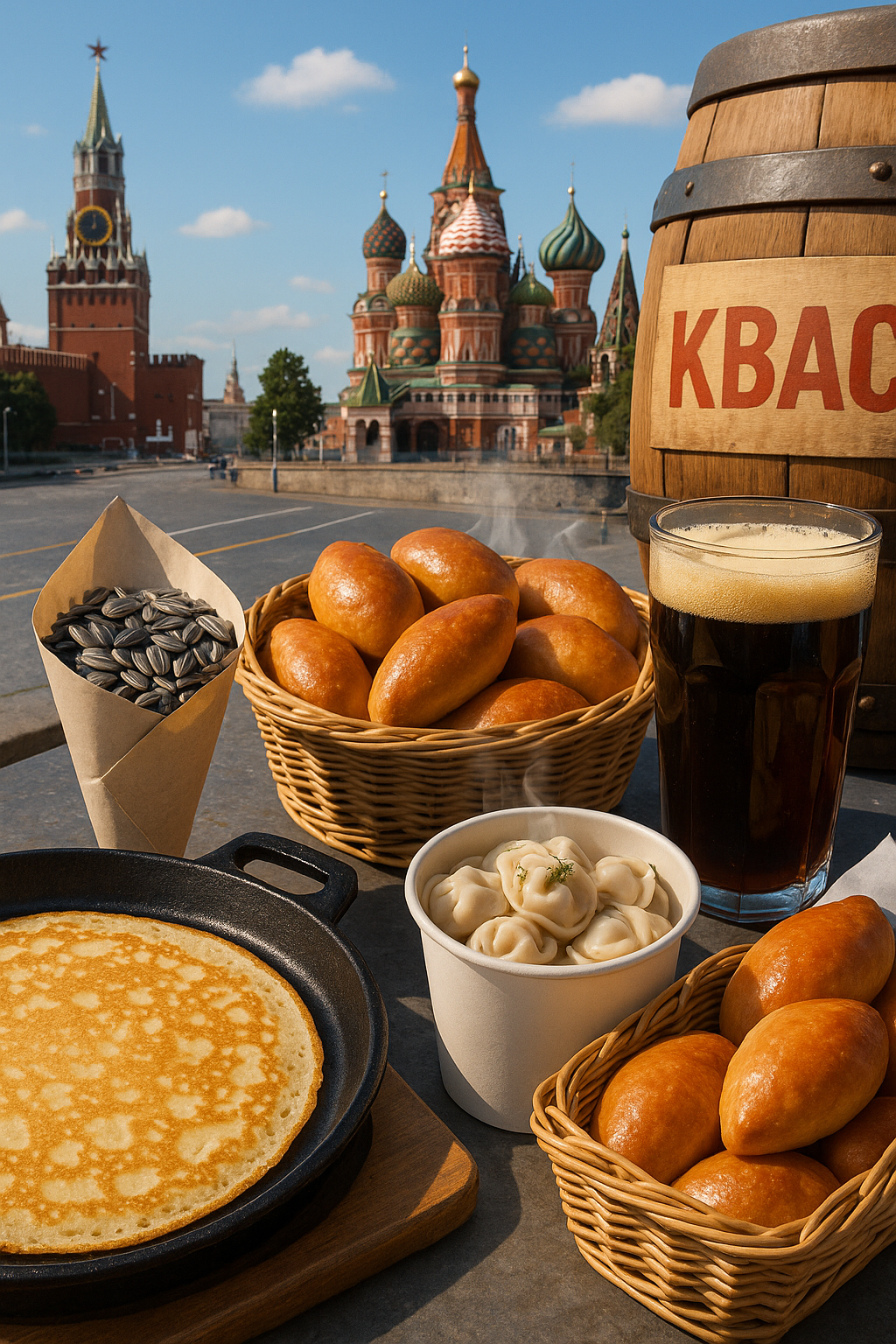
Food is one of the most direct ways into the heart of a culture, and nowhere is this truer than in Russia. While Russian cuisine is often associated with heavy winter meals, steaming bowls of borscht, or lavish holiday tables, everyday food culture thrives on the streets. Walk through a Moscow underpass, along Nevsky Prospekt in St. Petersburg, or across a small town square, and you’ll discover a surprisingly diverse world of Russian street food: savory pastries, quick grilled skewers, steaming drinks, and nostalgic Soviet-era snacks that continue to feed generations.
Street food in Russia is more than just a quick bite—it’s a reflection of history, practicality, and the Russian spirit of improvisation. During the Soviet years, street vendors offered simple staples like pirozhki (stuffed buns) or blini(pancakes) from kiosks, providing affordable sustenance for workers and students. Today, you’ll find both tradition and innovation: kiosks selling shawarma or chebureki, hipster coffee carts tucked in courtyards, and even Soviet-style ice cream stalls beloved by young and old alike. For the traveler or student of Russian, street food is not just about taste—it’s a living classroom where language meets culture.
Ordering from a street vendor is also a fascinating language experience. Unlike in restaurants where you can rely on menus and slower interactions, street food transactions are fast-paced, casual, and full of colloquial expressions. Vendors often speak quickly, use slang, or expect you to know the basics of what you want. If you’re learning Russian, this is where your studies come alive: asking for a snack, understanding the reply, and perhaps even engaging in a bit of small talk.
In this article, we’ll take a journey through the most popular Russian street foods, explain their cultural significance, and most importantly, give you the phrases you need to order them with confidence. Whether you’re wandering the streets of Moscow or simply curious about Russian culinary culture from afar, this guide will give you both the flavors and the words to make the experience authentic.
1. Blini (Блины) – Russia’s Favorite Pancakes
Blini are thin, crepe-like pancakes that have been a staple of Russian cuisine for centuries. They are associated with Maslenitsa (Butter Week), a pre-Lenten festival celebrating the end of winter. On the street, they are sold hot off the griddle, often with fillings.
Fillings: Sour cream (сметана), jam (варенье), honey (мёд), caviar (икра), or savory options like mushrooms and cheese.
How to order:
“Один блин с вареньем, пожалуйста.”
(“One blin with jam, please.”)“Можно два блина с мясом?”
(“Can I have two blini with meat?”)
2. Pirozhki (Пирожки) – Stuffed Buns
Pirozhki are small baked or fried buns stuffed with sweet or savory fillings. They’re one of the most common street snacks.
Popular fillings: Cabbage (капуста), potato (картошка), meat (мясо), rice and egg (рис с яйцом), or sweet fillings like apple (яблоки).
How to order:
“Один пирожок с картошкой.”
(“One pirozhok with potato.”)“Дайте три пирожка с капустой.”
(“Give me three pirozhki with cabbage.”)
3. Chebureki (Чебуреки) – Crispy Meat Pies
Originally from the Crimean Tatar tradition, chebureki are deep-fried turnovers filled with minced meat and onions. On Russian streets, they’re hot, greasy, and beloved by students for their affordability.
How to order:
“Один чебурек, пожалуйста.”
(“One cheburek, please.”)“У вас есть чебуреки с сыром?”
(“Do you have chebureki with cheese?”)
4. Shashlik (Шашлык) – Russian Barbecue
Shashlik refers to skewered meat grilled over coals, similar to kebabs. In summer markets and fairs, the smell of sizzling shashlik fills the air.
How to order:
“Один шашлык из свинины.”
(“One pork shashlik.”)“Сколько стоит порция шашлыка?”
(“How much is a portion of shashlik?”)
5. Pelmeni on the Go (Пельмени)
While pelmeni (dumplings) are usually eaten at home, some street vendors sell them in cups, topped with butter, sour cream, or vinegar. They’re Russia’s comfort food.
How to order:
“Один стакан пельменей со сметаной.”
(“One cup of pelmeni with sour cream.”)
6. Kvass (Квас) – The Traditional Fermented Drink
Kvass is a lightly fermented beverage made from bread, slightly sour, slightly sweet, and refreshing in summer. Kvass barrels on the streets were once ubiquitous in Soviet cities.
How to order:
“Один стакан кваса.”
(“One glass of kvass.”)“Большой или маленький?”
(“Large or small?” – a typical vendor’s question.)
7. Soviet Ice Cream (Мороженое)
Russian ice cream, sold in paper-wrapped bricks or cones, is nostalgic and surprisingly creamy. Even in winter, you’ll see people eating it outdoors.
How to order:
“Одно мороженое в стаканчике.”
(“One ice cream in a cone.”)“Можно два эскимо?”
(“Can I have two eskimo-style ice creams?”)
8. Shawarma (Шаурма/Шаверма)
Though not originally Russian, shawarma (known as шаурма in Moscow and шаверма in St. Petersburg) is now a staple street food. Juicy meat, vegetables, and sauce are wrapped in flatbread.
How to order:
“Одну шаурму с курицей, пожалуйста.”
(“One shawarma with chicken, please.”)“Соус острый или обычный?”
(“Spicy sauce or regular?”)
9. Vatrushka (Ватрушка) – Sweet Cheese Pastry
This pastry has a soft dough with a sweetened farmer’s cheese filling in the middle. A popular sweet snack sold in bakeries and kiosks.
How to order:
“Одну ватрушку с творогом.”
(“One vatrushka with cottage cheese.”)
10. Sunflower Seeds (Семечки)
Chewing sunflower seeds is practically a national pastime, often sold in paper cones by street vendors.
How to order:
“Один пакет семечек, пожалуйста.”
(“One pack of sunflower seeds, please.”)
Cultural Tips for Ordering Street Food
Be quick: Vendors expect short, clear orders.
Use “один/одна/одно”: Always specify how many.
Have small change: Many kiosks won’t break large bills.
Be polite: Adding “пожалуйста” (please) goes a long way.
Listen for follow-ups: Vendors may ask “Соус какой?” (What sauce?) or “Греться будете?” (Do you want it warmed?).
FAQs
1. Is Russian street food safe to eat?
Generally yes, especially in cities. Stick to busy vendors with fresh turnover.
2. What is the cheapest Russian street food?
Pirozhki and chebureki are usually the most affordable.
3. Do I need Russian to order food?
Basic phrases help a lot. Vendors may not speak English, especially in smaller towns.
4. Are there vegetarian options?
Yes—pirozhki with cabbage or potato, blini with jam or cheese, and vatrushki.
5. What drink should I try?
Kvass is the classic Russian street drink, though tea from kiosks is also popular.
6. Can you get street food in winter?
Absolutely. Many vendors operate year-round, and hot snacks are perfect for the cold.
7. Is ice cream really eaten in Russian winter?
Yes—it’s a cultural quirk. Russians love their mороженое even in the snow.
8. What’s the difference between shawarma in Moscow and St. Petersburg?
Only the name—шаурма in Moscow, шаверма in St. Petersburg.
Conclusion: Savoring Russia, One Bite at a Time
Russian street food is a journey through history, culture, and everyday life. From blini that recall ancient festivals to shawarma that reflects modern tastes, the foods you find on Russian streets are as diverse as the country itself. And when you combine food with language—ordering in Russian, chatting with a vendor—you’re not just eating; you’re experiencing the culture authentically.
At Polyglottist Language Academy, we believe learning Russian should be delicious. Our courses don’t just teach grammar—they immerse you in the real contexts of Russian life, from ordering street food to understanding idioms and gestures. Sign up today to start your Russian learning journey, and bring the flavors of Russia into your conversations.
💡 Explore more on our blog:
How Russians Navigate Public Space—And Why Americans Struggle With It
What It’s Like To Be The Only Foreigner In A Russian Dacha Community
The Cultural Importance Of Grandmothers (Babushki) In Russian Society
Russian Weddings, Toasts, And Table Traditions You Didn't Know Existed
What Watching Soviet Cartoons Teaches You About The Russian Mindset