
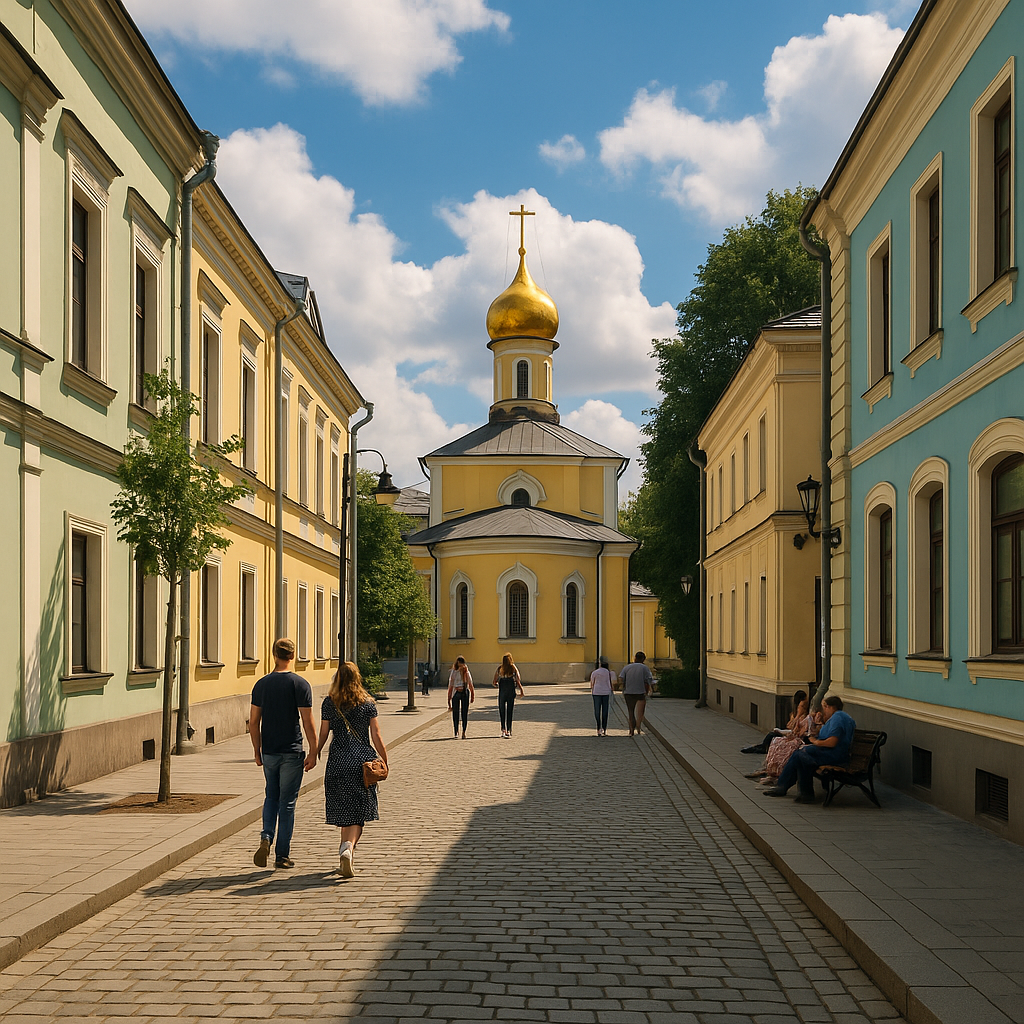
There are cities that impress you at first glance with their grandeur, and then there are cities like Moscow, which dazzle you with iconic landmarks such as the Kremlin, St. Basil’s Cathedral, and the Bolshoi Theatre, but truly capture your heart when you wander into the quiet courtyards, eclectic neighborhoods, and unexpected cultural spaces that make the Russian capital one of the most layered and fascinating metropolises in the world. Travelers who only stop at Red Square may leave with stunning photographs, but those who take the time to venture deeper—into leafy boulevards, bohemian art galleries, tranquil monasteries, and bustling food markets—discover the real essence of Moscow: a city where centuries of history mingle with modern creativity, where old wooden houses stand not far from futuristic skyscrapers, and where every neighborhood tells a different story.
Moscow is not just the political and economic center of Russia—it is also a cultural capital that never stops reinventing itself. While its monumental scale can be overwhelming at first, the city rewards curiosity and patience. Beneath the imposing architecture lies a softer, more intimate Moscow: the courtyards where children play, the neighborhood cafés where friends share blini and tea, and the underground art spaces where young Muscovites push creative boundaries. This is the Moscow most tourists miss, but the one that locals treasure.
In this article, we will journey beyond Red Square to explore both Moscow’s world-famous landmarks and its hidden treasures. You’ll learn not only what to see, but also how to experience the city more like a local—with cultural tips, neighborhood highlights, and useful Russian phrases that can make your trip smoother and more rewarding.
Moscow’s Iconic Landmarks: More Than Just Postcards
The Kremlin
The heart of Moscow and the symbol of Russian statehood, the Kremlin is far more than just a fortress. Inside its walls lie stunning cathedrals, museums, and the official residence of the President. For visitors, it offers a crash course in Russian history and architecture, from medieval icons to imperial treasures.
Travel Tip: Buy tickets online in advance to skip long lines, especially in summer.
Useful Russian Phrase:
Где вход в Кремль? (Gde vhod v Kreml’?) – Where is the entrance to the Kremlin?
St. Basil’s Cathedral
Perhaps Russia’s most recognizable building, St. Basil’s Cathedral with its colorful onion domes is a UNESCO World Heritage site and an architectural masterpiece. Inside, visitors are surprised to find a labyrinth of small chapels rather than one large open space.
Travel Tip: Visit at sunset when the domes glow beautifully against the evening sky.
Useful Russian Phrase:
Сколько стоит билет? (Skol’ko stoit bilet?) – How much is the ticket?
The Bolshoi Theatre
A symbol of Russian performing arts, the Bolshoi Theatre has hosted some of the world’s most famous ballet and opera performances. Even if you don’t attend a show, a guided tour of its interiors is unforgettable.
Travel Tip: Tickets for performances sell out quickly—book weeks or months ahead.
Useful Russian Phrase:
У вас есть билеты на балет? (U vas yest’ bilety na balet?) – Do you have tickets for the ballet?
Neighborhoods That Reveal Moscow’s Soul
Arbat: The Historic Pedestrian Street
The Arbat is a lively pedestrian street filled with street musicians, souvenir shops, and historic architecture. While some see it as touristy, it remains a must-visit for its atmosphere and history.
Hidden Gem: Side streets around Arbat are less crowded and reveal charming cafés and small museums.
Zamoskvorechye: Old Moscow Charm
Across the river from the Kremlin lies Zamoskvorechye, a district of narrow lanes, pastel-colored houses, and old churches. Walking here feels like stepping into 19th-century Moscow.
Hidden Gem: The Tretyakov Gallery, Russia’s premier collection of national art, is located here.
Patriarch’s Ponds: A Literary Landmark
Immortalized by Mikhail Bulgakov’s The Master and Margarita, Patriarch’s Ponds is now a trendy neighborhood with hip cafés and designer boutiques. Yet the central pond and leafy park preserve a quiet, romantic atmosphere.
Hidden Gem: Try local bakeries for Moscow’s best pastries.
Kitay-Gorod: A Blend of Old and New
One of Moscow’s oldest districts, Kitay-Gorod mixes medieval walls, baroque churches, and contemporary bars. It’s perfect for wandering aimlessly and discovering contrasts.
Hidden Gem: Visit hidden courtyards where Soviet mosaics mix with modern street art.
Tverskaya: The City’s Beating Heart
Tverskaya Street is Moscow’s main thoroughfare, filled with shops, theatres, and Soviet-era architecture. It’s busy but gives a sense of the city’s scale and energy.
Hidden Gem: Small side alleys hide excellent Georgian and Uzbek restaurants.
Parks and Green Escapes
Despite its size and traffic, Moscow is one of the greenest capitals in the world.
Gorky Park: A vibrant hub with bike paths, yoga classes, cafés, and open-air concerts.
Kolomenskoye: A former royal estate with wooden churches and wide meadows overlooking the Moscow River.
Tsaritsyno Park: Built for Catherine the Great, this park offers fairy-tale palaces and evening light shows.
VDNKh: A massive Soviet-era exhibition park with fountains, pavilions, and even a space museum.
Useful Russian Phrase:
Где находится парк Горького? (Gde nakhoditsya park Gorkogo?) – Where is Gorky Park?
Moscow’s Art and Culture Beyond the Bolshoi
Garage Museum of Contemporary Art: A hub for modern creativity.
Winzavod Art Center: A former wine factory turned into a contemporary art cluster.
Moscow Metro: Often called “the people’s palace,” each station is a masterpiece of Soviet art and design.
Travel Tip: Buy a Troika card for easy metro access.
Useful Russian Phrase:
Как проехать до станции метро? (Kak proekhat’ do stantsii metro?) – How do I get to the metro station?
Cultural Tips for Travelers
Greetings: A firm handshake is common; kissing on the cheek is reserved for close friends.
Dress Code: Muscovites dress stylishly, especially for theatres and fine dining.
Dining: Always try Russian staples like borscht, pelmeni, and blini, but also sample Moscow’s international scene.
Etiquette: Avoid discussing politics unless you know someone well.
Language: Even basic Russian phrases are appreciated and often lead to friendlier interactions.
Useful Russian Phrases for Moscow
Здравствуйте (Zdravstvuyte) – Hello (formal).
Спасибо (Spasibo) – Thank you.
Пожалуйста (Pozhaluysta) – Please / You’re welcome.
Я не говорю по-русски (Ya ne govoryu po-russki) – I don’t speak Russian.
Вы говорите по-английски? (Vy govorite po-angliyski?) – Do you speak English?
Где туалет? (Gde tualet?) – Where is the bathroom?
Можно счёт, пожалуйста? (Mozhno schyot, pozhaluysta?) – Can I have the check, please?
Сколько это стоит? (Skol’ko eto stoit?) – How much does this cost?
FAQs
Q: How many days do I need to explore Moscow beyond Red Square?
A: At least 4–5 days to see both major landmarks and hidden gems.
Q: Is Moscow safe for tourists?
A: Yes, Moscow is safe, especially in central areas. Like any big city, stay aware of your belongings.
Q: What is the best time to visit?
A: Late spring (May–June) and early autumn (September) for pleasant weather. Winter offers magical snowy scenery but requires warm clothing.
Q: Do I need to know Russian to enjoy Moscow?
A: No, but knowing a few phrases helps. Many signs are now bilingual, and younger Russians often know some English.
Q: Are taxis or ride-sharing apps better?
A: Apps like Yandex.Taxi and Citymobil are more reliable and cheaper than street taxis.
Q: What food should I try in Moscow?
A: Blini, pelmeni, beef stroganoff, pirozhki, and Russian honey cake.
Q: Are museums closed on certain days?
A: Yes, many major museums close on Mondays. Always check in advance.
Conclusion & Call to Action
Moscow is a city of contrasts: monumental yet intimate, historic yet modern, global yet unmistakably Russian. While Red Square and the Kremlin are unmissable, the real beauty of Moscow reveals itself in its neighborhoods, parks, art spaces, and the rhythm of everyday life. To explore Moscow deeply is to understand Russia’s complexity and richness.
At Polyglottist Language Academy, we believe the best way to truly experience a place is through its language. Our Russian classes prepare you not only to navigate Moscow’s streets with confidence but also to connect with its people, culture, and traditions on a deeper level.
👉 Ready to make Moscow come alive for you? Sign up for Russian classes at Polyglottist Language Academy and start your journey today.
Explore More Articles from Our Blog
If you enjoyed this guide, you may also like: