
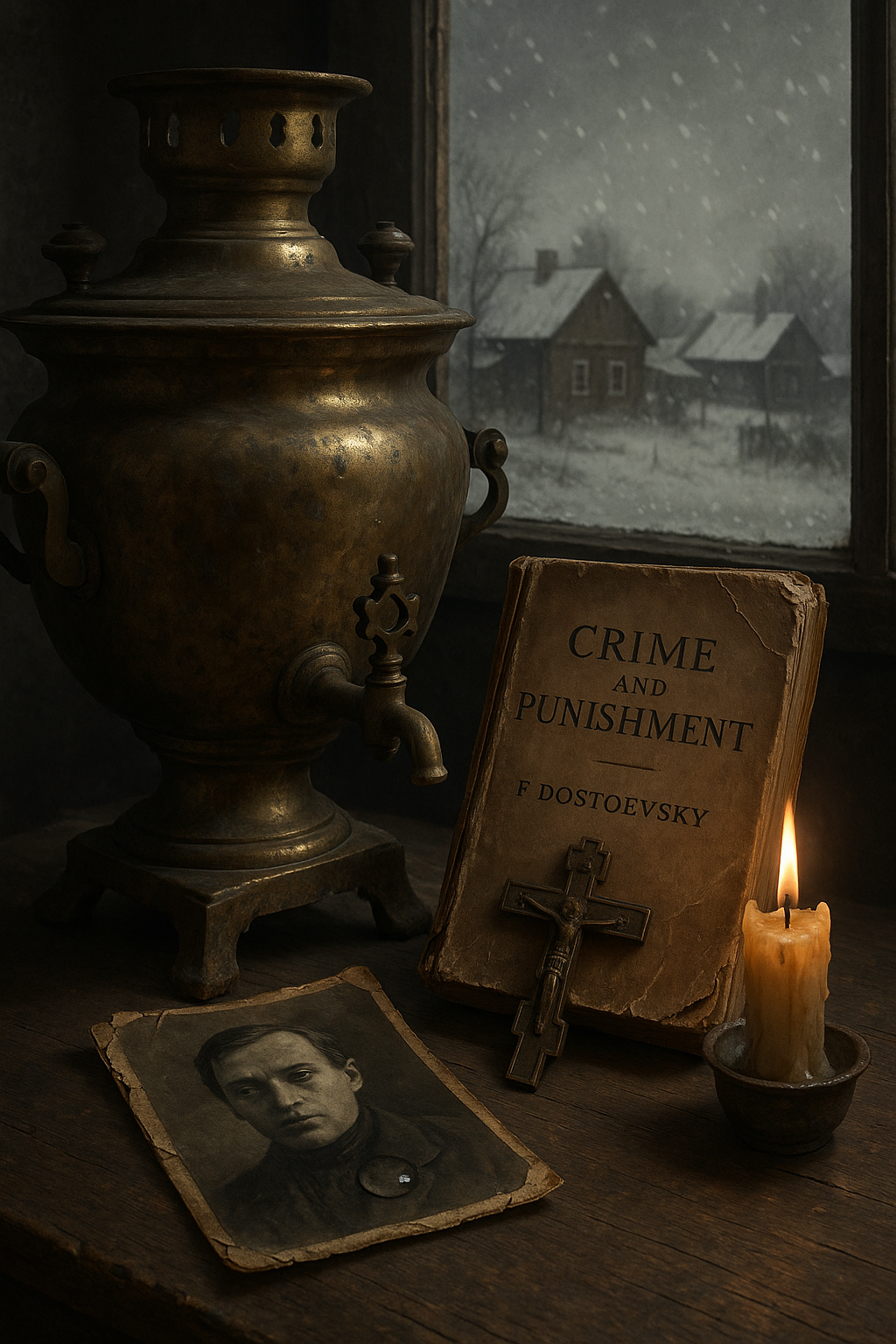
There are few cultures in which suffering is not merely endured but elevated to an almost sacred status, woven into the national identity and immortalized in literature, religion, and the arts—but in Russia, suffering isn’t just part of the story, it is the story. From the anguish of Dostoevsky’s tormented protagonists to the haunting chords of Rachmaninoff’s symphonies and the mournful verses of Anna Akhmatova, suffering is not treated as a problem to be solved or avoided, but rather as a crucible through which the soul is purified, tested, and ultimately made real. This deep cultural fascination with pain, sacrifice, and spiritual trial may seem alien—or even morbid—to outsiders, but to understand Russian culture, language, and identity, one must come to grips with this enduring theme.
This obsession didn’t begin with the 20th century’s gulags or revolutions, nor does it end with the trauma of war and political repression. It stretches back centuries, rooted in the theological traditions of Russian Orthodoxy, solidified in the collective memory of serfdom and imperial rule, and etched into the national consciousness by both state-imposed hardship and deeply personal philosophical reflection. The Russian soul, as conceived in the works of its greatest thinkers and artists, is not shaped by comfort or prosperity but by confrontation with suffering—by staring into the abyss and finding meaning in the darkness.
In this article, we’ll explore the historical, religious, philosophical, and artistic roots of Russia’s unique relationship with suffering. We’ll trace this motif from Orthodox Christianity’s emphasis on redemptive pain, through the brutal realities of serfdom and imperial tyranny, into the minds of Russia’s greatest authors and the lives of everyday people. We’ll ask why suffering holds such pride of place in the Russian imagination, how it has been transformed across centuries, and what it tells us about the Russian language and mindset.
I. Orthodox Christianity and Redemptive Suffering
The seeds of the Russian preoccupation with suffering were planted early, with the Christianization of Kievan Rus’ in 988 CE. But it wasn’t just any form of Christianity that took root—it was Eastern Orthodoxy, which developed its own theological and aesthetic emphasis on mystical suffering, sacrifice, and the redemptive value of pain.
Unlike Western Christianity, which often frames suffering in terms of sin, guilt, and redemption through institutional mechanisms like confession or penance, Russian Orthodoxy sees suffering as an existential path to holiness. Saints are not admired for triumph or worldly success but for enduring unimaginable torment with humility and love. The ideal is the yurodivy—the holy fool—who lives in poverty, scorn, and madness, yet carries divine truth.
Icons, hymns, and liturgies dwell on martyrdom, asceticism, and Christ’s Passion not as isolated events but as the ultimate pattern for human life. To suffer is to walk the path of Christ. To endure humiliation, exile, and loss is not just inevitable—it is sacred. This outlook saturates Russian religious art and music and found its way into the psychological and moral outlook of the people, especially as the Church became intertwined with the state.
II. Historical Hardship: Serfdom, Autocracy, and Revolution
While religion laid the philosophical groundwork, Russia’s political and economic history hammered the theme of suffering into lived experience. For centuries, the vast majority of Russians were peasants—many of them serfs bound to landowners and denied basic rights. From the 17th century until the emancipation of serfs in 1861, generations lived in conditions of brutal labor, poverty, and powerlessness.
This entrenched a worldview in which pain was normal, endurance was expected, and dreams of escape were rarely realized. The autocratic tsarist regime reinforced this reality with absolute authority, crushing uprisings and dissent while promoting a myth of national unity through shared suffering.
Then came the revolutions of the early 20th century and the Soviet experiment. The promise of liberation quickly turned into a new chapter of national trauma: purges, forced collectivization, gulags, censorship, and war. Entire populations were deported, millions perished, and an entire culture learned to survive in silence. Suffering became both a private agony and a collective badge of honor.
The 20th-century Russian experience—with its violent upheavals, endless queues, hunger, and loss—cemented pain as a normal state of being. But rather than revolt against it entirely, many Russians absorbed it into their identity. Suffering was proof of authenticity. To have suffered was to have lived.
III. Dostoevsky, Tolstoy, and the Aesthetic of Pain
No exploration of the Russian cult of suffering would be complete without turning to its literary giants—especially Dostoevsky and Tolstoy—who not only reflected this cultural mindset but gave it psychological and philosophical shape.
Dostoevsky is perhaps the most famous advocate for the moral value of suffering. His characters—Raskolnikov, Prince Myshkin, Ivan Karamazov—are torn apart by guilt, despair, and spiritual struggle. In Crime and Punishment, Raskolnikov’s redemption only comes through accepting punishment and suffering. In The Brothers Karamazov, Ivan challenges God on the problem of innocent suffering, while Alyosha embraces the mystery of faith and love in a world of pain.
For Dostoevsky, suffering was not just inevitable—it was redemptive. It purifies, awakens, humbles, and connects us to others. To suffer is to feel deeply, to confront moral truth, and to become fully human.
Tolstoy, though less obsessed with psychological torment, also saw spiritual value in suffering. His later works, such as The Death of Ivan Ilyich and Resurrection, explore how pain strips away illusion and forces characters to face the ultimate questions of life. He abandoned wealth and fame in pursuit of a simpler, more virtuous life, echoing Christian ideals of asceticism and nonviolence.
IV. The Soviet Cult of Suffering
While Soviet ideology was officially atheistic, it inherited and repurposed Russia’s historical fascination with suffering for political ends. The state became the new church, and the narrative of redemptive suffering found a secular form: sacrifice for the greater good, martyrdom for socialism, heroism through labor and war.
Soviet propaganda glorified workers who died on the job, soldiers who froze on the front lines, mothers who sent sons to war. The ideal citizen was one who endured without complaint. Monuments, songs, and films extolled resilience and pain as patriotic virtues. Even in literature, the genre of "production novels" celebrated grueling work and stoic perseverance.
But this cult of suffering was double-edged. It demanded silence about trauma. Millions died in gulags or starved in forced famines, but their stories were erased or rewritten. Survival often meant internalizing suffering without hope of justice or recognition.
And yet, the cultural template endured. Even today, Russian discourse often frames resilience as the highest virtue. As the saying goes: "Мы не жалуемся — мы держимся" ("We don’t complain—we endure").
V. Suffering in Russian Language and Idiom
The Russian language itself encodes this cultural relationship with suffering. Russian has an unusually rich vocabulary for pain, endurance, and emotional struggle. Verbs like страдать (to suffer), терпеть (to endure), and переживать (to live through/emotionally endure) are used in a variety of contexts, from casual complaints to profound existential reflections.
Common phrases include:
"Терпение и труд всё перетрут" – Patience and hard work grind everything down.
"Без труда не выловишь и рыбку из пруда" – You can’t catch even a little fish without effort.
"Кто не страдал — тот не жил" – He who hasn’t suffered hasn’t lived.
Even the structure of Russian speech reflects endurance. The frequent use of aspect in verbs allows speakers to highlight whether an action was completed, ongoing, or habitual—adding emotional nuance to stories of endurance and trial.
VI. Is It Changing? Suffering in Contemporary Russia
Is this cultural orientation toward suffering still alive in the 21st century? In some ways, yes. Contemporary Russian media, literature, and public discourse still valorize perseverance and survival. War commemorations, national tragedies, and personal hardship are framed as tests of character. Enduring without complaint is often seen as more noble than fighting for comfort or change.
Yet among younger Russians and urban intellectuals, this narrative is being questioned. New literature and art push back against glorified suffering, instead emphasizing pleasure, creativity, individual freedom, and healing. Some writers challenge the idea that pain builds character, asking instead: what would it mean to live without always preparing for catastrophe?
Nevertheless, the old tropes persist. In a country where instability has been the norm for centuries, suffering remains a deeply familiar and strangely comforting narrative. It offers continuity, shared identity, and a sense that meaning can still be found—even in the darkest times.
FAQs
Why do Russians seem to value suffering so much?
Because of centuries of religious, political, and literary tradition. Suffering is seen not only as inevitable, but as redemptive—a path to moral or spiritual truth.
Is this idea of suffering unique to Russia?
No, but it is particularly strong in Russian culture due to the combination of Orthodox Christian theology, harsh history, and literary reinforcement.
How does this affect Russian behavior and communication?
Many Russians express hardship with stoicism, avoid complaint, and are quick to bond over shared pain. Humor, too, is often dark and ironic.
Do all Russians believe suffering is noble?
Not at all—many challenge or reject this idea, especially younger generations. But it remains a strong cultural undercurrent.
How can understanding this help me learn Russian?
You’ll better understand how the language expresses emotion, nuance, and philosophy. It will also help you grasp the tone and themes of Russian literature, film, and everyday conversation.
Learn Russian the Meaningful Way
If you want to go beyond textbook phrases and truly understand the soul of the Russian language, join us at Polyglottist Language Academy. Our courses don't just teach you grammar—they immerse you in Russian history, culture, and literature, giving you the tools to engage with the language on a deeper level.
Whether you're a total beginner or already reading Dostoevsky, our experienced instructors will help you unlock the rich emotional depth of Russian.
Sign up today and begin your journey into the heart of one of the world’s most profound cultures—where even suffering tells a story worth learning.
Want to explore more about Russian language and culture?
Check out our full collection of articles on the Polyglottist Language Academy Blog, where we dive into everything from why fluent Russian isn’t fast Russian to how to survive a Russian toast and what it’s like to be the only foreigner in a Russian dacha community. Whether you're curious about grammar tips, cultural faux pas, or how Russians navigate public space, our blog offers fresh, engaging insights to support your learning journey.