
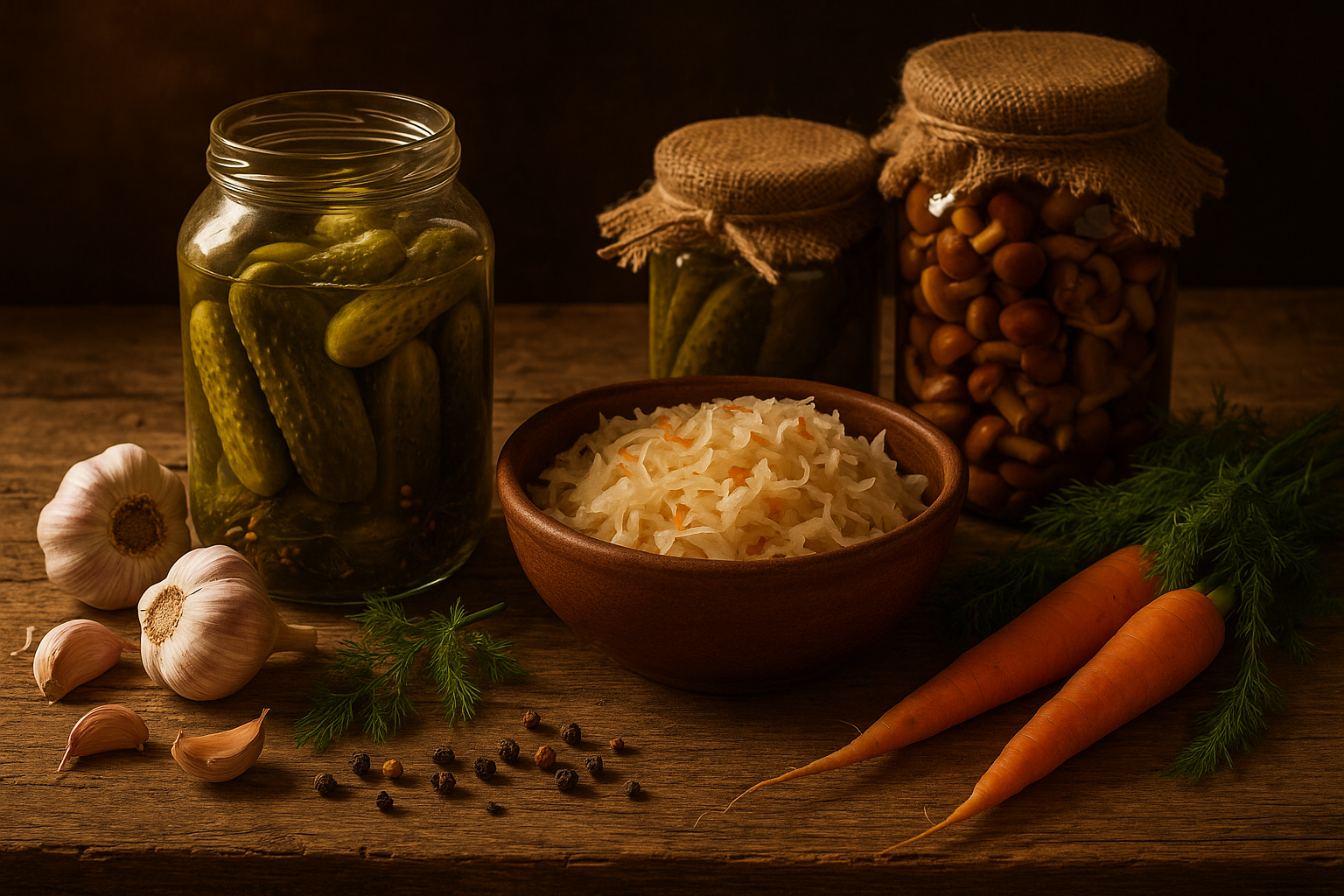
There are few culinary traditions as deeply tied to Russian life as the art of pickling, and few foods carry as much cultural weight as a crisp salted cucumber, a jar of tangy sauerkraut, or a plate of marinated forest mushrooms served at the family table. These foods are more than mere condiments; they are symbols of endurance through long winters, of resourcefulness in the kitchen, and of hospitality that welcomes guests with rustic yet unforgettable flavors. To understand Russian cuisine, one must understand pickling—because it is not just a preservation method, but a way of connecting generations, seasons, and even language.
The practice of pickling in Russia stretches back centuries, long before refrigeration, supermarkets, or global trade. Harsh winters made it necessary to preserve food from the abundant summer and autumn harvests to ensure survival through the cold months. Families across vast regions developed recipes for salting, fermenting, and marinating vegetables and mushrooms, each method fine-tuned to local tastes and ingredients. The result was not just sustenance but a rich culinary tradition that continues to this day, cherished equally in rural villages and modern apartments in Moscow and St. Petersburg.
For Russians, pickling is also about ritual. Summer days might be devoted to tending garden plots or foraging in the forest, followed by long afternoons of washing, chopping, and carefully layering produce into jars. The clink of glass jars, the sharp aroma of garlic and dill, the hiss of brine bubbling during fermentation—all these sensations form a sensory soundtrack of Russian life. Even today, when store-bought pickles line supermarket shelves, many families prefer to make their own, convinced that nothing compares to the flavor of homemade preserves.
And then there is the cultural meaning of these foods. A jar of cucumbers pulled from the cellar is not just food—it is a token of care and self-sufficiency. Sauerkraut on the table speaks of tradition, of the bond between generations, and of the power of simple ingredients to sustain body and spirit. Forest mushrooms preserved in brine or vinegar are not just appetizers—they are the pride of the forager, a treasure from Russia’s vast woodlands.
In this article, we will explore the Russian pickling tradition in depth: the history behind it, the methods used, the central role of cucumbers, sauerkraut, and mushrooms, and the cultural values tied to these foods. We will also look at how pickling intersects with Russian language and daily life, and how learners of Russian can use food traditions to deepen their understanding of culture. By the end, you’ll see why pickling in Russia is more than a kitchen technique—it is an expression of identity, resilience, and belonging.
A Brief History of Pickling in Russia
Pickling in Russia has ancient roots. Archaeological evidence shows that Slavic peoples were fermenting vegetables and fish centuries ago. Unlike in Mediterranean climates, where drying or olive oil preservation was common, Russia’s harsh winters demanded techniques that could sustain food over long, frozen months.
Salt and Fermentation: Salt was widely available, making brine-based preservation the most practical method. Vegetables like cucumbers and cabbage were submerged in salted water and left to ferment, producing lactic acid that preserved them naturally.
Barrels and Cellars: Traditionally, pickling was done in wooden barrels stored in cool cellars. Even today, Russians romanticize the taste of cucumbers “from the barrel,” believing them superior to jarred pickles.
Community and Ritual: In villages, pickling was often a communal task, with neighbors exchanging recipes, labor, and even jars.
Over centuries, pickling became not just survival but a deeply ingrained cultural habit.
The Reign of the Pickled Cucumber
No food symbolizes Russian pickling more than the cucumber. Known as солёные огурцы (solyonyye ogurtsy, salted cucumbers), these crisp, tangy bites are a fixture of Russian tables.
Why Cucumbers?
Cucumbers grow easily in Russia’s short summers and absorb flavors from garlic, dill, currant leaves, and horseradish root added to the brine. The result is a uniquely Russian taste: sour, salty, crunchy, and aromatic.
Cultural Role
Pickled cucumbers are:
A zakuska (appetizer) served with vodka.
An essential side to heavy meat dishes.
A cure for hangovers, considered restorative after drinking.
Russians even have sayings about cucumbers, such as Без огурца и обеда нет (“Without a cucumber, there’s no meal”).
Sauerkraut: The Staple of Winter
If cucumbers are the king of Russian pickling, sauerkraut (квашеная капуста) is its queen. Fermented cabbage has been a staple since ancient times, valued for its long shelf life and vitamin content.
The Process
Cabbage is shredded, salted, and packed tightly into barrels with carrots, cranberries, or apples added for flavor. As it ferments, it develops a tangy taste that can last all winter.
Cultural Meaning
Sauerkraut is more than food—it represents thrift, health, and resilience. In Russian folklore, cabbage is a symbol of fertility and abundance. Families believed sauerkraut kept them strong through the cold months, warding off illness with its vitamin C.
Modern Use
Today, sauerkraut is eaten as a side dish, in soups like щи (shchi), or as a filling for pies. It remains a symbol of home cooking and tradition.
Forest Mushrooms: Treasures of the Woods
Russia is a land of forests, and mushroom foraging (тихая охота, “quiet hunting”) is a beloved pastime. Families spend late summer and autumn weekends collecting chanterelles, boletus, russula, and the prized porcini.
Preserving Mushrooms
Mushrooms are often:
Salted in brine.
Marinated with vinegar, onions, and spices.
Layered in jars with dill and garlic.
Cultural Importance
Preserved mushrooms are:
A symbol of pride—showing off one’s foraging skill.
A central part of festive tables, especially at New Year.
An example of the Russian connection to the land.
Russians view mushrooms almost spiritually, with folk tales and proverbs emphasizing their mystery and abundance.
Pickling as a Cultural Language
For learners of Russian, food vocabulary tied to pickling offers insight into culture. Consider words like:
рассол – brine (also used for hangover remedies).
соленье – pickles in general.
закуска – appetizer.
погреб – cellar, where jars are stored.
These words appear not only in kitchens but in songs, literature, and daily conversation. For instance, a “cucumber from the barrel” can symbolize authenticity, tradition, or nostalgia.
Pickling and Russian Identity
Pickling embodies values central to Russian life:
Resilience: Surviving winter through foresight and preparation.
Community: Families and neighbors sharing work and recipes.
Tradition: Passing down methods through generations.
Simplicity: Transforming humble ingredients into cherished food.
These values are also reflected in the Russian language itself, with its emphasis on expressive idioms, cultural metaphors, and a deep respect for heritage.
Pickling Today: Between Tradition and Modernity
Even in modern Russia, with supermarkets full of imported goods, the tradition of home pickling endures. Many families still prepare their own cucumbers, sauerkraut, and mushrooms each year, especially in rural areas or among older generations. Urban Russians may rely more on store-bought pickles but often confess that nothing compares to their grandmother’s homemade jars.
Pickling has also become a marker of identity for Russian émigrés abroad. In New York or Berlin, jars of pickles in Russian shops are more than groceries—they are symbols of home.
FAQs: Russian Pickling Tradition
1. Why is pickling so important in Russian cuisine?
Because it was historically necessary for survival in harsh winters and became a beloved cultural tradition.
2. What is the difference between salted and marinated cucumbers?
Salted cucumbers are fermented in brine, while marinated cucumbers use vinegar for preservation.
3. Why is sauerkraut so popular in Russia?
It’s nutritious, long-lasting, and deeply tied to cultural traditions of winter survival.
4. Are pickled mushrooms safe to eat?
Yes, if prepared correctly. Foraging and preservation are done with care and experience.
5. What role do pickles play in Russian celebrations?
They are common appetizers (zakuski), often served with vodka or as side dishes.
6. Do Russians pickle only cucumbers, cabbage, and mushrooms?
No. Beets, tomatoes, garlic, apples, and even watermelon are also pickled.
7. Why do Russians say pickle brine cures hangovers?
Because it replenishes salt and minerals lost during drinking—an old folk remedy.
8. Do younger Russians still pickle food at home?
Some do, especially in rural areas, though store-bought pickles are increasingly common.
Conclusion: Pickling as Russia’s Flavor of Comfort
Pickling in Russia is more than a culinary technique—it is a story of survival, adaptation, and cultural pride. Cucumbers, sauerkraut, and forest mushrooms are foods that nourish not only the body but also the spirit, linking generations and seasons together in a cycle of tradition. To understand Russian culture is to understand its food rituals, and few are as central as the jars of pickles stored in cellars across the country.
At Polyglottist Language Academy, we believe that language learning should include these cultural windows. When you study Russian with us, you don’t just learn grammar and vocabulary—you learn the traditions, stories, and rituals that bring the language alive. If you’re ready to dive into Russian language and culture, sign up today and join our vibrant community of learners.