
Borscht Beyond Beets: The Many Variations of Russia’s Most Famous Soup
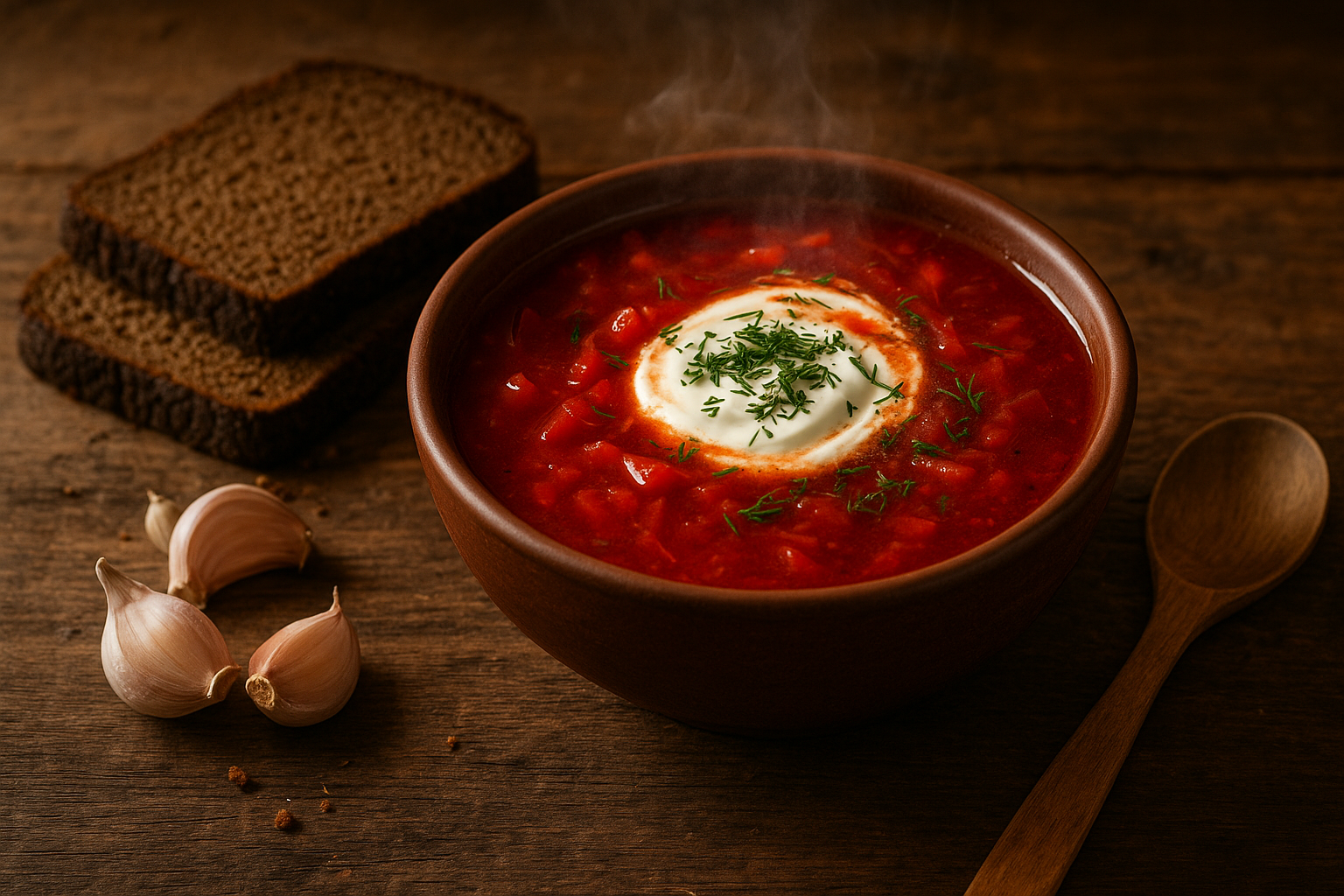
Borscht is one of those dishes that instantly conjures up an image of Russia for people around the world, a ruby-red bowl of beet soup crowned with a dollop of sour cream and accompanied by black bread and garlic. But the truth about borscht is far richer, more complex, and more fascinating than the simple stereotype. Far from being just “that beet soup,” borscht is a culinary universe of regional variations, family recipes, and cultural traditions that stretch across centuries and borders. In Russia, Ukraine, Poland, and beyond, it is not one dish but many, reflecting the history, geography, and creativity of the people who make it.
For Russians, borscht is more than food—it is memory, ritual, and identity served in a steaming bowl. It is the soup your grandmother stirred on a winter afternoon, the comfort meal that warmed you after a long day, the centerpiece of family gatherings where recipes were whispered down generations. And yet, it is also a dish constantly reinvented: with or without beets, vegetarian or meaty, hot in winter or cold in summer, tangy, sweet, or savory depending on the cook’s hand and the region’s tradition.
What makes borscht so fascinating is that no two bowls are ever quite alike. Ask ten Russians how to make it and you’ll get ten different answers. For some, it must include beef broth and cabbage; for others, it’s a summer dish best made with fresh garden vegetables. Some insist on the sharp tang of vinegar or lemon, while others prefer a mellow sweetness. And then there are the versions that barely resemble the stereotypical image at all: green borscht made with sorrel, white borscht with rye flour, mushroom borscht from the forests, or even regional variants with beans or fish.
In this article, we’ll go far beyond the beetroot cliché and explore the many faces of borscht in Russian culinary culture. We’ll look at its origins, its symbolic meanings, its regional and seasonal variations, and the way it has evolved over time. Along the way, we’ll see how learning about borscht is also a way of learning about Russia itself: a land where food is never just sustenance but a story about family, survival, and celebration.
The Origins of Borscht
The roots of borscht stretch back centuries in Eastern Europe. While today we associate it primarily with beets, the original “borshch” in medieval times was made from the leaves and stems of hogweed (borshchivnik in Russian, hence the name). Over time, as beets became more widespread in cultivation, they replaced hogweed as the defining ingredient.
By the 18th and 19th centuries, borscht had become a staple of Russian and Ukrainian households. Recipes varied widely by region, but the soup’s identity as a hearty, sour-sweet dish built around local vegetables was firmly established.
Interestingly, borscht has always blurred national boundaries. While Ukrainians claim it as a cornerstone of their national cuisine, Russians embrace it as their own, and Polish, Lithuanian, and Jewish communities also have their versions. This shared ownership speaks to the cultural interconnectedness of the region.
The Role of Beets: Iconic but Not Mandatory
Beets are the vegetable most associated with borscht, giving the soup its jewel-red color. Yet, not all borscht contains beets. In fact, some of the most traditional variations use other greens or vegetables entirely.
Red borscht: The classic beet-based soup, with cabbage, carrots, onions, potatoes, and meat or beans.
Green borscht: Made with sorrel or spinach, giving it a tangy, refreshing flavor.
White borscht: A Polish-inspired variation with fermented rye flour, more common in the western parts of Russia.
So while beets are iconic, they are not universal.
Regional Variations of Borscht in Russia
1. Moscow Borscht
Rich, hearty, and often made with beef or pork broth, Moscow borscht emphasizes meat and strong flavors. Sometimes it even includes ham or sausage.
2. Siberian Borscht
Siberian versions often rely on preserved ingredients, like sauerkraut instead of fresh cabbage, reflecting the harsh climate and long winters.
3. Southern Borscht
In regions closer to the Caucasus, borscht can be spicier and brighter, sometimes with tomatoes or more herbs.
4. Monastic Borscht
Traditionally vegetarian, served during fasting periods in monasteries. Often made with mushrooms, beans, or dried fruits for richness.
Seasonal Variations
Borscht is remarkably versatile across the seasons.
Winter borscht: Hearty, with meat broth, potatoes, and long-cooked vegetables.
Summer borscht: Lighter, with fresh vegetables from the garden, often eaten chilled. A common summer version is svekolnik, a cold beet soup similar to gazpacho.
The Art of Serving Borscht
Borscht is rarely eaten alone. It comes with rituals:
A generous spoon of sour cream (smetana) on top.
Fresh herbs like dill or parsley sprinkled for aroma.
A slice of black rye bread or garlic rolls (pampushki).
Sometimes a shot of vodka or a glass of kvass on the side.
These accompaniments complete the experience, making borscht a centerpiece of Russian hospitality.
Symbolism and Cultural Meaning
Borscht is more than a recipe—it’s part of Russian identity.
Hospitality: Serving borscht is a way of welcoming guests with warmth and abundance.
Tradition: Families pass down recipes like heirlooms.
Survival: Borscht reflects the ability to make nourishing meals out of whatever is available, a hallmark of Russian resilience.
In literature and film, borscht often appears as a shorthand for home, comfort, or “real” Russian life.
A Language Learner’s Exercise
For students of Russian, borscht offers a perfect opportunity to learn food vocabulary. Try writing the ingredients list in Russian:
Свекла – beets
Капуста – cabbage
Картофель – potatoes
Морковь – carrots
Лук – onions
Чеснок – garlic
Фасоль – beans
Говядина – beef
Сметана – sour cream
Укроп – dill
Cooking a dish while practicing the words in Russian is a fun way to bring language to life.
FAQs: Borscht in Russian Cuisine
1. Does borscht always have beets?
No. While red borscht usually does, there are green and white variations without them.
2. Can borscht be vegetarian?
Yes. Many traditional versions are meatless, especially during fasting periods.
3. Is borscht eaten hot or cold?
Both. Winter borscht is hot and hearty, while summer versions can be served chilled.
4. Why is sour cream always added?
It balances the tanginess of the soup and adds creaminess.
5. How long does it take to make borscht?
Traditional recipes can take several hours, but quick versions exist too.
6. Is borscht healthy?
Yes, it’s packed with vegetables, fiber, and vitamins, though some meat-heavy versions can be rich.
7. Do Russians eat borscht every day?
Not every day, but it’s a staple dish that appears regularly in households.
Conclusion: Borscht as a Window into Russian Life
Borscht, in all its variations, is not just a soup but a story. It tells of history and geography, of resilience and creativity, of family ties and cultural pride. Whether it’s a steaming red bowl in Moscow, a tangy green sorrel soup in summer, or a monastic mushroom version during fasting, each type of borscht reflects a different facet of Russian life. For learners of Russian, understanding borscht is another way of understanding the language and culture—because food, like words, carries memory and meaning.
At Polyglottist Language Academy, we teach Russian not only through grammar and vocabulary but also through culture, food, and tradition. Our classes help students connect language learning to real life, so that when you hear the word борщ, you don’t just think of beets—you think of the rich world of Russian history and culture it represents. If you’re ready to explore Russian deeply and meaningfully, sign up for our classes today.
And if you enjoyed this article, check out more of our blog posts that bring Russian language and culture to life: