
How to Ask for Directions in Russian Like a Native
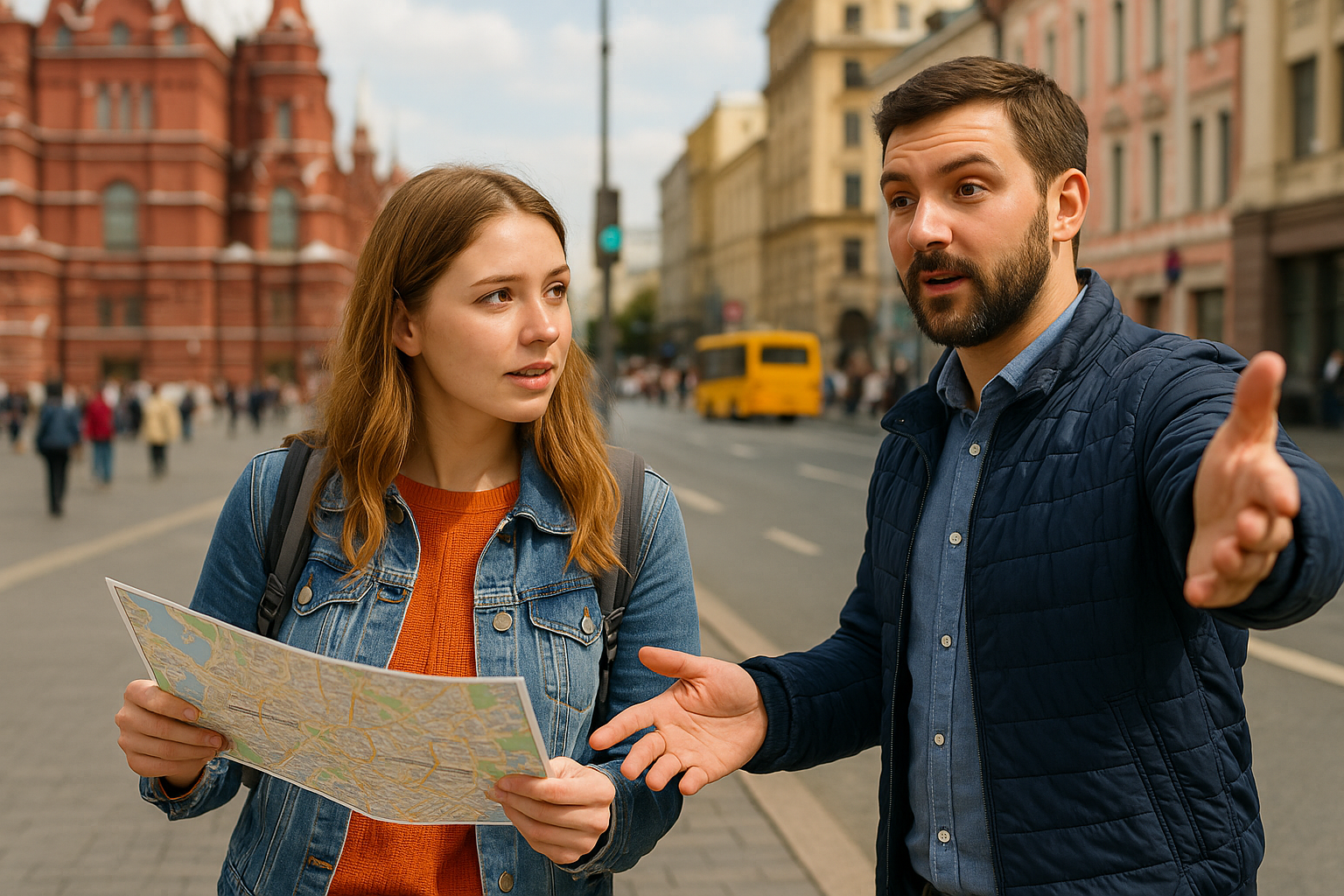
Traveling in Russia—or in any Russian-speaking country—often means stepping into streets, train stations, and city squares where English may not get you very far. You may find yourself in the Moscow Metro surrounded by elegant Soviet mosaics, or wandering the historic streets of St. Petersburg where every corner reveals another ornate palace, or even navigating a small provincial town where signs and instructions exist only in Cyrillic. In these moments, your ability to ask for and understand directions in Russian transforms from a nice bonus into a survival skill. It is not just about language—it’s about connecting with people, showing respect, and moving through space with confidence.
For many learners, the idea of asking for directions in Russian can feel intimidating. Russian is often portrayed as complex and formal, with its cases and verb aspects. But when you’re lost in an unfamiliar neighborhood or trying to catch the right train, you don’t need perfect grammar—you need functional, polite, and effective phrases. The good news is that Russians are usually eager to help someone who makes the effort to speak their language, even imperfectly. A small set of well-practiced expressions can get you to the right bus, the right metro line, or the right exit from a sprawling train station.
But asking for directions is not only about language—it is about culture. Russians have their own way of giving and understanding directions, often relying on landmarks rather than street names, using gestures to indicate turns, and expecting you to grasp prepositions that signal whether you should go “onto” the street, “into” the metro, or “toward” the square. Mastering this doesn’t just help you avoid getting lost—it makes you sound more natural and respectful, allowing you to step into Russian daily life with confidence.
In this article, we’ll take a deep dive into how to ask for directions in Russian like a native. We’ll cover essential vocabulary, cultural nuances, polite versus direct phrases, sample dialogues, and strategies for understanding the answers you’ll receive. Along the way, we’ll highlight common mistakes learners make and show you how to avoid them. By the end, you’ll be ready to not only ask where the nearest metro is but also understand the reply—and maybe even enjoy the interaction.
Why Learning to Ask Directions Matters
Practical necessity. Russian cities are large and complex, with metro systems, bus routes, and streets that can overwhelm even experienced travelers.
Cultural connection. Asking for directions is one of the most natural ways to start a conversation with locals.
Confidence booster. Using Russian in real situations shows you that you can manage more than classroom phrases.
Everyday fluency. Directions combine key grammar elements: cases, prepositions, and verbs of motion. Mastering them improves your overall Russian.
Essential Vocabulary for Directions
Here are words you’ll encounter often:
где – where
когда – when
здесь – here
там – there
туда – (to) there
сюда – (to) here
прямо – straight
налево – to the left
направо – to the right
рядом – nearby
близко – close
далеко – far
остановка – stop (bus/tram stop)
станция – station (metro/train)
улица – street
площадь – square
вход/выход – entrance/exit
перекрёсток – intersection
Polite Openers
When approaching someone, start with a polite phrase to get attention:
Извините, пожалуйста… – Excuse me, please…
Скажите, пожалуйста… – Tell me, please…
These signal respect and make people more willing to help.
Asking the Question
Basic forms:
Где находится…? – Where is … located?
Как пройти к …? – How can I get to …?
Как добраться до …? – How can I reach …?
Examples:
Как пройти к метро? – How can I get to the metro?
Где находится Красная площадь? – Where is Red Square?
Как добраться до вокзала? – How can I reach the train station?
Understanding the Reply
You’ll often hear combinations of prepositions + cases. Key prepositions include:
к + dative → toward (к станции метро – toward the metro station).
в/на + accusative → into/onto (в метро – into the metro).
через + accusative → across/through (через парк – through the park).
за + accusative → behind (за углом – around the corner).
Typical phrases:
Идите прямо. – Go straight.
Поверните направо. – Turn right.
Это рядом, около магазина. – It’s nearby, next to the store.
До метро минут десять пешком. – It’s a ten-minute walk to the metro.
Cultural Nuances
Landmarks matter. Russians often give directions using shops, buildings, or statues rather than exact addresses.
Gestures help. Don’t be surprised if someone points in the direction while explaining.
Directness is normal. “Go straight, then right” is not considered rude—it’s efficient.
Asking twice is fine. Russians expect you may need to confirm.
Sample Dialogues
Dialogue 1: Asking for the Metro
You: Извините, пожалуйста, как пройти к метро?
Local: Идите прямо, потом налево. Станция рядом.
Translation: Excuse me, how do I get to the metro? – Go straight, then left. The station is nearby.
Dialogue 2: Asking for Red Square
You: Скажите, пожалуйста, где находится Красная площадь?
Local: Идите прямо до перекрёстка, потом направо. Там будет вход.
Translation: Where is Red Square? – Go straight to the intersection, then right. The entrance will be there.
Dialogue 3: Asking for the Bus Stop
You: Как добраться до автобусной остановки?
Local: Прямо и через парк. Остановка напротив магазина.
Translation: How can I reach the bus stop? – Straight ahead and through the park. The stop is across from the store.
Common Mistakes Learners Make
Forgetting the case. After до you need the genitive: до вокзала, not до вокзал.
Mixing up на and в. Use в метро (into the metro), but на остановке (at the stop).
Overcomplicating. Simple is best—don’t try to use overly advanced structures.
Not listening for time estimates. Russians often say how long it will take: пять минут пешком (five minutes on foot).
Practice Exercises
Translate into Russian:
Excuse me, where is the train station?
How can I get to the square?
Go straight, then turn right.
The bus stop is nearby.
It is fifteen minutes on foot.
Answers:
Извините, где находится вокзал?
Как пройти к площади?
Идите прямо, потом поверните направо.
Остановка рядом.
Пятнадцать минут пешком.
FAQs About Asking for Directions in Russian
Q: Should I always use пожалуйста?
A: Yes. It softens the request and shows respect.
Q: Is где находится too formal?
A: It’s polite and common. Где …? is simpler but less formal.
Q: How do Russians usually reply?
A: With short instructions, often using gestures. Don’t expect long sentences.
Q: Can I use English if I get stuck?
A: In big cities, sometimes. But outside tourist areas, Russian works best.
Q: What if I don’t understand the answer?
A: Ask again: Повторите, пожалуйста. (Repeat, please.)
Q: How do I ask how long it takes?
A: Сколько минут пешком? – How many minutes on foot?
Q: Do Russians prefer street names or landmarks?
A: Landmarks. Directions often include “next to the pharmacy,” “behind the theater,” etc.
Q: Should I switch to ты with strangers?
A: No. Always use вы with people you don’t know.
Final Thoughts
Asking for directions in Russian is one of the most practical skills you can master. It brings together essential vocabulary, grammar, and cultural habits, but more importantly, it allows you to connect with people in real-life situations. Russians appreciate when foreigners make the effort, and even a short, polite question will open doors—sometimes literally. With practice, you’ll find that asking for directions is not just about finding your way, but also about practicing the rhythm and courtesy of Russian conversation.
At Polyglottist Language Academy, we specialize in teaching real-life Russian for travelers, students, and professionals. Our courses don’t just teach grammar; they give you the cultural and conversational tools you need to thrive in everyday situations—from shopping to navigating cities to making friends. Sign up today and start your journey to speaking Russian with confidence.