
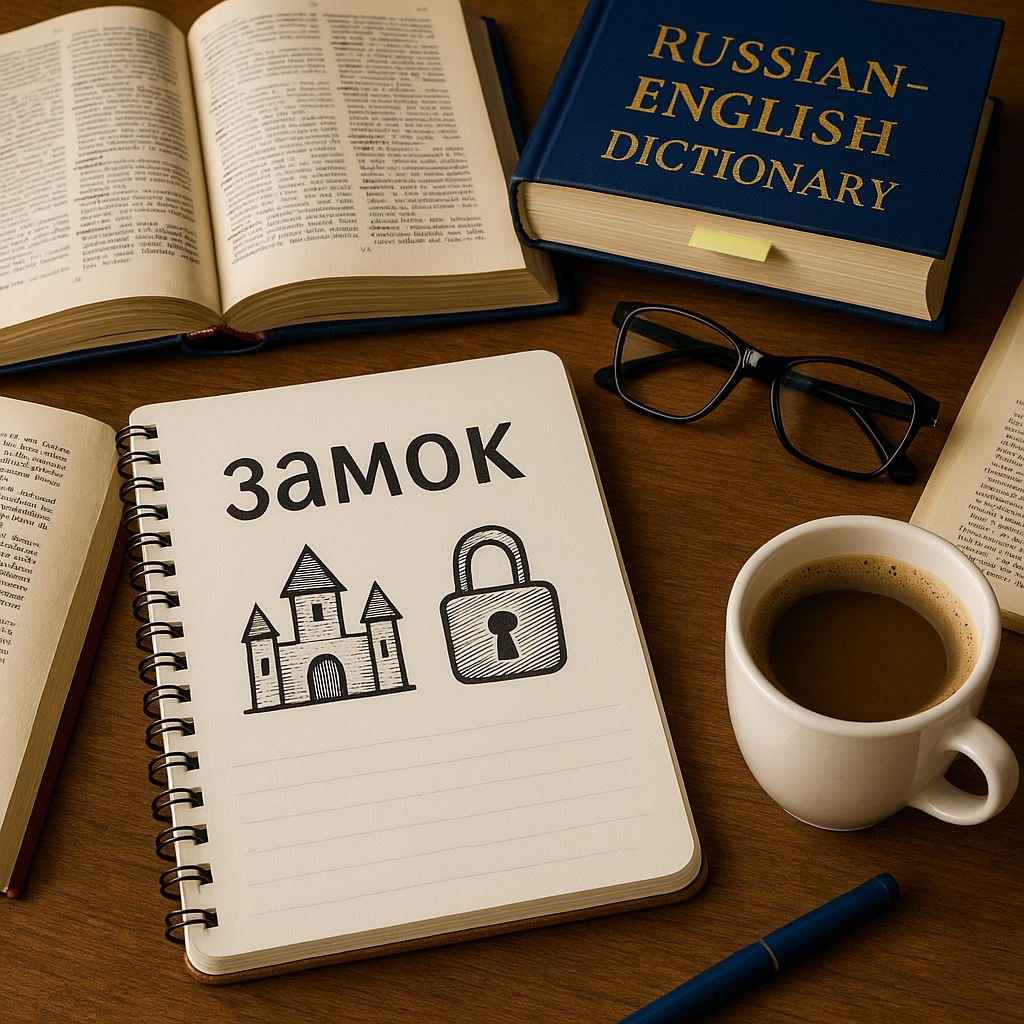
Russian is a language that’s as rich in nuance as it is in consonants—and if you’ve ever found yourself scratching your head over a single word that seems to mean five different things depending on tone, context, or prefix, you’re not alone. Russian has a unique way of taking deceptively simple words and loading them with meanings, idiomatic quirks, and grammatical expectations that challenge even the most diligent learners. One moment you're confidently using a word like “да” thinking it means a straightforward “yes,” and the next you're in a conversation where “да нет, наверное” actually means “probably not.” Welcome to the wonderfully bewildering world of Russian vocabulary.
Learning Russian isn’t just about memorizing vocabulary lists or mastering cases—it’s about tuning your ear to shades of meaning, subtext, and cultural logic that shape how native speakers actually use words. The language loves wordplay, relies on context heavily, and often defies translation. That’s why certain Russian words consistently trip up learners: they look simple, sound familiar, or seem obvious, but carry layers of hidden complexity. When learners encounter these words, they often pause mid-sentence, hesitate during conversation, or mistranslate what was said altogether. But don’t worry—confusion is part of the learning curve. Once you start to recognize these patterns, they become less intimidating and even enjoyable to master.
In this article, we’ll break down some of the most confusing Russian words—those little linguistic traps that even upper-level students still hesitate over. Whether you’re just starting out or trying to polish your fluency, understanding how to correctly use these tricky terms will help you sound more natural, avoid embarrassing misunderstandings, and even decode Russian humor and sarcasm. We’ll explore common meanings, variations based on context, idiomatic expressions, and offer example sentences to clarify how these words function in real life. By the end, you’ll have a stronger grasp of these problem words and a clearer path toward speaking like a native.
1. Да – It Doesn’t Always Mean “Yes”
“Да” is one of the first Russian words learners pick up, but it doesn’t always behave like a simple “yes.” Russians often use it for emphasis, surprise, contradiction, or filler. The word can even carry sarcastic, exasperated, or resigned tones, depending on how it's said. While the dictionary defines it plainly, real-life usage can confuse learners when “да” doesn't signal agreement at all.
Examples:
Да нет, наверное. – Literally: “Yes no, probably.” Meaning: “Probably not.”
**Да ты что!” – “Are you serious?” or “No way!” (often used in disbelief)
**Да уж...” – A sigh-like agreement, “Yeah, sure,” often tinged with resignation or irony.
**Да конечно!” – “Of course!” — enthusiastic affirmation.
How to use it correctly: Pay close attention to intonation and accompanying expressions. Russians use “да” like a verbal eyebrow raise—it can mean yes, no, maybe, or “I can’t believe you just said that.” In some cases, it might not mean anything in particular but simply serve as a conversation filler. Learning to read body language and tone will help you determine whether it’s enthusiastic, skeptical, or dismissive.
2. Такой / Так – So, Such, That… but Which One?
"Такой" and "так" both relate to expressing degree, similarity, or emphasis, but they aren’t interchangeable. They often confuse learners because they appear in similar contexts but actually serve different grammatical roles. If you're describing an object or person with a particular quality, you'll reach for "такой." If you're commenting on how something is done or the extent of an action, then "так" is your word.
Examples:
Он такой умный. – He’s so smart.
Это была такая интересная история. – That was such an interesting story.
Не делай так. – Don’t do it like that.
Почему ты говоришь так громко? – Why are you speaking so loudly?
Common mix-up: Learners often confuse "такой" with "так" when trying to say “so beautiful,” “so cold,” etc. They might say "так красивая" when it should be "такая красивая."
Correct usage tip: If you're describing a noun (so + noun/adjective), use такой. If you’re describing how something is done (so + verb/adverb), use так. This distinction becomes clearer with practice and lots of listening to native speakers.
3. Сейчас / Сейчас же / Уже / Пока – Talking About Time Gets Weird
These four seemingly simple time-related words can completely change the meaning of a sentence depending on nuance, tone, and placement. Learners often feel a false sense of security using them—until they realize the Russian concept of “now” doesn’t always mean this very moment, and that “bye” might not be goodbye at all.
Сейчас – Most learners translate this as “now,” but it often means “in a minute” or “soon.” It’s one of the most flexible time-related words in the Russian language.
Example: Я сейчас приду. – I’ll be there in a moment.
It could mean “I’ll be right back,” “I’ll be there in 30 seconds,” or “Don’t expect me until I finish what I’m doing.”
Сейчас же – This adds urgency. It means right now or immediately, and is often used in commands or scolding tones.
Example: Уйди отсюда сейчас же! – Get out right now!
Уже – Translates to “already,” but it’s used much more than in English and often implies impatience or emphasis.
Example: Ты уже поел? – Have you already eaten?
It can also be part of phrases showing progression or surprise, like Он уже дома? – He’s home already?
Пока – Can mean “for now,” “while,” or “bye,” depending on context.
Пока! – Bye!
Пока он готовит, я читаю. – While he cooks, I read.
Tip: Always look at the surrounding context and verb tense. The exact meaning shifts based on emphasis and what the speaker is implying about time. For example, Я сейчас иду means “I’m on my way,” even if the person hasn’t yet left. Tone and body language matter just as much.
4. Можно / Надо / Должен – Permission, Necessity, Obligation
These three modal expressions form a triangle of possibility, obligation, and permission—but they’re often misused by learners who translate directly from English.
Можно – This is how Russians express permission. It’s impersonal, meaning it doesn’t always show who is allowed—it simply states that something is allowed.
Example: Можно взять это? – May I take this?
You’ll also hear: Здесь нельзя курить – Smoking isn’t allowed here.
Надо – Literally means “it is necessary,” and is used with the dative case.
Example: Мне надо работать. – I need to work.
Unlike English, this removes the subject’s agency: “To me, it’s necessary to…”
Должен – Implies obligation or duty and agrees with the subject in gender and number.
Я должен идти. – I must go (said by a male).
Она должна знать. – She must know.
Tip: If you’re unsure whether to say “I must,” “I should,” or “I need,” try to determine the tone:
Надо is neutral and practical.
Должен carries weight and duty.
Можно is polite and indirect.
5. Уже vs. Ещё – Already vs. Still / Not Yet
These two words are paired opposites, but they can be surprisingly confusing.
Уже – Means “already,” but it’s often used to emphasize completion or impatience.
Я уже сделал домашку. – I already did the homework.
Ещё – Depending on the context, it can mean “still,” “yet,” or “more.”
Ты ещё здесь? – You’re still here?
Ты ещё не ел? – Haven’t you eaten yet?
Хочешь ещё? – Want more?
Tip: Word order affects meaning. When paired with negative verbs, “ещё” takes on the meaning of “not yet.” With positive verbs, it’s “still.”
6. Тоже vs. Также – Also vs. Too (But Not the Same)
These two both translate to “also” or “too,” but they are not interchangeable.
Тоже – Used when echoing or agreeing with a statement, typically at the end.
Я люблю чай. – I like tea.
Я тоже. – Me too.
Также – Adds another fact or activity. It’s more common in formal writing.
Он поёт и также играет на гитаре. – He sings and also plays guitar.
Tip: Think of тоже as a reply and также as adding a new thought. Using the wrong one can make your sentence feel unnatural or robotic.
7. Свой – The Word That Replaces Everything
“Sвой” replaces possessives (мой, твой, его, etc.) when the subject owns the object.
Он взял свою книгу. – He took his (own) book.
Он взял его книгу. – He took his (someone else’s) book.
Why it matters: Russians use “свой” to avoid ambiguity. It reinforces that the subject owns the object.
Mistake to avoid: Learners often default to “его” or “её,” not realizing they could imply it belongs to someone else.
8. Ждать / Подождать / Дождаться – All Just “Wait”? Not Quite.
Ждать – Imperfective, ongoing. You are waiting.
Я жду автобус. – I’m waiting for the bus.
Подождать – Perfective, to wait briefly or once.
Подожди меня здесь. – Wait for me here.
Дождаться – Emphasizes waiting until something finally happens.
Я дождался результатов. – I finally got the results.
Tip: Perfective verbs indicate completed action. Prefixes change the tone and outcome. Using the wrong one might make you sound impatient or overly formal.
9. Знакомый / Друг – Not Every Friend Is a “Friend”
Друг – Close, trusted friend. Reserved for genuine relationships.
Знакомый – Acquaintance, someone you know casually.
Cultural Note: Russians reserve “друг” for deep connections. Calling someone your friend too soon can feel forced.
10. Кстати – By the Way, But More Nuanced
Introduces a new topic:
Кстати, ты знаешь... – By the way, did you know...
Can also mean “incidentally,” used to loop back to something:
Кстати, мы уже это обсуждали. – By the way, we already discussed this.
Tip: It signals a topic shift but keeps the conversation casual. Think of it as conversational glue.
11. Бы – The Elusive Conditional Particle
Used for hypotheticals, wishes, and polite speech. It’s not a verb—just a mood marker.
Я бы пошёл. – I would go.
Если бы я знал. – If I had known.
Grammar Tip: Use “бы” with the past tense to build conditional structures. Its placement is flexible but should stay near the verb.
12. Ну – The Verbal Swiss Army Knife
“Ну” adds tone, hesitation, impatience, or encouragement.
Ну, давай! – Come on!
Ну, не знаю... – Well, I don’t know…
Ну и что? – So what?
Tip: Listen to native speakers. “Ну” conveys mood more than meaning. Mastering it adds natural rhythm to your speech.
Learn Russian the Right Way—with Real Guidance and Cultural Insight
Russian isn’t just about memorizing case tables and verb conjugations—it’s about learning how real people actually usethe language. At Polyglottist Language Academy, we don’t just teach grammar—we guide you through the confusing, fascinating, and often hilarious realities of spoken Russian. Our online Russian classes are designed for busy adults, curious travelers, and serious language lovers who want to learn with confidence and cultural fluency.
With small group sizes, expert native-speaking instructors, and practical conversation-focused lessons, we make sure our students not only learn Russian but start to think in Russian. You’ll gain confidence using complex vocabulary, navigating fast-paced dialogue, and understanding regional slang and idiomatic expressions that aren’t in textbooks. We help you build real-world fluency, not just classroom knowledge.
Whether you're just starting out or fine-tuning your conversational skills, our expert instructors will help you navigate the trickiest Russian words—and finally use them like a native.
👉 Ready to conquer Russian once and for all?
Sign up for a class at Polyglottist Language Academy and start speaking with clarity, confidence, and cultural finesse.
FAQs About Confusing Russian Words
Q: Why are Russian words so context-dependent?
A: Russian grammar and vocabulary are highly inflected, meaning that endings, prefixes, and particles carry lots of information. That makes word meaning fluid and dependent on usage, tone, and social context. What looks like a single word can behave in drastically different ways depending on whether it’s part of a command, a question, an exclamation, or a casual aside. Unlike English, Russian rarely relies on word order alone to convey meaning. So, it’s essential to look beyond definitions and observe usage in real conversations, films, and native media.
Q: How can I remember when to use “тоже” vs. “также”?
A: Try translating “тоже” as “me too” and “также” as “in addition.” Think about whether you're echoing someone or adding something. “Тоже” is great for showing solidarity or shared experience: “I like tea.” “Me too.” But “также” is more formal and often used in written Russian to add information. For example: “He’s a lawyer and also writes books.”
Q: Why do Russians use impersonal constructions like “мне надо”?
A: It’s a cultural and grammatical habit. Impersonal phrases soften responsibility, create distance, or express necessity in a neutral way. They’re everywhere, so it’s best to get used to them early. “Мне надо идти” literally means “To me, it is necessary to go,” which sounds strange in English but feels perfectly natural in Russian. These constructions reflect a way of communicating that’s less direct and more about social harmony or perceived obligation.
Q: Is it okay if I mix up these words as a beginner?
A: Yes! Mistakes are part of the learning process. Most Russians will understand you even if your usage is off. But learning the subtle distinctions will make your Russian sound more natural and help you avoid embarrassing mix-ups. The key is to stay curious, ask native speakers for feedback, and keep absorbing the language through reading, listening, and speaking practice.
Want to explore more about Russian language and culture?
Check out our full collection of articles on the Polyglottist Language Academy Blog, where we dive into everything from why fluent Russian isn’t fast Russian to how to survive a Russian toast and what it’s like to be the only foreigner in a Russian dacha community. Whether you're curious about grammar tips, cultural faux pas, or how Russians navigate public space, our blog offers fresh, engaging insights to support your learning journey.