
Russian Books That Would Make Oscar-Winning Films
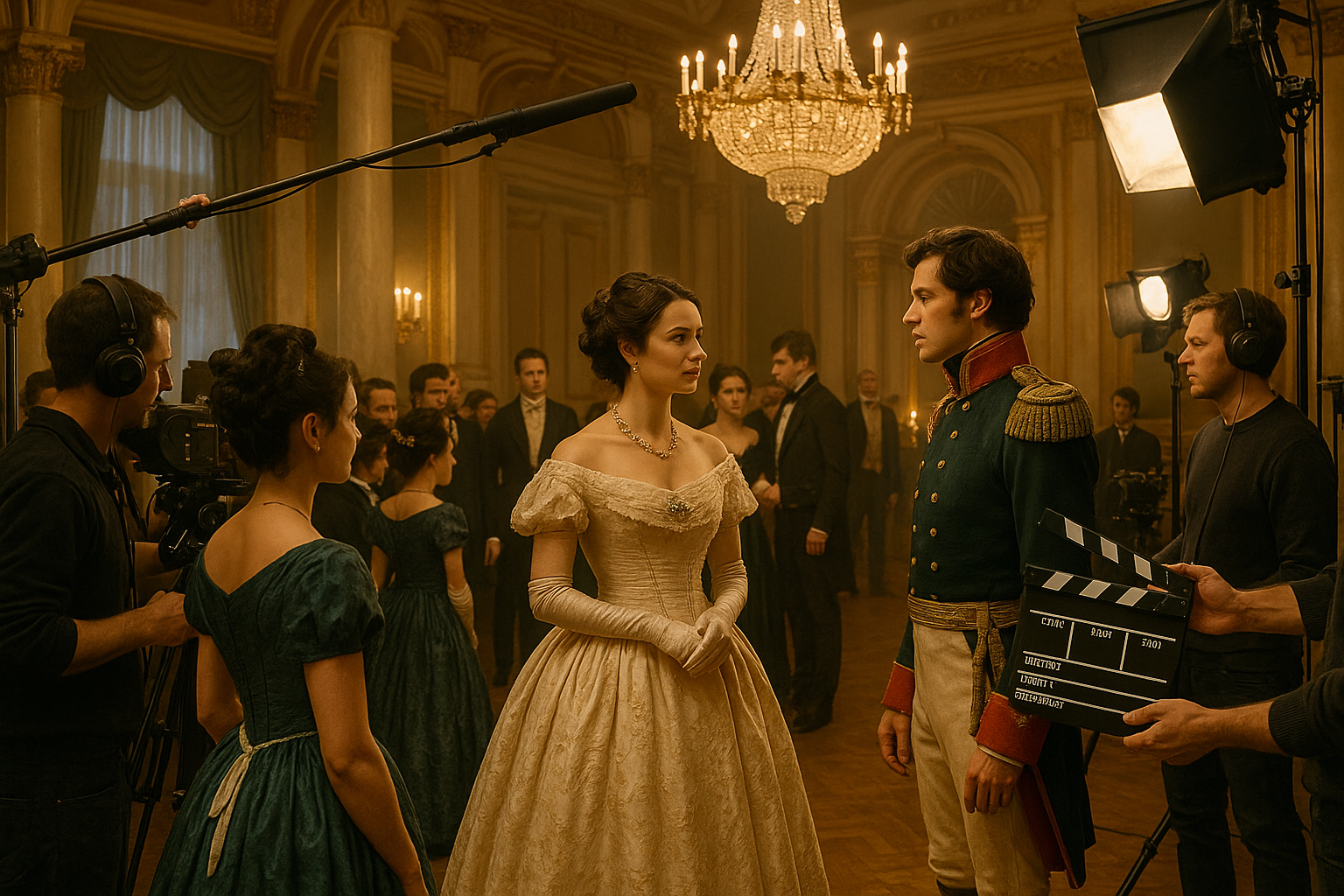
The world of Russian literature is already cinematic in scope—epic battles of conscience, sweeping love stories, dark psychological dramas, existential showdowns, and flashes of absurdist humor that cut through the heaviest of themes. Yet despite this, many Russian novels remain confined to the page or adapted only in limited domestic productions. Hollywood has barely scratched the surface. In fact, some of the greatest unwritten Oscar speeches may be hiding inside dog-eared copies of books by Tolstoy, Bulgakov, Akhmatova, or contemporary authors like Ludmila Ulitskaya and Guzel Yakhina.
What makes a story Oscar-worthy? Emotional depth, unforgettable characters, timeless themes, powerful dialogue, and moral ambiguity all come to mind. Now think about Russian literature—those elements aren’t just present, they’re the foundation. Imagine the quiet terror of The Death of Ivan Ilyich rendered by a masterful director like Alfonso Cuarón, or the twisted magical realism of The Master and Margarita brought to life by Guillermo del Toro. These aren’t just books—they’re screenplays waiting to happen.
In this article, we’ll explore a curated list of Russian novels and short stories that have all the ingredients to win big at the Academy Awards. Some have been adapted before, but never on the scale or with the vision that could truly showcase their brilliance to a global audience. Others remain untouched, just waiting for the right filmmaker with courage and a taste for the dramatic.
Let’s dive into the books that could captivate not just Russian readers, but audiences around the world—if only they made it to the silver screen.
1. The Master and Margarita by Mikhail Bulgakov
Genre: Fantasy / Satire / Historical Drama
Oscar potential: Best Adapted Screenplay, Best Cinematography, Best Director
One of the most visually striking, philosophically rich, and narratively layered novels of the 20th century, The Master and Margarita would make a breathtaking, genre-defying film. It’s a novel that juggles multiple storylines: the devil arriving in Soviet Moscow, the love story between a tormented writer and his muse, and a retelling of the trial of Jesus through the eyes of Pontius Pilate. All of this blends dark comedy, social critique, romance, and metaphysics.
A successful adaptation would require a visionary director willing to embrace the absurd, the magical, and the tragic all at once—think Guillermo del Toro, Darren Aronofsky, or Andrei Zvyagintsev. Done right, this film could sweep awards for its screenplay, production design, and possibly even visual effects.
2. Life and Fate by Vasily Grossman
Genre: War Drama / Historical Epic
Oscar potential: Best Picture, Best Actor, Best Adapted Screenplay
Often compared to War and Peace, Grossman’s Life and Fate is a monumental novel of the 20th century. Set during the Battle of Stalingrad, it follows multiple characters—soldiers, scientists, mothers, Jews, communists—whose lives intersect in a brutal, ideologically charged world. This isn’t just a war story; it’s a meditation on freedom, evil, and the resilience of the human spirit.
Think of a sweeping, intimate drama like The Pianist or Schindler’s List, but with even broader philosophical scope. With the right cast and director, this could be an Oscar magnet—especially for Best Picture and acting awards.
3. A Gentleman in Moscow by Amor Towles
Genre: Historical Fiction / Drama
Oscar potential: Best Costume Design, Best Art Direction, Best Actor
While Towles is American, his novel’s Russian setting and tone are so well-crafted that it earns a place on this list. The story follows Count Alexander Rostov, who is sentenced to lifelong house arrest in the Metropol Hotel in Moscow after the Bolshevik Revolution. The film would blend elegance, wit, and melancholy—qualities that, when executed well, make for awards-season favorites.
The luxurious set, the passing of decades, and the subtle transformation of the Count would make this a strong contender in the Best Actor and Best Production Design categories.
4. Doctor Zhivago by Boris Pasternak
Genre: Romance / War / Historical Drama
Oscar potential: Best Score, Best Cinematography, Best Adaptation
While Doctor Zhivago has already been adapted into a classic film in 1965 (and won five Academy Awards), a modern, grittier remake would be well-timed. Pasternak’s epic spans the Russian Revolution and civil war, following a doctor-poet as he navigates love, exile, and ideological chaos.
A new adaptation could highlight the emotional and political nuance often lost in earlier versions, giving a fresh take on the doomed romance and poetic soul of its protagonist. Think Atonement, but Russian and even more tragic.
5. Zuleikha Opens Her Eyes by Guzel Yakhina
Genre: Historical Fiction / Feminist Drama
Oscar potential: Best Foreign Language Film, Best Actress, Best Original Score
This recent breakout novel follows Zuleikha, a Tatar woman exiled to Siberia in the 1930s under Stalinist repression. At once a tale of survival, awakening, and cultural tension, it offers a story that is both uniquely Russian and universally human. The stark beauty of the taiga, the cruelty of exile, and the blossoming of a woman’s inner world could be visually and emotionally stunning on screen.
Yakhina’s novel is already being adapted into a TV series in Russia, but a cinematic, international version could be a powerful contender for Best Foreign Language Film and a star vehicle for a talented actress.
6. The Death of Ivan Ilyich by Leo Tolstoy
Genre: Psychological Drama
Oscar potential: Best Actor, Best Screenplay, Best Short Film (if condensed)
This novella could be turned into a haunting chamber drama about a man facing his mortality after a seemingly successful life. It's compact, emotionally wrenching, and morally profound. A modern minimalist adaptation could make it feel like The Father or Manchester by the Sea—films that shine by focusing intensely on one person’s psychological unraveling.
It’s a chance for a brilliant actor to deliver a tour-de-force performance and for a filmmaker to explore questions of meaning, regret, and dying well.
7. We by Yevgeny Zamyatin
Genre: Dystopian / Sci-Fi / Political Allegory
Oscar potential: Best Visual Effects, Best Production Design, Best Adapted Screenplay
Long before 1984 or Brave New World, there was We—a dystopian novel that predicted totalitarianism in chilling detail. The story is set in a glass city where people are known by numbers, individuality is banned, and love is dangerous. Written in the 1920s and banned in the Soviet Union for decades, We is a treasure trove of visual potential and philosophical intrigue.
A big-budget adaptation would appeal to fans of Blade Runner, The Matrix, or Children of Men. With its themes of surveillance, identity, and rebellion, this novel is practically begging for a smart, stylish adaptation.
8. Chevengur by Andrei Platonov
Genre: Philosophical Allegory / Political Satire
Oscar potential: Best Original Screenplay (for its daring), Best Art Direction
This surreal, almost hallucinatory novel explores a group of revolutionaries trying to build a utopian communist town in the Russian steppes. Full of absurd conversations, haunting imagery, and bleak humor, Chevengur would be a difficult but potentially groundbreaking film—something between The Lobster and The Sacrifice.
Unapologetically weird, Chevengur could become a cult classic and a dark horse in Oscar categories that reward vision and originality.
9. Lolita by Vladimir Nabokov (Russian roots, English language)
Genre: Psychological Drama / Tragedy
Oscar potential: Best Adapted Screenplay, Best Cinematography
Although written in English, Nabokov’s Lolita is a product of a Russian literary mind. And while there have been two major film adaptations, both fell short of capturing the novel’s genius. A third attempt, one that truly wrestles with the unreliability of Humbert Humbert’s narration and the horror of his actions, could become a critically lauded film—if handled with extreme care.
With the right approach, this film could reframe Lolita as a tragedy of manipulation, control, and lost innocence, rather than the misunderstood romance it is too often misinterpreted as.
10. An Astrologer’s Day by Ludmila Ulitskaya
Genre: Drama / Contemporary Russian Life
Oscar potential: Best Short Film, Best Screenplay, Best Actress
Ulitskaya’s short stories, especially “An Astrologer’s Day,” deal with aging, estrangement, and quiet, poignant revelations. These are stories of ordinary people wrestling with life’s disappointments and small triumphs. Filmed with the right nuance, they could be emotional powerhouses like The Lunchbox or Nomadland—films that say a lot with very little.
Why Haven’t These Been Made Yet?
There are many reasons why these books haven’t been adapted (or adapted well). Complex rights issues, cultural sensitivities, difficult narratives, or simply the challenge of capturing such philosophical depth in visual form. But as global audiences become more curious, diverse, and adventurous in their tastes, there’s never been a better time to bring Russian literature to the global screen.
FAQs
Q: Why aren’t more Russian books made into Hollywood films?
A: Some are very complex or politically sensitive, others require deep cultural context, and some simply haven't caught the attention of major studios. But with growing interest in international stories, this may change.
Q: Are there any good Russian film adaptations already?
A: Yes. Burnt by the Sun, Leviathan, War and Peace (1966), and Solaris (Tarkovsky) are excellent examples. But many major novels remain unadapted or under-adapted for modern audiences.
Q: Do you need to read Russian to enjoy these books?
A: No, many are available in excellent translations. However, reading in Russian adds incredible nuance and emotional texture that translations can sometimes miss.
Q: Can I study Russian literature even as a beginner?
A: Absolutely! You can start with simplified texts or parallel translations, and gradually work your way up to full novels. A good language class can help you build up to that level.
Q: What’s the best way to start reading Russian authors?
A: Begin with novellas and short stories—Chekhov, Tolstoy’s shorter works, and more recent authors like Yakhina or Ulitskaya are great entry points.
Start Your Journey Into Russian Literature with Us
At Polyglottist Language Academy, we believe that learning a language should be a journey into culture, story, and soul—not just vocabulary lists and grammar drills. If this article has sparked your interest in Russian books, characters, or history, why not take the next step?
Our online and in-person Russian classes are designed to immerse you in the language. You’ll read, discuss, and analyze Russian texts with expert guidance—whether you’re a complete beginner or already fluent.
Start your language journey today and unlock the full power of Russian literature—not just on the page, but in your own voice.
👉 Sign up now at Polyglottist Language Academy
.
Want to explore more about Russian language and culture?
Check out our full collection of articles on the Polyglottist Language Academy Blog, where we dive into everything from why fluent Russian isn’t fast Russian to how to survive a Russian toast and what it’s like to be the only foreigner in a Russian dacha community. Whether you're curious about grammar tips, cultural faux pas, or how Russians navigate public space, our blog offers fresh, engaging insights to support your learning journey.