
Tverskaya Street: The Russian Broadway of Moscow
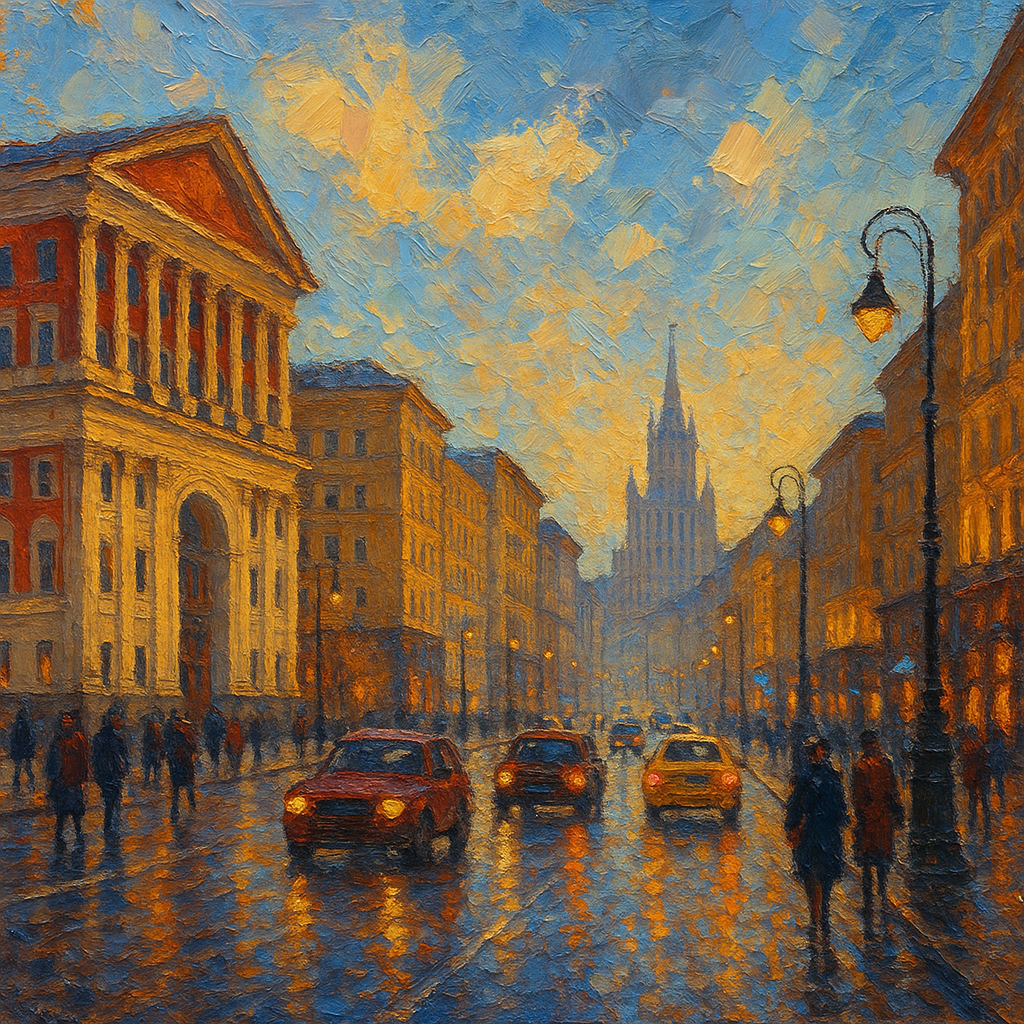
Introduction: Moscow’s Beating Artery of Culture and Power
Stretching from the Kremlin outward like a grand artery of Moscow, Tverskaya Street has for centuries been the place where politics, commerce, culture, and daily life collide, a wide boulevard that has seen tsarist processions, revolutionary marches, Stalinist redesign, luxury shopping booms, and the dazzling nightlife of today’s capital.
To walk down Tverskaya is to experience Moscow in microcosm. The street has always been a stage—not just for the city’s elite and powerful, but for ordinary Muscovites who shop, work, and gather here. It is often called the “Russian Broadway” because it blends glittering theaters, luxury boutiques, cafés, historic hotels, and government buildings into a spectacle that feels both timeless and ever-changing. If Nevsky Prospekt is the cultural soul of St. Petersburg, then Tverskaya is Moscow’s dramatic showcase—an avenue of power, performance, and prestige.
In this article, we’ll take a deep dive into the history, architecture, culture, and linguistic identity of Tverskaya Street. We’ll uncover how it became Moscow’s most iconic boulevard, what role it plays today, and why learning Russian helps you truly appreciate its layered history and living culture.
1. The Origins of Tverskaya Street
The history of Tverskaya dates back to medieval Moscow, when it served as the main road leading northwest to the city of Tver. Merchants, pilgrims, and travelers passed along this route, giving the street an early importance as a thoroughfare. Over the centuries, wooden shops and inns gave way to stone buildings, aristocratic residences, and eventually, the monumental Stalinist architecture that defines parts of the street today.
By the 18th century, Tverskaya had already become the fashionable promenade for nobles. Mansions lined the street, while carriages and horseback riders moved in stately procession. Writers like Pushkin and Gogol strolled along its pavements, and theaters began to open, foreshadowing the street’s future reputation as Russia’s Broadway.
2. Tsarist-Era Glamour
In the 19th century, Tverskaya solidified its status as Moscow’s elite boulevard. It was lined with luxury hotels, cafés, pastry shops, and theaters. Wealthy nobles and merchants built mansions here, many of which doubled as salons for artists and intellectuals.
The Yermolova Theater and the Moscow Art Theatre became magnets for culture-seekers. Meanwhile, lavish hotels such as the Hotel National hosted foreign dignitaries and Russian aristocrats alike. Tverskaya became a place where Moscow showcased its wealth and cultural sophistication to the world.
At the same time, Tverskaya was also the place where ordinary Muscovites could come to glimpse the glamorous life. Crowds gathered for parades, royal processions, and festive events that turned the street into a grand stage for the whole city.
3. Revolution and Soviet Transformation
The Russian Revolution of 1917 dramatically reshaped Tverskaya, both symbolically and physically. The street became a site of demonstrations and marches, its aristocratic mansions often repurposed for Soviet institutions.
Under Stalin, the street underwent its most dramatic transformation. Buildings were demolished, entire structures were shifted backward to widen the avenue, and monumental Stalinist skyscrapers and government offices replaced older architecture. This reshaping was intended to make Tverskaya not just Moscow’s grand boulevard, but a showcase of Soviet power and modernity.
Even its name was changed: for decades, it was officially called Gorky Street after the Soviet writer Maxim Gorky. Only after the collapse of the USSR in the 1990s did the historic name “Tverskaya” return.
4. Tverskaya Today: A Living Boulevard
Modern Tverskaya is a mix of historic grandeur and fast-paced modern life. Luxury boutiques like Gucci and Louis Vuitton stand alongside Soviet-era architecture. The street is always bustling, filled with commuters, tourists, shoppers, and performers.
At night, Tverskaya glows with neon lights, packed cafés, and theaters staging everything from Russian drama to modern musicals. This is why many compare it to Broadway—the mix of performance, spectacle, and urban energy makes it a cultural heartbeat of the city.
Tverskaya is also a space of contrasts: oligarch-owned offices and government ministries sit just a few steps away from fast-food kiosks and metro entrances. It is a place where Moscow’s extremes—old and new, East and West, tradition and modernity—collide in one continuous, noisy, dazzling stream.
5. Architectural Landmarks Along Tverskaya
Walking down Tverskaya is like flipping through a visual history book of Moscow. Key landmarks include:
Hotel National – Built in 1903, this luxury hotel hosted everyone from Lenin to international celebrities.
Yermolova Theater – A historic theater known for its dramatic productions.
Moscow City Hall – The former governor-general’s palace, a symbol of political authority.
Central Telegraph Building – A Stalinist masterpiece of the 1930s.
Luxury Boutiques – The modern layer of Moscow’s capitalist rebirth.
Each building tells a story, from tsarist grandeur to Soviet power to modern consumerism.
6. The Cultural Pulse: Why “Russian Broadway”?
Tverskaya earns its “Russian Broadway” title for several reasons:
The Theaters: With a dense concentration of performance venues, from drama to musical theater, Tverskaya remains Moscow’s hub for stage art.
The Lights: At night, the street comes alive with illuminated signs and bustling nightlife, much like Times Square.
The Glamour: For over two centuries, Muscovites have seen Tverskaya as the place to see and be seen.
But beyond entertainment, Tverskaya also functions as a place of national spectacle. It hosts parades, rallies, and New Year’s celebrations. The entire nation watches it on television during public holidays.
7. The Language of Tverskaya
One fascinating aspect of Tverskaya is the language you hear when walking down the street. Because of its role as a cultural and commercial hub, the boulevard is a melting pot of speech styles:
High-style Russian: Used in theaters, government offices, and by intellectuals.
Youth slang: Heard in cafés, fast food outlets, and on the lips of teenagers hanging out.
Business jargon and Anglicisms: Common in the offices of multinational companies.
Tourist English: Sprinkled into conversations as shopkeepers and waiters serve international visitors.
For learners of Russian, Tverskaya offers a living classroom where you can hear everything from Pushkin-esque elegance to the latest TikTok slang in a single afternoon.
8. Events and Festivals on Tverskaya
Throughout the year, Tverskaya transforms into a festival ground. During Moscow City Day, the entire street is closed to traffic and becomes a pedestrian boulevard full of concerts, street performances, and food stalls. On New Year’s Eve, Muscovites gather on Tverskaya before heading to Red Square for fireworks.
This festival culture further enhances its comparison to Broadway, where streets close down for parades and public events.
9. Tverskaya as a Symbol of Moscow
What makes Tverskaya so significant is not just its theaters or shops, but its role as a symbol of Moscow itself. It embodies the city’s power, its cultural ambition, its contradictions, and its restless energy.
For visitors, it’s one of the best places to sense the essence of Moscow. For Muscovites, it’s a familiar yet ever-changing backdrop to daily life. And for learners of Russian, it’s a reminder that language is deeply tied to place: the Russian spoken here reflects the grandeur, dynamism, and diversity of the street itself.
FAQs About Tverskaya Street
Q: Why is Tverskaya called the “Russian Broadway”?
A: Because of its theaters, nightlife, and cultural glamour, Tverskaya is compared to Broadway in New York. Both are stages where a city performs itself.
Q: Is Tverskaya safe for tourists?
A: Yes, it is one of the safest and busiest parts of Moscow. It is well-lit, heavily policed, and full of people at all hours.
Q: What is the best time to visit Tverskaya?
A: Evening is best for experiencing the lights and nightlife. Festival days like Moscow City Day or New Year’s Eve add even more vibrancy.
Q: What are must-see stops on Tverskaya?
A: Hotel National, Yermolova Theater, Moscow City Hall, and the Central Telegraph building, as well as the many cafés and shops.
Q: Is Tverskaya affordable for average visitors?
A: While luxury shops dominate, there are also affordable cafés, fast food outlets, and free events. You don’t need a big budget to enjoy it.
Q: How does Tverskaya compare to Nevsky Prospekt in St. Petersburg?
A: Nevsky is more literary and romantic, while Tverskaya is more political and theatrical. Both are iconic boulevards in their cities.
Q: Is the street pedestrian-friendly?
A: While it’s wide and busy with traffic, there are underground passages, wide sidewalks, and pedestrian zones during festivals.
Q: What does Tverskaya teach us about Russian language and culture?
A: It shows how language adapts to setting: you can hear high formal Russian, street slang, English borrowings, and regional accents all on one street.
Conclusion: The Grand Stage of Moscow
Tverskaya Street is more than just a boulevard—it is Moscow’s stage, its showcase, its Broadway. To walk it is to see the layers of Russian history and culture unfold before your eyes: tsarist parades, Soviet rallies, neon-lit modern capitalism, and the eternal pulse of Muscovite life.
At Polyglottist Language Academy, we believe that to learn Russian is not just to study grammar—it is to understand the places and cultural spaces where the language lives and breathes. Tverskaya Street embodies the performance, drama, and dynamism of Russian culture.
👉 Sign up today for our Russian classes and bring Moscow’s language and culture to life in your own conversations.
And if you enjoyed this article, be sure to check out our other blog posts: