
The White Nights of St. Petersburg: Russia’s Cultural Jewel on the Neva
Introduction
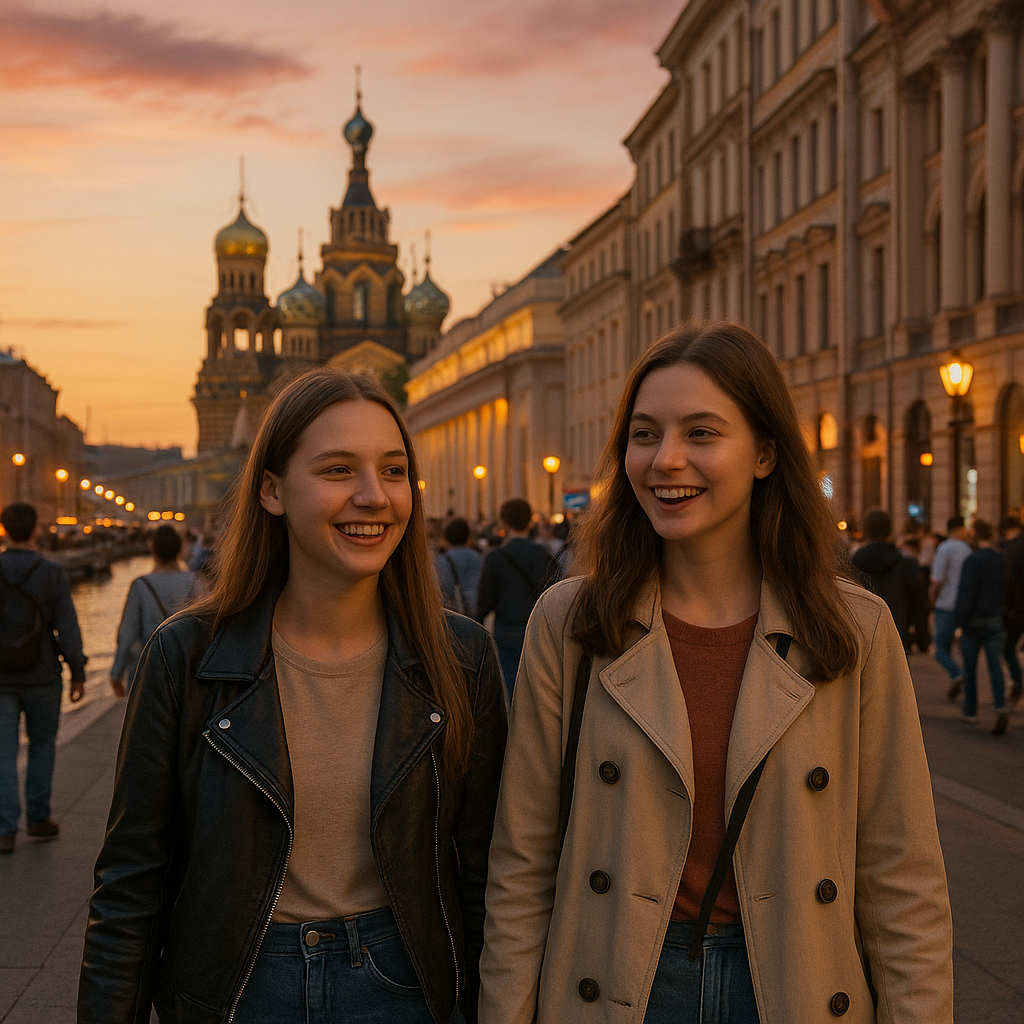
There are few places in the world where time itself seems to dissolve into magic, where night refuses to fall and the city becomes suspended in a glowing twilight, and nowhere is this phenomenon more spectacular than in St. Petersburg during its legendary White Nights, a cultural and natural marvel that has inspired poets, composers, and travelers for centuries. As the northern sun hovers stubbornly above the horizon from late May to mid-July, the city on the Neva becomes more than a place—it transforms into a living festival of light, history, art, and collective joy.
St. Petersburg is often called Russia’s “window to Europe,” a city born of Peter the Great’s vision of a modern, European-style capital, and the White Nights season embodies that spirit of openness and grandeur. It’s not just about a quirk of geography and latitude. The phenomenon of the midnight sun turns the city into an open-air stage where Russian culture reveals itself in its most dazzling forms: ballet performances that begin in twilight and end at dawn, concerts on palace squares, river cruises along the Neva bathed in pastel hues, and streets alive with laughter, music, and celebration.
The White Nights are at once deeply Russian and universally enchanting. For locals, they are a treasured time when St. Petersburg feels weightless, timeless, and eternally youthful. For visitors, they are an invitation to step into the rhythm of a city that blurs the line between day and night, between history and the present, between the grandeur of its imperial past and the vitality of its modern identity.
In this article, we will explore not only the phenomenon of the White Nights themselves, but also the cultural traditions that surround them, the famous festival that has made St. Petersburg’s summer world-renowned, the historical and literary significance of this luminous season, and practical tips for anyone who dreams of experiencing this dazzling spectacle. Along the way, we’ll uncover why the White Nights are more than a tourist attraction—they are a cultural jewel, a gift of nature, and a key to understanding the Russian soul.
The Natural Phenomenon of the White Nights
Latitude and Light
St. Petersburg lies at latitude 59°57′N, placing it close to the Arctic Circle. While it doesn’t experience a full “midnight sun” as cities farther north do, its summer solstice brings extraordinarily long days and lingering twilight. From late May to early July, the sun dips only slightly below the horizon, leaving the sky suffused with a pearly glow that lasts all night. This period is affectionately called the Belye Nochi—the White Nights.
A Sky Like No Other
The light of the White Nights is unlike daylight or darkness; it is a soft, ethereal radiance with hues of pink, gold, lavender, and pale blue. Painters like Ivan Aivazovsky and writers like Fyodor Dostoevsky tried to capture its haunting beauty, but many argue that no canvas or prose can truly render its effect. To walk the embankments of the Neva at 2 a.m. and see the bridges outlined against a luminous sky is to understand why artists have been captivated for centuries.
The White Nights Festival: St. Petersburg on Stage
Origins of the Festival
While the natural White Nights existed long before, the official White Nights Festival began in the early 1990s, envisioned as a way to showcase St. Petersburg’s cultural excellence on an international stage. Today, it is one of the largest and most prestigious arts festivals in the world.
The Mariinsky Theatre and Ballet Traditions
At the heart of the festival is the Mariinsky Theatre, home to Russia’s most celebrated ballet and opera traditions. During the White Nights season, the theatre hosts an extended program featuring world-class performances. Imagine watching Swan Lake performed by the Mariinsky Ballet under a sky that never darkens—it is an unforgettable merging of nature and art.
Scarlet Sails: A Celebration of Youth and Freedom
The highlight for many is the Scarlet Sails celebration, originally inspired by a popular Soviet-era children’s book by Alexander Grin. This massive public event, held near the end of June to coincide with school graduations, features concerts, fireworks, and the dramatic appearance of a ship with scarlet sails gliding along the Neva. It symbolizes hope, freedom, and the promise of new beginnings, and it attracts crowds of up to a million people.
Concerts, Carnivals, and Citywide Revelry
Beyond the theatre, the festival spreads across the entire city. Palaces, squares, and parks host concerts ranging from classical music to modern pop. Street performers fill Nevsky Prospekt. Locals and tourists mingle on riverbanks, waiting for the famous bridges of the Neva to open in the small hours of the morning, an event that itself feels like a performance.
Historical and Literary Echoes of the White Nights
Dostoevsky’s Dreamers
One of the most famous literary depictions of the White Nights is Fyodor Dostoevsky’s short story White Nights (1848), which tells the tale of a lonely dreamer wandering the glowing streets of St. Petersburg. The story captures the ephemeral, almost surreal mood of this season: the way time seems to stretch, how reality feels suspended, and how fleeting encounters can become deeply meaningful.
The Imperial Legacy
The imperial grandeur of St. Petersburg—its palaces, cathedrals, and gardens—takes on an even more dramatic quality during the White Nights. The Peter and Paul Fortress glows against the sky; the Winter Palace and Hermitage shimmer in twilight; fountains at Peterhof sparkle like liquid light. For centuries, the Russian elite hosted lavish balls and outdoor gatherings during this season, a tradition that echoes in today’s festivities.
Inspiration for Music and Art
Composers like Tchaikovsky and Rimsky-Korsakov drew inspiration from St. Petersburg’s summer nights, and even today, international artists flock to perform during this luminous season. The blending of natural beauty and cultural brilliance makes the White Nights a muse for creative minds.
Experiencing the White Nights as a Traveler
What to Do
Take a Midnight Cruise on the Neva: See the city’s drawbridges open while the skyline glows in pastel twilight.
Attend a Ballet at the Mariinsky Theatre: Book tickets in advance to catch world-class performances.
Join the Scarlet Sails Celebration: If your trip coincides, don’t miss this unforgettable spectacle.
Stroll Nevsky Prospekt: The city’s main avenue is alive with music, street performers, and bustling cafés.
Visit the Palaces and Gardens: Summer is the best time to see Peterhof, Catherine Palace, and Pavlovsk in their full splendor.
Practical Tips
Book Early: Hotels fill quickly during the festival season.
Expect Crowds: Especially around Scarlet Sails, the city can be extremely busy.
Dress in Layers: Even in summer, nights can be cool, especially on the water.
Learn a Few Russian Phrases: While many people in tourism speak English, a few words of Russian go a long way in connecting with locals.
The White Nights and the Russian Soul
The White Nights are not just about entertainment or tourism. They reflect something profound about Russian culture: a love of gatherings, a reverence for beauty, a capacity for endurance through long winters rewarded by radiant summers, and a deep sense of collective celebration. The season symbolizes hope and resilience, reminding people that after darkness comes light, after hardship comes joy.
To understand the White Nights is to gain a window into the Russian soul: a mixture of melancholy and exuberance, of timeless traditions and spontaneous joy, of grandeur and intimacy. It is no wonder that so many who experience this phenomenon feel that it stays with them forever.
FAQs about the White Nights of St. Petersburg
Q: When exactly do the White Nights occur?
A: The phenomenon typically lasts from late May through early July, with the brightest period around the summer solstice (June 21–22).
Q: Do the White Nights mean it’s never dark?
A: St. Petersburg does not have a full midnight sun, but the sky remains illuminated in twilight throughout the night, never reaching complete darkness.
Q: What is the White Nights Festival?
A: It is a cultural festival held annually during this period, featuring ballet, opera, music concerts, fireworks, and citywide celebrations.
Q: What is the Scarlet Sails event?
A: Scarlet Sails is a highlight of the festival, celebrating high school graduates with fireworks, concerts, and the iconic appearance of a ship with scarlet sails on the Neva.
Q: How crowded is the city during the White Nights?
A: Very crowded, especially during major events like Scarlet Sails. Travelers should expect busy streets and full hotels.
Q: Are tickets needed for White Nights events?
A: Many concerts and theatre performances require tickets, especially at venues like the Mariinsky Theatre. However, outdoor celebrations and fireworks are free to the public.
Q: What is the best way to enjoy the White Nights as a first-time visitor?
A: A combination of attending a cultural performance, taking a Neva cruise, and simply strolling the city at midnight will give you the essence of the experience.
Q: Can children enjoy the White Nights Festival?
A: Yes, many events are family-friendly, especially outdoor concerts and Scarlet Sails, though parents should be mindful of large crowds.
Conclusion: A Cultural Jewel Worth Experiencing
The White Nights of St. Petersburg are more than a natural curiosity. They are a living tradition that blends the grandeur of Russian history, the brilliance of its artistic heritage, and the warmth of its people into a once-in-a-lifetime experience. To walk the Neva embankments under a sky that refuses to darken is to step into a story that has captivated generations.
At Polyglottist Language Academy, we believe that language and culture are inseparable. Experiencing something like the White Nights becomes infinitely richer when you can understand the Russian conversations around you, read Dostoevsky’s White Nights in the original, or share a toast with locals in their own language. If you’ve ever dreamed of traveling to Russia or simply want to connect with its culture more deeply, we invite you to sign up for our Russian classes today.
And if you loved this article, don’t stop here—check out more of our blog posts that dive into Russian culture, food, literature, and traditions: