
The Role of Fate in Russian Classics
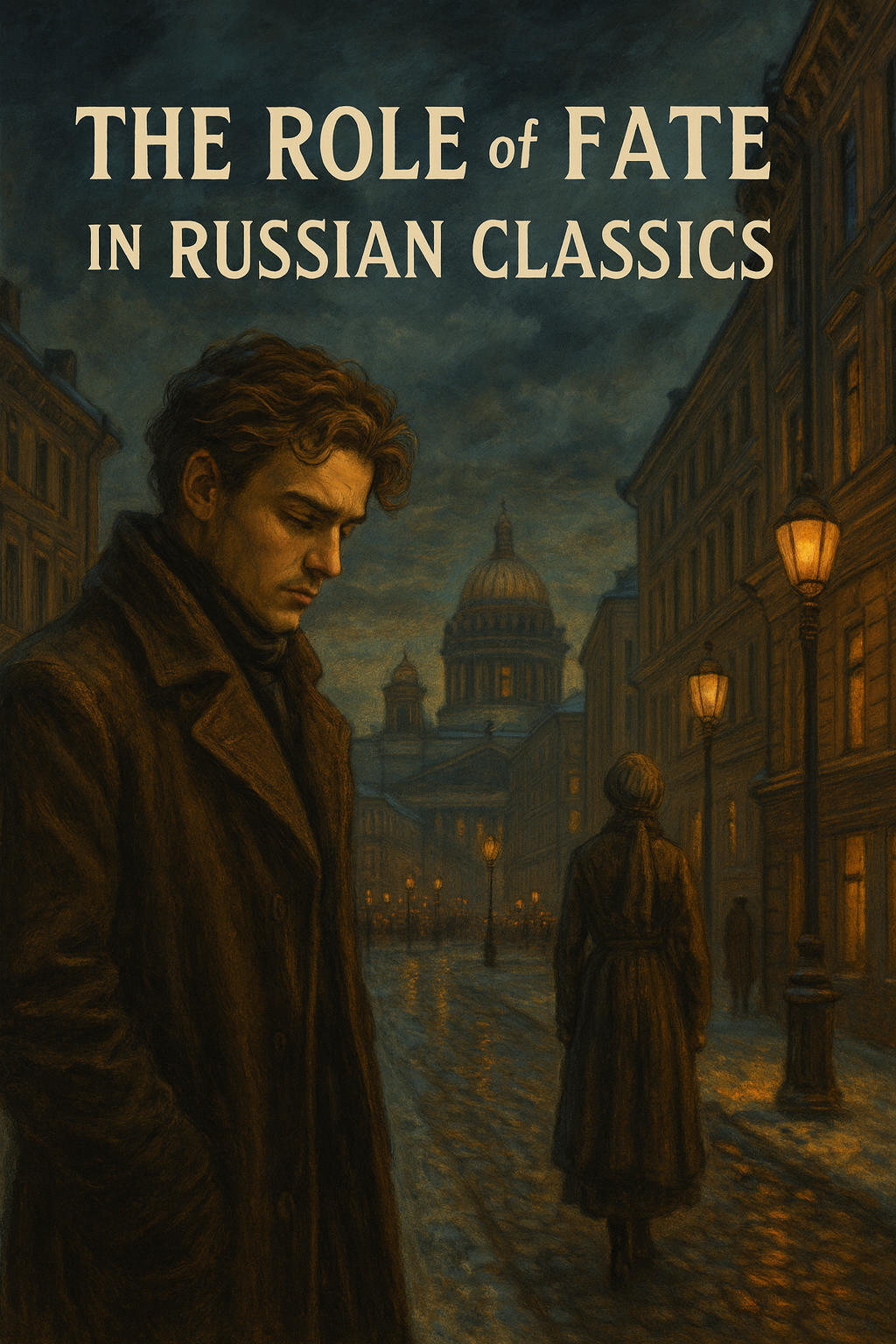
Few literary traditions grapple with the mystery of fate as intensely, painfully, and poetically as Russian literature, where characters often seem to be caught in a web of inevitability—trapped between their desires and destinies, between personal will and the unforgiving weight of history, family, and divine judgment. In the pages of Tolstoy, Dostoevsky, Pushkin, and Lermontov, fate is not merely a narrative device or a symbolic abstraction; it is a living, breathing presence—sometimes silent, sometimes cruel, always watching. This tension between free will and predestination haunts the Russian literary imagination, shaping its most iconic works and leaving readers to wonder: do we choose our paths, or are they chosen for us?
Unlike in many Western novels, where the plot often hinges on a hero's ability to overcome obstacles and change their fate, Russian classics tend to resist such redemptive arcs. Tragedy is not a byproduct of bad luck—it is frequently the culmination of deep philosophical, moral, and spiritual forces that suggest a kind of cosmic determinism. Characters fall not just because of their flaws, but because their fall was, in some sense, foreordained. Yet paradoxically, this sense of inevitability does not reduce the drama—it heightens it. Knowing that doom is on the horizon does not make it easier to watch; it makes it more profound.
The Russian obsession with fate is not just about storytelling; it reflects centuries of political repression, Orthodox theology, and a national history riddled with suffering and unpredictability. For generations of readers and writers, fate has not been a metaphor—it has been a reality. The unpredictable will of tsars, wars, revolutions, and exiles gave rise to a worldview in which the future was never guaranteed, and personal choice could be crushed under the wheel of collective destiny.
In this article, we’ll explore how the theme of fate plays out in Russian classics, why it occupies such a central place in the Russian imagination, and how it invites readers not to despair, but to reflect on their own agency, limitations, and capacity for moral courage.
I. Fate in Russian Culture and History
To understand the role of fate in Russian literature, we must first understand the worldview that gave rise to it. The Russian psyche has been shaped by a long and often brutal history—one in which the individual's power to control their destiny has repeatedly been undercut by autocratic rulers, institutionalized serfdom, wars, and ideological regimes.
From the tsars who ruled with absolute authority to the Soviet government that dictated nearly every aspect of private life, generations of Russians lived in conditions where personal agency was severely limited. This bred a certain fatalism—an acceptance, even expectation, that life would involve suffering, loss, and uncontrollable external forces.
Orthodox Christianity also played a role in cultivating this outlook. Unlike Western Christianity, which often emphasizes individual salvation and moral autonomy, Eastern Orthodoxy stresses humility before divine will and the mysterious, often inscrutable, plan of God. Saints and martyrs in Russian hagiography do not fight their destinies—they accept them, finding spiritual transcendence in submission to suffering.
This theological and historical backdrop infused Russian literature with a deep sensitivity to the tension between free will and fate. Characters often experience life not as something they shape, but as something they must endure. Yet within that endurance, Russian writers often find meaning—and even moral power.
II. Fate and Tragedy in Dostoevsky
No writer confronts fate more directly—and more disturbingly—than Fyodor Dostoevsky. In novels such as Crime and Punishment, The Idiot, and The Brothers Karamazov, characters are drawn inexorably toward tragedy, as if caught in a moral and psychological gravity they cannot escape.
Take Raskolnikov, the protagonist of Crime and Punishment. His descent into guilt and madness after committing murder is not just the result of bad decisions—it feels like a reckoning that was always waiting for him. The novel raises the terrifying possibility that once a certain idea takes root in the mind (in this case, the idea of being a “superman” above moral law), fate begins to take over.
In The Brothers Karamazov, the parricide committed by Smerdyakov seems fated not just by his own warped psychology, but by the sins, pride, and neglect of the other Karamazovs. Ivan, Alyosha, and Dmitri all bear responsibility in ways that are not always linear but deeply existential. The novel asks: are we free to act, or are we bound by chains of spiritual inheritance?
Dostoevsky’s genius lies in making fate feel both external and internal. His characters are often trapped not by the stars, but by their own ideas, obsessions, traumas, and metaphysical questions. Fate is not just imposed—it is chosen, feared, and finally, revealed.
III. Tolstoy: Fate, History, and Moral Awakening
Leo Tolstoy approaches fate from a different angle. In War and Peace, he famously argues that historical events—like Napoleon’s invasion of Russia—are not shaped by great men, but by countless small decisions, habits, and spiritual conditions. The characters, from Pierre to Andrei to Natasha, struggle to understand their place in this vast, impersonal flow of history.
Tolstoy does not deny the existence of fate; rather, he redefines it. Fate is not a supernatural decree—it is the sum total of millions of choices, most of them unconscious. And yet, within this web of cause and effect, individual awakening is still possible.
Pierre’s transformation in War and Peace—from a passive, bumbling aristocrat to a thoughtful, spiritually aware man—is not a triumph over fate, but a journey into acceptance and humility. He does not master history; he finds peace within it.
Tolstoy’s later works, like The Death of Ivan Ilyich, explore fate on a more intimate scale. Ivan, a successful judge, faces death and realizes that his entire life has been a lie. His fate is not just to die, but to confront the falsity of his existence. Only in doing so does he find something resembling grace.
IV. Pushkin, Lermontov, and the Romantic Struggle
In the earlier Romantic period, fate in Russian literature takes on a more personal, passionate, and sometimes mythic quality. Alexander Pushkin’s Eugene Onegin is a tale of missed opportunities and emotional fatalism. Onegin rejects the love of Tatyana when she is young and naive, only to realize too late that she was his destiny. By then, her fate has changed—she is married, and her love has cooled.
Pushkin does not frame this as a moral lesson. It is simply life—tragic, ironic, and irreversible. Fate is less divine justice and more the result of timing, character, and miscommunication.
Lermontov’s A Hero of Our Time takes this fatalism even further. Its protagonist, Pechorin, is a man doomed by his own detachment and narcissism. He seduces women, ruins friendships, and provokes duels—not out of malice, but because he is bored, restless, and existentially empty. He recognizes his own destructiveness, but seems powerless to change it. His fate is self-authored, but still tragic.
These Romantic heroes do not fight fate—they flirt with it, test it, and ultimately succumb to it. In doing so, they reveal the loneliness and melancholy of a world without clear moral anchors.
V. Soviet and Post-Soviet Reimaginings of Fate
In the Soviet era, fate was reimagined through the lens of ideology and state power. Writers like Solzhenitsyn, Bulgakov, and Pasternak used the concept of fate to critique systems that claimed to control it.
In The Gulag Archipelago, Solzhenitsyn describes how arbitrary arrests, forced labor, and state violence could destroy lives overnight. Fate becomes political, institutionalized. And yet, even in these conditions, Solzhenitsyn insists on the individual’s capacity for moral choice. Suffering is not always chosen, but how we respond to it can shape our soul.
Bulgakov’s The Master and Margarita offers a surreal, metaphysical take on fate, with the devil himself visiting Moscow to reveal hidden truths and force characters to confront their spiritual emptiness. The novel suggests that fate is both absurd and divine—both punishment and liberation.
Post-Soviet literature continues this exploration, often questioning whether history will always repeat itself. Fate is seen not just as a philosophical problem but as a psychological inheritance—a trauma passed down through generations.
VI. Fate and the Russian Language
Even the Russian language reflects this cultural preoccupation with fate. Words like судьба (fate), предназначение(destiny or purpose), and рок (doom or fate) are common in both literature and conversation. Russian verbs of motion often emphasize direction and inevitability. The passive voice is frequently used to describe life events that "happened to" someone, subtly reinforcing a worldview in which individuals are acted upon more than they act.
Phrases such as:
"Что суждено, то и произойдёт" (What is fated will happen)
"На всё воля Божья" (Everything is God's will)
"Такова судьба" (Such is fate)
These expressions underscore a cultural comfort with ambiguity, resignation, and acceptance. But they also suggest a paradox: even in accepting fate, one can still act with dignity and purpose.
FAQs
Why is fate so central in Russian literature? It reflects the historical and spiritual conditions of Russian life—autocratic rule, Orthodox Christianity, and a cultural tradition that values endurance, introspection, and moral struggle.
Are Russian authors fatalistic? Not always. Many authors challenge fate, redefine it, or explore how individuals can still make meaningful choices within constraints.
How does fate differ in Russian literature compared to Western literature? Western literature often emphasizes overcoming obstacles and personal triumph. Russian literature tends to dwell on spiritual, existential, and societal limitations—and how people respond to them.
Is fate portrayed more as punishment or mystery? Both. Fate can be cruel and punishing, but it also serves as a space for philosophical exploration and, sometimes, transcendence.
Can understanding fate in Russian literature help me learn the language? Yes. It deepens your appreciation for idiomatic expressions, cultural references, and the emotional resonance behind certain words and phrases.
Read the Classics, Learn the Soul of the Language
Want to read Tolstoy, Dostoevsky, or Pushkin not just in translation—but in the original Russian? At Polyglottist Language Academy, our expert instructors will help you explore not just grammar and vocabulary, but the cultural and philosophical depth behind every sentence.
Whether you're just starting your Russian journey or you're ready to tackle the classics in their original form, we offer courses designed to engage your intellect and your imagination.
Join us today and discover how learning Russian can give you direct access to one of the most profound literary traditions in the world—where fate, freedom, and thought collide on every page.
Want to explore more about Russian language and culture?
Check out our full collection of articles on the Polyglottist Language Academy Blog, where we dive into everything from why fluent Russian isn’t fast Russian to how to survive a Russian toast and what it’s like to be the only foreigner in a Russian dacha community. Whether you're curious about grammar tips, cultural faux pas, or how Russians navigate public space, our blog offers fresh, engaging insights to support your learning journey.