
Pirozhki, Pies, and Coulibiac: The Art of Russian Stuffed Dough
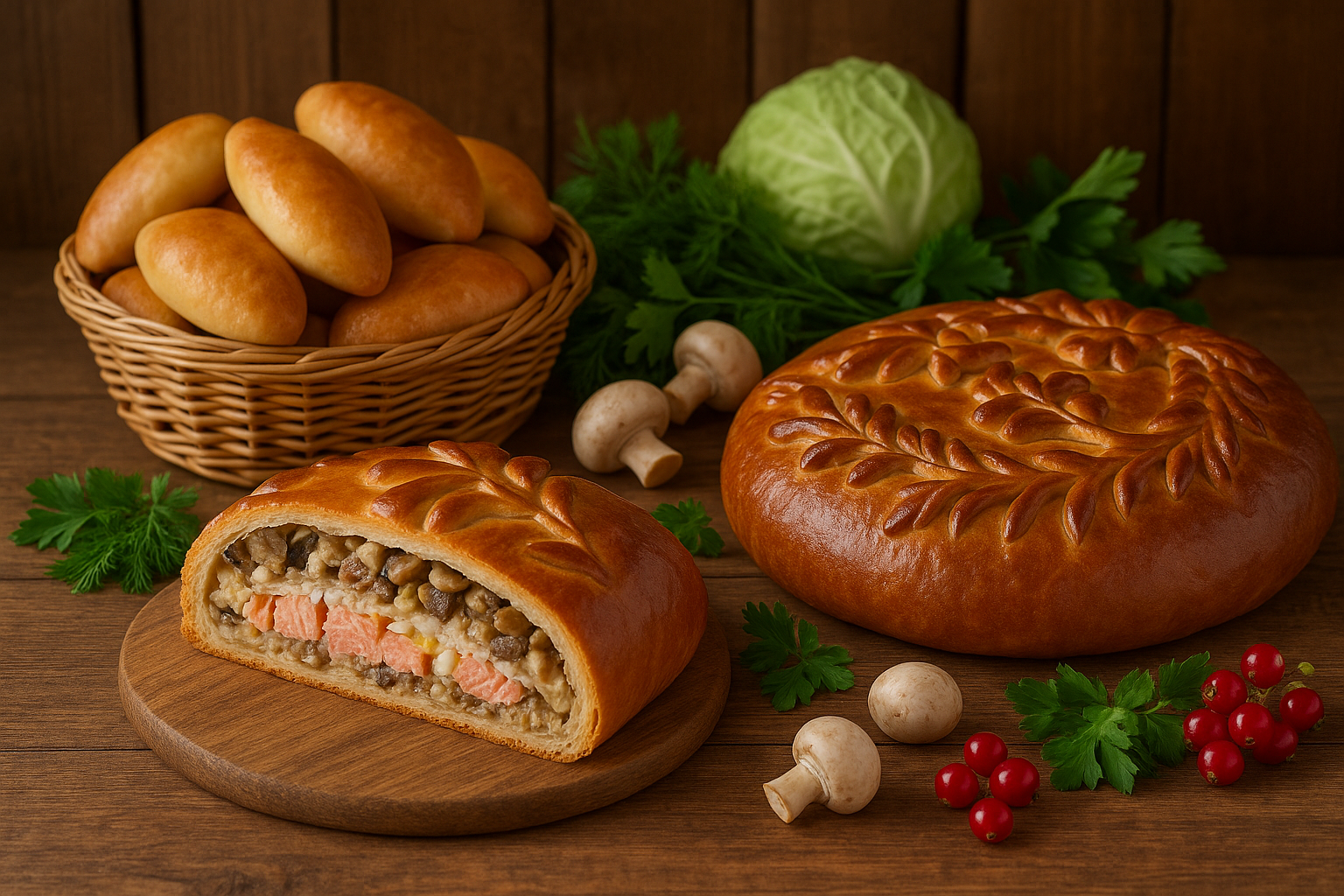
Few cuisines in the world celebrate the versatility of dough quite like Russia’s, where every generation has rolled, filled, baked, and fried their way into an endless variety of stuffed pastries. At the heart of this tradition are pirozhki, the handheld pies that appear on every table from Moscow to Siberia; pirogi, large family-sized pies often baked for celebrations; and coulibiac, the elaborate stuffed loaf that dazzled aristocrats and foreign visitors alike. These dishes are more than just food—they are stories wrapped in dough, reflections of Russia’s landscapes, seasons, and social history.
In Russia, stuffed dough is not a side dish but a cultural institution. Whether filled with meat, cabbage, mushrooms, potatoes, berries, or rice and fish, these pastries bridge everyday life and festive rituals. They are the snacks that children carry in school lunchboxes, the centerpiece of holiday banquets, the humble gifts brought to neighbors, and the culinary symbols of hospitality. For centuries, Russians have embraced the philosophy that almost anything can be tucked into dough, turning simple ingredients into nourishing and comforting meals.
What makes this tradition so fascinating is its range. On one end, there are pirozhki—small, portable, perfect for eating on the go. On the other, there are monumental pirogi baked in giant ovens to feed dozens, often decorated with intricate braids and patterns. And then there is coulibiac, a pie so rich and layered that it became a star of 19th-century banquets, admired by gourmands across Europe. Together, these forms show how Russian cuisine manages to be both rustic and refined, practical and artistic.
For language learners and cultural enthusiasts, exploring stuffed dough opens a window into everyday Russian life. The words themselves—пирожок (pi-ro-ZHOK), пирог (pi-ROG), кулебяка (ku-li-BYA-ka)—carry echoes of tradition. They appear in Russian literature, folklore, and even proverbs, always linked to comfort, celebration, and community. To bake or eat one of these pastries is to participate in a culinary dialogue with centuries of Russian history.
In this article, we’ll explore the art of Russian stuffed dough in depth. We’ll look at the history of pirozhki, pies, and coulibiac, the diversity of fillings, the techniques of preparation, and their role in Russian culture. Along the way, we’ll uncover how these dishes connect to rituals, holidays, and language itself. By the end, you’ll understand why Russians never tire of finding new ways to wrap flavors inside warm, golden crusts.
The History of Stuffed Dough in Russia
Bread has always been central to Russian life. In fact, the Russian word for “feast,” хлеб-соль (literally “bread and salt”), underscores the symbolic weight of bread as a staple and as a gesture of hospitality. Stuffed breads and pies emerged as a natural extension of this tradition, transforming bread from a simple food into a canvas for creativity.
Medieval Origins: Early Russian pies were often made with rye dough and filled with cabbage, fish, or buckwheat—ingredients common to the Russian countryside.
Festive Symbolism: By the 16th and 17th centuries, pies had become staples of feasts, weddings, and religious holidays. Large pirogi often symbolized prosperity and abundance.
Influence of Trade and Aristocracy: As Russia opened to European influence, ingredients like rice, lemons, and spices began appearing in coulibiacs, adding layers of sophistication.
Thus, stuffed dough reflects both Russia’s peasant roots and its imperial grandeur.
Pirozhki: The Everyday Russian Pastry
What Are Pirozhki?
Pirozhki (singular: pirozhok) are small pastries filled with sweet or savory ingredients, made with either yeast dough (soft and fluffy) or shortcrust dough (crispy and flaky). They can be baked or fried, making them endlessly adaptable.
Common Fillings
Savory: cabbage and egg, potatoes and mushrooms, ground beef, rice with egg, fish.
Sweet: cherries, apples, cottage cheese (tvorog), berries.
Where You’ll Find Them
At home, fresh from the oven or pan.
In school cafeterias, where children line up for hot pirozhki at lunchtime.
In train stations and bakeries, sold as the quintessential Russian street food.
Cultural Meaning
Pirozhki are comfort food at its finest. They symbolize warmth, care, and hospitality. To be offered a pirozhok is to be welcomed into someone’s circle.
Pirogi: Feasts in Dough
What Is a Pirog?
While pirozhki are small, a pirog is a large pie, often rectangular or round, meant to be sliced and shared. These pies can be savory or sweet, simple or extravagant.
Traditional Fillings
Salmon with rice and onions.
Mushrooms and buckwheat.
Cabbage and egg.
Sweet fillings like jam, apples, or berries.
Decorative Art
Large pirogi are often works of art, decorated with braided dough, flowers, and patterns on top. They were historically presented at weddings, holidays, and banquets as symbols of abundance and joy.
Coulibiac: The Aristocratic Pie
What Is Coulibiac?
Coulibiac (кулебяка) is a Russian stuffed loaf that became famous in 19th-century aristocratic cuisine. Traditionally, it features layers of fish (often salmon or sturgeon), rice or buckwheat, mushrooms, onions, eggs, and sometimes pancakes separating the layers.
Why It Stands Out
Complex and rich, coulibiac was designed to impress guests.
It entered French cuisine after being popularized by chefs like Escoffier, who admired its structure.
Today, it remains a showpiece dish, though rarely made outside festive occasions.
The Symbolism of Stuffed Dough
Stuffed dough plays a symbolic role in Russian culture:
Hospitality: Offering guests pies is a sign of generosity.
Community: Large pies unite families and villages around the table.
Celebration: Weddings, baptisms, and holidays all include pies as centerpieces.
Folklore: Russian proverbs often mention pies, e.g., Не красна изба углами, а красна пирогами (“A house is not made beautiful by its corners, but by its pies”).
Regional Variations
Russia’s vast size means endless regional adaptations:
Northern Russia: Fish pies dominate, using salmon, herring, or pike.
Central Russia: Cabbage, mushrooms, and potatoes fill everyday pies.
Siberia: Meat and game pies reflect the hunting traditions.
Volga Region: Rice and eggs appear, influenced by trade routes.
Each region reflects its local environment and resources, yet the unifying theme remains: dough as a vessel for nourishment and creativity.
Stuffed Dough in Russian Literature and Culture
Pies appear everywhere in Russian culture, from literature to art:
In Gogol’s Dead Souls, a description of a banquet includes towering pies, symbols of Russian hospitality.
In Tolstoy’s War and Peace, pies represent domestic comfort amid chaos.
In countless fairy tales, humble pirozhki symbolize kindness and abundance.
The recurring presence of pies underscores their cultural importance.
Language Learner’s Corner: Useful Vocabulary
Пирожок (pirozhok) – small stuffed pastry
Пирожки (pirozhki) – plural
Пирог (pirog) – large pie
Кулебяка (kulibyaka) – coulibiac
Начинка (nachinka) – filling
Капуста (kapusta) – cabbage
Картошка (kartoshka) – potato
Грибы (griby) – mushrooms
Ягоды (yagody) – berries
Practicing these words while cooking or eating pies makes language learning practical and delicious.
FAQs: Russian Stuffed Dough
1. What is the difference between pirozhki and pirog?
Pirozhki are small, individual pastries, while a pirog is a large pie meant to be sliced and shared.
2. Are pirozhki always savory?
No. They can be filled with sweet fillings like berries, apples, or cottage cheese.
3. Is coulibiac still made today?
Yes, though it’s less common. It’s typically prepared for special occasions and in traditional restaurants.
4. Can pirozhki be fried as well as baked?
Absolutely. Both methods are popular, and each produces a different texture.
5. Do Russians eat pies every day?
Not every day, but pies are common for family meals, celebrations, and as snacks.
6. Are Russian pies similar to Western pies?
They share similarities but often differ in fillings and dough types. Russian pies emphasize savory fillings more than Western fruit pies.
7. Can vegetarians enjoy Russian pies?
Yes. Vegetarian fillings like cabbage, mushrooms, and potatoes are very traditional.
8. Why are pies so symbolic in Russian culture?
They represent hospitality, community, and abundance, making them integral to celebrations and folklore.
Conclusion: Russia’s Love Affair with Dough
Pirozhki, pies, and coulibiac show the incredible range of Russian stuffed dough, from humble snacks to grand feasts. They reflect the country’s landscapes, history, and values, reminding us that food is never just sustenance—it is memory, art, and identity. To taste one of these pies is to connect with centuries of Russian tradition.
At Polyglottist Language Academy, we believe language learning should go hand in hand with cultural discovery. Our Russian classes explore not only grammar and vocabulary but also the foods, traditions, and rituals that make the language alive. If you want to dive deeper into Russian life and learn to speak with authenticity, sign up for our classes today.
And if you enjoyed this article, you’ll love exploring more of our cultural and language posts: