
Russian Writers Who Were Censored, Exiled — or Killed
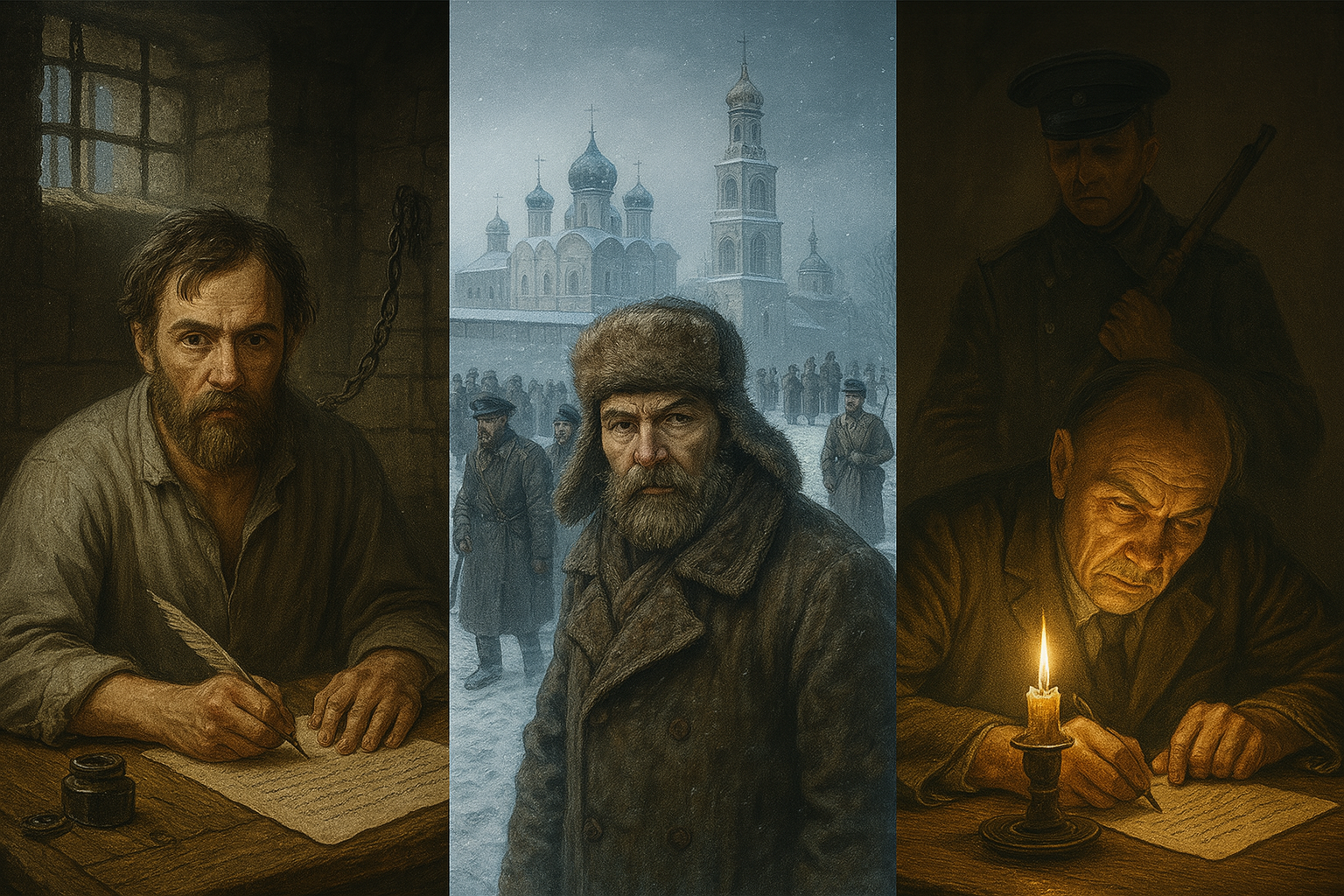
Explore the powerful stories of Russian writers who risked—and often lost—their lives for literature. Censorship, exile, and death shaped their legacy.
Introduction: When Literature Is Treated Like a Crime
In many countries, writing a novel might earn you praise, applause, or perhaps a quiet shelf in a library—but in Russia, writing the wrong book at the wrong time could cost you your job, your freedom, your family, or even your life. For centuries, Russian writers have paid an extraordinary price for their words. They have been silenced by tsars, censored by Soviets, exiled to Siberia, or executed for expressing thoughts that were too truthful, too powerful, or simply too dangerous. In a country where the written word was often treated as a political weapon, to be a writer was to live under constant threat.
Russian literature isn’t just great because of its psychological depth or philosophical intensity—it’s great because it was forged under pressure. These weren’t authors working in peace and quiet; they were artists dodging censors, whispering subversion between the lines, and risking everything to tell the truth. To understand Russian literature is to understand that its beauty is often stained with fear, blood, and resistance.
What sets Russian literary history apart is the way it has been entangled—over and over again—with state power, ideology, and control. While in other nations writers were free to explore personal stories or moral questions, in Russia, the stakes were higher: a single poem could be declared subversive, a novel could be banned before it was finished, and a journal entry could become evidence in a trial. Writers had to walk a thin line between expression and survival, often relying on metaphor, allegory, or coded language just to preserve their work. And still, many chose to write the truth—even when it meant losing everything.
This article is about those writers. It’s about the men and women who were arrested for their poems, who were sent into exile for their essays, who died in prison camps for their novels. Some were world-famous, like Dostoevsky and Solzhenitsyn. Others, like Natalia Ginzburg or Osip Mandelstam, were only recognized after their deaths. What they all shared was a belief that language matters—that stories, poems, and ideas could pierce the silence of oppression and awaken the conscience of a people.
These writers remind us that censorship is not just about deleting words; it’s about trying to erase truth. And every time a Russian writer picked up a pen in defiance of that erasure, they were not just writing literature—they were creating history.
Why Were So Many Russian Writers Censored or Punished?
Literature as a Political Threat
In Russia, the written word has always carried political weight. Writers were often seen not just as artists, but as public figures who shaped national identity, public opinion, and moral discourse. That gave them power—and made them targets.
Under the Czars: The state maintained strict censorship bureaus. Any publication required approval. Even correspondence could be monitored.
Under the Soviets: Censorship evolved into state-controlled ideology. Writers were expected to follow Socialist Realism and glorify the regime. Deviating meant persecution.
In both eras, the truth could get you killed.
1. Alexander Pushkin: Watched and Exiled
Though celebrated as the father of modern Russian literature, Alexander Pushkin lived under close surveillance. His political sympathies and association with liberal intellectuals made the tsar uneasy.
Punishment: Exiled from the capital in 1820.
Cause: Private letters and verses that criticized autocracy.
Legacy: Pushkin set the stage for Russian writers to use literature as a form of dissent.
2. Fyodor Dostoevsky: Death Sentence Commuted
Fyodor Dostoevsky was arrested in 1849 for participating in a radical intellectual group. He was sentenced to death and stood before a firing squad—only to have his sentence commuted at the last second.
Punishment: Four years in a Siberian labor camp, followed by forced military service.
Result: His experiences informed his later masterpieces, which wrestle with faith, free will, and redemption.
Impact: One of the most influential writers of all time, shaped by suffering.
3. Anna Akhmatova: Silenced but Not Broken
Anna Akhmatova, a poet of enormous talent and emotional depth, refused to leave Russia even when her work was banned and her son imprisoned.
Repression: Forbidden from publishing for years under Stalin.
Masterpiece: Requiem, a cycle of poems about Stalinist terror, was memorized and circulated secretly.
Quote: “No, not under the vault of alien skies, / And not under the shelter of alien wings— / I was with my people then, / There where my people, unfortunately, were.”
4. Osip Mandelstam: Poetry as a Death Sentence
Osip Mandelstam wrote a satirical poem about Stalin that was never officially published—but it still reached the wrong ears.
Arrested: 1934 and again in 1938.
Died: In a Siberian transit camp in 1938.
Legacy: His courage inspired generations of poets, and his widow preserved his work by memorizing it.
5. Boris Pasternak: Nobel Prize Rejected Under Pressure
Boris Pasternak won the Nobel Prize for Doctor Zhivago, a novel the Soviet Union refused to publish.
Punishment: Expelled from the Soviet Writers’ Union. Forced to publicly decline the Nobel.
Reaction: Hounded in the press as a traitor. His funeral was monitored by the KGB.
Legacy: Doctor Zhivago became a global symbol of artistic defiance.
6. Aleksandr Solzhenitsyn: Exiled for Exposing the Gulag
Aleksandr Solzhenitsyn spent eight years in a labor camp and then exposed the entire Soviet gulag system in his multi-volume nonfiction work The Gulag Archipelago.
Punishment: Stripped of citizenship and exiled from the USSR in 1974.
Influence: Played a major role in revealing the brutality of Soviet repression to the world.
Return: Came back to Russia in 1994, hailed as a national hero.
7. Andrei Platonov: Muffled Genius
Andrei Platonov wrote surreal, emotionally powerful stories that portrayed the cruelty and absurdity of Stalinism.
Censorship: Nearly all of his major works were suppressed during his lifetime.
Death: Died impoverished and largely unknown in 1951.
Posthumous Recognition: Now regarded as one of Russia’s greatest 20th-century writers.
8. Natalia Gorbanevskaya: Poet and Protester
Natalia Gorbanevskaya was a poet and human rights activist arrested for participating in the 1968 Red Square protest against the Soviet invasion of Czechoslovakia.
Punishment: Declared insane and institutionalized.
Work: Published Red Square at Noon, chronicling the protest and its consequences.
Legacy: Became a symbol of intellectual resistance.
9. Varlam Shalamov: Chronicler of the Camps
Varlam Shalamov wrote Kolyma Tales, a harrowing short story collection about his years in one of the worst Soviet labor camps.
Experience: Spent 17 years in the Gulag.
Result: His writing is stark, haunting, and brutally honest.
Importance: Offers one of the most unflinching literary accounts of the Soviet prison system.
FAQs: Understanding Russian Literary Censorship
Why were Russian writers targeted by the government?
Because literature in Russia has always been taken seriously. Writers shaped public thought—and challenging the state’s narrative could be seen as subversive or treasonous.
Was all Russian literature censored?
No, but all publishing was tightly controlled. Writers who conformed to government ideology were often rewarded. Those who didn’t were punished or erased.
How did banned writers preserve their work?
Many used “samizdat” (self-publishing), memorization, oral circulation, or smuggled manuscripts abroad. Some wrote only for “the drawer,” hoping future generations would read their work.
Can these writers be read today?
Yes. Most of their works are now available in translation and widely studied. They remain essential reading for anyone interested in literature, freedom, and the resilience of the human spirit.
Why does this matter now?
Because censorship and authoritarianism still exist in many parts of the world. These writers show us what it means to tell the truth when it’s dangerous—and why doing so is necessary.
Final Thoughts: Words That Refused to Die
The Russian writers profiled in this article were not just artists—they were moral forces. They risked exile, imprisonment, and execution because they believed in the power of literature to confront injustice and preserve truth. Their legacy is more than literary. It is spiritual, cultural, and human.
To read their work is to engage in an act of remembrance. And to learn their language is to hear them clearly, without the distortion of censorship or translation.
Want to Read Russian Literature in the Original?
At Polyglottist Language Academy, we offer in-person and online Russian classes that connect you not only to the grammar and vocabulary of the language—but to its soul. Our classes are ideal for readers who want to explore Russian literature in the original, understand its historical context, and engage with its emotional depth.
Whether you're just starting or aiming to read Dostoevsky, Akhmatova, or Platonov without translation, we’re here to guide you.
👉 Join a Russian class today and start reading the words that regimes tried—but failed—to silence.
Want to explore more about Russian language and culture?
Check out our full collection of articles on the Polyglottist Language Academy Blog, where we dive into everything from why fluent Russian isn’t fast Russian to how to survive a Russian toast and what it’s like to be the only foreigner in a Russian dacha community. Whether you're curious about grammar tips, cultural faux pas, or how Russians navigate public space, our blog offers fresh, engaging insights to support your learning journey.