
10 Russian Short Films Perfect for Language Practice
Introduction
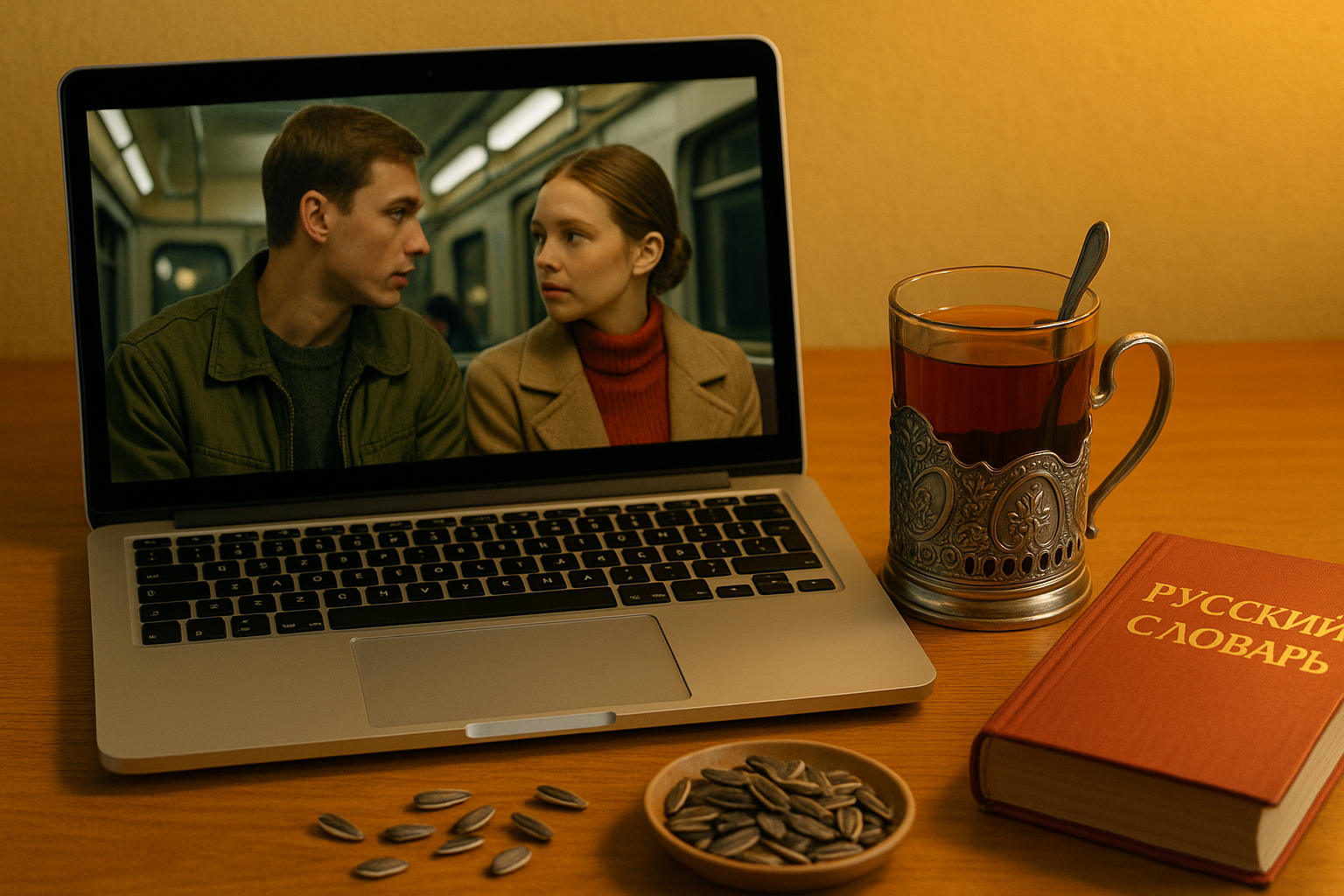
There is something uniquely powerful about the short film: in just a few minutes, a story unfolds that can surprise you, move you, and stay with you long after the credits roll, and for language learners, that same compressed storytelling can also become one of the most effective tools for improving comprehension, vocabulary, and cultural insight. Unlike feature-length films, which often require significant time investment and advanced listening skills, short films offer digestible, repeatable opportunities to encounter authentic Russian, making them the perfect bridge between classroom learning and real-world fluency.
Learning Russian can often feel intimidating—long words, unusual cases, fast speech—but when you watch a short film, you are not just passively consuming language, you are immersing yourself in a cultural moment. The dialogue is anchored in visuals, tone of voice, and setting, which helps you piece together meaning even if you don’t catch every word. What’s more, Russian short films have a long tradition of blending humor, irony, philosophy, and emotion, giving you not only practice with the language but also a glimpse into the Russian way of seeing the world.
Whether you’re at the very beginning of your studies and want to train your ear with everyday phrases, or you’re already intermediate or advanced and looking to refine your comprehension and cultural fluency, short films provide an ideal learning laboratory. They are short enough to watch multiple times, easy to pause and rewind, and often come with subtitles that allow you to cross-check your understanding. Even better, many Russian short films are freely available online, making them accessible resources for self-study.
In this article, we’ll explore 10 Russian short films perfect for language practice. Each one has been chosen not only for its artistic value but also for the ways it can support learners—whether by showcasing conversational Russian, exposing you to different registers of speech, or offering cultural context that enriches your understanding of the language. Along the way, you’ll discover why short films should be part of your Russian learning routine, how to watch them effectively, and which films to start with depending on your level.
1. “Кирпичи” (Bricks)
This short film follows two boys in a post-Soviet courtyard as they play a game that spirals into unexpected seriousness. The language is simple and colloquial, making it great for beginners. You’ll hear natural dialogue between children—short sentences, slang, and repetition—which is excellent for ear training.
Learning focus: casual Russian, children’s speech, playground vocabulary.
2. “Собачий кайф” (Dog’s Bliss)
A humorous but poignant short about a stray dog wandering the city and observing humans. The narration is light, witty, and full of idiomatic expressions, offering learners exposure to figurative Russian.
Learning focus: idioms, descriptive language, storytelling tone.
3. “Страна Оз” (Land of Oz) – short student cut
Though the feature-length film is famous, the student short that inspired it is only 20 minutes long. It shows life in provincial Russia during New Year’s Eve, full of chaotic and humorous interactions.
Learning focus: regional accents, everyday conversation, festive vocabulary.
4. “Встреча” (The Meeting)
Two strangers meet on a train—an iconic Russian setting for conversations. The film is dialogue-heavy, with characters exchanging personal stories and philosophical reflections.
Learning focus: conversational Russian, small talk, reflective speech.
5. “Фонарь” (The Lantern)
A visually beautiful short where dialogue is minimal, but what is spoken is full of emotion. This is ideal for beginners who want to focus on tone, context, and emotion rather than fast speech.
Learning focus: listening to intonation, connecting visuals with meaning.
6. “Петр и Волк” (Peter and the Wolf) – animated short
This Oscar-winning short film based on Prokofiev’s musical tale has minimal dialogue, but occasional narration in Russian versions makes it a great entry point. Learners can rely on visuals while absorbing new words.
Learning focus: narration, rhythm of Russian speech, fairy-tale vocabulary.
7. “Короткие встречи” (Brief Encounters) – student short
A student short inspired by Kira Muratova’s style, exploring fleeting connections in everyday life. The film is slow-paced and uses realistic dialogue.
Learning focus: urban vocabulary, emotions, natural pauses in Russian.
8. “Остановка” (The Bus Stop)
A comedic short about people waiting for a bus in the cold, engaging in absurd conversations. The humor lies in everyday complaints, irony, and sarcasm—all essential elements of Russian communication.
Learning focus: sarcasm, humor, colloquial phrases.
9. “Чистый понедельник” (A Clean Monday) – short adaptation
Based on Bunin’s classic story, this adaptation condenses rich literary dialogue into a short runtime. It’s a great introduction to elevated Russian language.
Learning focus: literary vocabulary, formal register, poetic expressions.
10. “Нормально” (Normal)
A slice-of-life short capturing a day in Moscow, with characters constantly saying “нормально” in different contexts. It’s a brilliant example of how one word can mean many things depending on intonation.
Learning focus: pragmatics, multiple meanings, context-based interpretation.
How to Watch Russian Short Films for Learning
Watch once without subtitles. Focus on context and visuals.
Rewatch with Russian subtitles. Pay attention to spelling and phrasing.
Take notes. Write down new words, idioms, or repeated phrases.
Practice shadowing. Repeat aloud after the characters to improve pronunciation.
Revisit often. Short films are perfect for multiple viewings—you’ll catch new details each time.
Why Short Films Work Better Than Clips or Full Movies
Manageable length: 5–20 minutes is ideal for study.
Self-contained stories: You get full context in one sitting.
Diverse styles: From animation to drama to comedy, exposing you to different registers.
Cultural immersion: Short films often tackle everyday life, humor, or philosophy—key parts of Russian culture.
FAQs
Q: I’m a complete beginner. Should I watch these films without subtitles?
A: Yes, at least once. Even if you don’t understand everything, you’ll train your ear to Russian sounds. Then, watch with Russian subtitles for reinforcement.
Q: Are short films better than watching TV series?
A: Both are valuable, but short films allow you to finish a story quickly and rewatch multiple times, which makes them more efficient for study.
Q: How many times should I rewatch a short film?
A: Ideally three to four times—first for overall meaning, second with subtitles, third to focus on vocabulary, and a final time to shadow speech.
Q: Where can I find these Russian short films?
A: Many are available on YouTube, film school archives, or Russian cultural platforms such as КиноПоиск.
Q: Which short film is best for intermediate learners?
A: “Встреча” (The Meeting) is excellent because it’s dialogue-heavy but clear and slow enough for learners.
Conclusion and Next Steps
Russian short films are not just entertainment—they are compact, powerful learning tools that bring together language, culture, and emotion in a way no textbook can. By integrating these films into your study routine, you’ll sharpen your listening skills, pick up authentic phrases, and gain cultural fluency in a way that feels natural and engaging.
At Polyglottist Language Academy, we believe that learning a language goes beyond grammar drills and vocabulary lists. That’s why our Russian classes integrate film, literature, and culture to give you a full immersion experience. Whether you want to start with the basics, polish your conversational Russian, or dive into literary analysis, our classes—online and in-person—can help you reach your goals.
👉 Ready to make your Russian come alive? Sign up today for Russian classes at Polyglottist Language Academy and start learning the language the way it’s meant to be experienced.
Explore More from Our Blog
If you enjoyed this article, you may also like: