
Pozharsky Cutlets: The Dish That Won Over Tsars and Writers
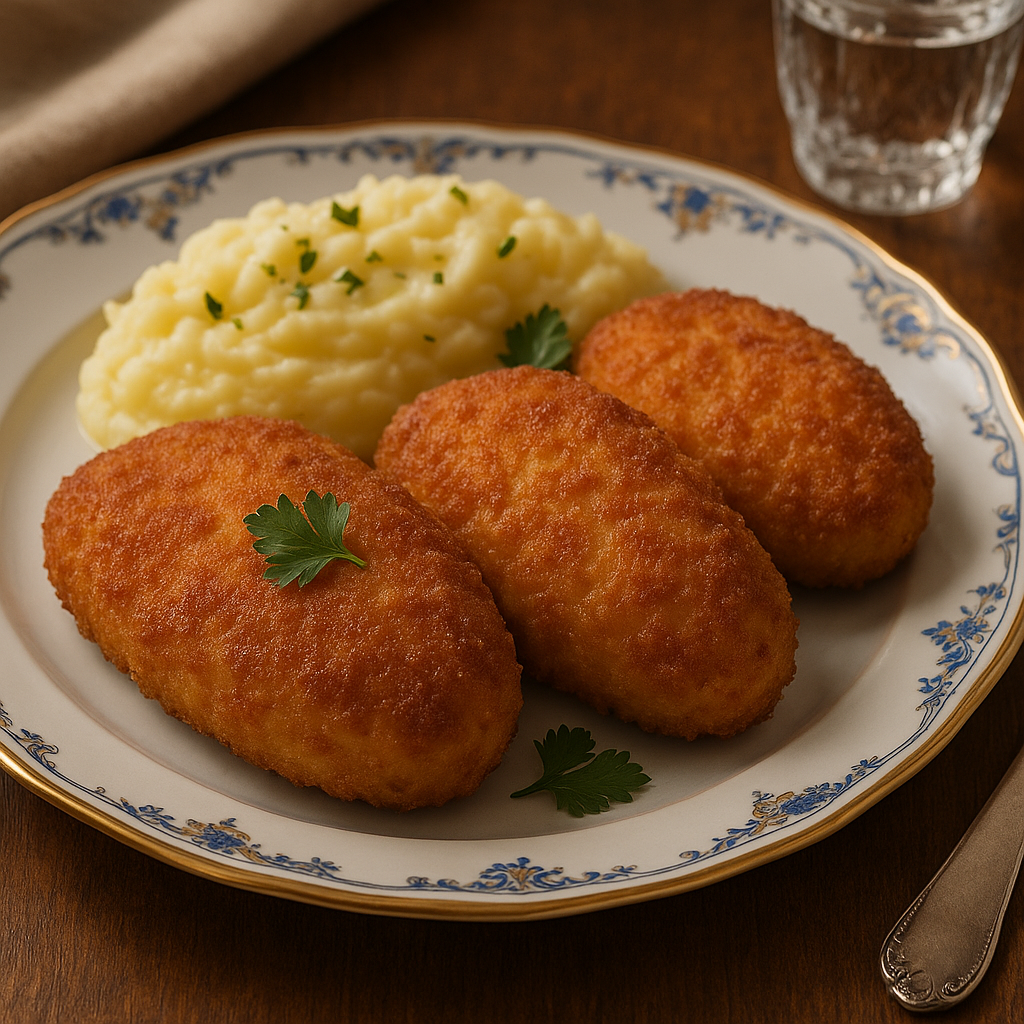
Russian cuisine has always had a unique way of balancing the hearty with the refined, of transforming simple, everyday ingredients into dishes worthy of royal banquets, and few foods embody this paradox better than the famous Pozharsky cutlets. Born in a provincial inn, perfected in the kitchens of noble estates, and immortalized in literature, these deceptively humble chicken patties managed to capture the attention of Russia’s most demanding diners: the tsars themselves, alongside some of the country’s greatest writers. To understand Pozharsky cutlets is to understand not just a recipe, but a cultural phenomenon—one that reveals how food traveled from provincial towns to St. Petersburg palaces, from folklore to French cookbooks, from history to our own tables today.
In Russia, food is rarely just food. A dish can carry layers of symbolism, identity, and memory. Borscht speaks of resilience, kasha of tradition, pelmeni of Siberian winters. But Pozharsky cutlets tell another story: the story of aspiration, refinement, and the enduring Russian love affair with dishes that combine substance with elegance. These golden, crispy cutlets are more than a meal; they are a reminder of how Russian cuisine sought to position itself on the European stage, embracing French techniques while never abandoning its own flavors.
In this article, we’ll dive deep into the history of Pozharsky cutlets, tracing their journey from a tavern in Torzhok to the pages of Pushkin’s letters and the dining rooms of Russian emperors. We’ll examine their unique cooking method, why they became a favorite of aristocrats and writers alike, and how they represent the blending of Russian and European culinary traditions. Along the way, we’ll offer cultural insights, literary references, and even a look at how you can try them yourself today.
So, let’s explore why this dish—crispy on the outside, tender and buttery on the inside—deserves its place in the story of Russian culture.
The Origins of Pozharsky Cutlets
The legend begins in the early 19th century in the small town of Torzhok, located between Moscow and Saint Petersburg. Torzhok was a popular stopover for travelers journeying between the two capitals, and its inns became famous for hearty meals that could revive weary nobles, merchants, and couriers. Among these establishments was the inn of Evdokim Pozharsky.
Pozharsky originally served veal cutlets, a common enough dish of the time. But according to culinary historians, when veal was scarce, he replaced it with minced chicken, adding soaked white bread to keep the meat moist. The result was unexpectedly delicious: tender, airy chicken patties coated in breadcrumbs and fried until golden. The invention proved so popular that the family name soon became attached to the dish itself.
Later, it was Pozharsky’s daughter Darya who perfected the recipe and turned the inn into a culinary landmark. Travelers passing through Torzhok began to ask specifically for “Pozharsky cutlets,” and soon the fame of the dish spread far beyond the town.
A Dish Fit for a Tsar
It is said that Tsar Nicholas I himself stopped in Torzhok to sample the famous cutlets and was so impressed that he ordered them to be served at his court. From then on, Pozharsky cutlets were no longer just a provincial curiosity—they were a dish worthy of imperial banquets. Their appeal lay in their paradox: unlike heavy meat roasts or elaborate French soufflés, Pozharsky cutlets offered a dish that was simultaneously simple and refined, satisfying and elegant.
The tsars, who were eager to demonstrate Russia’s sophistication, embraced dishes like this that combined local ingredients with European culinary finesse. Pozharsky cutlets soon appeared in aristocratic households and were codified in cookbooks that blended Russian tradition with French technique.
Writers and Pozharsky Cutlets
No less than Alexander Pushkin, Russia’s most celebrated poet, mentioned them in his letters. In one playful note, he urged a friend traveling through Torzhok to stop and eat the famous cutlets. This literary seal of approval elevated the dish to something more than just a local specialty—it became a cultural symbol.
Later writers and travelers also immortalized Pozharsky cutlets in their accounts. The great gourmand and gastronome Alexandre Dumas (author of The Three Musketeers) praised them during his travels in Russia. Russian satirists and essayists mentioned them as a kind of shorthand for provincial refinement.
By the mid-19th century, to know and love Pozharsky cutlets was to participate in a wider cultural conversation, one where food, literature, and national identity were deeply intertwined.
The Culinary Secret of Pozharsky Cutlets
So, what makes Pozharsky cutlets different from ordinary chicken patties?
Soaked White Bread in Butter – The bread is soaked in milk or cream, then combined with minced chicken. This lightens the texture and makes the cutlets airy.
Butter in the Meat – Chilled butter is often added to the mixture, which melts during frying, keeping the cutlet juicy.
Breadcrumb Coating – Unlike regular cutlets, Pozharsky cutlets are coated in finely grated white breadcrumbs, giving them a delicate, crispy crust.
Oval Shape – Traditionally, they are shaped into slightly elongated ovals, resembling a small croquette.
This technique made them stand out not only in Russia but also abroad. French chefs admired the refinement of the method, and Pozharsky cutlets began appearing in European cookbooks as an example of Russian culinary sophistication.
Pozharsky Cutlets and Russian Identity
At first glance, it may seem odd that a dish of minced chicken cutlets could carry so much cultural weight. But in 19th-century Russia, food was inseparable from questions of identity. The aristocracy was heavily influenced by French culture, but there was a growing movement to celebrate uniquely Russian contributions. Dishes like Pozharsky cutlets represented a compromise: refined enough to please European tastes, yet rooted in local ingredients and traditions.
For Russian writers, the dish symbolized the everyday charm of provincial life, a reminder that refinement did not always come from Paris but could spring from the kitchens of small-town Russia. For the tsars, it was a way of showing that Russia could stand proudly alongside European nations in matters of culture and cuisine.
Modern Variations
Today, Pozharsky cutlets can still be found in Russian restaurants, though their preparation varies. Some chefs stick to the traditional minced chicken and bread recipe, while others experiment with turkey or veal. In Soviet times, the dish was adapted into canteen versions—often heavier and less refined. Yet the true version, golden and buttery, remains a hallmark of classic Russian cuisine.
In recent years, Russian chefs have revived Pozharsky cutlets as part of a larger movement to reclaim traditional dishes and present them with modern flair. Served with creamy mashed potatoes or sautéed vegetables, they continue to embody that perfect blend of simplicity and elegance.
Cultural Significance
The enduring popularity of Pozharsky cutlets reminds us of how food travels across time and space. What started as a practical solution in a provincial inn became a dish that defined an era, celebrated by poets and tsars alike. It also shows the way Russian culture has always negotiated between its own traditions and European influences.
In a way, Pozharsky cutlets are a metaphor for the Russian language itself: rich, adaptable, capable of simplicity and grandeur. Just as writers used conjunctions and clauses to weave sentences that carried whole worlds within them, cooks in Torzhok wove together chicken, bread, and butter into a dish that has lasted for centuries.
FAQs About Pozharsky Cutlets
Q: What makes Pozharsky cutlets different from regular chicken cutlets?
A: Their airy texture and buttery flavor, achieved by mixing minced chicken with soaked bread and butter, then frying in breadcrumbs.
Q: Why are they called “Pozharsky”?
A: They were created by the Pozharsky family, innkeepers in Torzhok, who popularized the dish in the early 19th century.
Q: Did Pushkin really write about them?
A: Yes. Pushkin mentioned Pozharsky cutlets in his letters, recommending them to friends traveling through Torzhok.
Q: Are they still eaten today?
A: Yes. Traditional versions are served in Russian restaurants, and modern chefs are reinventing them with new twists.
Q: Are they hard to make at home?
A: They require some care (especially with the butter and bread mixture), but many home cooks prepare them successfully.
Q: Do they always use chicken?
A: Traditionally, yes, but variations with veal, turkey, or mixed meats also exist.
Q: What do you serve them with?
A: Mashed potatoes, rice, or vegetables are the most common accompaniments.
Q: Are they considered French-inspired or Russian?
A: They are firmly Russian, though their refined preparation reflects European culinary influence.
Conclusion
Pozharsky cutlets are more than just a delicious recipe; they are a window into Russian history, culture, and identity. From a small-town tavern to the tables of tsars and the pages of Pushkin’s letters, this dish shows how food can transcend its humble origins to become a national treasure. If you want to experience Russian culture in its most flavorful form, Pozharsky cutlets are an unforgettable entry point.
At Polyglottist Language Academy, we believe language and culture are inseparable. Just as dishes like Pozharsky cutlets carry centuries of history within them, so too does the Russian language. By learning Russian with us, you won’t just memorize words—you’ll uncover the stories, traditions, and nuances that make the culture come alive.
👉 Sign up for Russian classes at Polyglottist Language Academy and discover the richness of Russian language and culture for yourself.
And if you enjoyed this article, continue your journey into Russian life and language with our other posts:
Borscht Beyond Beets: The Many Variations Of Russia’s Most Famous Soup
Russian Pickling Tradition: Cucumbers, Sauerkraut, And Forest Mushrooms
Blini Through The Seasons: From Maslenitsa To Modern Brunch Tables
Zakuski In The 19th Century Russia: Caviar, Aspic, And Aristocratic Indulgence
The Comfort Of Olivier Salad: Why Russians Can’t Celebrate New Year Without It