
Murmansk: The Russian Arctic Capital of the Northern Lights
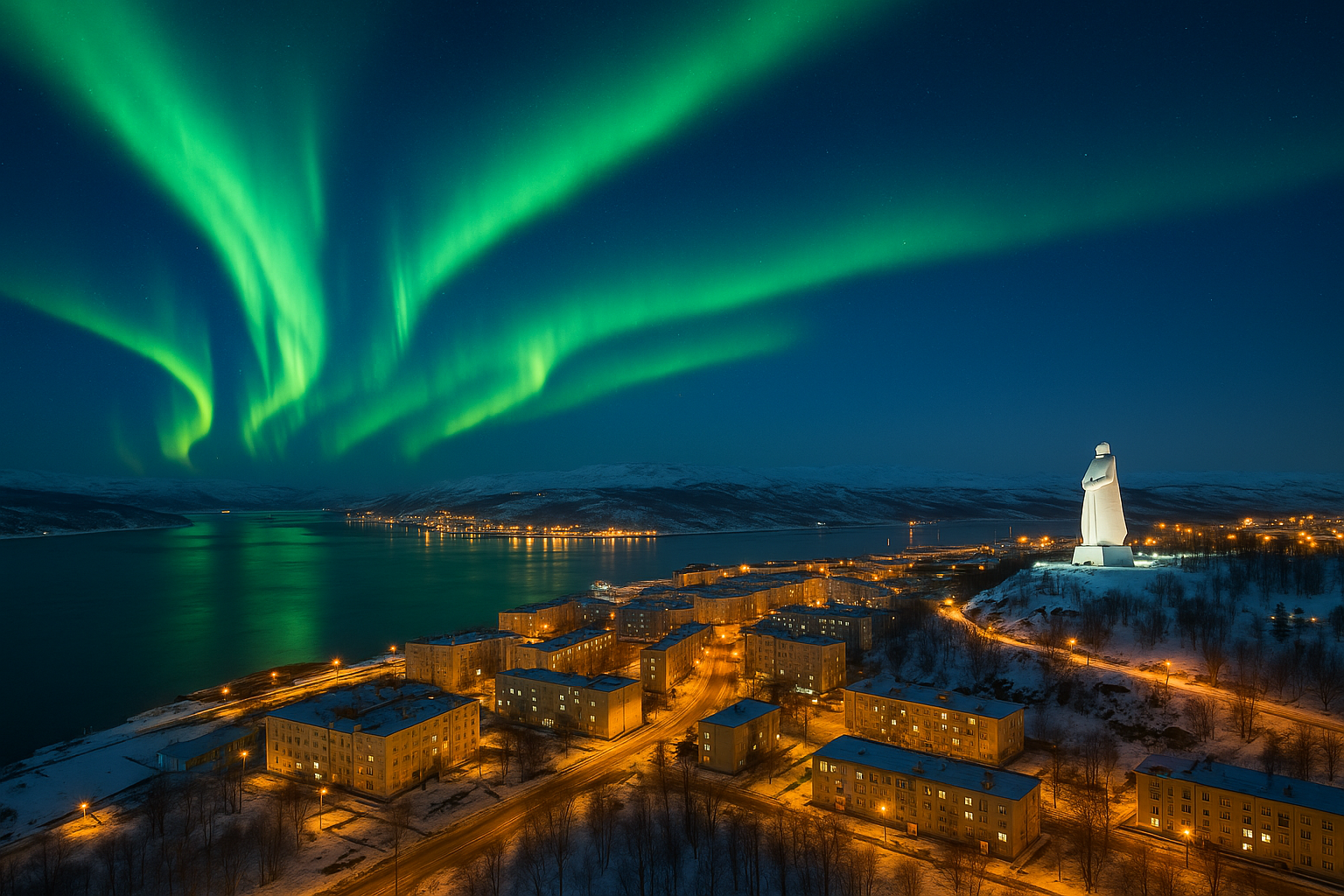
Few cities in the world occupy a space as simultaneously remote, mysterious, and strategically important as Murmansk, the Arctic outpost that has captured the imagination of travelers, scientists, and writers for over a century. Perched above the Arctic Circle on the Kola Peninsula, Murmansk is not just the largest city in the Arctic but also one of the most remarkable places in Russia—a city where polar nights stretch into weeks of darkness, where the sun disappears for nearly two months each winter, and where the ethereal glow of the northern lights regularly dances across the frozen sky.
Murmansk is a place where extremes define daily life. Winters are long and harsh, with icy winds blowing from the Barents Sea, yet summers bring endless days of light and surprising bursts of greenery. Its history is equally dramatic: founded during World War I as a vital port, it played an essential role during World War II, serving as a lifeline for Allied supplies delivered through Arctic convoys. Today, Murmansk remains strategically significant as the home port of Russia’s nuclear icebreaker fleet and as a hub for Arctic exploration. But beyond geopolitics and industry, Murmansk is a city that fascinates with its culture, resilience, and natural beauty.
What truly makes Murmansk stand apart from any other Russian city, however, is its relationship with the northern lights—Aurora Borealis. Here, far from the glow of southern cities, the Arctic skies regularly transform into a celestial theater of swirling green, purple, and red. For travelers and locals alike, these auroras are more than a natural phenomenon—they are an emotional and almost spiritual experience, a reminder of the raw power and beauty of the Arctic.
In this article, we’ll dive deep into Murmansk’s history, its geography, and its unique culture. We’ll explore the wonders of the polar night and the midnight sun, the folklore and science behind the northern lights, and the resilience of people who have made this Arctic capital their home. And finally, we’ll look at why Murmansk continues to attract visitors, adventurers, and language learners who want to immerse themselves in a side of Russia rarely seen by outsiders.
The History of Murmansk: A City Born of Necessity
Unlike many Russian cities that trace their roots back centuries, Murmansk is relatively young. It was founded in 1916 during World War I as Romanov-on-Murman (Романов-на-Мурмане), later renamed Murmansk after the Russian Revolution. Its creation was not a matter of gradual settlement but one of urgent necessity: Russia needed an ice-free port in the north to receive supplies from its allies.
The port’s location was carefully chosen. The Gulf Stream keeps the waters of the Kola Bay relatively ice-free year-round, a rare blessing in the Arctic. This meant ships could dock even in the coldest months—a lifeline in times of war. During World War II, Murmansk’s role became legendary. The city endured relentless German bombing but held out, enabling supplies from Britain and the United States to reach the Soviet Union. Murmansk was awarded the title of Hero City in recognition of its courage and sacrifice.
Today, reminders of that history remain everywhere: monuments to Arctic convoys, museums dedicated to wartime resilience, and an enduring sense of pride among locals. Murmansk is not just a city of the north—it is a city of survival and victory.
Murmansk and Its Harsh but Beautiful Climate
Living above the Arctic Circle means living with extremes. Murmansk experiences two phenomena that shape every aspect of life:
Polar Night (Полярная ночь): From early December to mid-January, the sun does not rise above the horizon. For 40 long days, the city is enveloped in darkness, with only a faint twilight around midday. For newcomers, the polar night can be disorienting, even challenging to mental health. For locals, it is part of life, a season that fosters resilience and community.
Midnight Sun (Полярный день): From mid-May to late July, the opposite happens: the sun never sets. Daylight lasts 24 hours, and the city buzzes with energy as people take advantage of the endless light. Parks, riversides, and outdoor cafés fill with life, and even at midnight, the sky glows as if it were afternoon.
These natural rhythms define Murmansk’s character. They also create the perfect backdrop for the northern lights, which are most visible during the long, dark winter nights.
Aurora Borealis: Murmansk’s Celestial Treasure
The northern lights are not unique to Murmansk, but few cities in the world are as perfectly positioned to see them. Between September and April, the skies over Murmansk regularly erupt into waves of shimmering green, purple, and red. Tourists from around the world flock here, often joining guided tours that venture outside the city to escape light pollution.
But for Murmansk residents, the aurora is part of daily life. Children grow up hearing stories of how the northern lights are the spirits of ancestors or the sparks from celestial battles. Scientists explain the phenomenon as solar particles colliding with Earth’s atmosphere. Poets and writers see it as a metaphor for hope in the long Arctic night.
Whatever the interpretation, the northern lights in Murmansk are unforgettable. They remind everyone who sees them that life in the Arctic is not only about endurance but also about witnessing moments of awe.
Culture and Daily Life in Murmansk
Despite its harsh climate, Murmansk has a rich cultural life. Theaters, museums, and concert halls thrive, often showcasing themes of Arctic exploration and wartime resilience. The Murmansk Regional Museum of Local Lore offers insights into the indigenous Sami people and the natural environment of the Kola Peninsula. The Murmansk Regional Drama Theater stages productions that reflect both Russian classics and modern works.
Cuisine also reflects Arctic life. Dishes often feature fish from the Barents Sea—salmon, cod, herring—alongside venison and berries from the tundra. Murmansk cafés serve piping-hot pies (pirogi), while restaurants offer reindeer meat and northern seafood prepared in both traditional and modern styles.
For those who live here, resilience is not just a word—it’s a way of life. People adapt to the darkness with community events, festivals, and traditions that celebrate the seasons. The city’s warmth comes not from its climate but from its people.
Murmansk in Literature and Art
Writers and artists have long been drawn to Murmansk and the Arctic north. Soviet-era literature often portrayed the city as a frontier of progress, a symbol of human resilience against nature’s extremes. Poets described the northern lights as metaphors for hope, inspiration, or fleeting beauty.
Travel writers marvel at the contradictions: a bustling industrial port in the middle of the tundra, a place where nuclear icebreakers and Sami reindeer herders coexist, where war monuments stand next to theaters and modern cafés. For many Russians, Murmansk represents both the hardships and the romantic allure of the Arctic.
Why Visit Murmansk?
For adventurous travelers, Murmansk offers a unique combination:
The chance to see the northern lights in a city with full amenities.
An immersion into Arctic culture, history, and cuisine.
Access to excursions into the tundra, where one can meet indigenous Sami people or visit reindeer farms.
A sense of experiencing a side of Russia far removed from Moscow or Saint Petersburg.
It is not an easy destination. Winters are cold and dark, and the city is more functional than picturesque. Yet this is exactly what gives Murmansk its charm—it is real, resilient, and unlike anywhere else.
FAQs About Murmansk
Q: When is the best time to see the northern lights in Murmansk?
A: The aurora season runs from September to April, with December through March offering the highest chances.
Q: How cold does it get in Murmansk?
A: Winter temperatures typically range between –10°C to –20°C, though the Gulf Stream keeps it milder than Siberia.
Q: How do locals cope with the polar night?
A: Through community traditions, festivals, and adaptive routines—plus lots of hot tea and warm food.
Q: Is Murmansk safe for tourists?
A: Yes, though as with any industrial city, it is best to stay aware of your surroundings. Tours are well-organized and popular.
Q: Can I meet indigenous Sami people there?
A: Yes. Sami cultural centers and reindeer farms near Murmansk welcome visitors.
Q: How do I get to Murmansk?
A: The city has an airport with flights from Moscow and Saint Petersburg, and trains connect it to other regions of Russia.
Q: Do people in Murmansk speak English?
A: Limited, but in tourist areas and hotels, English is increasingly common. Learning some Russian phrases will enrich your visit.
Q: What makes Murmansk different from other Arctic destinations?
A: It is the largest city above the Arctic Circle, combining northern lights tourism with cultural life, history, and strategic significance.
Conclusion
Murmansk is not a city of half-measures—it is a place of extremes, where darkness lasts for weeks, light lingers endlessly, and the skies themselves become a stage for nature’s most dazzling performance. To understand Murmansk is to appreciate not just the endurance of its people but also the beauty and wonder of the Arctic. Whether you visit for the northern lights, for its fascinating history, or for its resilient culture, Murmansk leaves an impression that lasts a lifetime.
At Polyglottist Language Academy, we believe that learning a language is about more than vocabulary and grammar—it’s about connecting to the stories, places, and people behind the words. Murmansk and the Russian Arctic are part of that story, and learning Russian opens the door to understanding them in a deeper way.
👉 Sign up for Russian classes at Polyglottist Language Academy and let your journey into Russian culture begin today.
And if this article sparked your curiosity, continue exploring Russia through our other blog posts: