
Few cities in Russia combine such an extraordinary mix of landscapes, climates, and cultural layers as Sochi, the sprawling resort city along the Black Sea coast. Known internationally for hosting the 2014 Winter Olympics, Sochi is often imagined as a city of ski jumps, ice rinks, and sports arenas. Yet long before the Olympic spotlight, Sochi had been Russia’s summer playground, nicknamed the country’s “Black Sea Riviera.” With subtropical beaches, lush botanical gardens, snow-capped mountains just a short drive away, and a history that stretches from ancient times to modern glamour, Sochi is one of the most intriguing destinations in Russia.
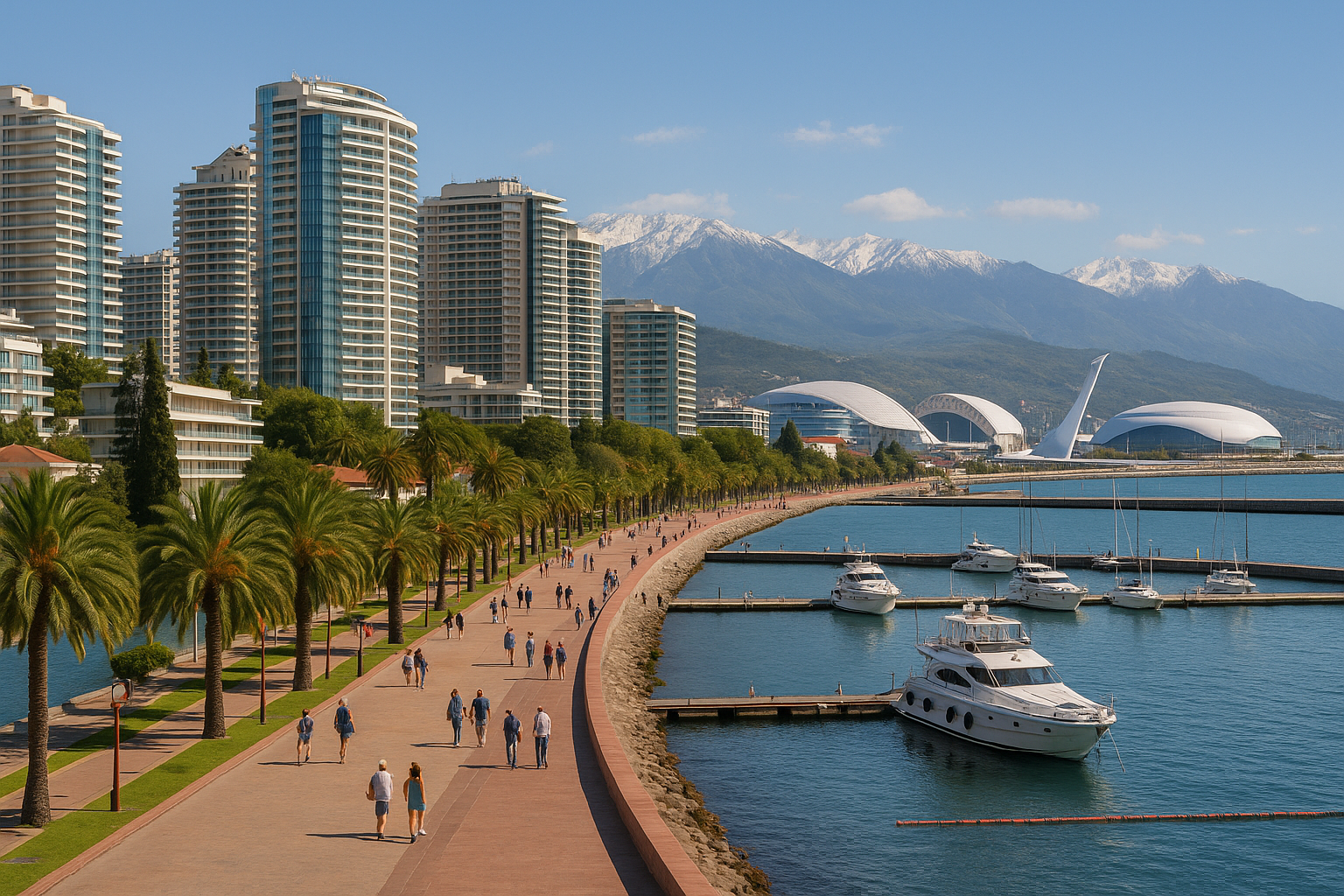
To walk along Sochi’s palm-lined promenades and gaze at the snowy peaks of the Caucasus Mountains rising in the background is to experience a paradox unique to this part of the world. On one hand, Sochi is unmistakably Russian—filled with dachas, sanatoriums, and cultural monuments. On the other, it feels Mediterranean, with citrus orchards, tea plantations, and a climate so mild that subtropical plants thrive here. For centuries, this combination of sea and mountains, tradition and modernity, has drawn visitors from across Russia and beyond.
The city’s reputation as a resort dates back to the 19th century, when members of the Russian aristocracy and intelligentsia began building summer residences here. During the Soviet era, Sochi became the quintessential holiday spot for ordinary citizens, with sanatoriums and wellness resorts offering workers a taste of seaside relaxation. Later, Sochi became a political and cultural symbol as well—Stalin himself maintained a summer residence here, and later leaders followed his example.
For travelers today, Sochi offers far more than just Olympic venues. It is a city where you can swim in the Black Sea in the morning and ski in the Caucasus Mountains in the afternoon. It is a place of bustling beaches, quiet mountain villages, and national parks filled with waterfalls, caves, and forests. It is also a city of festivals, from film and music events to sports competitions, which give it a cosmopolitan energy. And for learners of Russian, it is an immersive environment where you can practice the language in a relaxed, multicultural setting while exploring one of the most unique corners of the country.
In this article, we will look at Sochi beyond the Olympics. We’ll explore its history, its natural wonders, its role as Russia’s resort capital, and its cultural and linguistic significance. By the end, you’ll see why Sochi is more than a destination—it’s an experience that reveals a different side of Russia.
A Brief History of Sochi
Ancient Roots
The history of Sochi stretches back thousands of years. Archaeological finds show that the region was inhabited in ancient times by tribes connected to the Circassians and other peoples of the Caucasus. The Greeks and Romans knew of this area, and later it became a frontier between empires.
Russian Expansion
It wasn’t until the 19th century that Russia firmly established control over the Sochi region after the Caucasian War. The fertile climate and stunning scenery soon attracted settlers and vacationers. By the late 1800s, Sochi was already becoming a fashionable health resort, with its mineral springs and subtropical climate celebrated for their therapeutic qualities.
Soviet Sochi
In the Soviet period, Sochi became the ultimate workers’ resort. State-run sanatoriums were built along the coast, offering affordable vacations combined with health treatments. A visit to Sochi was both a reward and a sign of prestige. Stalin’s famous dacha, now a museum, still reflects the city’s importance in Soviet political life.
Olympic Spotlight
The 2014 Winter Olympics transformed Sochi’s infrastructure, introducing modern stadiums, hotels, and transportation links. While some venues remain symbols of that global event, the city itself has continued to thrive as a tourist destination, blending its Olympic legacy with its older identity as a resort town.
The Geography of Contrasts
Sochi’s geography is what makes it so unique:
The Black Sea Coast: With its pebble and sand beaches, the coast is the heart of Sochi’s summer appeal. The warm sea draws millions of visitors each year.
The Caucasus Mountains: Just a short drive inland, the mountains offer hiking, skiing, and breathtaking natural scenery. Krasnaya Polyana, the Olympic ski resort, is now one of Russia’s premier winter sports destinations.
Subtropical Climate: Sochi enjoys a humid subtropical climate—the only city in Russia with this weather. Palms, magnolias, and citrus trees grow alongside traditional Russian birches and pines.
This blend of sea and mountains means visitors can experience both Mediterranean-style beaches and Alpine-style slopes in the same trip.
Attractions in Sochi
Beaches and Promenades
Sochi’s beaches stretch for over 140 kilometers, offering everything from lively city beaches with cafés and entertainment to quieter stretches in small coastal villages. The Sochi Seaside Promenade is perfect for evening strolls.
Parks and Gardens
Sochi Arboretum: A vast botanical garden featuring plants from around the world.
Riviera Park: Built in the late 19th century, it remains a favorite with families.
Dendrarium: Famous for its subtropical species.
Cultural Sites
Stalin’s Dacha: Preserved in green paint to blend with the forest, this summer residence reflects the personal life of the Soviet leader.
Sochi Art Museum: Showcasing Russian art in a neoclassical building.
Winter Theatre: A cultural hub hosting performances year-round.
Natural Wonders
Agura Waterfalls: A series of beautiful cascades in the mountains near Sochi.
Vorontsov Caves: A large cave system with stalactites and stalagmites.
Sochi National Park: Covering over 190,000 hectares, it is one of the oldest national parks in Russia.
Krasnaya Polyana: Sochi’s Mountain Gem
Krasnaya Polyana, once a quiet mountain village, was transformed into a world-class ski resort for the Olympics. Today it offers:
Ski slopes in winter.
Hiking and mountain biking in summer.
Luxury hotels, spas, and casinos.
For many, Krasnaya Polyana represents the modern face of Sochi, balancing tradition with international appeal.
Festivals and Events
Sochi is alive with cultural and sporting events throughout the year:
Kinotavr Film Festival: Russia’s most prestigious film festival.
New Wave Music Contest: An international music competition.
Formula 1 Russian Grand Prix: Hosted in Sochi from 2014 to 2021.
Jazz Festivals, theatre performances, and seasonal fairs bring continuous life to the city.
Sochi’s Culinary Identity
Sochi’s cuisine reflects its position at the crossroads of Russia and the Caucasus:
Shashlik (grilled meat skewers) are popular at beachside stalls.
Khachapuri (cheese bread) and other Georgian-influenced dishes are staples.
Local produce: mandarins, persimmons, and figs grown in the subtropical climate.
Black Sea fish: mullet and anchovies are often on the menu.
Sochi Beyond Tourism
Sochi is also home to Russia’s only tea plantations, producing Krasnodar tea—the northernmost tea in the world. The city has also developed as a conference and business center thanks to its modern infrastructure.
Learning Russian in Sochi
For students of Russian, Sochi provides a unique environment. The relaxed resort atmosphere makes it easier to engage in conversations with locals, whether at a market, a café, or during a mountain hike. The city’s multicultural identity—blending Russian, Caucasian, and international influences—offers rich linguistic variety.
Studying Russian in Sochi also connects language to lived experience. Vocabulary learned in class comes alive when you order shashlik at a beach café, buy mandarins from a local vendor, or ask directions to the Agura waterfalls.
FAQs: Visiting Sochi
1. Where is Sochi located?
On the northeastern coast of the Black Sea, near the border with Georgia.
2. What is Sochi best known for?
Its beaches, subtropical climate, mountains, and the 2014 Winter Olympics.
3. When is the best time to visit Sochi?
Summer for the beach season (June–September) and winter for skiing in Krasnaya Polyana (December–March).
4. How do you get to Sochi?
By air (Sochi International Airport), by train from Moscow, or by car.
5. Is Sochi expensive?
It can be, especially during peak seasons, but there are options for all budgets.
6. Do people speak English in Sochi?
In tourist areas, some English is spoken, but learning Russian phrases is very helpful.
7. Can you swim and ski in Sochi on the same day?
Yes—thanks to its geography, this unique experience is possible in spring.
8. Is Sochi safe for tourists?
Yes, it is generally considered safe, though normal travel precautions apply.
Conclusion: Sochi as More Than an Olympic City
Sochi is far more than its Olympic legacy. It is Russia’s resort capital, a place where sea meets mountains, where subtropical gardens meet snowy peaks, and where tradition and modernity intertwine. For Russians, it has long been a beloved retreat; for visitors, it offers a chance to experience a side of Russia that is sunny, relaxed, and deeply hospitable.
At Polyglottist Language Academy, we believe that learning Russian should go hand in hand with exploring its many cultures and regions. Sochi is one of those places where language, geography, and tradition come together in unforgettable ways. If you want to deepen your Russian skills while discovering the culture behind the words, sign up for our classes today and begin your own journey.
And if you enjoyed this article, don’t miss these other explorations of Russian life and language: