
The Impact of Digital Media on Russian Language Evolution
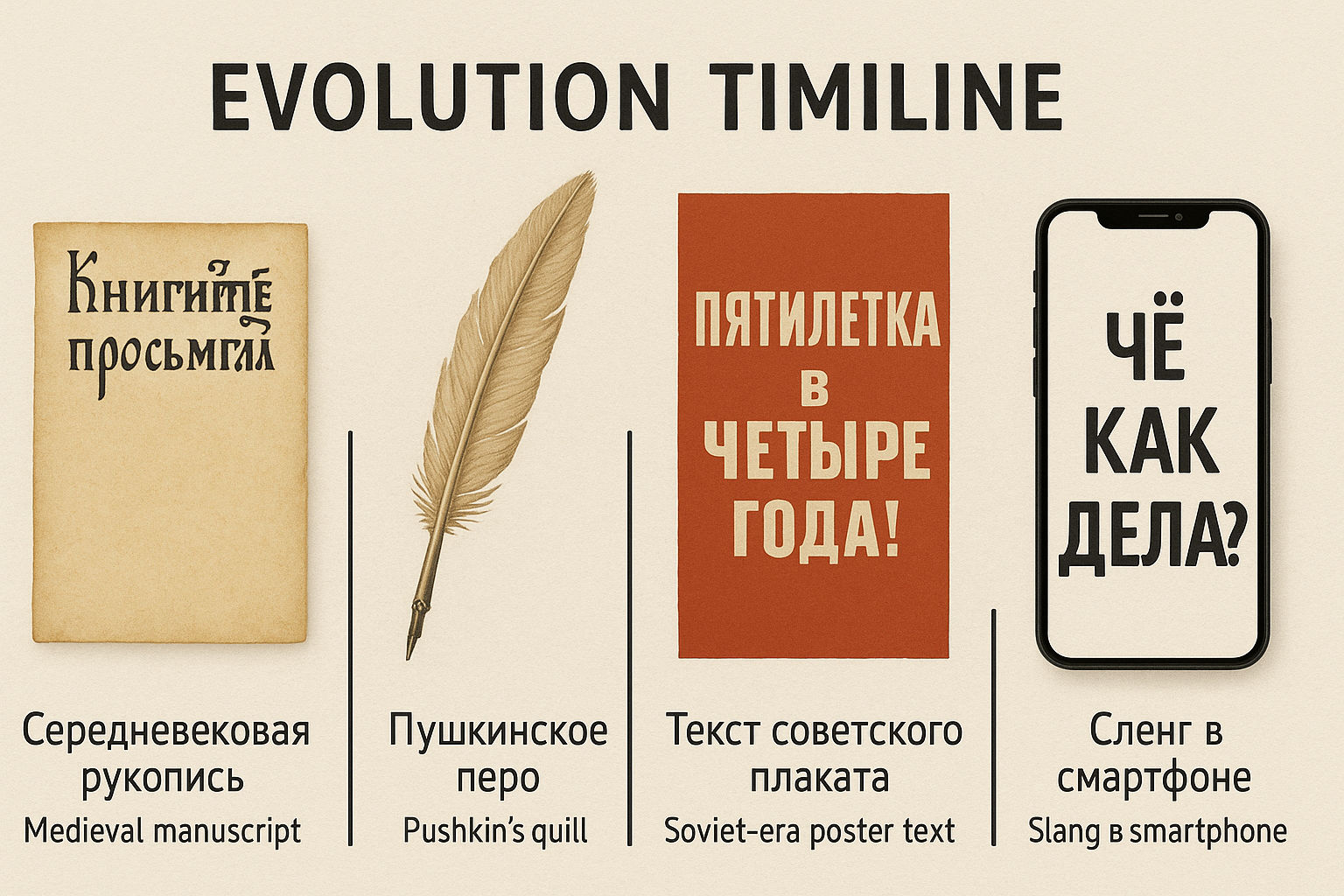
The Russian language, with its thousand-year history, vast literary tradition, and reputation for expressive depth, has always been a living organism, constantly adapting to the times—but never has it changed as quickly or as dramatically as in the age of digital media. For centuries, linguistic shifts were slow, shaped by political reforms, the influence of neighboring cultures, and the natural evolution of speech. Today, however, new words, abbreviations, and even grammatical shortcuts can emerge overnight, spreading from memes, blogs, and social networks across Russia and the global Russian-speaking diaspora. The result is a language that is both enriched and challenged by the digital revolution—a language simultaneously maintaining its classical roots and absorbing new, dynamic influences.
The digital sphere has accelerated language change in a way that would have been unimaginable even a generation ago. Where once a new word might take years to gain acceptance through literature or academia, now a viral TikTok clip or Telegram post can propel neologisms into everyday conversation within days. Russian has always been creative with word formation, but the internet age has pushed this creativity into overdrive, producing slang, borrowings, and hybrid expressions at a pace never before seen.
But what exactly is happening to Russian in the digital era? How do online platforms, memes, and global communication reshape the way people speak, write, and think in Russian? And what does this mean for learners who want to master Russian today?
In this article, we’ll explore these questions in depth, analyzing how digital media shapes Russian vocabulary, grammar, style, and even cultural identity. We’ll also examine the tension between tradition and innovation: on one hand, the preservation of Russian as a literary and scholarly language, and on the other, its playful reinvention in chatrooms, blogs, and online communities.
A Brief Historical Context: Russian Language Before the Digital Age
To appreciate the magnitude of digital influence, it’s important to remember how slowly Russian used to change.
18th–19th centuries: Peter the Great’s reforms and later the golden age of Russian literature introduced new vocabulary, often borrowed from French, German, and Latin. Words like бутерброд (from German Butterbrot) or галантный (from French galant) entered Russian during this period.
20th century: Soviet ideology introduced a flood of political vocabulary (товарищ, ударник, комсомолец), while mass literacy campaigns standardized grammar and spelling. Despite these changes, Russian remained a language strongly rooted in its literary tradition.
Language evolution in these eras was deliberate and institutionalized. By contrast, digital media has unleashed a decentralized, user-driven evolution, one that resists official regulation and thrives in the creativity of millions of online users.
Vocabulary Explosion: Neologisms and Borrowings
Perhaps the most visible impact of digital media on Russian is the explosion of new vocabulary. Much of this comes from English, the global lingua franca of the internet.
Technological Borrowings: Words like лайкать (to like), гуглить (to Google), скроллить (to scroll), зумиться(to Zoom) have seamlessly entered Russian daily speech. These words follow Russian grammar rules, conjugating and declining as naturally as native verbs.
Hybrid Expressions: Russian users often blend English with Russian in playful ways, producing hybrids like фейспалмить (“to facepalm repeatedly”) or постить мемы (“to post memes”).
Internet Slang: Expressions like лол (LOL), имхо (IMHO), крinge (cringe), and кек (a Russian internet adaptation of “LOL”) have become part of youth language, sometimes even spilling into offline conversations.
What makes this unique is the speed and scale. In just 10–15 years, digital media has contributed more new vocabulary to Russian than decades of Soviet ideology or earlier European borrowings.
Grammar and Style in the Age of Messaging
The structure of Russian sentences is also changing under the influence of digital media.
Abbreviations: Russians online love shortening words. спс (thanks, from спасибо), чел (dude, from человек), пж(please, from пожалуйста), щас (now, from сейчас). These shortened forms often migrate into spoken language.
Elliptical Sentences: Online communication encourages brevity, leading to phrases that omit subjects, verbs, or endings: иду домой (I’m going home) might become simply домой.
Emoji as Grammar: In digital Russian, emojis often substitute for punctuation or emotional markers, softening tone or conveying irony. A message like норм 🙂 communicates much more than the plain word норм.
Transliteration: Some users write Russian in Latin letters (known as translit), especially in older digital platforms that lacked Cyrillic support. While less common today, translit shaped an entire generation’s digital habits.
Memes as a Linguistic Force
Russian internet culture thrives on memes, and these memes often generate new phrases or repurpose old ones. For example:
“Ну, допустим” (“Well, let’s suppose”)—a meme phrase used to express skepticism.
“Кек”—originating in gaming culture, now widely used across Russian online spaces.
“Привет, медвед” (“Hello, bear”)—from a humorous meme that spread widely in the 2000s, showing how nonsense phrases can enter common usage.
These meme-born phrases may not last forever, but they demonstrate how quickly Russian adapts to humor and play in digital spaces.
Cultural Identity and the Digital Divide
Digital media has also sharpened generational differences in Russian language use. Older speakers often resist slang and English borrowings, while younger generations embrace them enthusiastically. This divide sometimes leads to debates about “purity” versus “progress.”
At the same time, digital platforms allow Russian speakers across the world—whether in Moscow, New York, or Tel Aviv—to stay connected and shape the language together. Russian online culture has become a truly global phenomenon, blurring national borders.
The Role of Regulation: Can Russian Be Controlled Online?
The Russian government and linguistic authorities occasionally attempt to regulate language use, particularly in official contexts. Dictionaries try to codify new words, and there are periodic debates about banning excessive Anglicisms. But online, language resists regulation. The creativity of millions of users outweighs any institutional control.
In this sense, Russian joins other global languages in experiencing a kind of democratization. The people, not the authorities, decide which words thrive.
Implications for Russian Learners
For students of Russian, the digital revolution presents both opportunities and challenges:
Opportunity: Access to authentic, modern Russian through social media, YouTube, Telegram channels, and memes. Learners can immerse themselves in living language, not just textbooks.
Challenge: Navigating slang, abbreviations, and hybrid words that may confuse or clash with standard Russian taught in classrooms.
The key is balance: mastering standard Russian grammar and vocabulary while also becoming aware of digital slang and trends. This makes learners not just fluent, but also culturally literate.
FAQs About Digital Media and Russian Language
Q: Are English loanwords really necessary in Russian?
A: While some could be replaced by native words, many loanwords stick because they capture a nuance or trend more efficiently. For example, гуглить feels more specific than искать в интернете (“to search on the internet”).
Q: Is Russian grammar being destroyed by the internet?
A: No. Informal digital Russian is different from formal written Russian, but the two coexist. Just as English tolerates slang online while maintaining academic standards, Russian does the same.
Q: Do older Russians use internet slang?
A: Some adopt it playfully, but generally it is most common among younger generations. However, certain abbreviations (спс, лол) are now widely understood.
Q: What is translit?
A: Writing Russian words using Latin letters (e.g., privet for привет). It was common when Cyrillic support was limited but is less frequent today.
Q: How fast do new words spread in Russian digital culture?
A: Very fast. A meme can introduce a word that becomes widespread within weeks.
Q: Is slang the same across Russia?
A: Largely yes, because of the internet. But some regional slang persists.
Q: Are memes hard for learners to understand?
A: Yes, often, because they rely on cultural context. But studying memes can be a fun way to gain cultural insights.
Q: Will digital slang make its way into official dictionaries?
A: Some already have. Words like гуглить are recognized in modern dictionaries, while others remain informal.
Conclusion
The impact of digital media on Russian is undeniable: it has accelerated linguistic change, expanded vocabulary, reshaped communication styles, and fostered new cultural expressions. Far from weakening the language, digital media has made Russian more flexible, more dynamic, and more global. At the same time, it challenges learners and educators to adapt, balancing tradition with innovation.
At Polyglottist Language Academy, we understand that learning Russian today means engaging not only with its classical roots but also with its modern, digital forms. Our courses bring together the depth of Russian literature and grammar with the vibrancy of contemporary usage—from memes to media, from Telegram chats to Tolstoy.
👉 Sign up for Russian classes at Polyglottist Language Academy and discover how to navigate the old and new faces of the Russian language.
And don’t stop here! Check out some of our other blog posts to continue your journey: