
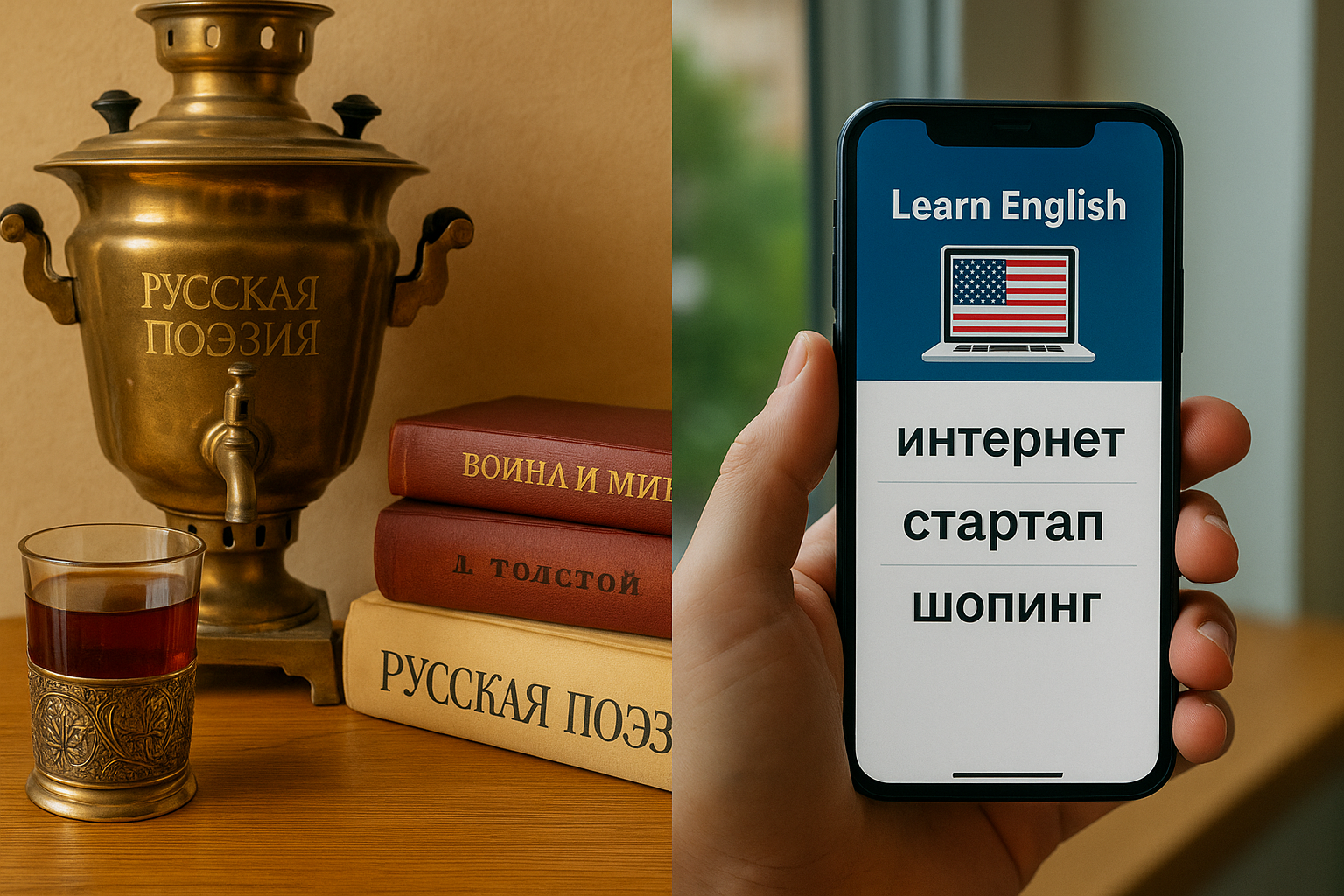
Languages are living organisms that grow, evolve, and adapt to the world around them, and few phenomena have shaped modern languages as profoundly as globalization. In Russia, a country that straddles East and West geographically, politically, and culturally, globalization has left a visible mark not only on business, technology, and culture, but also on the words people use in everyday life. Walk down the streets of Moscow or St. Petersburg, scroll through Russian social media, or listen to a conversation among young people, and you’ll notice something striking: Russian vocabulary is filled with borrowings, calques, and hybrids that reflect a globalized world.
This linguistic transformation is not entirely new—Russian has always absorbed foreign influences, from French in the 18th and 19th centuries to German in the scientific and military spheres, and English in the late 20th century. But globalization has accelerated the pace of change, flooding the language with terms from technology, business, pop culture, fashion, and the internet. Words like “компьютер” (computer), “блогер” (blogger), “маркетинг” (marketing), and “лайкать” (to like on social media) are so natural to modern Russian speakers that younger generations hardly recognize them as foreign.
For learners of Russian, this trend brings both opportunities and challenges. On the one hand, globalization makes Russian vocabulary more familiar—after all, a word like “интернет” (internet) or “пицца” (pizza) needs no introduction. On the other hand, the blending of Russian grammar with borrowed words creates unique forms and idioms that can be confusing if you don’t understand the cultural and linguistic context.
In this article, we will explore the impact of globalization on Russian vocabulary in depth: how foreign words enter Russian, which areas of life are most influenced, how Russians adapt borrowed words to fit their grammar, and the debates this trend sparks among linguists, writers, and everyday speakers. By the end, you’ll understand not only the mechanics of vocabulary change but also the cultural tensions behind it—and you’ll see how mastering this aspect of Russian makes you a more informed and culturally sensitive speaker.
A Brief History of Borrowings in Russian
Globalization may feel like a modern phenomenon, but Russian has been absorbing words for centuries:
Greek and Church Slavonic: Religious terms like икона (icon) and ангел (angel).
Mongol-Turkic influences: Everyday words like сарай (shed) or арбуз (watermelon).
Western European borrowings under Peter the Great: Naval and administrative terms from Dutch, German, and Swedish.
French dominance in the 18th–19th centuries: Aristocratic vocabulary like бал (ball), салон (salon), and гардероб (wardrobe).
German and English scientific/technical terms in the 19th–20th centuries: Words like штаб(staff/headquarters) or инженер (engineer).
Thus, globalization is only the latest wave in a long tradition of linguistic borrowing.
English: The Language of Globalization
Today, the vast majority of global borrowings into Russian come from English. This reflects English’s role as the international language of business, technology, science, and pop culture. Common examples include:
Technology: компьютер (computer), смартфон (smartphone), ноутбук (laptop).
Business: маркетинг (marketing), менеджер (manager), стартап (startup).
Internet culture: лайкать (to like), постить (to post), фоловить (to follow).
Fashion and lifestyle: бренд (brand), шопинг (shopping), фитнес (fitness).
These words are often adapted to Russian grammar:
лайкать gets the -ать verb ending to fit conjugation.
пост (post) is declined like any Russian masculine noun.
Areas of Life Most Influenced
1. Technology and the Internet
Perhaps the most visible area. Russian has absorbed words like хакер (hacker), чат (chat), онлайн (online), and логин(login). These words are often easier to use than creating clunky native equivalents.
2. Business and Economics
The post-Soviet transition to a market economy flooded Russian with English business jargon. Words like офис (office), бизнесмен (businessman), and менеджмент (management) are ubiquitous.
3. Pop Culture and Lifestyle
From рок (rock) and рэп (rap) to фастфуд (fast food) and шопинг (shopping), Russian borrows heavily from global entertainment and lifestyle trends.
4. Youth Slang
Young people adopt global slang rapidly, often blending Russian and English creatively. Examples include крэйзи(crazy), крутой бренд (cool brand), or хайп (hype).
How Borrowed Words Are “Russified”
Borrowings rarely remain unchanged; Russian adapts them to its grammar system:
Adding Russian suffixes: лайк → лайкать (to like), пост → постить (to post).
Changing pronunciation/spelling: “club” → клуб, “cash” → кэш.
Declension: смартфон declines as a masculine noun (смартфона, смартфону, смартфоном).
This process makes foreign words feel native over time.
The Debate: Purity vs. Practicality
The influx of global vocabulary sparks debate in Russia. Some argue that excessive borrowing “pollutes” Russian, threatening its purity and traditions. They advocate for native equivalents:
электронная почта instead of имейл.
управляющий instead of менеджер.
Others argue that borrowing is natural, efficient, and keeps the language modern. After all, no one today considers театр(theater) or машина (machine) as foreign words, though they once were.
This debate reflects larger cultural questions about globalization, identity, and Russia’s place in the world.
The Learner’s Advantage
For Russian learners, globalization can actually make vocabulary acquisition easier:
Familiarity: Many borrowed words look and sound like English counterparts.
Gateway to grammar: Seeing how borrowed words decline or conjugate reinforces Russian grammar.
Cultural literacy: Knowing how and when to use borrowed words helps you sound natural, especially in modern contexts.
Practical Tips for Mastering Globalized Russian Vocabulary
Learn the Patterns of Russification – Notice how verbs adopt -ать endings, and nouns fit into declension groups.
Don’t Overuse Englishisms – While common, some borrowed words sound trendy or casual. Stick to context-appropriate usage.
Balance with Native Vocabulary – Russians appreciate when learners know both электронная почта and имейл.
Follow Russian Media – Social media, news, and blogs are the best places to see globalized vocabulary in action.
Ask Native Speakers – Russians will tell you which words feel natural, outdated, or awkward.
Case Study: The Word “Like”
English: Like (verb/noun).
Russian: лайк (noun), лайкать (verb), залайкать (perfective verb with prefix “за-”).
This single borrowing shows how Russian not only adopts words but creates whole new grammatical families around them.
The Future of Russian Vocabulary
Globalization shows no signs of slowing down. Russian will likely continue borrowing from English and, increasingly, from other global languages like Chinese. At the same time, there will be periodic pushes for linguistic purism, especially in official contexts. For learners, the best strategy is flexibility: understand both globalized and traditional terms, and adapt to context.
FAQs: Globalization and Russian Vocabulary
1. Why are most modern Russian borrowings from English?
Because English dominates global business, science, technology, and culture.
2. Do Russians resist using borrowed words?
Some do, especially older generations or linguistic purists. But many English borrowings are now normalized.
3. How do I know if a word is borrowed or native?
Etymology dictionaries can help, but often it’s not essential—borrowed words become “Russian” over time.
4. Should I learn both the borrowed and native equivalents?
Yes, especially for formal vs. informal contexts (e.g., имейл vs. электронная почта).
5. Do young Russians use more English words?
Yes. Youth slang and internet culture accelerate borrowing.
6. How does Russian spelling adapt foreign words?
They are written in Cyrillic with phonetic spelling: “computer” → компьютер.
7. Are borrowed words declined like Russian nouns?
Yes—once adopted, they follow Russian grammar rules.
8. Will globalization make Russian too similar to English?
Unlikely. Borrowed vocabulary is just one layer; Russian grammar, idioms, and structure remain unique.
Conclusion: Embracing a Global Russian
Globalization has reshaped Russian vocabulary, bringing in waves of English words that reflect the modern world. Far from erasing Russian, these borrowings enrich it, creating a living, adaptable language that reflects both tradition and change. For learners, understanding this phenomenon offers not just vocabulary but cultural insight, showing how Russians navigate global influence while maintaining their identity.
At Polyglottist Language Academy, we guide learners through these complexities—helping you not just memorize words, but understand how language reflects culture. Whether you’re a beginner grappling with Cyrillic or an advanced student analyzing song lyrics and slang, our Russian classes give you the tools to thrive in a globalized world. Sign up today and join our community of learners who bring Russian to life.
And if you enjoyed this article, check out our other deep dives into Russian language and culture: