
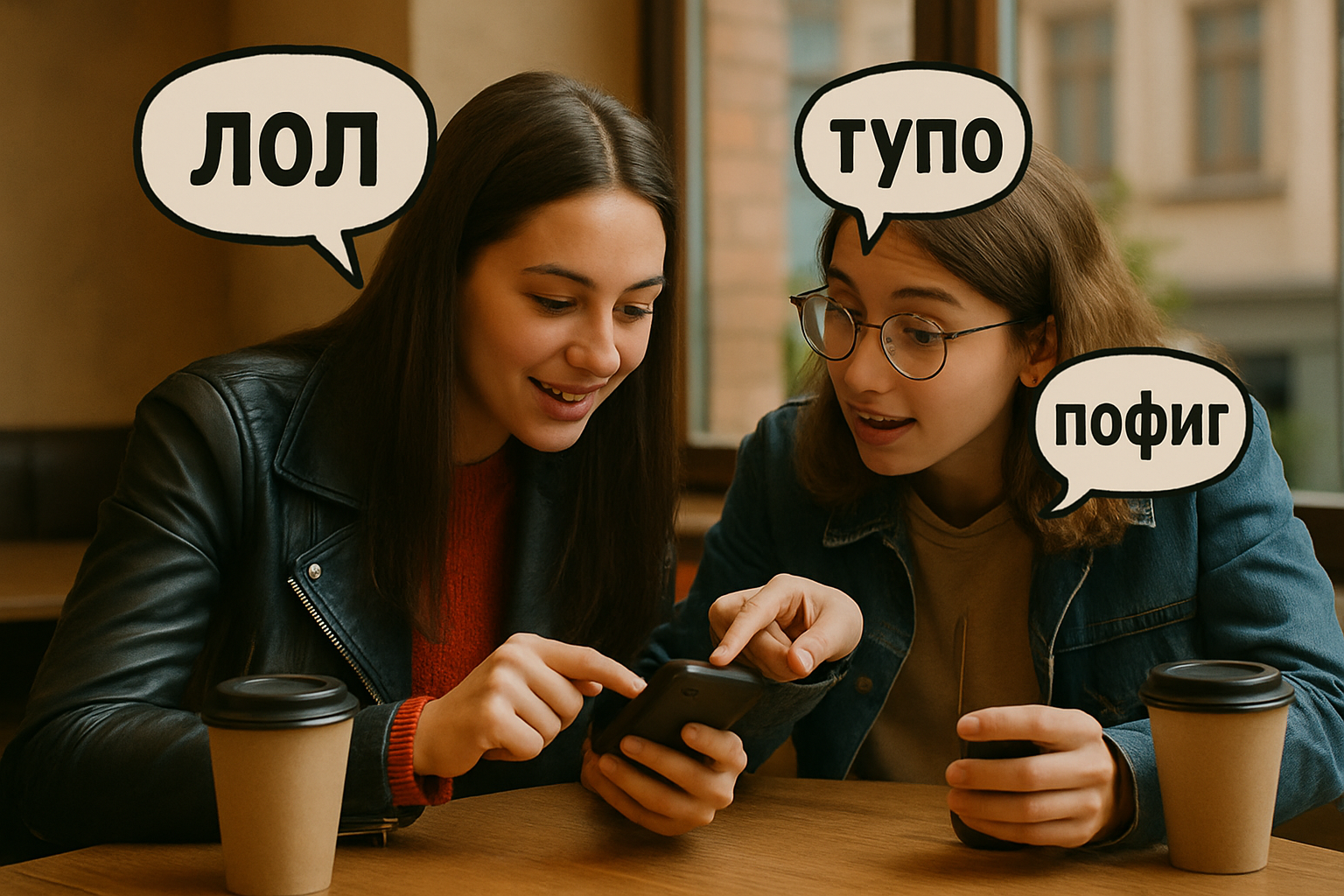
If you’ve ever studied Russian formally and then overheard a group of Russians chatting in a bar, on a train, or online, you may have felt like you were hearing a completely different language—one full of strange words, clipped syllables, and oddly poetic insults. Welcome to Russian slang: the vivid, expressive, and constantly evolving world of speech that lives outside textbooks and classrooms. It’s informal, often untranslatable, and absolutely essential if you want to sound like you actually speak Russian—not just study it.
Textbook Russian will help you survive. Slang Russian will help you belong. It’s how Russians joke, vent, exaggerate, soften an insult, or add color to a bland sentence. It’s the difference between “I’m tired” and “I’m dead on my feet, bro.” It’s the reason you can’t always rely on Google Translate and why even fluent learners sometimes get lost in memes or group chats. And unlike the rigid grammar rules you memorized, Russian slang is flexible, creative, and tied to regional quirks, generational shifts, and trends from TikTok to Telegram.
In this guide, we’ll unlock the most common, useful, and current slang expressions you’re unlikely to hear from a teacher—but almost guaranteed to encounter in real life. From Gen Z slang and Soviet-era holdovers to street talk and Internet Russian, we’ll help you understand not only what these words mean, but also how and when to use them naturally.
Let’s dive into the gritty, hilarious, and oddly poetic world of everyday Russian slang.
PART 1: SLANG FOR PEOPLE
Let’s start with what Russians call each other—not just names, but labels that imply age, personality, or relationship.
1. чувак / чувиха
chuvák / chuvíha – dude / girl
Very common, neutral-casual term for a guy or girl, similar to “dude” or “chick.”
Example: “Эй, чувак, ты где был?” – “Hey dude, where were you?”
2. тёлка / телёнок
tyólka / telyónok – chick / guy (informal, objectifying)
Often used by younger guys to refer to girls; some consider it disrespectful. Think “babe” with a macho tone.
3. мужик
muzhík – guy, man, dude
Rougher than “чувак,” this is more like “a real man” or “working-class guy.” Also used affectionately.
4. бабуля / дедуля
babúlya / dedúlya – grandma / grandpa
Sweet, affectionate diminutives for older folks. Often used for strangers, too.
5. ботан / задрот
botán / zadrót – nerd / geek
Both used teasingly. “Задрот” is stronger—like “obsessive nerd.”
Example: “Он задрот, всё время играет.” – “He’s a geek, always gaming.”
PART 2: SLANG FOR FEELINGS & REACTIONS
These words help express frustration, awe, surprise, or just how over it you are.
6. жесть
zhest’ – rough! intense!
Used to describe something wild, shocking, or hardcore.
Example: “У него три работы? Жесть.” – “He has three jobs? Brutal.”
7. капец / трындец / пипец
kapéts / tryndéts / pipéts – damn / crap / oh no
Colorful, slightly euphemized curse substitutes. Пипец is the strongest (but not obscene).
Example: “Пипец, я всё забыл!” – “Crap, I forgot everything!”
8. офигеть / офигенно
ofigét’ / ofigénno – no way! / awesome!
Literal root means “to go nuts.” But context makes it positive.
Example: “Ты видел это? Офигеть!” – “Did you see that? No way!”
9. круто
krúto – cool
One of the most common ways to say “awesome” or “great.”
10. блин
blin – darn / crap
Literally means “pancake,” but used like “shoot” or “damn.”
Example: “Блин, я опоздал!” – “Shoot, I’m late!”
PART 3: SLANG FOR BEING TIRED OR DONE
These expressions are extremely common in casual complaints and online posts.
11. устал как собака
ustál kak sobáka – tired like a dog
Not technically slang, but a common colorful idiom.
Example: “Я устал как собака после работы.”
12. мне пофиг / мне всё равно / мне по барабану
mne pófig / mne vsyo ravnó / mne po barabánu – I don’t care
Three levels of apathy. Пофиг is the most slangy and dismissive.
13. достало / надоело
dostálo / nadoyélo – I’m fed up
Common venting words.
Example: “Всё достало!” – “I’m sick of everything!”
PART 4: ONLINE & TEXT SLANG
Like every language, Russian has developed its own informal lingo for texting, memes, and social media.
14. лол / рофл / кек
lól / rófl / kek – lol / rofl / haha
Transliterated Internet laughs. “Кек” is especially meme-y.
15. збс / чзх / хз / ок / гг
Initialism slang:
збс – за*бись (awesome, vulgar)
чзх – что за херня? (WTF?)
хз – хрен знает (who knows?)
гг – good game, also sarcastic “we’re screwed now”
Most of these are semi-vulgar or edgy, so tread carefully.
PART 5: CLASSIC PHRASES & “OLD SCHOOL” SLANG
Many of these come from Soviet-era films and cartoons but are still widely used.
16. ни фига себе
ni figá sebe – no way! wow!
Used to express surprise. Sometimes shortened to just фига себе or фига!
17. свято место пусто не бывает
svyáto mésto pústo ne byváet – nature abhors a vacuum
Used humorously or seriously. Think: “If someone leaves, someone else will take their place.”
18. фуфло
fufló – trash, low-quality stuff
Example: “Этот телефон — фуфло.” – “This phone is garbage.”
PART 6: SWEAR LITE (CLEANISH CURSES)
These are not true мат (obscene language), but still edgy and expressive.
19. фигня
fignya – crap, nonsense
Mild way of saying something is stupid or useless.
Example: “Не слушай его, это фигня.”
20. чёрт / чёрт побери
chyort / chyort poberí – damn it / what the hell
Old-school curse, very common in Soviet literature.
21. задница / жопа
zádnitsa / zhópa – butt / mess
Often used to describe a disaster or bad situation.
Example: “Полная задница!” – “A total mess!”
PART 7: CONTEXT MATTERS — WHEN (NOT) TO USE SLANG
Russian slang is rich and colorful, but it’s also highly contextual. Here’s what to keep in mind:
With friends or peers: Slang is everywhere.
With elders or strangers: Use caution.
At work or in formal situations: Avoid it unless others use it first.
Online: Feel free to explore—it’s a great place to absorb modern usage.
Also, keep in mind that some slang can sound dated if used by the wrong generation. What a 22-year-old says on Telegram may not work coming from a 45-year-old in a business meeting.
PART 8: HOW TO LEARN RUSSIAN SLANG NATURALLY
Here are some tips to pick up slang the way native speakers do:
Watch Russian YouTubers and vloggers, especially lifestyle or humor channels.
Read meme pages or follow Russian subreddits like r/ru_memes.
Listen to Russian podcasts or watch teen dramas.
Ask your teacher or tutor to explain slang you’ve heard but don’t understand.
PART 9: DON'T GET LOST IN TRANSLATION
Sometimes Russian slang doesn’t map cleanly onto English. For example:
“Пипец” might mean anything from “damn!” to “I’m totally screwed.”
“Чувак” could be “bro,” “dude,” “guy,” or “man” depending on tone.
This is why context and tone matter more than dictionary definitions. The best way to learn is by hearing it used in real situations.
PART 10: START USING IT (WITHOUT SOUNDING RIDICULOUS)
How to practice:
Pick 3–5 slang words and try using them when chatting with Russian speakers.
Watch a Russian comedy and jot down expressions you don’t recognize.
Repeat expressions out loud—mimic tone and rhythm.
You don’t have to use slang right away, but learning to understand it will unlock a whole new level of fluency.
FREQUENTLY ASKED QUESTIONS
Q: Is Russian slang the same everywhere?
No. Moscow, St. Petersburg, and the regions each have their own slang terms. There’s also generational slang, like that used by Soviet-born speakers versus Gen Z Russians.
Q: Is Russian slang appropriate to use in class?
Only sometimes. Ask your teacher what’s okay. Many teachers will explain slang if you bring it up, even if they won’t teach it directly.
Q: Can slang be offensive?
Yes. Some words have strong or vulgar meanings. When in doubt, ask a native speaker or skip it until you’re sure it’s appropriate.
Q: How do I stay updated with current slang?
Follow Russian meme pages, Telegram channels, or TikTok creators. Slang evolves fast—what’s trendy this year might sound cringe next year.
READY TO SPEAK RUSSIAN LIKE A LOCAL?
Slang is more than a linguistic curiosity—it’s the key to understanding jokes, memes, conversations, and emotions. And mastering it helps you sound more confident, more connected, and way more native.
At Polyglottist Language Academy, we don’t just teach you textbook Russian. We help you navigate real-world language—slang, idioms, expressions, and all the cultural nuance that makes Russian so rich. Whether you’re just starting or brushing up for a trip or career, we’ve got expert instructors who can guide you beyond the basics.
Sign up today for our in-person or online Russian classes and unlock the language real Russians use.
Your first conversation is waiting. Let’s make sure it sounds real.
Want to explore more about Russian language and culture?
Check out our full collection of articles on the Polyglottist Language Academy Blog, where we dive into everything from why fluent Russian isn’t fast Russian to how to survive a Russian toast and what it’s like to be the only foreigner in a Russian dacha community. Whether you're curious about grammar tips, cultural faux pas, or how Russians navigate public space, our blog offers fresh, engaging insights to support your learning journey.