
Introduction
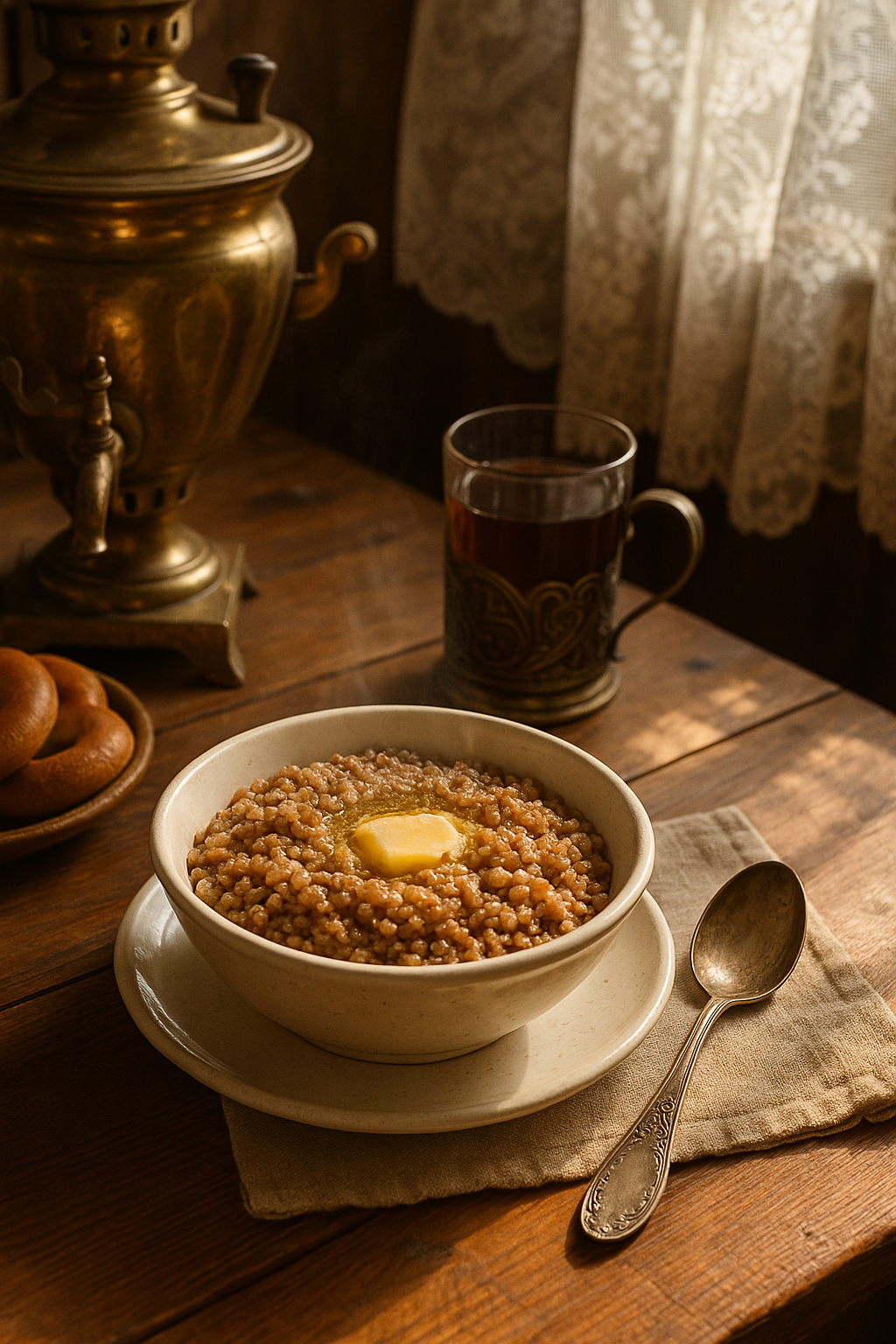
Few foods in Russian culture carry as much history, symbolism, and emotional resonance as kasha, the family of porridges made from grains that has nourished people across the vast Russian lands for centuries, appearing not only on peasant tables and aristocratic banquets but also in folk tales, proverbs, military life, and even religious rituals, where it became more than a dish—it became a metaphor for life itself. To speak of Russian kasha is to speak of childhood mornings with a steaming bowl of semolina sweetened with jam, of grandmothers stirring buckwheat in heavy cast-iron pots, of wedding feasts where special ritual porridges were served, and of soldiers sustaining themselves on barley gruel during long campaigns. Kasha is at once humble and celebratory, a staple and a delicacy, a food that unites generations and encapsulates the very soul of Russian daily life.
While outsiders may associate Russia mostly with borscht, vodka, or pelmeni, it is kasha that has arguably been the backbone of the cuisine for longer than any other dish. Russians themselves often say, “Kasha is our mother,” and with good reason: for centuries, before potatoes became common, porridges of millet, buckwheat, oats, rye, and barley were the foundation of the diet in both rural villages and monasteries. Every region developed its own preferences, every family had its own variations, and every holiday cycle wove porridge into its rituals. Even today, in modern Russian kitchens, porridge continues to anchor breakfasts, comfort sick children, and bring nostalgia to adults who left home years ago.
This article explores the world of Russian kashi in depth: their history, varieties, cultural symbolism, festive role, and enduring presence in modern life. By the end, you’ll see why no discussion of Russian cuisine is complete without a deep dive into these seemingly simple, yet endlessly meaningful porridges.
The Historical Role of Kasha
Grains have always been central to the Russian diet. Long before the introduction of potatoes in the 18th century, porridges made from locally available grains—such as millet, barley, oats, rye, and later buckwheat—formed the nutritional base of everyday life. Kasha was inexpensive, filling, and versatile. It could be cooked plain with water and salt for a simple meal, enriched with milk and butter for children, or transformed into a festive dish with honey, dried fruits, or nuts.
In medieval chronicles, references to kasha are abundant. Feasts to mark important events—weddings, births, funerals—always included porridge. Monastic communities depended on kasha during fasting periods. Warriors on campaign carried grain with them, knowing it could be easily boiled into a sustaining meal. Even Russian folktales feature magical pots of porridge, symbolizing abundance and the generosity of nature.
Proverbs and idioms also reflect kasha’s importance. “You won’t cook kasha with him” means someone is uncooperative. “Eat kasha” was a way to tell a child to grow strong. Clearly, kasha was more than food—it was a metaphorical anchor of Russian existence.
Types of Russian Kashi
Russia’s geographical diversity and agricultural traditions produced a wide range of porridges. Some are eaten daily, others are reserved for holidays. Let’s explore the most common types.
1. Buckwheat Kasha (Гречневая каша)
Buckwheat, known as grechka, is perhaps the most iconic of all Russian porridges. Unlike in many Western countries where buckwheat is exotic, in Russia it is an everyday staple. Cooked with water or broth, it produces a nutty, earthy kasha often eaten as a side dish with meat, mushrooms, or vegetables. For many Russians abroad, the taste of grechka is one of the strongest links to home.
2. Millet Kasha (Пшённая каша)
Millet, with its golden hue, produces a sunny, slightly sweet porridge. Traditionally, millet kasha was eaten with milk, butter, or pumpkin. In festive contexts, it was sweetened with honey and decorated with dried fruit.
3. Barley Kasha (Ячневая каша or Перловая каша)
Barley comes in two main forms: perlovka (pearl barley) and yachnevaya (crushed barley). Perlovka was long associated with the army and Soviet canteens, giving it a reputation as a rough, utilitarian food. Yet when prepared well—with butter, mushrooms, or meat—it becomes hearty and delicious.
4. Oatmeal (Овсяная каша)
Oatmeal has a long history in Russia, often prepared thick and creamy with milk. Children are especially familiar with it, though adults eat it too. In modern kitchens, oatmeal has been rediscovered as a healthy breakfast with berries, nuts, and honey.
5. Semolina Kasha (Манная каша)
Semolina, known as manka, is one of the most nostalgic porridges for Russians. It is soft, creamy, and often sweetened with sugar, jam, or fruit syrup. While beloved by some, it is dreaded by others who remember lumpy kindergarten servings. Few dishes inspire as much childhood debate as manka.
6. Rice Kasha (Рисовая каша)
Rice came relatively late to Russia but became an important porridge, often cooked with milk and sugar for breakfast. On festive occasions, rice kasha is enriched with raisins, nuts, or spices.
Kasha in Rituals and Festivities
Kasha was inseparable from the Russian life cycle. At weddings, a special porridge called wedding kasha was prepared with butter, milk, and sometimes meat, symbolizing abundance and fertility. At christenings, “godparent’s kasha” was cooked. Even funerals involved a ritual porridge, underscoring the belief that kasha accompanied the soul at every stage of life.
During folk festivals like Maslenitsa (the butter week before Lent), porridges would appear alongside pancakes. On Christmas Eve, kutya, a sweet wheat or rice porridge with honey and poppy seeds, symbolized remembrance of ancestors and communal togetherness. Kutya also played a role in funeral meals, reinforcing the spiritual bond between the living and the dead.
Kasha in Literature and Folklore
Russian writers frequently used kasha to depict home life, poverty, abundance, or humor. In Tolstoy’s works, peasants eat kasha at dawn before laboring in the fields. Chekhov’s characters sometimes complain about monotonous porridge meals. Fairy tales feature endless pots of porridge as magical gifts or punishments.
This literary presence shows that kasha was not merely food—it was part of the Russian imagination. To this day, kasha remains a cultural shorthand: when a Russian says “We ate kasha together,” it implies shared experience and solidarity.
Soviet and Modern Transformations
The Soviet era transformed kasha into both a nutritional necessity and an educational tool. Schools, kindergartens, hospitals, and the army all relied on porridge to feed large numbers of people cheaply. Many adults today recall early mornings with state-provided oatmeal or manka.
Yet modern Russia has also reinterpreted kasha. Restaurants now serve gourmet versions with truffle oil or exotic fruits. Nutritionists promote traditional grains for their health benefits. Urban families rediscover millet and buckwheat as trendy “superfoods.” Kasha has survived modernization not by fading, but by reinventing itself.
Cooking Methods and Traditions
Kasha is deceptively simple: just grain, liquid, and heat. Yet technique matters. Traditional Russian kitchens relied on clay pots in the oven, where porridges cooked slowly overnight. The result was creamy, deeply flavored, and infused with rustic aroma.
Modern cooks often use stovetops, though slow cookers and multicookers have brought back the slow-simmered style. Russians say the secret to good kasha lies in patience and generosity with butter. “You can’t spoil kasha with butter,” goes the famous saying.
Kasha Beyond Russia
While kasha is quintessentially Russian, similar porridges appear across Eastern Europe and Central Asia. Ukrainians also prize buckwheat, Lithuanians cook millet, and Georgians prepare cornmeal porridge. Yet the Russian relationship with kasha—as cultural identity, daily necessity, and ritual food—remains uniquely deep.
Why Kasha Matters Today
For modern learners of Russian culture and language, kasha is a gateway to understanding daily life, traditions, and values. It embodies thrift, community, resilience, and comfort. When you eat kasha, you join centuries of Russians who began their day with a warm, simple bowl of grain.
FAQs about Russian Porridges
Q1: Is kasha always sweet?
No. While many breakfast porridges are sweetened, kasha can also be savory, cooked with broth, onions, mushrooms, or meat.
Q2: Which kasha is considered the most “Russian”?
Buckwheat kasha is often seen as the quintessential Russian porridge, loved across all social classes.
Q3: Why do Russians associate kasha with childhood?
Because schools, kindergartens, and homes served it daily, often for breakfast. Many adults carry strong memories—both fond and reluctant—of childhood kasha.
Q4: Is kasha healthy?
Yes. Buckwheat, millet, oats, and barley are rich in fiber, vitamins, and minerals. Russian nutritionists today promote them as part of a balanced diet.
Q5: What’s the difference between kasha and kutya?
Kutya is a ceremonial sweet porridge made for Christmas Eve and funerals, usually with wheat or rice, honey, and poppy seeds. Kasha is the general term for all porridges.
Q6: Do Russians still eat kasha daily?
Yes, though habits vary. Many families continue to eat oatmeal, buckwheat, or rice porridge several times a week.
Q7: Can kasha be gluten-free?
Buckwheat, rice, and millet are naturally gluten-free. Barley and wheat-based kasha contain gluten.
Q8: How is kasha different from Western porridge?
Western porridge often refers only to oatmeal, while Russian kasha encompasses many grains and a wider range of flavors, from sweet to savory.
Conclusion
Kasha may appear humble, but it holds a place in Russian life far beyond the kitchen. It has fed peasants and tsars, soldiers and schoolchildren, celebrants and mourners. It has inspired literature, idioms, and proverbs. Above all, it remains a symbol of nourishment, resilience, and cultural continuity.
At Polyglottist Language Academy, we believe that learning a language is not just about grammar and vocabulary but also about immersing yourself in the culture that shapes it. When you learn Russian with us, you’ll gain the keys to understanding traditions like kasha—why they matter, what they mean, and how they continue to live in everyday speech and rituals.
If you’re ready to deepen your connection to Russian culture and language, join our classes today. You’ll not only master the grammar but also explore the foods, customs, and expressions that make Russian unique.
👉 Sign up now for Russian classes at Polyglottist Language Academy and start your journey today!
And while you’re here, explore more of our cultural and language insights:
Borscht Beyond Beets: The Many Variations Of Russia’s Most Famous Soup
Russian Pickling Tradition: Cucumbers, Sauerkraut, And Forest Mushrooms
Blini Through The Seasons: From Maslenitsa To Modern Brunch Tables
Zakuski In The 19th Century Russia: Caviar, Aspic, And Aristocratic Indulgence
The Comfort Of Olivier Salad: Why Russians Can’t Celebrate New Year Without It