
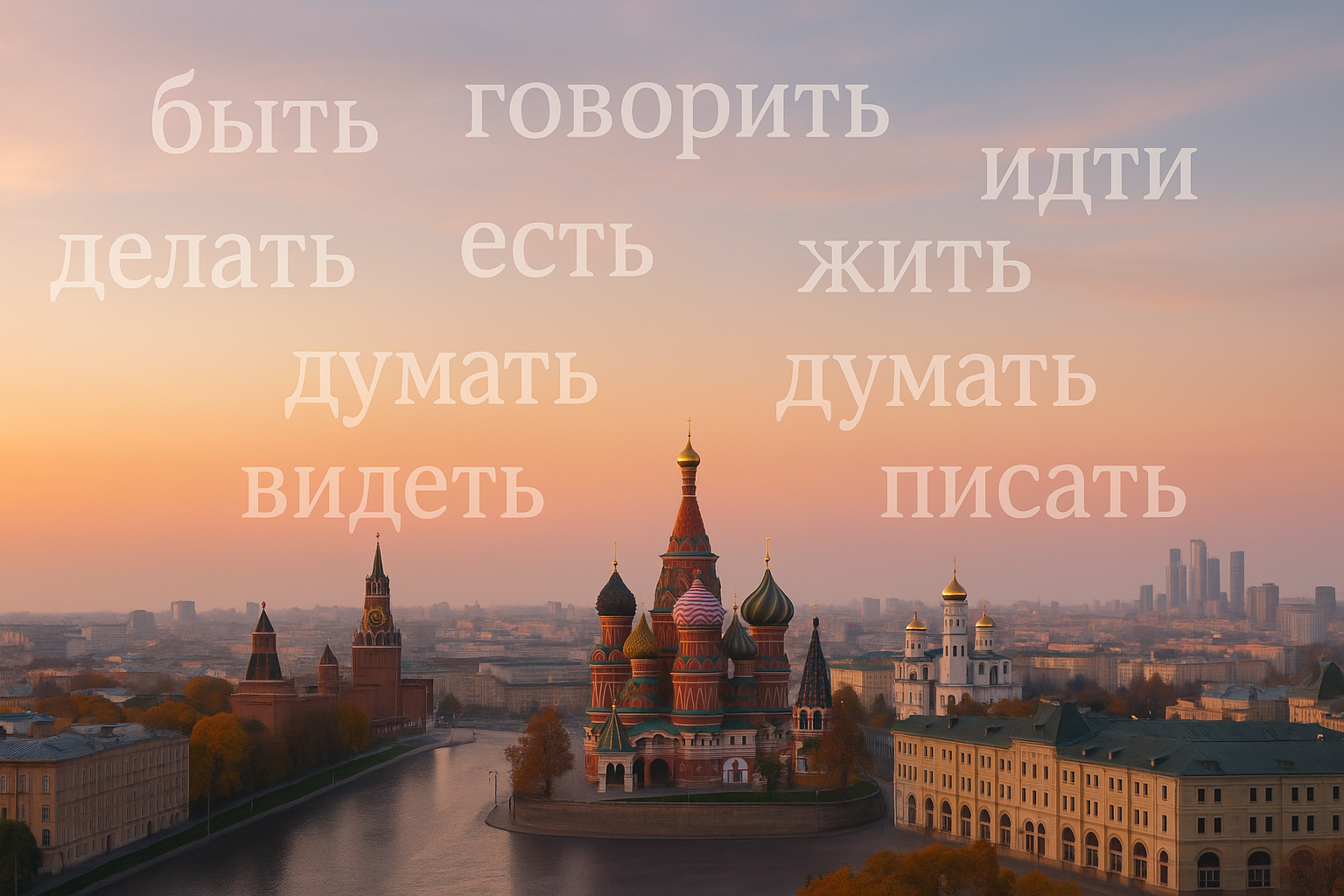
Russian is a language where verbs do more than convey action—they tell stories, show direction, hint at completion, and offer nuance that can take years to fully unpack. For beginners, however, the journey starts not with complexity but with clarity: building a solid foundation of verbs that will carry you through your first conversations, your initial readings, and your early moments of real-life Russian interaction. But unlike languages with simpler conjugation systems, Russian asks more of you—aspect, motion, conjugation types, and even verb pairs come into play right from the start. That’s why learning your first 50 Russian verbs isn’t just a vocabulary drill. It’s a blueprint for thinking in Russian.
This article will guide you through a carefully curated list of the most essential, versatile, and powerful verbs every Russian learner should know. Whether you're starting from scratch or want to solidify your grasp on verbs that truly matter, this list will serve as both a reference and a launchpad. But it’s not just a list—we’ll also walk through patterns, show you how to group these verbs logically, and offer memory aids and usage tips that help them stick. By the end, you won’t just have memorized 50 verbs—you’ll understand how they work, how they interact with other parts of the sentence, and how to build meaning like a Russian speaker.
PART 1: WHY VERBS ARE EVERYTHING IN RUSSIAN
In Russian, verbs are the engine of communication. While nouns and adjectives set the scene, it’s the verbs that move everything forward—or backward, or around, depending on what kind of motion verb you’re dealing with. Russian doesn’t rely heavily on helper verbs (like “do” in English) or even subject pronouns (they’re often dropped). Instead, meaning lives in the verb itself: its form, its aspect, its prefix.
That’s why picking your first 50 verbs isn’t about frequency alone. It’s about choosing verbs that open doors to other verbs—those that teach you core patterns, prefixes, and motion systems that keep repeating as you advance.
PART 2: CORE ACTION VERBS (START HERE)
These are your go-to daily actions, useful in almost every situation:
делать / сделать – to do, to make
говорить / сказать – to speak / to say
есть / поесть / съесть – to eat
пить / выпить – to drink
работать – to work
жить – to live
думать / подумать – to think
знать / узнать – to know / to find out
понимать / понять – to understand
любить / полюбить – to love / fall in love
➡ Tip: Learn both imperfective and perfective pairs early. Don’t try to memorize all grammar rules at once—just know that one is for ongoing/repeated action and the other for completed actions.
PART 3: VERBS OF MOTION (CRUCIAL CATEGORY)
No other language deals with movement quite like Russian. Start with these and notice how they show direction, purpose, and repetition:
идти / пойти – to go (on foot, one time)
ехать / поехать – to go (by transport, one time)
ходить – to go (on foot, habitually)
ездить – to go (by transport, habitually)
приходить / прийти – to come (on foot)
приезжать / приехать – to arrive (by transport)
уходить / уйти – to leave (on foot)
уезжать / уехать – to leave (by transport)
входить / войти – to enter (on foot)
выходить / выйти – to exit (on foot)
➡ Hack: Visualize the prefix. "при-" (arrival), "у-" (departure), "в-" (into), "вы-" (out of). These come up again and again.
PART 4: THINKING, FEELING, WANTING
These verbs help you express what’s going on inside:
хотеть / захотеть – to want
нравиться / понравиться – to like (literally: to be pleasing)
чувствовать / почувствовать – to feel
бояться – to be afraid
помнить / запомнить – to remember / to memorize
забывать / забыть – to forget
мечтать – to dream
надеяться – to hope
верить / поверить – to believe
смеяться / засмеяться – to laugh / start laughing
➡ Grammar Tip: Some of these verbs are reflexive (like бояться or надеяться). Get used to spotting and pronouncing the “-ся” at the end.
PART 5: VERBS YOU’LL HEAR EVERYWHERE
These common, flexible verbs show up in casual speech constantly:
давать / дать – to give
брать / взять – to take
ставить / поставить – to put upright
класть / положить – to lay down
находить / найти – to find
терять / потерять – to lose
открывать / открыть – to open
закрывать / закрыть – to close
начинать / начать – to begin
кончать / кончить – to finish
➡ Use Trick: Don’t try to translate literally—focus on how these are used in real context. For example, you say “Я дал ему книгу” (I gave him a book), and not “Я дал к нему книгу.”
PART 6: ESSENTIAL COMMUNICATION VERBS
These verbs make your Russian sound alive and interactive:
спрашивать / спросить – to ask
отвечать / ответить – to answer
показывать / показать – to show
слышать / услышать – to hear
видеть / увидеть – to see
звонить / позвонить – to call (by phone)
писать / написать – to write
читать / прочитать – to read
слушать / послушать – to listen
повторять / повторить – to repeat
➡ Conversation Hack: These verbs show up constantly in classroom and travel situations. Practice full sentences like: “Я хочу спросить” (I want to ask) or “Повторите, пожалуйста” (Repeat, please).
PART 7: HOW TO MEMORIZE AND MASTER THEM
Memorizing 50 verbs is only the beginning—you need to internalize them. Here’s how:
Group them by theme
Use categories like "motion," "emotion," or "communication" to organize your flashcards.
Learn them in pairs
Imperfective + perfective. Treat them as one unit: говорить/сказать, есть/съесть.
Use mnemonics and visual cues
Create little mental stories or associate verbs with real-life actions.
Practice with patterns
Say them in full sentences. “Я люблю читать.” “Он начал работать.” “Ты хочешь пить?”
Speak out loud
Russian pronunciation changes with conjugation. Say them to hear the rhythm.
PART 8: WHAT COMES NEXT?
Once you’ve mastered these 50, you’ll start to notice patterns across hundreds of other verbs. You’ll be better equipped to learn verbs with prefixes, understand motion verb systems more deeply, and deal with irregular forms without panic.
Your vocabulary will grow, yes—but more importantly, your brain will begin thinking in Russian structures.
FREQUENTLY ASKED QUESTIONS
Q: How long does it take to memorize 50 verbs in Russian?
A: With daily review and sentence practice, most learners can internalize 50 verbs in 2–3 weeks.
Q: Should I focus on perfective or imperfective verbs first?
A: Always learn them together in pairs. Think of them as two sides of one action.
Q: Are these the same verbs I’ll see in textbooks?
A: Some overlap, but many textbooks don’t teach verbs in functional groupings. This blueprint is designed for real-world use.
Q: How do I practice these verbs in real conversations?
A: Try language exchange, speaking with a tutor, or joining an online class where you can use them actively.
TAKE THE NEXT STEP WITH POLYGLOTTIST LANGUAGE ACADEMY
Learning your first 50 Russian verbs is a major achievement—and it’s just the beginning. At Polyglottist Language Academy, we offer in-person and online Russian classes designed to move you from hesitant beginner to confident speaker. Our expert teachers guide you through not just vocabulary, but also grammar, pronunciation, and cultural nuance.
Ready to actually speak Russian—not just study it?
Sign up today for Russian classes
Want to explore more about Russian language and culture?
Check out our full collection of articles on the Polyglottist Language Academy Blog, where we dive into everything from why fluent Russian isn’t fast Russian to how to survive a Russian toast and what it’s like to be the only foreigner in a Russian dacha community. Whether you're curious about grammar tips, cultural faux pas, or how Russians navigate public space, our blog offers fresh, engaging insights to support your learning journey.