
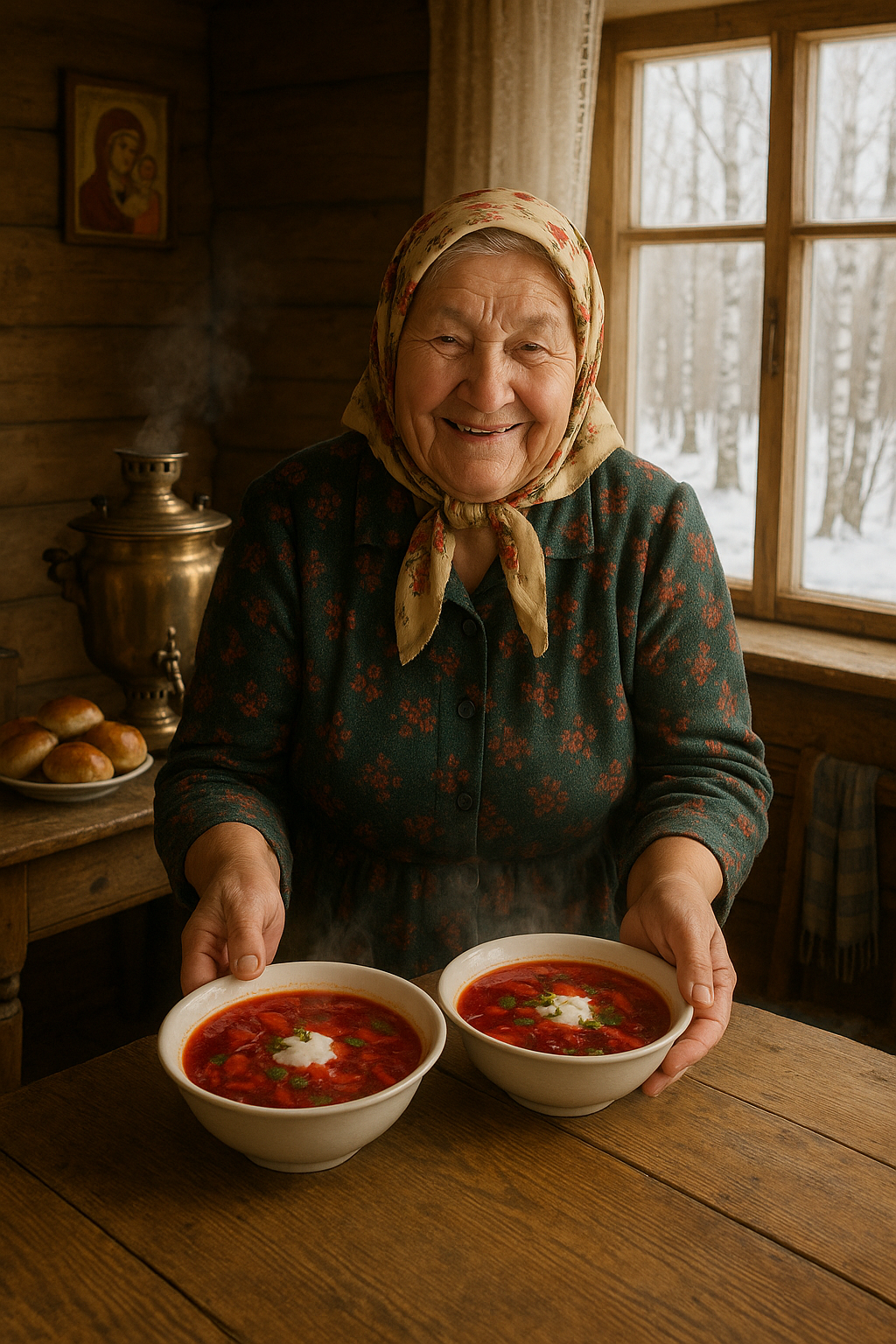
There’s something uniquely magnetic about Russian culture—at once proud, poetic, and paradoxical—that makes it hard to define in just a few words, yet unmistakably recognizable the moment you encounter it. It lives in the haunting melodies of a Tchaikovsky ballet, in the stern wisdom of a grandmother serving tea in a village kitchen, in the gilded opulence of Orthodox icons and the solemn silence of Soviet war memorials. Whether you’re drawn to Russian literature, history, language, or art, there’s no denying that to truly understand Russia, you must learn to navigate its cultural icons—and there are many.
This article is your guide through some of the most enduring, expressive, and emotionally charged symbols of Russian identity, from the humble babushka to the grand Bolshoi Theatre, from folk traditions and Soviet relics to the contemporary faces of Russian innovation and art. Whether you’re a language learner trying to make sense of the cultural subtext in your lessons, a traveler planning your first visit to Russia, or simply a curious soul fascinated by Slavic culture, you’ll find in these icons a roadmap not just to Russian customs—but to the Russian soul.
Let’s dive into the powerful symbols, names, and institutions that define Russia across generations, regions, and ideologies.
1. The Babushka: Russia’s Matriarchal Backbone
She may not hold political office, but in every Russian family, the babushka—literally “grandmother”—is the true seat of power. Known for her no-nonsense wisdom, unmatched cooking, and fierce protectiveness of her grandchildren, the babushka is more than a family figure: she’s a national archetype.
Historically, babushki carried communities through hardship, preserved oral traditions, and kept families together during war and migration. In literature and cinema, they symbolize endurance, tradition, and a bridge between the old and new Russia. When you hear the word “babushka,” think warm tea, crocheted shawls, stern advice, and undying love—all wrapped into one.
Language note: “бабушка” is also used affectionately for elderly women in general, even strangers.
2. Matryoshka Dolls: Layers of Identity
Often mistaken as a children’s toy, the matryoshka (nesting doll) is rich in symbolism. Each doll reveals another inside, echoing the Russian soul’s complexity—one identity within another, memory wrapped in memory, culture layered with culture. The largest doll may wear a peasant scarf and carry a basket, while the smallest is a tiny kernel of innocence. Some see this as a metaphor for motherhood, others for the layers of Russian history and national character.
Invented in the late 19th century but inspired by Japanese wooden dolls, the matryoshka has become a global symbol of Russian folk art. And yes, nearly every Russian home has one—even if tucked away in a dusty corner.
3. The Bolshoi Theatre: Russia’s Cultural Crown Jewel
To understand Russia’s love of high art, one need only step into the Bolshoi Theatre in Moscow. With its grand neoclassical façade, velvet-draped interiors, and legendary performances of ballet and opera, the Bolshoi is more than a building—it’s a symbol of artistic ambition.
Russia doesn’t just appreciate ballet; it reveres it. And names like Nureyev, Plisetskaya, and Zakharova aren’t just stars—they're national treasures. Even if you’ve never set foot in Russia, odds are you’ve seen a Bolshoi performance broadcast or referenced in pop culture. It’s a living emblem of Russia’s commitment to aesthetic excellence and emotional storytelling.
4. Samovar: The Social Centerpiece
Before Starbucks, before espresso machines, Russia had the samovar—a brass or copper contraption for boiling water and brewing tea. But the samovar is more than a teapot; it’s a ritual. Conversations spark around it. Disputes settle near it. Friendships deepen beside it. In traditional Russian homes, especially in the countryside, the samovar is the hearth.
It often features in literature, symbolizing hospitality, routine, and resilience. And yes, modern Russians still love their tea—though now the samovar might be electric.
5. Lenin and Soviet Iconography
It’s impossible to navigate Russian cultural symbols without confronting the enduring presence of Lenin, hammers and sickles, and Soviet murals. Whether viewed with nostalgia, irony, reverence, or discomfort, these images continue to define the Russian landscape.
From Moscow’s Red Square to distant villages, Lenin statues still stand. Soviet posters still hang in metro stations. For many, they are relics of a complex past—a symbol of strength and unity, or of repression and loss, depending on who you ask.
Language insight: Young Russians today often use the word “совок” (a slang term) to critique lingering Soviet mentalities.
6. The Orthodox Cross and Church Domes
The onion-shaped domes of Orthodox churches, with their vibrant blues, greens, and golds, are visual shorthand for Russian spirituality. These structures pierce the sky like prayers made solid. The Orthodox cross, with its distinctive slanted bottom bar, appears across art, jewelry, and graveyards.
Though the Soviet regime discouraged religion, the Orthodox Church has seen a resurgence in post-Soviet Russia. Its imagery—icons, candles, incense—is now once again deeply entwined with Russian identity and morality.
7. Banya: The Ritual of Sweat, Birch, and Brotherhood
The Russian banya, or sauna, is as much about soul-cleansing as it is about sweating. It’s a communal space, often gender-separated, where friends (and strangers) alternate between steam, cold plunges, and being lightly flogged with birch branches (called venik)—a tradition said to improve circulation and purify the spirit.
It’s also a place of honesty, jokes, bonding, and tradition. In Russian proverbs and folk tales, the banya often has magical or symbolic significance—think of it as the rustic cousin of the Japanese onsen or Finnish sauna.
8. Tolstoy, Dostoevsky, and the Literary Canon
When it comes to cultural symbols, Russian literature may be the most influential of all. The names Tolstoy, Dostoevsky, Chekhov, and Pushkin are not just literary giants—they’re national prophets, philosophers, and psychologists rolled into one.
Russian literature is intense, metaphysical, often tragic, but profoundly human. It asks big questions: What is justice? What is truth? What does it mean to be free? Reading it is not a casual pastime—it’s a spiritual experience.
Pro tip: Start with Chekhov’s short stories or Pushkin’s “The Captain’s Daughter” before diving into 800 pages of Dostoevsky.
9. The Dacha: Escape to Nature
For many Russians, weekends and summers are spent at the dacha—a countryside cottage or garden plot outside the city. Dachas are places to reconnect with the earth, grow potatoes, go mushroom hunting, or just escape the pace of urban life.
The dacha tradition is deeply tied to Soviet-era land allotments and continues to shape Russian concepts of family, space, and leisure. It’s also where countless samovars have boiled and where generations of children have learned to pick berries and play outside.
10. Tchaikovsky and Russian Classical Music
Pyotr Ilyich Tchaikovsky is to Russian music what Tolstoy is to literature. His emotional depth, theatrical flair, and haunting melodies define the global image of Russian classical music. From Swan Lake to The Nutcracker, his works are staples of the cultural imagination.
But it doesn’t end with Tchaikovsky. Prokofiev, Rachmaninoff, Stravinsky—all wrote music that channels something distinctly Russian: grandeur, sorrow, power, and beauty in equal measure.
11. Caviar, Blini, and the Language of Food
You can’t talk about Russian culture without mentioning food. Not just sustenance—food in Russia is symbolic, seasonal, and communal.
Caviar (especially red caviar) represents celebration.
Blini (thin pancakes) are served with everything from honey to herring and symbolize the sun in pagan tradition.
Borscht (yes, it’s Russian and Ukrainian) is more than a soup—it’s a gesture of warmth and welcome.
Food traditions often link directly to religious or folk calendars, making them a fascinating window into Russian seasonal life.
12. Modern Icons: Gagarin, Kasparov, and Contemporary Art
Cultural symbols evolve. Today, names like Yuri Gagarin (first man in space), Garri Kasparov (chess genius), or Sergei Polunin (ballet rebel) continue to shape how Russia sees itself—and how the world sees Russia.
Russian filmmakers like Andrey Zvyagintsev or conceptual artists like AES+F bring the cultural conversation into the 21st century, blending tradition with modern critique. You might find matryoshka dolls reimagined as political commentary, or classical music fused with electronic experimentation.
FREQUENTLY ASKED QUESTIONS
Q: Are these cultural icons still relevant to younger Russians?
Yes—though the meanings may evolve, many young Russians still feel a strong connection to figures like Pushkin, the dacha lifestyle, or the banya ritual. Others reinterpret Soviet or folk symbols through irony, nostalgia, or protest.
Q: Can I experience these things without traveling to Russia?
Absolutely. Russian cultural centers abroad, festivals, Orthodox churches, and even local bathhouses offer a taste of many traditions. But of course, immersion is deeper when you go there in person.
Q: Are there regional differences in Russian cultural icons?
Definitely. Siberian traditions, Tatar influences, and Caucasus customs add incredible diversity. But icons like the samovar, babushka, or matryoshka still resonate nationally.
Q: What should I do first to get familiar with Russian culture?
Start by reading a short story by Chekhov, listening to Tchaikovsky, watching a Russian film (Leviathan, The Cranes Are Flying, or Burnt by the Sun), and trying to make blini at home. Language learning adds a whole other dimension.
LEARN THE LANGUAGE BEHIND THE ICONS
Polyglottist Language Academy isn’t just about grammar drills—we believe learning Russian is a cultural adventure. Our online Russian classes help you not only speak the language but understand the world that comes with it—from babushka wisdom to Bolshoi elegance.
Whether you’re a complete beginner or looking to deepen your knowledge, our expert teachers guide you through language, history, humor, and identity.
Ready to explore Russian culture in its native language?
Sign up now and join a vibrant, supportive community of learners at Polyglottist Language Academy. Let’s decode the mystery of Russia—one word, one icon, one conversation at a time.
Want to explore more about Russian language and culture?
Check out our full collection of articles on the Polyglottist Language Academy Blog, where we dive into everything from why fluent Russian isn’t fast Russian to how to survive a Russian toast and what it’s like to be the only foreigner in a Russian dacha community. Whether you're curious about grammar tips, cultural faux pas, or how Russians navigate public space, our blog offers fresh, engaging insights to support your learning journey.