
Introduction
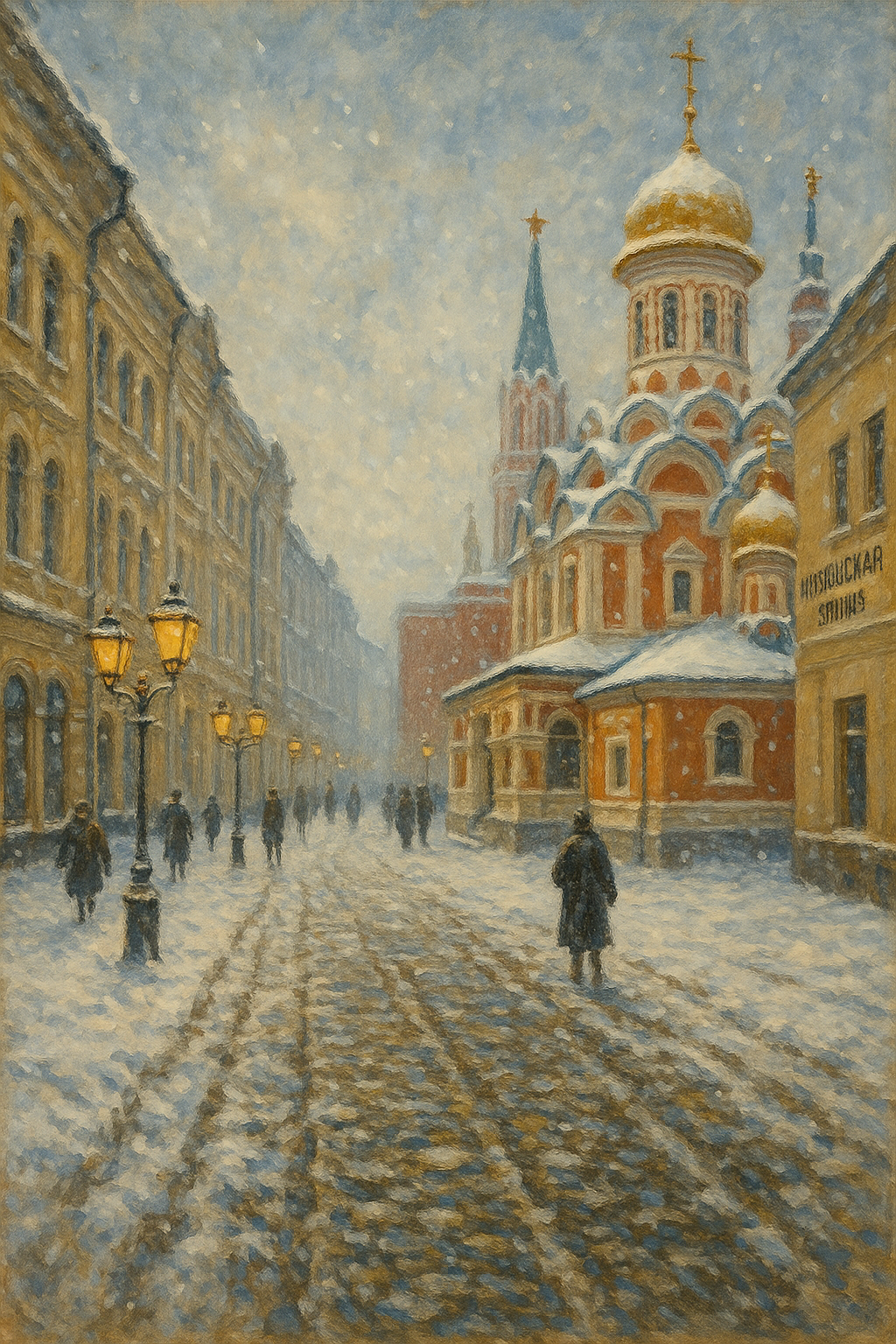
Few streets in Moscow embody the sweep of Russian history and culture as vividly as Nikolskaya Street, a place where medieval monasteries, baroque churches, 19th-century shopping arcades, Soviet parades, and international celebrations have all left their mark, creating a single thoroughfare that feels like both a museum and a living stage of Russian identity. Running through the very heart of Moscow, connecting Red Square to Lubyanka, Nikolskaya is not just a road paved with stones but a road paved with centuries of memory, transformation, and reinvention. To walk down this street is to witness a condensed history of Russia itself, from the sacred to the commercial, from the imperial to the global.
In the Middle Ages, Nikolskaya was a quiet, holy route lined with monasteries and religious buildings that gave the street its name. Over time, as Moscow grew into a capital of empire, Nikolskaya transformed into a bustling hub of trade, publishing, and cultural life, known for its bookshops and intellectual atmosphere. In the Soviet era, its identity shifted again, becoming a place of state parades and official architecture. And in 2018, during the FIFA World Cup, the street was reborn yet again, this time as the pulsating heart of global celebration, when fans from around the world turned it into an endless carnival of flags, songs, and camaraderie.
The story of Nikolskaya Street is the story of how Russia balances tradition and change, sacredness and spectacle, local identity and global interaction. It is a story that shows how a single urban space can evolve with the times while remaining a central artery of national life.
In this article, we’ll take a deep dive into the layered history of Nikolskaya Street: its religious beginnings, imperial role, Soviet transformations, and modern revival. Along the way, we’ll explore its cultural significance, architecture, and the role it played in international events like the World Cup. By the end, you’ll see why Nikolskaya is more than just a street—it’s a mirror of Russia’s journey.
The Sacred Origins: Monasteries and Churches
Nikolskaya Street gets its name from the Nikolo-Greek Monastery, one of several monasteries that once stood along its path. In medieval Moscow, monasteries were not just religious centers but also centers of learning, literacy, and social life. The presence of these holy institutions gave Nikolskaya an aura of sanctity and solemnity.
Key landmarks included:
The Greek Monastery of St. Nicholas, which lent its name to the street.
Zaikonospassky Monastery, later famous for its theological academy.
For centuries, this was a place where monks, scholars, and pilgrims walked, a spiritual artery in the heart of Moscow. Even as the city around it modernized, these religious roots continued to shape the street’s atmosphere.
A Hub of Publishing and Learning
By the 17th and 18th centuries, Nikolskaya was no longer only a religious street—it became a hub of education and publishing.
The Zaikonospassky Monastery founded the first higher educational institution in Moscow, the Slavic Greek Latin Academy.
Bookshops and printers flourished, making Nikolskaya synonymous with the intellectual life of Russia.
This era cemented the street’s reputation as a place of ideas. For Moscow residents, Nikolskaya was where you went to find books, meet scholars, and engage with Russia’s growing cultural sphere.
The Imperial Age: Trade and Elegance
In the 18th and 19th centuries, Nikolskaya underwent yet another transformation as Russia embraced its imperial grandeur.
The street became home to elegant arcades, shops, and cultural institutions.
The Gostiny Dvor, Moscow’s grand trading rows, attracted merchants and shoppers from across the empire.
Noble families and wealthy merchants flocked to the area, turning Nikolskaya into a fashionable boulevard.
This period gave the street a more cosmopolitan identity. It became a place not only of learning but also of commerce, bridging Moscow’s sacred and secular lives.
The Soviet Era: Transformation and Propaganda
The Bolshevik Revolution changed Nikolskaya dramatically. Religious institutions were closed or repurposed. Churches were destroyed or turned into warehouses. The street’s older identity as a religious and intellectual hub was replaced with Soviet grandeur and ideology.
During this time:
Religious processions gave way to state parades.
Publishing houses turned into propaganda offices.
Lubyanka Square, at one end of the street, became synonymous with Soviet power through the headquarters of the KGB.
Yet even in this era of change, Nikolskaya remained central to Moscow life—a place where history marched on, often in dramatic and painful ways.
The 21st Century Revival
With the fall of the Soviet Union, Nikolskaya entered yet another chapter. Restoration projects brought back its historic beauty. Churches were rebuilt or reopened. Shops and restaurants gave the street a lively commercial energy. By the 2000s, Nikolskaya had re-emerged as one of Moscow’s most vibrant pedestrian streets, full of tourists, locals, and cultural events.
The World Cup of 2018: Nikolskaya’s Global Moment
In the summer of 2018, Nikolskaya Street became the most famous street in the world.
During the FIFA World Cup hosted by Russia, fans from dozens of countries flocked to Moscow. Red Square may have been the official symbol, but Nikolskaya was the beating heart of the celebration.
Crowds gathered day and night, singing national anthems, waving flags, and dancing under strings of lights.
Videos of the endless party on Nikolskaya went viral, showing a Russia open, festive, and welcoming.
For many foreigners, this street became their most vivid memory of Russia—a place of joy, unity, and global connection.
This event reshaped the global image of Nikolskaya and highlighted how a street once defined by monasteries could also become a stage for international glory.
Architectural Highlights
Nikolskaya’s architecture reflects its layered history. Key landmarks include:
Kazan Cathedral (restored after Soviet destruction).
Gostiny Dvor with its massive trading halls.
Historical printing houses and bookshops.
Elegant 19th-century facades lit up by modern LED lights.
The blend of sacred and secular, old and new, creates a unique visual experience.
Nikolskaya as Cultural Symbol
Today, Nikolskaya symbolizes:
Spiritual heritage, through its restored churches.
Intellectual tradition, as the street of books and learning.
Commercial vibrancy, with its shops and restaurants.
Global connection, as the World Cup party capital.
Its very identity is one of transformation, showing how Russia embraces change while preserving memory.
FAQs about Nikolskaya Street
Q1: Why is it called Nikolskaya Street?
It is named after the Greek Monastery of St. Nicholas, which once stood along the street.
Q2: What was Nikolskaya known for in the 17th century?
It was a center of religious and intellectual life, home to monasteries and the Slavic Greek Latin Academy.
Q3: What happened to Nikolskaya during the Soviet era?
Religious institutions were closed, churches were destroyed or repurposed, and the street became associated with Soviet power.
Q4: Why was Nikolskaya famous during the 2018 World Cup?
It became the main gathering place for international fans, hosting a nonstop street party that symbolized Russia’s festive spirit.
Q5: What landmarks are on Nikolskaya today?
Kazan Cathedral, Gostiny Dvor, restored monasteries, and many shops and restaurants.
Q6: Is Nikolskaya open to cars?
No. It is now a pedestrian street, making it popular for walking and sightseeing.
Q7: What makes Nikolskaya different from other Moscow streets?
Its unique mix of religious, intellectual, commercial, and festive history makes it a microcosm of Russian culture.
Q8: How can I experience Nikolskaya as a visitor?
By walking from Red Square to Lubyanka, stopping at cathedrals, arcades, cafés, and simply soaking in the atmosphere.
Conclusion
Nikolskaya Street is more than just a road in Moscow—it is a journey through Russia’s past and present. From monasteries to markets, from Soviet parades to World Cup celebrations, Nikolskaya has witnessed every phase of Russian history. To walk along it today is to step into a living narrative that combines sacred heritage, intellectual tradition, commercial vitality, and global festivity.
At Polyglottist Language Academy, we believe that learning Russian is about more than grammar and vocabulary—it’s about understanding the culture and history that shape the language. Nikolskaya Street is a perfect example of how one word, one place, or one tradition can open a window into the Russian soul.
👉 Sign up for Russian classes at Polyglottist Language Academy today, and begin your own journey into the richness of Russian culture and history.
For more stories that bring Russia to life, explore our other blog articles: