
Introduction
Among the many cultural borrowings that crossed borders during the cosmopolitan 19th century, few are as sweet, delicate, and revealing as the dessert known in Russia as “sharlotka” or, more formally, Charlotte Russe. This elegant creation—originally a European dessert of sponge fingers and custard that found popularity in France and England—underwent a transformation in Russia, where it became not only a fashionable treat for the aristocracy but also, over time, an everyday favorite reinvented in kitchens across the empire. The story of Charlotte Russe in Russia is about far more than cake: it reflects the country’s relationship with Europe, its culinary imagination, and its ability to adapt foreign influences into something uniquely Russian.
When 19th-century Russian nobility looked westward, they adopted not only French fashion, language, and manners but also the art of French pastry. In the kitchens of Saint Petersburg and Moscow, French chefs reigned supreme, serving at noble households and the imperial court. Desserts like éclairs, mille-feuille, and charlotte brought refinement to Russian tables. Yet Charlotte Russe, with its structure of sponge biscuits or cake filled with custard, cream, or fruit, soon became a dessert that Russians not only consumed but also transformed, eventually producing variations that are still beloved today.
Tracing the journey of Charlotte Russe through Russia tells us about changing tastes, culinary innovation, and cultural borrowing. It also highlights a fascinating paradox: while aristocratic Russia looked abroad for inspiration, it was the Russian people themselves who made Charlotte their own, adapting it into simpler forms like the modern apple sharlotka, now a staple in Russian households.
In this article, we’ll explore the origins of Charlotte Russe, its arrival in Russia, the ways it evolved in Russian kitchens, and its place in Russian culture today. We’ll also connect this culinary tale to the broader story of Russian openness to outside influences, and the creativity with which they are reinterpreted.
Origins of Charlotte Russe
The dessert known as charlotte predates its Russian fame. Historians believe it originated in England in the late 18th century as a baked pudding made with apples and stale bread. Its name may honor Queen Charlotte, wife of King George III, who was known for her interest in agriculture and orchards.
Later, in France, the famed chef Marie-Antoine Carême refined the recipe into Charlotte à la Russe, a cold dessert lined with ladyfingers and filled with Bavarian cream. This was the version that conquered aristocratic Europe and eventually entered Russian cuisine. Why “à la Russe”? Some culinary historians suggest that Carême, who cooked for Russian nobility, named the dish in honor of his Russian patrons, while others argue that the title simply reflected the 19th-century European vogue of associating exotic or luxurious dishes with Russia.
Whatever its precise naming origins, Charlotte Russe became associated with elegance, refinement, and cosmopolitanism.
Arrival in Russia
By the early 19th century, French chefs were staples in noble Russian households. Russian high society spoke French, read French novels, and employed French cooks. It was during this period that Charlotte Russe entered Russian culinary culture.
In Russia, Charlotte Russe was first enjoyed in its aristocratic form: an elaborate, chilled dessert requiring imported ingredients like ladyfingers, gelatin, and molds. It appeared at banquets, balls, and imperial dinners. Diaries and letters from the Russian nobility mention Charlotte Russe among fashionable treats.
But as often happens, recipes trickled down from palaces to middle-class and even peasant kitchens, adapted to local resources and simplified for practicality. Thus began the Russianization of Charlotte Russe.
Russian Variations of Charlotte
1. The Aristocratic Charlotte Russe
In noble circles, Charlotte remained close to its French prototype: ladyfingers, cream fillings, fruits, and elaborate molds. It symbolized sophistication and foreign refinement.
2. The Russian Apple Sharlotka
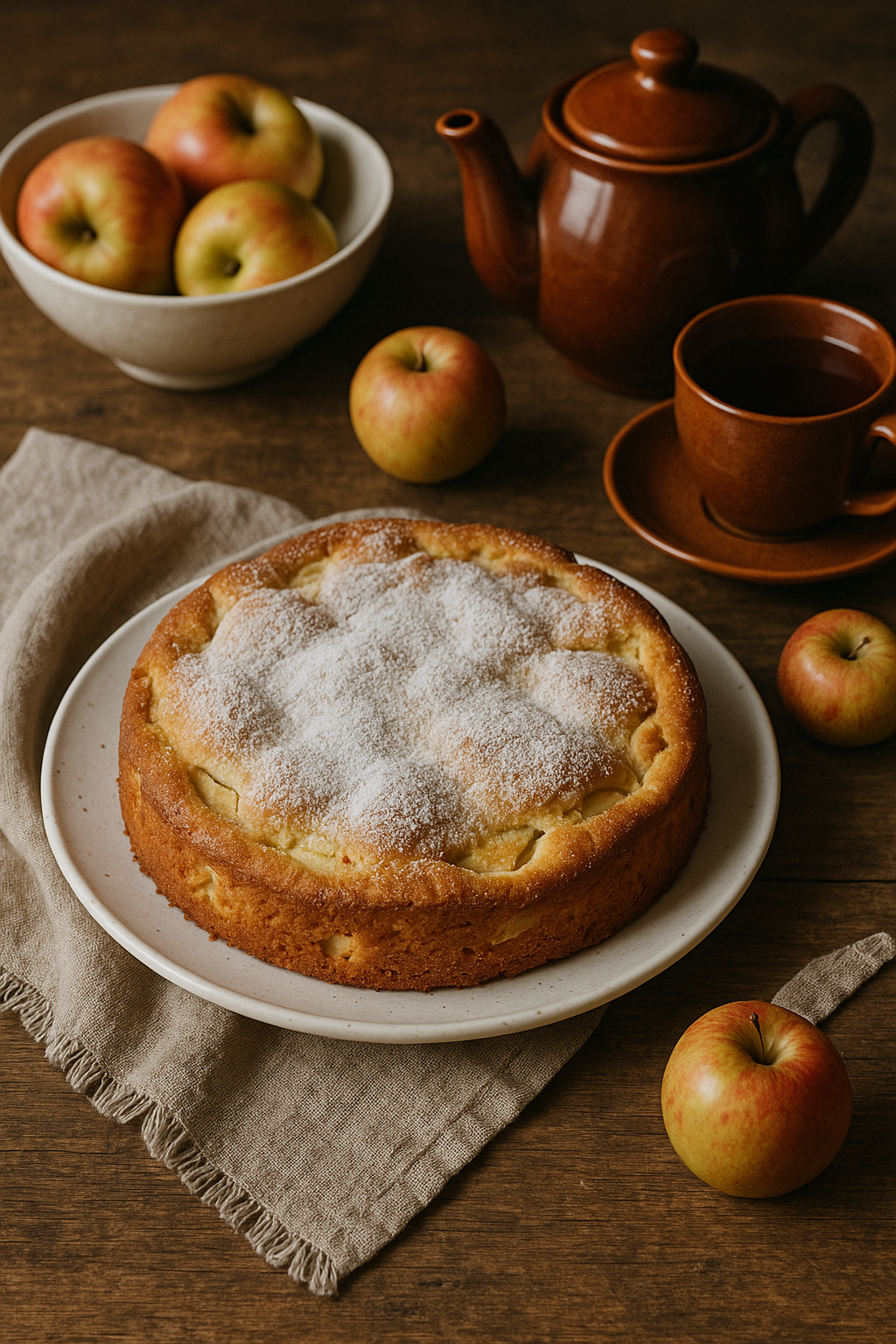
Over time, the Russian version simplified into what is now the quintessential sharlotka: a light sponge cake filled with apples, baked in homes across Russia. Cheap, quick, and requiring minimal ingredients, this form became a staple of everyday Russian baking.
Ingredients: flour, sugar, eggs, and apples.
Method: mix batter, pour over sliced apples, and bake.
This everyday sharlotka bears little resemblance to Carême’s Charlotte Russe, yet it inherited its name and became the dessert most Russians associate with the term “charlotte.”
3. Festive and Modern Twists
In Soviet times, Charlotte resurfaced in cookbooks as a modest but reliable dessert, often enriched with sour cream or seasonal fruits. Today, Russian bakeries offer both rustic apple sharlotka and sophisticated cream-filled charlottes, bridging the gap between peasant and aristocratic traditions.
Charlotte Russe in Russian Culture
The cultural story of Charlotte in Russia reflects broader themes:
Borrowing and Adaptation: Russia eagerly imported European culture, but adaptations—like sharlotka—made it Russian.
Democratization of Taste: What began as an aristocratic delicacy became a household dessert for ordinary people.
Cultural Memory: For many Russians, sharlotka evokes childhood, family kitchens, and the scent of baked apples, far removed from the gilded halls of 19th-century nobles.
Charlotte in Literature and Memory
Though not as frequently mentioned as borscht or kasha, Charlotte Russe occasionally appears in Russian memoirs and cookbooks of the 19th century. More importantly, sharlotka is a recurring feature in personal narratives: Soviet childhood memories often include a grandmother’s apple sharlotka, quick to prepare and perfect with tea.
This everyday association gives Charlotte in Russia a nostalgic aura: a link between past refinement and modern simplicity.
The Symbolism of Charlotte’s Transformation
The story of Charlotte Russe in Russia mirrors the country’s cultural trajectory:
From aristocratic fascination with France to domestic adaptation.
From complexity and luxury to simplicity and accessibility.
From imported prestige to deeply rooted tradition.
It shows how Russian culture has historically absorbed foreign influences, reshaping them into uniquely Russian forms.
Recipes: Then and Now
Classic Charlotte Russe (Carême’s version)
Ladyfingers lining a mold
Filled with Bavarian cream and fruit
Chilled and unmolded for elegant presentation
Russian Apple Sharlotka (Modern)
3 eggs
1 cup sugar
1 cup flour
3–4 apples, sliced
Mix batter, pour over apples, bake at 180°C (350°F) for 40 minutes.
This side-by-side recipe comparison illustrates the journey from aristocratic Europe to everyday Russian kitchens.
Charlotte Russe Today
In modern Russia, both versions coexist. Upscale patisseries offer elaborate charlottes reminiscent of French origins, while households continue to bake humble apple sharlotka. Russian food blogs frequently feature sharlotka recipes, attesting to its enduring popularity.
Beyond Russia, the diaspora has carried sharlotka abroad. Russian immigrants in the U.S. often bake it, sharing it with American friends as a taste of home. Thus, Charlotte continues to evolve, adapting to new contexts and communities.
FAQs about Charlotte Russe in Russia
Q1: Why is it called Charlotte “Russe”?
The “à la Russe” name likely honored Russian patrons of the French chef Carême or reflected European fascination with Russia in the 19th century.
Q2: Is Russian sharlotka the same as Charlotte Russe?
Not exactly. Sharlotka is a simplified apple sponge cake, while Charlotte Russe is a cream-filled, molded dessert.
Q3: Which version is more common in Russia today?
Sharlotka, the apple sponge cake, is far more common in everyday life.
Q4: Do Russians still make the aristocratic Charlotte?
Yes, but usually in upscale settings, restaurants, or special occasions.
Q5: Is sharlotka difficult to make?
No. It is considered one of the easiest Russian desserts to prepare.
Q6: Why is sharlotka nostalgic for Russians?
Because many associate it with childhood, home cooking, and the smell of baked apples in family kitchens.
Q7: Are there regional variations in Russia?
Yes. Some versions use pears, plums, or sour cream to enrich the batter.
Q8: How did Charlotte reflect Russia’s cultural borrowing?
It shows how Russia absorbed European culture but transformed it into something practical, beloved, and uniquely its own.
Conclusion
The story of Charlotte Russe in Russia is not just about dessert—it’s about cultural transformation. From French aristocratic kitchens to Russian peasant homes, Charlotte traveled, adapted, and endured. Today, Russians cherish both its elegant past and its homely present, proving that culinary traditions can evolve without losing their essence.
At Polyglottist Language Academy, we know that learning a language is also about discovering the culture that surrounds it. Understanding how a dessert like Charlotte Russe became sharlotka offers insights into Russian history, values, and daily life.
👉 Sign up for Russian classes at Polyglottist Language Academy today and enrich your learning with the cultural stories that make language come alive.
For more cultural and linguistic journeys, check out our other articles:
Borscht Beyond Beets: The Many Variations Of Russia’s Most Famous Soup
Russian Pickling Tradition: Cucumbers, Sauerkraut, And Forest Mushrooms
Blini Through The Seasons: From Maslenitsa To Modern Brunch Tables
Zakuski In The 19th Century Russia: Caviar, Aspic, And Aristocratic Indulgence
The Comfort Of Olivier Salad: Why Russians Can’t Celebrate New Year Without It