
Introduction
Among the many culinary traditions that reveal the character of Russian culture, few are as aromatic, comforting, and enduring as pryaniki, the spice cookies that have delighted generations with their honeyed sweetness, intricate patterns, and warm spiced flavors. More than just a dessert, pryaniki embody centuries of history, tracing their roots back to medieval Russia, when honey was the sweetener of choice and exotic spices like cardamom, cinnamon, and cloves arrived via the Silk Road. To bite into a pryanik is to taste a fusion of old-world trade, Orthodox ritual, festive celebration, and everyday family life, making these cookies far more than simple confections—they are edible pieces of cultural memory.
For Russians, pryaniki conjure images of bustling market stalls in cities like Tula and Vyazma, where elaborately decorated cookies once served as gifts, souvenirs, and even tokens of affection. They remind people of tea poured from samovars, snowy winter evenings, and childhood treats shared with grandparents. Their flavors—rich with honey, molasses, and warming spices—reflect a time when food not only satisfied hunger but also carried symbolic and spiritual meaning.
In this article, we’ll trace the long history of pryaniki from their medieval beginnings to their modern-day presence in Russian homes and bakeries. We’ll explore their regional varieties, festive role, symbolic meanings, and recipes, while connecting their story to the broader Russian relationship with sweetness, ritual, and hospitality. By the end, you’ll see that pryaniki are not just cookies—they are a narrative of Russia’s past and present baked into a single treat.
Ancient Roots: Honey and Spice
The earliest form of pryaniki dates back to the 9th century, long before sugar became common in Russia. At that time, honey was the universal sweetener, revered not only for its taste but also for its perceived medicinal and spiritual properties. Honey was mixed with rye flour to create simple cakes that were dense, chewy, and filling.
The transformation of these honey cakes into what we now call pryaniki came with the introduction of spices from the East. By the 12th and 13th centuries, through trade routes connecting Novgorod and Moscow to Byzantium and the Middle East, spices like cinnamon, cardamom, cloves, and nutmeg reached Russian kitchens. Combined with honey, these spices gave the cookies their distinctive aroma and flavor.
The name itself—“pryaniki”—comes from the word pryany, meaning “spicy” or “peppered,” reflecting their defining characteristic.
Medieval and Early Modern Pryaniki
By the 15th century, pryaniki had become an established part of Russian culture. They were baked not only in homes but also in specialized bakeries, often associated with monasteries. Monks played a key role in refining recipes and using pryaniki for religious festivals and rituals.
These cookies were also tied to commerce. Cities like Tula, Vyazma, and Gorodets became famous for their pryaniki, each developing distinct recipes and styles. Large, decorated pryaniki were sold at fairs and markets, often bearing intricate patterns pressed from wooden molds. They served as souvenirs, symbols of hospitality, and sometimes even as edible “letters” carrying messages or blessings.
Regional Varieties of Pryaniki
Tula Pryaniki
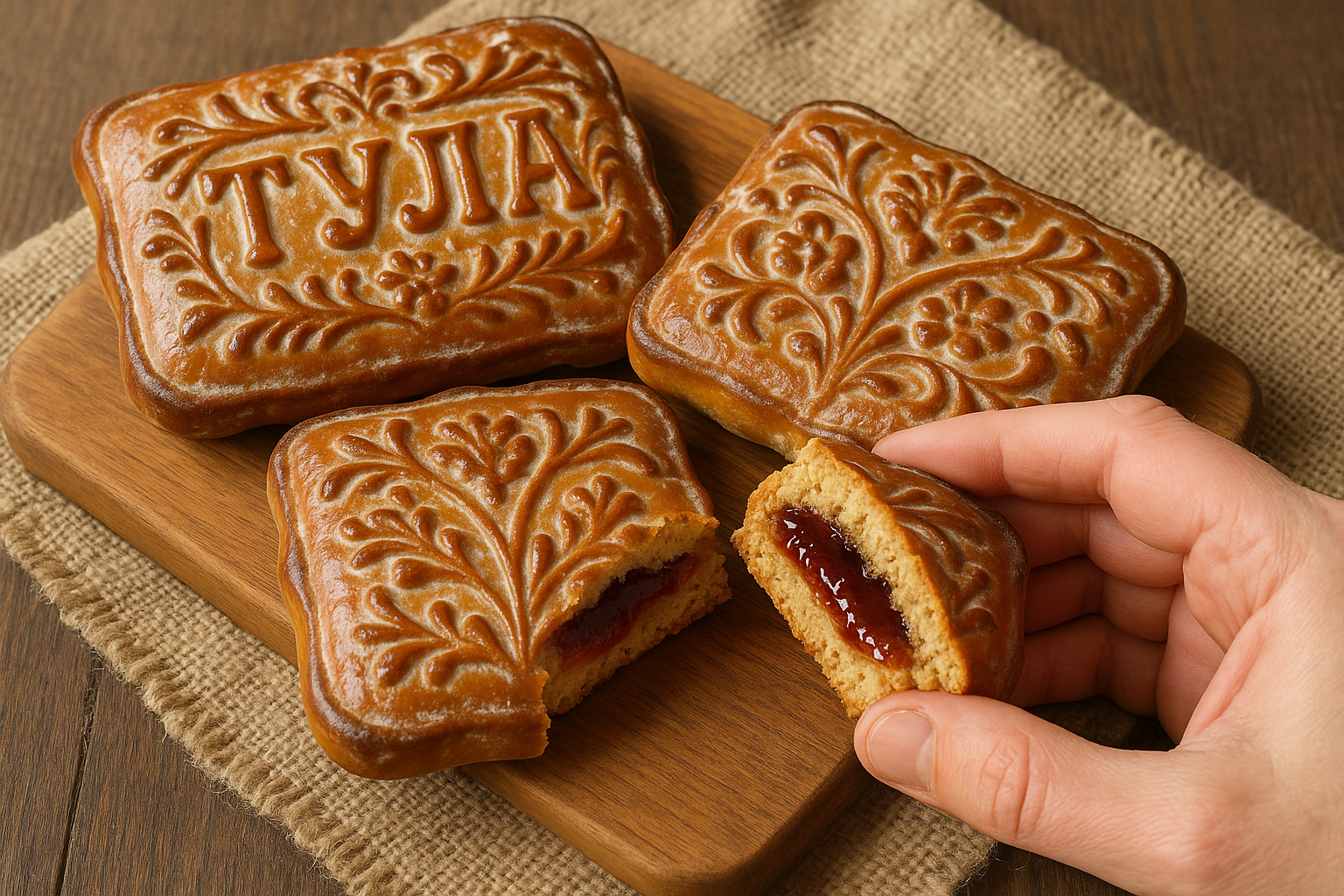
Perhaps the most famous variety, Tula pryaniki are rectangular, stamped with ornate designs, and often filled with jam or sweetened condensed milk. Tula’s reputation for these cookies is centuries old, and today they remain iconic souvenirs of the city.
Vyazma Pryaniki
Known for being particularly large and richly spiced, Vyazma pryaniki were once sent as gifts to the tsar’s court.
Gorodets Pryaniki
These were decorated with colorful icing and designs, reflecting Gorodets’ broader folk art traditions.
Plain Honey Pryaniki
Simpler versions, often small and round, became everyday treats, especially in rural households.
Symbolism and Cultural Role
Pryaniki have long been more than just desserts—they carried symbolic meaning in Russian society:
Hospitality: Offering pryaniki with tea was a gesture of welcome and warmth.
Festivals: They were staples of religious and seasonal celebrations, from Christmas to Easter.
Courtship: Large, decorated pryaniki were sometimes given as romantic tokens, akin to edible love letters.
Blessings: Some pryaniki carried religious motifs or inscriptions of goodwill.
They functioned as gifts, symbols, and rituals, blurring the line between food and cultural expression.
Pryaniki in the Soviet Era
During the Soviet period, many traditional foods were simplified or mass-produced. Pryaniki survived but often lost some of their artisanal richness. Factories churned out round, glazed versions filled with jam or condensed milk. These factory pryaniki became staples of Soviet childhoods, affordable and available across the USSR.
Though not as ornate as their pre-revolutionary counterparts, Soviet pryaniki retained their cultural importance as everyday tea cookies. For many Russians today, the taste of these modest pryaniki recalls school cafeterias, holidays, and family kitchens.
Modern Revival of Pryaniki
In the post-Soviet era, Russia has seen a revival of artisanal food traditions, and pryaniki are no exception. Today, bakeries across Russia produce both simple glazed pryaniki and ornate, traditional designs. Tula pryaniki remain iconic, and decorated pryaniki are popular at Christmas markets. Food bloggers and chefs experiment with new fillings, from chocolate to citrus, while still honoring the deep roots of the tradition.
Outside Russia, pryaniki have also gained popularity among the diaspora and curious bakers worldwide, who see them as a delicious entry point into Russian culinary heritage.
Recipes: Traditional and Modern
Traditional Honey Pryaniki
Ingredients:
Honey
Rye or wheat flour
Spices (cinnamon, cloves, cardamom, nutmeg)
Baking soda
Butter or oil
Method:
Warm honey and mix with spices.
Combine with flour and baking soda.
Shape into small rounds, bake until golden.
Tula Pryaniki with Filling
Ingredients:
Wheat flour
Honey and sugar
Butter
Spices
Jam or condensed milk for filling
Method:
Prepare dough with honey, sugar, and flour.
Roll and shape with molds.
Add filling, bake, and glaze with sugar syrup.
Pryaniki Beyond Russia
Like many Russian traditions, pryaniki traveled abroad with emigrants. In Eastern Europe, similar spiced cookies appear in Poland (pierniki) and Germany (Lebkuchen). In Russian communities abroad, pryaniki often appear at cultural festivals, Christmas bazaars, and family celebrations, connecting generations to their heritage.
The Enduring Allure of Pryaniki
Why have pryaniki lasted so long?
Their ingredients—honey, flour, and spices—are timeless and comforting.
Their role as symbols of hospitality and festivity keeps them relevant.
Their adaptability allows them to thrive in both ornate and simple forms.
Ultimately, pryaniki endure because they are woven into the fabric of Russian identity, offering sweetness in every sense of the word.
FAQs about Pryaniki
Q1: What does “pryaniki” mean?
It comes from pryany, meaning “spicy” or “seasoned.”
Q2: Are pryaniki the same as gingerbread?
They are similar, but pryaniki rely more on honey and distinctive Russian spice blends, making them softer and often glazed.
Q3: What is the most famous type of pryanik?
Tula pryaniki, rectangular cookies filled with jam or condensed milk and stamped with ornate designs.
Q4: Do Russians eat pryaniki only at holidays?
No, they are enjoyed year-round, often with tea.
Q5: Are pryaniki difficult to make at home?
No. Simple honey pryaniki are easy to prepare, while filled and molded varieties are more advanced.
Q6: What do pryaniki symbolize?
They symbolize hospitality, festivity, and sometimes romantic affection.
Q7: How do Soviet-style pryaniki differ from traditional ones?
Soviet versions were often factory-made, round, glazed, and filled with jam, while traditional ones were larger, molded, and ornate.
Q8: Can you find pryaniki outside Russia?
Yes. Russian bakeries abroad often sell them, and many recipes are available for home bakers worldwide.
Conclusion
Pryaniki are more than cookies—they are storytellers, carrying centuries of Russian history, tradition, and hospitality in their spiced sweetness. From their honey-and-spice medieval origins to their role in Orthodox festivals, Soviet factories, and modern bakeries, they remain an essential part of Russian identity. Their flavors link past and present, sacred and everyday, aristocratic and peasant life.
At Polyglottist Language Academy, we believe that learning a language is about more than grammar—it’s about tasting the culture, understanding its rituals, and experiencing its traditions. When you learn Russian with us, you gain access not only to words but also to the rich heritage behind them, from pryaniki to proverbs.
👉 Sign up for Russian classes at Polyglottist Language Academy today, and enrich your language journey with the cultural flavors that make Russian unforgettable.
If you enjoyed this article, don’t miss our other explorations of Russian culture and language:
Blini Through The Seasons: From Maslenitsa To Modern Brunch Tables
Zakuski Culture: The Russian Way Of Snacking And Socializing
Pirozhki, Pies, And Coulibiac: The Art Of Russian Stuffed Dough
Kvass, Kompot, And Kissel: Traditional Russian Drinks You Should Try
Borscht Beyond Beets: The Many Variations Of Russia’s Most Famous Soup
Zakuski In The 19th Century Russia: Caviar, Aspic, And Aristocratic Indulgence
The Comfort Of Olivier Salad: Why Russians Can’t Celebrate New Year Without It
Russian Holidays And Celebrations: Traditions You Should Know