
Languages are full of hidden shortcuts that reveal how people compare, rank, and evaluate the world around them, and in Russian, the way you express that something is “bigger,” “faster,” or “more important” than something else opens a fascinating window into both grammar and culture, because these forms are not only practical for everyday conversations but also deeply tied to idiomatic speech, literature, and even how Russians think about hierarchy and relationships.
Why Comparatives and Superlatives Matter
Whether you’re complimenting a friend, reviewing a restaurant, or discussing global politics, you constantly need to compare things. In English, it feels automatic: tall → taller → tallest, interesting → more interesting → most interesting. Russian works similarly, but with its own set of patterns, irregularities, and cultural quirks. Mastering these forms not only boosts your fluency but also makes your Russian sound natural, expressive, and precise.
For learners, comparatives and superlatives can be a breakthrough moment. Suddenly, you can go beyond simple descriptions (“the café is good”) and add nuance (“this café is better than that one,” “it’s the best café in town”). With just a few patterns, your vocabulary gains superpowers.
This article will guide you through:
How to form comparatives in Russian.
The difference between simple and compound comparatives.
How to form superlatives (both regular and irregular).
Common pitfalls learners make.
Cultural insights and idiomatic uses.
Practical examples from everyday Russian speech.
By the end, you’ll be able to compare and rank just about anything—from people and places to abstract concepts—in confident, natural Russian.
The Basics of Comparatives in Russian
Simple Comparatives
In Russian, many one-syllable adjectives have short comparative forms built by changing the ending:
большой (big) → больше (bigger)
маленький (small) → меньше (smaller)
дешёвый (cheap) → дешевле (cheaper)
дорогой (expensive) → дороже (more expensive)
Notice that many comparatives look quite different from their adjective base. This is where learners need to memorize irregular forms, much like in English (“good → better,” “bad → worse”).
These simple comparatives are used when comparing two things directly:
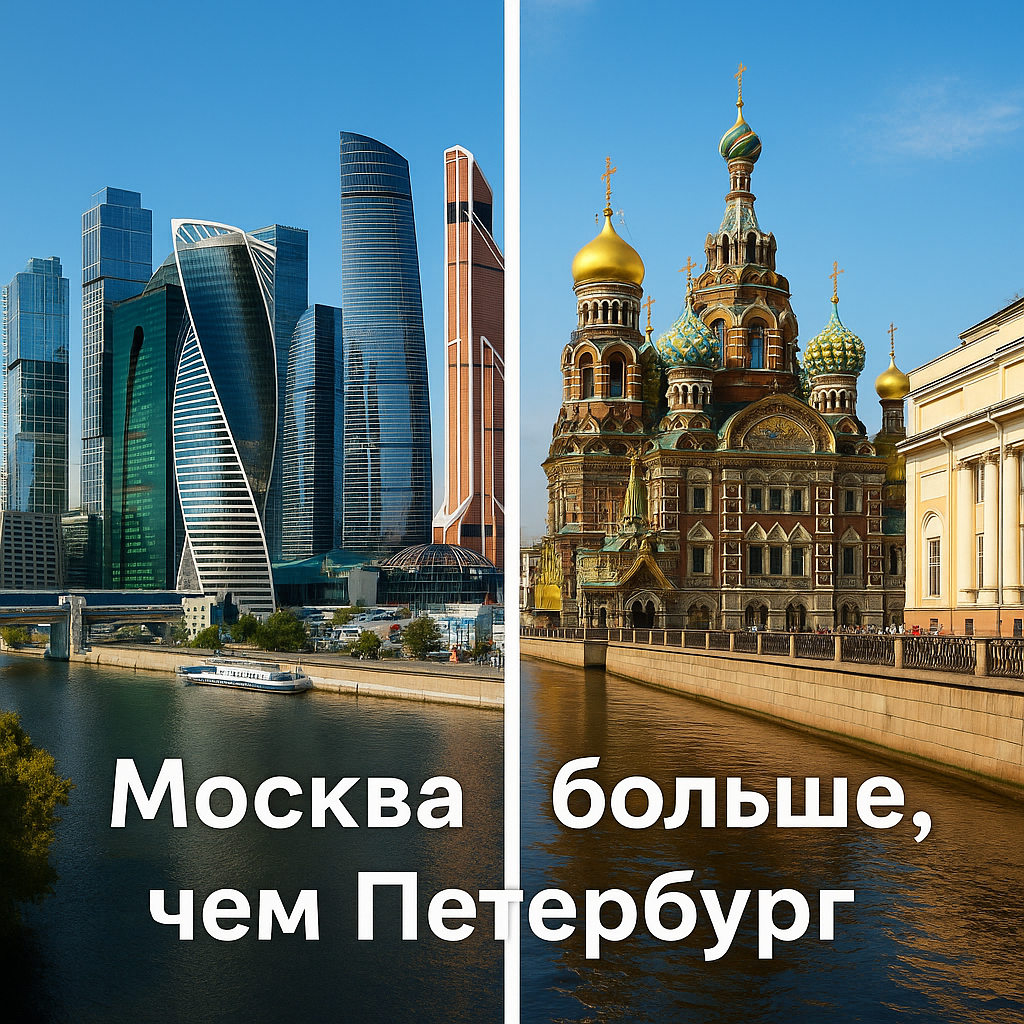
Москва больше, чем Петербург.
(Moscow is bigger than Petersburg.)Этот отель дороже, чем тот.
(This hotel is more expensive than that one.)
Compound Comparatives
Not all adjectives have short forms. For many, you form the comparative with более (more) + adjective:
интересный (interesting) → более интересный (more interesting)
удобный (comfortable) → более удобный (more comfortable)
This pattern is especially common for longer adjectives. It works almost exactly like English “more + adjective.”
Example:
Этот фильм более интересный, чем тот.
(This movie is more interesting than that one.)
You can also form the opposite with менее (less):
Эта задача менее сложная, чем та.
(This task is less difficult than that one.)
Superlatives in Russian
Superlatives let you say “the best,” “the worst,” or “the most important.”
Analytic Superlatives (Common and Easy)
The most common way is самый (the most) + adjective:
самый интересный фильм → the most interesting film
самая красивая девушка → the most beautiful girl
самое важное решение → the most important decision
This form is straightforward and widely used in both speech and writing.
Synthetic Superlatives (More Formal or Literary)
Russian also has single-word superlatives formed by adding -ейший / -айший to the adjective stem:
важный (important) → важнейший (most important / crucial)
строгий (strict) → строжайший (most strict / very strict)
These forms often sound more formal, bookish, or emphatic. You’ll encounter them in literature, journalism, or speeches.
Example:
Это имеет важнейшее значение.
(This has the utmost importance.)
Special & Irregular Forms
Some adjectives have irregular comparatives that you’ll hear all the time:
хороший (good) → лучше (better)
плохой (bad) → хуже (worse)
молодой (young) → младше (younger, for family/age)
старый (old) → старше (older, for age), старее (older, for objects)
These distinctions matter: старше vs. старее is one of those details that makes your Russian sound more natural.
Comparing Without “чем”
In Russian, you don’t always need чем (than). Often, you can simply use the genitive case:
Анна младше брата.
(Anna is younger than her brother.)Этот телефон дороже моего.
(This phone is more expensive than mine.)
This structure feels very idiomatic and is common in everyday Russian.
Comparatives in Idiomatic Speech
Russian loves using comparatives in colorful, expressive ways. For example:
Чем дальше в лес, тем больше дров.
(The deeper into the forest, the more firewood. = The deeper you go, the more complicated it gets.)Лучше поздно, чем никогда.
(Better late than never.)Хуже нет.
(There’s nothing worse.)
These expressions show that comparatives aren’t just grammar—they’re part of cultural wisdom.
Advanced Nuances
Comparing Degrees with “гораздо” and “намного”
To emphasize that something is much bigger, faster, or better, Russians use:
гораздо (much)
намного (much, by far)
Examples:
Этот город намного больше.
(This city is much bigger.)Задача оказалась гораздо сложнее.
(The task turned out much harder.)
“Ещё” for “Even More”
Another powerful particle is ещё (even more):
Это задание ещё труднее.
(This assignment is even harder.)Она выглядит ещё красивее.
(She looks even more beautiful.)
Cultural Insight: Hierarchies and Comparison in Russian
Russians often think in terms of gradations, hierarchies, and extremes. This shows up in how comparative and superlative forms are used:
Лучший (the best) is a word you’ll hear everywhere, from advertising slogans to casual talk. Russians tend to emphasize the very best or the worst rather than settling in the middle.
In literature, superlatives are used for drama and emotional impact—Dostoevsky, Tolstoy, and Chekhov all use them to heighten intensity.
Everyday conversations also rely heavily on these forms: asking which metro station is ближе (closer), whether a route is удобнее (more convenient), or which season is лучший (the best).
Understanding these cultural habits helps you use comparative and superlative forms not just correctly but expressively.
Practical Examples
Here are some mini-dialogues showing how comparatives and superlatives work in practice:
At a café:
— Как тебе кофе?
— Этот лучше, чем вчера.
(— How’s the coffee? — This one is better than yesterday’s.)
Traveling:
— Этот поезд быстрее?
— Да, гораздо быстрее.
(— Is this train faster? — Yes, much faster.)
Daily life:
— Где самый дешёвый супермаркет?
— На углу, возле метро.
(— Where’s the cheapest supermarket? — On the corner, near the metro.)
Common Mistakes to Avoid
Overusing “чем”:
Remember you can often drop it and use the genitive.Mixing up старше vs. старее:
One is for people, the other for objects.Forgetting irregular forms:
Better → лучше, not “хорошеее.”Forgetting agreement:
Superlatives with самый must agree in gender, number, and case.
FAQs
Q: What’s the difference between “самый красивый” and “красивейший”?
A: Самый красивый is neutral, common, and works everywhere. Красивейший sounds literary, elevated, or formal.
Q: Do all adjectives have short comparative forms like “больше”?
A: No. Many do, but for longer adjectives you need to use более (more).
Q: Can I always use “чем” when comparing?
A: You can, but often Russians prefer the genitive construction, which sounds more natural.
Q: How do you say “the least” in Russian?
A: Use наименее + adjective. For example: наименее удобный вариант (the least convenient option).
Q: Is “самый лучший” correct or redundant?
A: It’s technically redundant (“the most best”), but it’s very common in colloquial speech and advertising.
Q: Do comparatives decline?
A: Yes, some comparatives can be declined, especially when used as adjectives (e.g., в более интересной книге).
Q: Which superlative form should I use as a beginner?
A: Stick to самый + adjective. It’s simple, common, and always correct.
Q: Do Russians use comparatives metaphorically?
A: Absolutely. Expressions like хуже не бывает (it couldn’t be worse) or лучше всех (better than everyone) are very common.
Final Thoughts
Learning comparative and superlative adjectives in Russian is a gateway to more expressive, precise, and natural speech. With a handful of irregular forms and some practice, you’ll quickly find yourself able to compare everything from Russian cities to your favorite dumplings.
At Polyglottist Language Academy, we specialize in helping students make sense of these grammatical structures in real-life contexts. Our Russian classes—offered online and tailored to different levels—will give you the tools, confidence, and cultural understanding to use comparatives and superlatives like a native. If you’re ready to take your Russian to the next level, sign up for a class today and start experiencing the joy of mastering these expressive forms.
And don’t stop here—comparatives and superlatives connect naturally with other parts of Russian grammar. To deepen your learning, check out these other articles on our blog: