
Why Learning Dutch Changes How You Think About Time
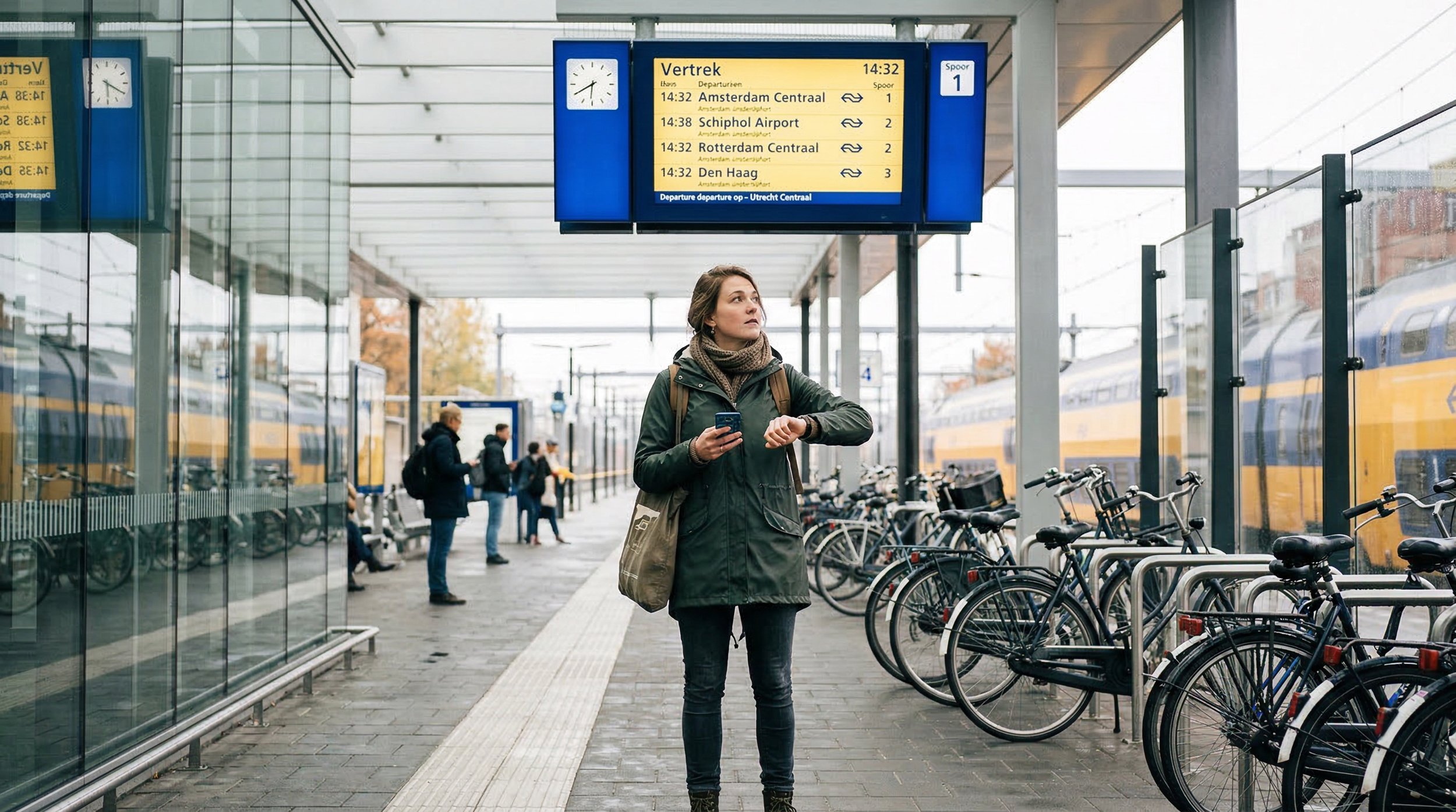
Introduction: When Time Becomes Taal
Move to the Netherlands and you quickly discover that time is not just measured by clocks and calendars – it is negotiated out loud. You are asked to put a coffee date “in your agenda,” reminded to be “op tijd,” and told someone will call you “straks” or “zometeen” with no exact minutes attached. Before long, you are not just learning vocabulary; you are learning a new way to feel deadlines, waiting, and free time.
This article explores how Dutch reshapes your sense of time: through the words people use, the cultural norms they reveal, and the subtle mental habits you adopt when you start speaking the language yourself. Along the way, we will look at linguistic research on time, expat experiences, and very practical expressions you can use in daily life. By the end, you will see why learning Dutch can quietly re‑organize your calendar, your social life, and even how you think about being “busy.”
1. How Dutch People Talk About Time
1.1 “Hoe laat is het?” – Late, not just time
A small but telling difference appears in one of the first questions you learn in Dutch: “Hoe laat is het?” Literally this is “How late is it?”, whereas English normally asks “What time is it?” It is a subtle shift from neutral clock reading to a sense of lateness, progress, and whether you are still on schedule.
This pattern shows up in other everyday phrases:
“Ben je op tijd?” – “Are you on time?”
“Ik ben te laat.” – “I am too late.”
These phrases are not sugar‑coated. There is no “running a little behind” or “got held up”; the language invites you to answer plainly. Time becomes a straightforward social fact: either you are on time or you are too late. For learners, this directness can feel blunt at first, especially if you come from a culture where lateness is wrapped in jokes or elaborate excuses. Over time, many people find it refreshing. It separates your worth as a person from the question of whether you are punctual, while still taking the other person’s time seriously.
1.2 The micro‑timing words: straks, zometeen, zo, net, even
One of the biggest mindset shifts comes from a cluster of small, slippery words that Dutch speakers use constantly for near past and near future. They look simple in a dictionary but carry a lot of shared cultural knowledge about how long things take and how urgent they feel.
Here are some of the most important ones:
straks – “later (today)”
Example: “Ik bel je straks.” – “I’ll call you later (today).”
Normally this means later the same day, often within a few hours. It is neither “in five minutes” nor “some distant time in the future.” It is vague but clearly bounded within the day.
zometeen / zo meteen – “in a little while / very soon”
Example: “Tot zometeen.” – “See you in a little bit.”
This usually suggests a shorter timeframe: perhaps 5 to 20 minutes. There is a feeling of imminence, like the person is already on their way or about to get moving.
straks vs. zometeen
Dutch speakers generally feel zometeen as sooner and more immediate than straks. “Ik doe het zometeen” is “I’ll do it shortly,” while “Ik doe het straks” is “I’ll do it later today when I get around to it.” When you first learn Dutch, both may translate as “later,” but as you gain experience, you start to feel that difference in your body: zometeen pulls you forward, straks leaves a comfortable buffer.
net / daarnet / zo net – “just (now), a moment ago”
Example: “Ik heb hem net gezien.” – “I just saw him.”
These words keep an event psychologically close to the present. The thing that “just” happened is still influencing the situation, and Dutch has a number of ways to shade that immediacy.
zo – a temporal wild card
Example: “Ik kom zo.” – “I’ll come in a moment / soon.”
The actual amount of time depends heavily on context, relationship, and tone. To a partner waiting at the door with coats on, “Ik kom zo” might mean 30 seconds. To a colleague asking for help while you are clearly deep in work, it might mean “after this task, maybe in a few minutes.” You learn to read the social clock hidden in the word.
even – “for a moment / just quickly”
Examples:
“Ik kijk het even na.” – “I’ll just quickly check it.”
“Kun je even wachten?” – “Can you wait a moment?”
“Even” acts like a temporal softener. It shrinks requests and tasks down to manageable bites: it will only take a moment. At the same time, it quietly assumes a culture of efficiency. You are promising not to waste the other person’s time.
As an English speaker, you may start by translating all of these simply as “soon,” “later” or “just,” but that quickly breaks down. What you really need to learn is the felt sense of each word. Once you do, the next few hours of your day stop being a blurry “later” and become a landscape of zometeen, straks, zo, net, even – each with its own emotional tone and level of urgency.
1.3 Agendas, appointments, and the language of scheduling
If you talk to expats about life in the Netherlands, there is one word that comes up again and again: agenda. Dutch people do not just “meet up.” They “make appointments” — for the doctor, for the dentist, for colleagues, but also for coffee with friends and casual beers after work.
The language reflects this culture of scheduling:
“Een afspraak maken” – “to make an appointment”
“Zullen we afspreken?” – “Shall we arrange to meet?”
“Heb je het al in je agenda gezet?” – “Have you already put it in your calendar?”
When you actually agree on something, Dutch tends to bundle precise details together:
“Donderdag de vijfde om veertien uur?” – “Thursday the 5th at 14:00?”
“Dus maandag om half drie bij het café op de hoek?” – “So Monday at 2:30 at the café on the corner?”
The repetition is not considered fussy; it is responsible. Both parties leave with the same mental picture and, often, the same calendar entry. If you are used to looser English habits like “Let’s do sometime next week” or “We’ll figure it out later,” this can feel hilariously over‑organized at first. But after a few missed coffees and double bookings, you may find yourself reaching for your agenda too, grateful for the clear boundaries and fewer surprises.
2. Dutch Culture: Agendas, Punctuality, and Boundaries
2.1 Punctuality as everyday respect
Dutch culture has a strong ideal of punctuality. The reality is not perfect – trains run late, municipalities overrun their appointments, people get stuck in traffic – but being roughly on time is clearly seen as part of social respect.
There are unspoken rules of thumb:
If something is at 10:00, arriving at 10:00 is ideal. Showing up at 10:05 is fine. Coming at 10:20 without advance warning will raise eyebrows.
If you know you will be late, you call or text: “Ik ben tien minuten te laat.” – “I am ten minutes too late.”
Persistent lateness is not treated as a cute personality quirk. It is quietly categorized as unreliability.
Compared to some Southern European or Slavic contexts, where social start times can be more elastic, Dutch norms lean tighter. Compared to some American workplaces, the Netherlands can feel both stricter and more relaxed: stricter about starting meetings on time, more relaxed about leaving the office at a reasonable hour. You do not prove commitment by staying late every night; you prove it by using your time well.
2.2 Agenda culture and long‑range planning
The Dutch agenda is an almost iconic object. People live by their calendars. Social lives, work lives, family obligations, and even phone calls are planned and recorded.
You quickly get used to sentences like:
“Wanneer komt het uit?” – “When works for you?”
“Ik kijk even in mijn agenda.” – “I will just look in my calendar.”
“Over drie weken heb ik tijd.” – “I have time in three weeks.”
The idea of spontaneously dropping by someone’s house unannounced is much less common than in many cultures. Instead, you plan visits, dinners, and coffees, often weeks in advance. The benefit is that when you are with someone, your time is usually dedicated: you are not squeezing them in between three other half‑plans on the same evening.
For learners, this can be both a challenge and a relief. It might feel cold at first if you come from a culture where “Just call me, we’ll see” is standard. Eventually, though, you may find that this way of living gives you more mental space. Your days are not a constant negotiation; you already know what is happening when, and you can relax into it.
2.3 Work–life balance: efficiency with an off switch
Dutch work culture is often described as pragmatic, efficient, and deeply concerned with work–life balance. That combination shapes how time is experienced across the week.
Some common features:
Working hours are fairly clear. Many offices expect you to arrive at a certain time and leave at a certain time, and actually encourage you to go home on time.
Productivity is measured more by results than by hours spent sitting at a desk. Staying late for the sake of appearances is less valued than in some other cultures.
Evenings and weekends are genuinely considered personal time. It is less normal to expect colleagues to answer work emails at 10 pm.
This can be a culture shock for people moving from environments where long hours and constant availability are the norm. But once you learn the Dutch scripts for setting boundaries – “Na vijf uur werk ik niet meer” (“After five I am no longer working”), or simply not answering calls outside hours – it becomes easier to defend your own time as well. Dutch does not just give you the vocabulary; it gives you permission.
2.4 Directness, boundaries, and saying no with time
Dutch directness is legendary. People often say what they think, and this applies especially to their calendars. Instead of vague excuses, you will hear clear statements:
“Dat komt niet uit.” – “That does not work (for me schedule‑wise).”
“Ik heb geen tijd.” – “I do not have time.”
“Ik heb al een afspraak.” – “I already have an appointment.”
“Laten we een andere datum prikken.” – “Let’s pick another date.”
If you are used to more indirect cultures, this can feel brutally honest. Over time, however, many learners find they prefer it. When someone says yes, you can trust that it is a real yes. When they say no, you do not have to decode it. Time boundaries become explicit and negotiable rather than hidden behind polite formulas.
When you start speaking Dutch yourself, you step into this straightforward style. You practice turning down invitations honestly, moving appointments clearly, and naming your limits without feeling guilty. The language gives you concise, socially accepted tools for respecting both your time and other people’s.
3. How Language Shapes Perception of Time (Without Magic)
3.1 Language, metaphors, and what you notice
Does the language you speak change how you perceive time? The nuanced answer is: yes, but not in a magical or deterministic way. Language shapes what you notice and how you habitually describe the world. Over time, that can influence how you feel about it.
Time is one of the areas where this influence shows up clearly. Different languages prefer different metaphors:
In many Germanic languages, including Dutch and English, time is treated like distance. You talk about a “long day,” a “short break,” a deadline that is “coming closer.”
In other languages, time may be treated more like a substance or volume. You might “have much time,” “waste a lot of time,” or “fill” a schedule.
Experiments with bilingual speakers have shown that these metaphors matter. When asked to judge the length of an event, people prompted in a “distance‑oriented” language pay more attention to spatial cues, while those prompted in a “volume‑oriented” language focus more on how full or empty something appears. The brain’s basic timing abilities are the same, but language nudges which cues feel relevant.
3.2 Dutch as a gentle re‑trainer of attention
Dutch participates in this metaphor system, but it also adds an unusually fine‑grained set of near‑future terms and a strong cultural habit of explicit scheduling. When you learn Dutch, you are not only memorizing words – you are training your attention to track certain aspects of time more closely.
A few of the shifts many learners experience:
You begin to feel the difference between “later today” and “in a bit” because you need to choose between straks and zometeen. The language forces you to commit to one or the other.
You become aware of whether something is truly fixed (“Ik heb al een afspraak”) or just a vague intention. Dutch pushes you to distinguish between these states in your speech.
You get used to thinking of appointments as real commitments and lateness as something you name aloud, which makes your own punctuality more salient to you.
The effect is subtle but pervasive. Dutch does not completely rewrite your internal clock, but it changes the questions you ask yourself about time. Instead of “Am I basically okay if I am roughly there around then?”, you tend to ask “Ben ik op tijd?” and “Komt dat uit?” — “Am I on time?” and “Does that work?”
This is why it is more accurate to say that Dutch shifts your habits of attention and your social expectations around time, rather than claiming that it fundamentally rewires your brain.
4. How Learning Dutch Changes Learners Personally
4.1 From “whenever works” to “When exactly?”
When people describe their first months in the Netherlands, many mention being surprised by how quickly conversations turn to calendars. They suggest a coffee and immediately hear, “Wanneer komt het uit?” (When does it work for you?). They propose “this weekend” and are gently asked, “Zaterdag of zondag? Hoe laat?”
Gradually, your own way of making plans starts to change. Instead of saying “Sometime next week,” you hear yourself say “Volgende week dinsdag om acht uur?” You move from a vague future to a clearly defined slot, and you put it in your agenda, because that is what everyone around you does.
This shift can bring unexpected benefits:
Your schedule becomes more realistic, because you see exactly how many evenings are already booked.
You say no more often to things that genuinely do not fit, instead of double‑booking yourself and apologizing later.
You start to feel more in control of your time, rather than feeling like it is always slipping away.
4.2 Becoming more precise – and kinder to your future self
Language influences how you treat your future self. Dutch nudges you away from saying yes impulsively and toward asking whether something “past in je agenda” (fits in your calendar).
As a learner, you pick up phrases like:
“Dat red ik niet, dan heb ik al iets staan.” – “I cannot make that, I already have something then.”
“Ik heb het druk die week.” – “I am busy that week.”
“Laten we het verzetten naar volgende maand.” – “Let’s move it to next month.”
These sentences help you protect your time upfront instead of apologizing after the fact. You start seeing your days as finite resources. Every yes has a cost, and Dutch gives you polite, efficient ways to decline. Over time, this can make your life more manageable. You are not less friendly – you are simply more honest about what you can actually do.
4.3 Social timing: when to arrive, when to leave
The more Dutch you use, the more you internalize local “social timing.” This is not written anywhere, but the language hints at it.
For example:
For a birthday party starting at 8 pm, most people will arrive between 8 and 8:30. You quickly learn that sliding in at 9:30 without warning is unusual unless you agreed on it beforehand.
For a casual drink after work, the start time is often more flexible, but people still treat it as a real anchor for their evening.
Leaving is often framed in terms of time and future obligations: “Ik ga er vandoor, ik moet morgen vroeg op.” (“I am heading off, I have to get up early tomorrow.”) There is no guilt; taking care of tomorrow’s energy is considered reasonable.
Speaking Dutch gives you the phrases to navigate these moments smoothly. You know how to say you will be “vijf minuutjes te laat,” how to excuse yourself early, and how to suggest an alternative if something is not working. You become more attuned to how long you stay, not because anyone is timing you, but because the culture around you treats time as something worth handling thoughtfully.
5. Practical Dutch Time Phrases (And What They Reveal)
This section gathers concrete examples you can use right away, with a focus on what each one quietly communicates.
Arriving on time
“Hoe laat begint de vergadering?” – “What time does the meeting start?”
“Om negen uur. Zorg dat je op tijd bent.” – “At nine o’clock. Make sure you’re on time.”
What it reveals: Punctuality is a shared responsibility; it is reasonable to remind someone of that clearly.
Admitting lateness directly
“Ik ben vijf minuten te laat, sorry.” – “I am five minutes too late, sorry.”
What it reveals: Lateness is stated plainly and measured specifically. A straightforward apology is usually enough.
Making an appointment
“Zullen we een afspraak maken voor volgende week?” – “Shall we make an appointment for next week?”
“Wanneer komt het uit?” – “When works for you?”
What it reveals: Scheduling is something you do together. Both people’s agendas matter.
Putting it in the agenda
“Ik zet het even in mijn agenda.” – “I’ll just put it in my calendar.”
What it reveals: Writing appointments down is normal, not nerdy. “Even” signals that this is a quick, standard step.
Confirming the details
“Dus, vrijdag om half acht bij jou?” – “So, Friday at 7:30 at your place?”
What it reveals: Repeating the arrangement out loud is a way to prevent misunderstandings, not a lack of trust.
Signalling a short wait
“Ik kom zo.” – “I’ll come in a moment / soon.”
What it reveals: You acknowledge the other person’s time and indicate that they matter enough to get a rough time frame, even if it is not precise.
Short postponement
“Kunnen we het even uitstellen?” – “Can we postpone it for a bit?”
What it reveals: Time is flexible, but changes should be discussed explicitly. “Even” tempers the disruption.
Near future vs slightly later
“Ik bel je zometeen.” – “I’ll call you in a little while (soon).”
“Ik bel je straks.” – “I’ll call you later (today).”
What it reveals: The language expects you to choose how soon something will happen, and other people will often feel the difference.
Leaving politely
“Ik ga er vandoor, ik moet morgen vroeg op.” – “I’m heading off, I have to get up early tomorrow.”
What it reveals: Protecting your sleep and tomorrow’s responsibilities is a socially acceptable reason to end an evening.
Protecting a prior commitment
“Dat red ik niet, dan heb ik al iets staan.” – “I can’t make that, I already have something then.”
What it reveals: A prior commitment, even if it is not explained in detail, is a valid boundary. You do not owe every detail of your schedule.
Setting a work–life boundary
“Na vijf uur neem ik geen werktelefoontjes meer op.” – “After five o’clock I do not pick up work calls anymore.”
What it reveals: Clear temporal limits around work are normal and can be stated matter‑of‑factly.
Handling cascading delays
“De vergadering loopt uit, kunnen we de volgende tien minuten opschuiven?” – “The meeting is running over; can we move the next one ten minutes later?”
What it reveals: When time goes wrong, you fix it by talking about it. You do not just let people wait in silence.
The more you use these phrases, the more natural it becomes to think in Dutch‑style time: explicit, negotiated, and balanced against both your needs and other people’s.
6. Learning Dutch With Time in Mind: Polyglottist Language Academy
If you want to feel these shifts in your own life, structured Dutch classes are a powerful way to accelerate the process. At Polyglottist Language Academy, Dutch is taught not just as grammar and vocabulary, but as a real‑world toolkit for living in the Netherlands, including its distinctive relationship to time.
If you would like to experience this for yourself, you can read more and sign up for Dutch classes here:
Dutch Classes at Polyglottist Language Academy
Whether you are a complete beginner or already speaking some Dutch, these classes can help you turn abstract cultural insights into concrete, daily habits.
7. Frequently Asked Questions About Dutch and Time
Does learning Dutch automatically make me more punctual?
Not automatically. Learning Dutch gives you new words and social scripts for punctuality, but your habits will still depend on your personality and circumstances. That said, many learners notice that once they understand Dutch expectations and start using the language, they naturally show up on time more often. It simply becomes the easiest way to fit into everyday life.
Is Dutch really stricter about time than English?
It depends on which English‑speaking culture you compare it to. Compared to some American workplaces, Dutch offices may be more relaxed about staying late but stricter about starting meetings on time. Compared to British small talk, Dutch time talk is often more direct and less wrapped in politeness. In general, Dutch culture takes timings and appointments seriously, but it also takes your right to go home on time seriously.
How is Dutch time different from Southern European or Slavic time?
Very broadly, Dutch culture tends to plan further ahead and expects closer adherence to agreed times, both at work and socially. Social events are often scheduled well in advance and tied to specific hours. In some Southern European or Slavic settings, social timing and punctuality may be more flexible, with more tolerance for late arrivals or last‑minute arrangements. It is important to remember that these are tendencies, not iron rules, and there is plenty of variation within every country.
Do Dutch people really plan their social lives weeks ahead?
Often, yes. It is common to schedule dinners, drinks, and birthdays weeks or even months in advance, especially for busy people. You might hear “Ik kan over twee weken” (“I can [do it] in two weeks”) or “Laten we iets plannen voor volgende maand” (“Let’s plan something for next month”). At first this can seem absurdly far out. Later, you may start doing the same just to keep your calendar manageable.
Is Dutch directness about time considered rude?
Within Dutch culture, usually not. Saying “Dat komt niet uit” or “Ik heb geen tijd” is simply considered honest. People prefer a clear no to a vague maybe that never happens. To someone from a more indirect culture, this can sound abrupt, but tone matters a lot. If your voice and facial expression are friendly, the directness is often experienced as straightforward, not hostile.
Can I pick up these time habits just from apps and self‑study?
You can learn vocabulary and basic structures from apps, but the finer points of timing – when a zometeen promise starts to feel broken, how direct you can be about rescheduling, how early to arrive for a party – are best learned with real people. Classes, language exchanges, and time spent in the Netherlands all give you feedback about what sounds natural and what feels off.
Does Dutch change how I experience waiting?
Many learners say yes, in small ways. Once you have words like zo and zometeen, you start distinguishing between different kinds of waiting: someone who will come “zo” versus someone who promises “straks” feels different. You also become more aware of whether people respect your time when they keep you waiting, because the culture expects delays to be communicated, not silently imposed.
8. Claims to Treat Carefully
Whenever we talk about language and thought, it is easy to slip into dramatic claims. To keep things grounded, here are some statements to avoid or at least handle with nuance:
“Dutch rewires your brain’s sense of time.”
A better phrasing: Dutch nudges your attention and expectations around time, and offers you new ways of describing and managing it.
“All Dutch people are punctual and efficient.”
It is more accurate to say there are strong norms around punctuality and planning, but individuals and institutions vary. You will encounter delays, rescheduling, and disorganization too.
“Southern Europeans / Slavs don’t care about time.”
All cultures care about time; they simply structure and communicate it differently. Some may rely more on flexible schedules and last‑minute adjustments; others on fixed calendars and explicit commitments.
“If you want to understand Dutch time culture, you just need vocab lists.”
Vocabulary is only part of the story. Intonation, context, and cultural expectations are crucial for using time expressions naturally. Experience and interaction matter at least as much as memorizing words.
Keeping these caveats in mind allows you to appreciate Dutch time culture without turning it into a caricature.
9. Where to Read Next: Other Dutch Articles to Explore
Where To Learn Dutch In San Francisco Before Moving To The Netherlands
Preparing For Life In The Netherlands? Dutch Language Courses In San Jose Explained
Learn Dutch Online In New York: Practical Classes For Busy Professionals
The Dutch Identity: A Culture Shaped By Land, Sea, And Trade
Why Dutch People Rarely Use Curtains (And What It Says About Them)