
Learn Dutch Online in New York: Practical Classes for Busy Professionals
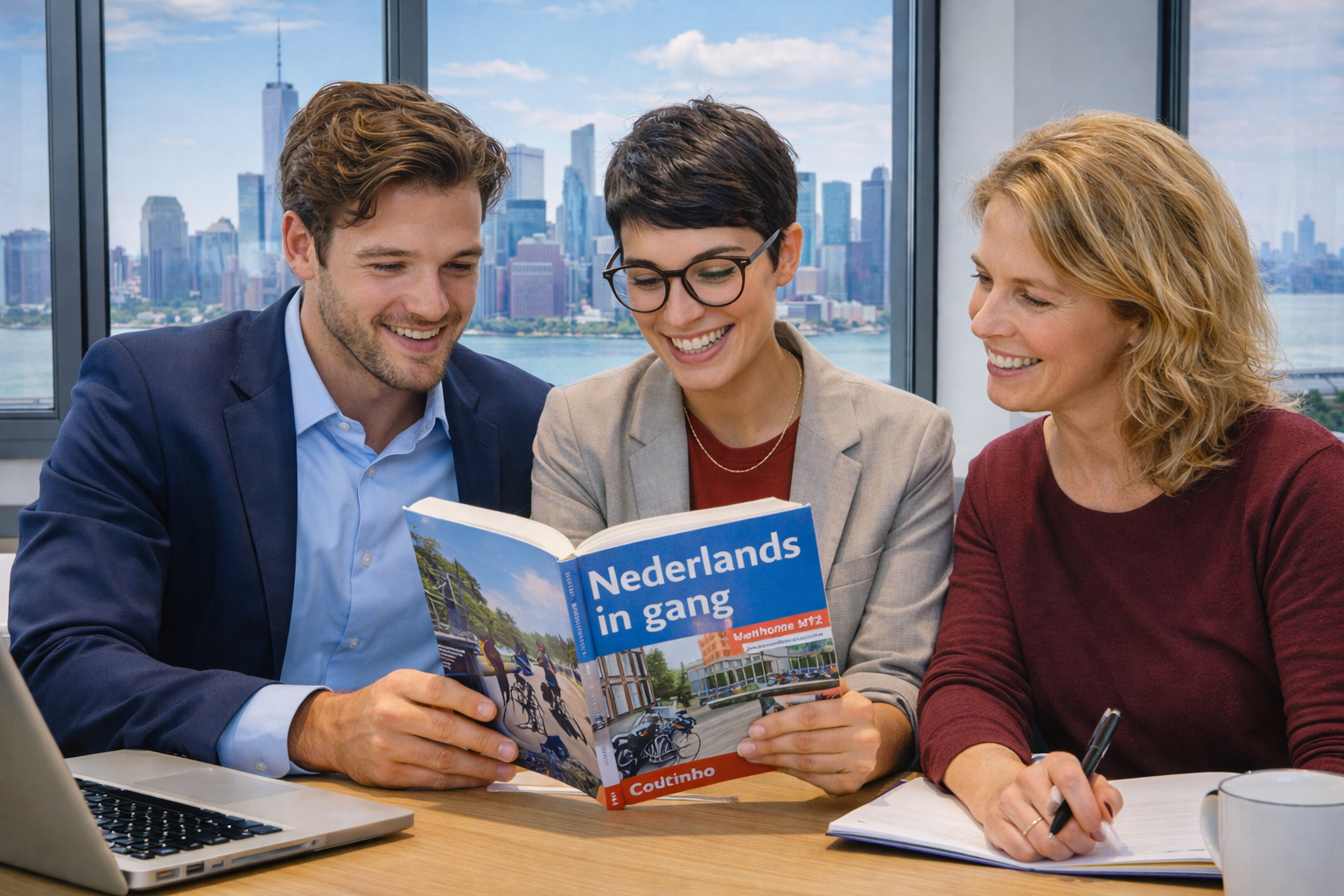
In a city where conversations move as fast as subway trains, calendars fill weeks in advance, and professional opportunities often depend on cross-border communication, learning a new language is no longer a luxury reserved for students or travelers—it has become a strategic skill, a cultural bridge, and increasingly, a professional advantage for globally minded New Yorkers navigating an interconnected world.
Dutch may not be the first language people associate with New York, yet its relevance is surprisingly deep and growing. From the city’s own historical roots as New Amsterdam to modern business ties with the Netherlands and Belgium, Dutch quietly connects industries, cultures, and professional networks across the Atlantic. Today, professionals in finance, tech, academia, design, logistics, sustainability, and international law are discovering that learning Dutch opens doors not only to communication but to understanding a uniquely pragmatic culture known for innovation, efficiency, and global influence.
At the same time, traditional language learning models often fail busy professionals. Evening commutes, demanding workloads, family responsibilities, and unpredictable schedules make fixed classroom programs difficult to sustain. That is precisely why online Dutch classes designed specifically for professionals in New York have become one of the most effective and realistic ways to achieve fluency.
This article explores why Dutch is increasingly relevant, how online learning fits modern professional life, what makes Dutch uniquely approachable for English speakers, and how structured online instruction can transform curiosity into real communication skills—even with a demanding schedule.
Why Learn Dutch in New York?
New York has always been a global city, but globalization today operates differently than it did even a decade ago. International collaboration happens daily through remote teams, cross-border investments, and multinational partnerships. The Netherlands plays an outsized role in many of these sectors.
Strong Economic Connections
The Netherlands consistently ranks among the largest foreign investors in the United States, and Dutch companies maintain significant operations in New York and the broader Northeast region. Major sectors include:
Finance and fintech
Sustainable energy and climate innovation
Architecture and urban planning
Logistics and global trade
Technology startups
Creative industries and design
Professionals working with Dutch partners quickly notice that while Dutch people speak excellent English, communication deepens dramatically when even basic Dutch enters the conversation.
Learning Dutch signals cultural respect and long-term commitment—qualities highly valued in Dutch professional culture.
Academic and Research Opportunities
New Yorkers connected to academia frequently collaborate with Dutch universities such as:
Delft University of Technology
University of Amsterdam
Leiden University
Erasmus University Rotterdam
Many graduate programs in the Netherlands are English-taught, but daily life, networking, and social integration become far richer with Dutch language skills.
Relocation and Lifestyle Goals
An increasing number of professionals consider moving to the Netherlands for:
Work-life balance
International career mobility
High quality of life
Cycling infrastructure and sustainability culture
Family-friendly urban environments
Learning Dutch before relocating dramatically smooths the transition.
Why Dutch Is an Ideal Language for English Speakers
One of the biggest misconceptions about language learning is that all languages require equal effort. Dutch stands out because it shares deep linguistic roots with English.
Familiar Vocabulary
Many Dutch words feel instantly recognizable:
water → water
hand → hand
book → boek
house → huis
apple → appel
This familiarity accelerates early progress and builds confidence quickly.
Logical Grammar Structure
Compared to many European languages, Dutch grammar is relatively systematic:
Verb placement follows predictable patterns.
Sentence construction mirrors English logic.
Tenses are manageable.
Pronunciation becomes intuitive with guided practice.
Students often reach conversational ability faster than expected—especially with consistent speaking practice.
Fast Return on Investment
Busy professionals appreciate measurable progress. Dutch rewards regular study with noticeable gains within months rather than years.
The Challenges Busy Professionals Face
Despite Dutch being accessible, many professionals struggle with traditional learning approaches.
Time Constraints
Common obstacles include:
Long work hours
Commutes
Travel schedules
Family commitments
Irregular availability
Consistency—not difficulty—is usually the real challenge.
Passive Learning Traps
Apps and self-study platforms create the illusion of progress but often lack:
Real conversation practice
Pronunciation correction
Cultural explanation
Accountability
Professionals frequently plateau because they understand Dutch but cannot actively speak it.
Lack of Practical Focus
Many courses emphasize academic grammar instead of real-world communication:
meetings
emails
introductions
networking conversations
everyday interactions
Practical language training must mirror real usage.
Why Online Dutch Classes Work for New Yorkers
Online learning has evolved far beyond prerecorded lessons. Modern virtual classrooms deliver flexibility without sacrificing quality.
Schedule Flexibility
Online classes allow professionals to learn:
Before work
During lunch breaks
After evening commitments
From home or office
While traveling
No commuting means more consistency.
Small Group Interaction
Live online classes recreate real communication environments:
Active speaking practice
Immediate feedback
Collaborative learning
Motivation through group dynamics
Students learn faster when language becomes social rather than solitary.
Personalized Instruction
Experienced instructors adapt lessons to:
professional goals
relocation plans
travel preparation
cultural interests
individual learning styles
What Practical Dutch Classes Actually Teach
A professional-focused Dutch program goes far beyond vocabulary lists.
Real Conversations First
Students learn how to:
introduce themselves confidently
navigate social situations
participate in meetings
ask questions naturally
handle daily interactions
Speaking begins from the first class.
Listening Skills for Real Dutch
Dutch spoken in real life differs from textbook recordings. Effective courses train students to understand:
natural speed conversations
regional accents
informal expressions
workplace communication
Cultural Fluency
Dutch communication style is famously direct. Understanding cultural norms prevents misunderstandings such as:
interpreting direct feedback as criticism
misreading workplace hierarchy
misunderstanding humor or understatement
Language and culture are inseparable.
The Dutch Communication Style: Why It Matters
Learning Dutch also means learning how Dutch people think and interact.
Direct but Collaborative
Dutch professionals value:
clarity
efficiency
honesty
consensus-building
Meetings often involve open discussion rather than strict hierarchy.
Equality in Conversation
Titles and formal distance matter less than in many cultures. Communication tends to feel informal yet precise.
Practical Problem-Solving
Dutch conversations focus on solutions rather than theory. Language reflects this practicality.
Understanding these patterns helps learners integrate faster into Dutch environments.
How Busy Professionals Can Learn Efficiently
Language learning succeeds when aligned with real routines.
Short, Consistent Sessions
Research shows that consistent exposure beats occasional long study sessions.
Ideal rhythm:
2–3 classes per week
daily micro-practice (10–15 minutes)
Speak Early, Speak Often
Perfection delays progress. Effective learners prioritize communication over correctness.
Integrate Dutch into Daily Life
Simple habits accelerate learning:
listening to Dutch podcasts during commutes
reading short news articles
labeling household items
practicing internal monologue
Typical Progress Timeline
While everyone progresses differently, professionals often experience:
Month 1–2
basic introductions
pronunciation foundation
simple conversations
Month 3–4
everyday interactions
understanding slow speech
forming longer sentences
Month 5–6
workplace discussions
expressing opinions
improved listening comprehension
After 1 Year
confident conversations
travel independence
meaningful social interaction
Consistency matters more than talent.
Online Learning vs. Self-Study Apps
FeatureAppsLive Online ClassesSpeaking PracticeLimitedExtensiveFeedbackAutomatedHumanAccountabilityLowHighCultural InsightMinimalIntegratedMotivationSoloSocial
Apps can supplement learning—but rarely replace structured instruction.
Who Benefits Most from Online Dutch Classes?
Online Dutch courses particularly suit:
finance professionals working with EU markets
tech workers collaborating internationally
academics and researchers
entrepreneurs expanding into Europe
professionals planning relocation
partners of Dutch nationals
globally curious lifelong learners
Building Confidence: The Hidden Goal
Many learners begin with vocabulary goals but discover the deeper transformation is confidence.
Students often report:
greater ease in international environments
stronger cultural awareness
improved listening skills even in English
increased cognitive flexibility
Language learning reshapes how people engage with the world.
FAQs: Learning Dutch Online in New York
Is Dutch difficult for English speakers?
No. Dutch is one of the easiest languages for English speakers due to shared vocabulary and grammar structures.
How long does it take to become conversational?
With consistent classes, many learners reach conversational ability within 6–12 months.
Do I need prior language experience?
Not at all. Beginner courses assume no previous knowledge.
Are online classes as effective as in-person classes?
Yes—often more effective due to flexibility and consistency.
How often should I study?
Two to three sessions weekly combined with short daily practice works best.
Will I learn formal or everyday Dutch?
Practical courses teach real-life communication first while gradually introducing grammar.
Can online classes prepare me for relocation?
Absolutely. Many programs focus specifically on daily life and professional communication in the Netherlands.
What if my schedule changes frequently?
Flexible scheduling options and online access make it easier to maintain continuity.
From Interest to Real Communication
Language learning begins as curiosity but becomes transformative through interaction. Dutch is not just a linguistic system—it is a gateway into a culture known for openness, innovation, and global perspective. For New York professionals accustomed to fast-paced environments, online Dutch learning offers a rare combination: intellectual challenge paired with immediate practical rewards.
Each conversation learned expands professional opportunities, strengthens cultural understanding, and creates new personal connections across borders.
Learn Dutch with Polyglottist Language Academy
At Polyglottist Language Academy, we specialize in practical, communication-focused language instruction designed specifically for adults and busy professionals. Our online Dutch classes emphasize real conversation, cultural understanding, and structured progress guided by experienced instructors.
We offer:
Small-group online Dutch classes
Individual and semi-private lessons
Courses for complete beginners through advanced learners
Flexible scheduling for professionals
Experienced instructors specializing in adult education
Whether your goal is relocation, career growth, travel, or personal enrichment, our programs help you move beyond studying Dutch toward actually using it.
👉 Ready to start learning Dutch?
Explore our Dutch classes and sign up today to begin your language journey with Polyglottist Language Academy.
Continue Exploring Dutch Language and Culture
If you enjoyed this article, you may also like:
Learn Dutch In Seattle: Small-Group Online Classes For All Levels
Dutch Classes In Los Angeles: Learn The Language Of The Netherlands Online
The Dutch Identity: A Culture Shaped By Land, Sea, And Trade
The #1 Grammar Rule You Need To Master To Speak Dutch Fluently
Do All Dutch People Speak English? The Truth Behind The Stereotype
San Francisco Dutch Language Classes: Flexible Online Options For Busy Adults
Is Dutch Easier To Learn If You Already Speak German Or Afrikaans?