
Why Dutch Sounds Like a Blend of German and English
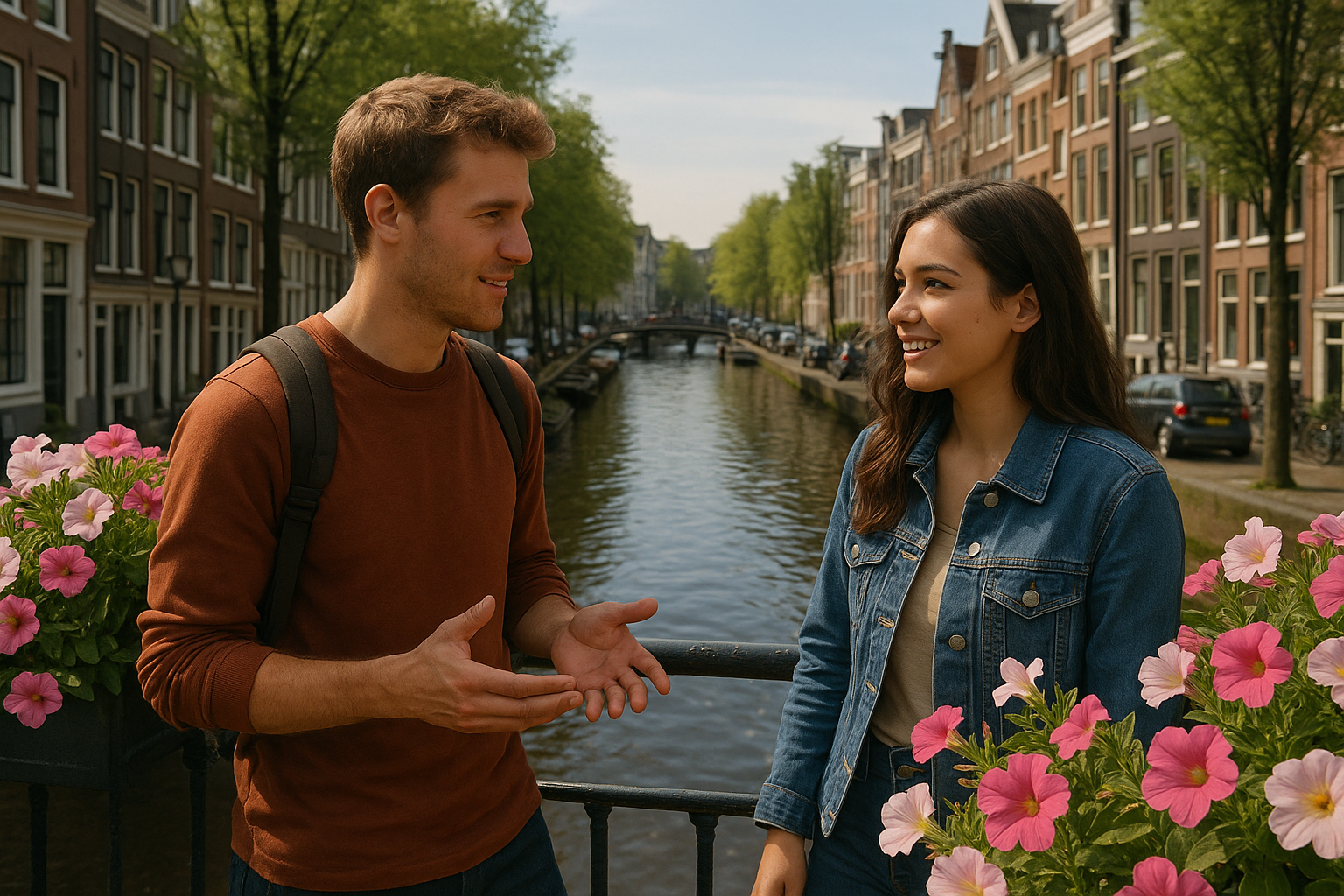
The first time many English speakers hear Dutch—on a train platform in Amsterdam, in a Flemish coffee bar, or in a Dutch colleague’s project update—they recognize more than they can explain: words that look suspiciously like English, rhythms that feel vaguely German, those unmistakable guttural g and ch sounds, and a parade of tidy compounds that pack whole ideas into one practical word, all of it familiar enough to invite you in and different enough to keep you alert. That instant déjà vu isn’t an illusion; Dutch really does sit in the middle of a linguistic neighborhood where English and German are the closest big relatives, and the way Dutch evolved makes it sound, look, and behave like a cousin who borrowed a sweater from each side of the family and then tailored both to fit its own life by the water, in cities, workshops, offices, and cafés.
Why does this matter? Because the more you understand why Dutch feels like a blend, the faster you’ll learn it and the more confidently you’ll use it. Recognizing shared roots explains the sea of cognates you can lean on from day one. Seeing where Dutch chose a path different from English or German helps you avoid classic errors with word order, verbs, and polite forms. And noticing how sound patterns map onto spelling will keep you from fearing ui and ij and will turn that famous g from a growl into a friendly local consonant you can actually produce.
This article is your field guide. We’ll zoom out to the family tree, zoom in on what you’re hearing—sounds, stress, rhythm—and then walk through vocabulary, spelling, grammar, and conversational style. You’ll get quick drills, side-by-side examples, false-friend alerts, and practical listening strategies. By the end, you’ll hear Dutch not as a fuzzy blend but as a distinct, coherent system you can decode—and enjoy.
The Family Tree: Shared Roots, Different Branches
Dutch, German, and English all descend from West Germanic, a branch of the Indo-European language family. That’s why you instantly recognize words like hand, water, land, brood/bread, licht/light, huis/house, zout/salt. But each language took its own path:
English mixed with Norse and French, shed many endings, and relaxed strict verb placement.
German kept more case endings and underwent the so-called High German consonant shift (think p → pf/f, t → z/s in some contexts: ship vs. Schiff, time vs. Zeit).
Dutch stayed largely outside that sound shift, simplified cases, and standardized around urban centers of the Low Countries.
Result: Dutch vocabulary often looks closer to English, while syntax (word order) and certain phonetics (that robust g/ch, separable verbs) feel closer to German. No wonder your ear says “both.”
What Your Ear Notices First: The Sound Profile
1) The Famous g and ch
Dutch g and ch are typically pronounced as a fricative at the back of the mouth. Northern accents make it harsher; southern Dutch and many Flemish accents soften it. You’ll hear it in goed (good), dag (day), lach (laugh).
Quick drill:
Whisper h as if fogging a mirror.
Move the constriction slightly back, add gentle friction: g/ch.
Pair with vowels: ga, ge, gi, go, gu; cha, che, chi, cho, chu.
2) The Diphthongs ui, ij, and ei
ui in huis, muis, bruin is the classic hurdle; start with a relaxed uh then glide toward oo/ee depending on your target accent.
ij/ei often sound similar in modern accents: vrij/rei, tijd/leid—learn them as spelling families.
3) Clear Vowels and Length
Dutch differentiates short and long vowels clearly: binnen vs. bienen (nonsense pair but feel the contrast), pen vs. peen(carrot), zon (sun) vs. zoon (son). English has length too, but Dutch spelling signals it more predictably.
4) The r
You’ll hear trilled r, uvular r, or a light tap—regional variation is normal. Pick a model you like (e.g., Amsterdam, Antwerp) and be consistent.
Why this sounds German-ish and English-ish:
The g/ch evokes German.
The diphthongs and many vowel qualities resonate with English.
The overall rhythm—stress on the first syllable of many words and compact syllables—feels like both.
Vocabulary: Cognates, Twins, and Traps
Cognates You Can Trust (Mostly)
water – water
hand – hand
land – land
boek – book
boter – butter
beter – better
brood – bread
huis – house
licht – light
nacht – night
These exist because English and Dutch share an ancestor; sometimes spelling shows consistent swaps (oo ↔ oa, ou ↔ ow/ough). Train your eye to spot the patterns.
Words English Borrowed from Dutch
cookie (koekje), coleslaw (koolsla), boss (baas), yacht (jacht), stoop (stoep), skipper (schipper), dock (related to dok), waffle (wafel).
Hearing these in Dutch creates a pleasant “I’ve met you before” moment.
False Friends to Flag
eventueel ≠ eventually → possibly/if needed
winkel ≠ winkle → shop
slaan ≠ to slay → often to hit/strike; in compounds, to save (IT) → opslaan
lekker ≠ lecherous → tasty/nice
brief ≠ brief → letter
vrij ≠ very → free, rather (in vrij goed = fairly good)
Keep a short list of false friends handy; it saves embarrassment and speeds comprehension.
Compounds: The Germanic Superpower
Dutch, like German, loves compounds—precision in a single word:
zorgverzekering (health insurance)
koffiepauze (coffee break)
woon-werkverkeer (commute)
toetsenbord (keyboard; literally keys-board)
spoedeisende hulp (emergency care; often abbreviated SEH)
English also compounds (keyboard, workplace), but Dutch does it more broadly and without spaces. Your strategy: read compounds left to right, chunking known parts, and remember that written compounds often carry linking letters (-e-, -en-) that you’ll learn by exposure.
Diminutives and Particles: Dutch Texture
Diminutives
The -je/-tje/-pje/-etje/-kje endings are wildly productive:
kopje koffie (a cup of coffee)
huisje (little house / cozy house)
They can signal affection, politeness, or casual tone more than literal size.
Conversational Particles
Dutch sprinkles sentence-softeners and mood markers:
even (just a moment / for a sec)
maar (softening an imperative: Doe maar rustig.)
toch (after all / right?)
hoor (friendly emphasis: Dat is prima, hoor.)
These don’t have exact English equivalents but give Dutch its friendly, pragmatic tone.
Grammar: Where Dutch Leans German—and Where It Doesn’t
1) Verb-Second in Main Clauses (V2)
Like German, Dutch generally puts the finite verb in second position:
Morgen ga ik naar Utrecht. (Tomorrow go I to Utrecht.)
English often puts the verb after the subject; Dutch moves it to the “slot two.”
2) Verbs at the End in Subordinate Clauses
… omdat ik morgen naar Utrecht ga. (… because I tomorrow to Utrecht go.)
Stacked auxiliaries pile up at the end, much like German.
3) Separable Verbs (Cousins of English Phrasals)
Dutch: opbellen (to call) → Ik bel je op.
German: anrufen → Ich rufe dich an.
English: call up / call.
In subordinate clauses and infinitives, Dutch re-joins the parts: … omdat ik je wil opbellen.
4) Cases Mostly Gone, Prepositions Do the Heavy Lifting
Unlike German, Dutch does not make you juggle four cases on nouns and articles. You’ll manage de/het(common/neuter) and learn set preposition patterns: denken aan, wachten op, zitten in.
5) Politeness: je/jij vs. u
Similar to German du/Sie, Dutch uses u for formal address. Context tells you which to choose; workplaces vary.
Bottom line: Word order feels Germanic; morphology feels lighter (closer to English). That’s the “blend” your brain hears.
Spelling That Signals Sound (More Reliably Than English)
aa/ee/oo/uu mark long vowels; single letters often short: maan vs. man, meer vs. mer (non-word).
ij (digraph; often capitalized IJ), frequently sounds like ei. Learn by families.
sch is typically s + ch (fricative): school, schepen.
-dt endings reflect grammar (present tense -t + stem ending in d): hij vindt, hij wordt. Hearing the t helps.
If you’re used to English’s spelling chaos, Dutch is a relief: rules explain a lot.
Rhythm and Intonation: The Dutch Flow
Dutch tends to stress the first syllable of many words and keeps syllables compact. Questions often get a modest rise at the end; statements settle. Modal particles (above) tune the social temperature. If you map English’s rhythm onto Dutch, you’ll be comprehensible, but imitating Dutch chunking (short bursts of meaning) makes you sound remarkably natural.
Listening Strategies: Turn “Blend” into “I Get It”
Anchor on Verbs. Find the finite verb early (slot two), then scan to the end for infinitives or participles in subclauses.
Chunk Compounds. Break arbeidsovereenkomst into arbeids–over–eenkomst → work-over-agreement → employment contract.
Hunt Cognates, Beware Traps. Grab universiteit, informatie, project; verify eventueel, winkel, brief.
Track Particles, Not Translate Them. Hear even/maar/toch/hoor as tone markers.
Compare Accents. Listen to both Netherlands Dutch and Belgian Dutch; choose a target model but build comprehension across varieties.
Mini-Drills You Can Do Today
A. The g/ch ladder (whisper → voice):
ha — cha — ga — hoch — grog — lachen — vragen — licht — genoeg
B. Diphthong pairs (slow → natural speed):
ui: huis, muis, bruin, duif, geluid
ij/ei: tijd, klein, rijden, ei, altijd
C. Separable verb contrast (main vs. sub):
Main: Ik vul het formulier in.
Sub: … omdat ik het formulier moet invullen.
D. Sentence frames (swap nouns/verbs):
Morgen ga ik [plaats].
Omdat ik [reden], [subclause verbs at end].
Ik neem [object] mee / op / af.
Ten minutes of targeted practice beats an hour of unfocused browsing.
False Friends—A Few More (Print This)
betrekken (to involve / to engage), not to betroth
flauw (tasteless / lame), not flaw
kamer (room), not camera
winkel (shop), not winkle
poort (gate), not port (though related in some senses)
pret (fun), not pretentious
rare (odd), not rare (undercooked)
For English Speakers: Leverage This
Vocabulary: Start with cognates and transparent loans: universiteit, creatief, informatie, probleem, project, telefoon.
Word Order: Drill V2 and subclause verb-final early; it’s the biggest structural shift.
Pronunciation: Prioritize ui, g/ch, and r; the rest will fall into place.
For German Speakers: Leverage That
Syntax: V2, verb-final, separables—check.
Morphology: Enjoy the lighter case system.
Pronunciation: Map German ch to Dutch g/ch (regionally adjusted).
Vocabulary: Watch for deceptively English-looking words that still follow Dutch rules.
Why “Blend” Is Accurate—and Misleading
Calling Dutch a blend helps beginners place it. But Dutch isn’t a mash-up; it’s a coherent system with its own history and standards. It shares a toolkit with its siblings, then applies it with Dutch priorities: clarity, compactness, practical compounds, a friendly tone softened by particles, and an ear trained by centuries of trade and city life. Respecting Dutch as its own language speeds up learning because you stop translating and start thinking in Dutch patterns.
Two Short Dialogues (With Notes)
At the café
A: Zullen we even koffie doen?
B: Ja, lekker. Ik bel je straks op.
Notes: zullen (modal suggestion), even (softener), lekker (nice/tasty), separable opbellen.
At work
A: Morgen ga ik thuiswerken, omdat ik vroeg naar de tandarts moet.
B: Geen probleem. Kun je het document vanmiddag nog even opsturen?
Notes: V2 in main, verb-final in sub, particles nog even, polite request form.
Common Learner Questions (Quick Answers Embedded)
Why does Dutch sound harsher in some places?
Regional accents, especially in the north of the Netherlands, use a stronger g/ch; southern Dutch and Flemish accents soften it.Do I have to roll my r?
No. Multiple r realizations are standard. Choose a model and stick to it.Are ij and ei the same sound?
In many accents, they’re similar; learn spelling families and typical words.Is Dutch grammar closer to German or English?
Word order is closer to German; morphology (cases) is closer to English.Why are Dutch words so long?
Compounding packs precise meaning efficiently. Read compounds left to right.Can I get by with English in the Netherlands or Flanders?
Often yes, but Dutch unlocks careers, relationships, and daily life with less friction.Should I learn Netherlands Dutch or Belgian Dutch?
Learn Standard Dutch; expose yourself to both accents. Adapt to your environment.What’s the fastest way to sound natural?
Master ui, g/ch, V2 word order, and sprinkle particles (even, maar, toch).
FAQs
Q1: If Dutch is so close to English and German, how long will it take me to reach B1/B2?
Timelines vary with study habits, but Dutch is considered relatively accessible for English and German speakers. With consistent practice (a few structured hours weekly plus daily listening), B1 in months is realistic; B2 typically takes longer. The key is focused drills on pronunciation and word order.
Q2: Is Flemish a different language from Dutch?
They are standard varieties of the same language. Pronunciation and some vocabulary differ (e.g., goesting in Flanders vs. zin in the Netherlands), but the standard grammar is shared, and mutual comprehension is high.
Q3: Why is the Dutch g so important, and do I need to make it harsh?
You need a clear fricative, not a growl. A softer southern/Flemish g is fully acceptable. Aim for clarity and comfort.
Q4: How do I know when a verb is separable?
Learn common prefixes (op-, aan-, mee-, uit-, door-, terug-, vast-). In dictionaries, separables are usually marked. In main clauses, the particle jumps to the end; in infinitives or subclauses, it rejoins the verb.
Q5: What’s the deal with de and het?
Dutch has two genders: common (de) and neuter (het). Many learners memorize the het words; everything else is de. Over time you’ll internalize patterns (e.g., most diminutives are het).
Q6: Why do I see -dt at the end of verbs like wordt?
That’s spelling reflecting grammar: the stem ends in d and the present-tense third person adds -t → wordt. Pronunciation ends in t.
Q7: Are Dutch compounds always written as one word?
Often yes; sometimes hyphenated for readability or when joining equal parts. If in doubt, check a reputable dictionary; reading native texts trains your eye quickly.
Q8: Which accent should I learn?
Pick a clear model (e.g., Randstad Dutch or standard Flemish), then build comprehension broadly. Mutual intelligibility is strong; exposure beats perfectionism.
Q9: Are there many English loanwords in Dutch?
Yes, especially in tech and business (downloaden, updaten, meeting). Don’t let them fool you—pronunciation and grammar still follow Dutch rules.
Q10: How can I practice listening if I’m busy?
Micro-sessions: 10 minutes of radio/podcast while commuting, shadow a short clip, repeat a sentence focusing on one feature (ui, g/ch, or V2). Consistency wins.
Final Thoughts: From “Blend” to Fluency
Hearing Dutch as a blend of German and English is a smart first instinct. It tells you where to borrow confidence (vocabulary from English, word order cues from German) and where to watch your step (false friends, separable verbs, ij/ei, particles). But fluency comes when you let Dutch be itself: a compact, precise, friendly language that rewards pattern recognition and daily use. Master a handful of sounds, memorize a few sentence frames, learn to love compounds, and you’ll find that the “blend” resolves into a clear, steady voice you can think and work in.
Learn Dutch with Polyglottist Language Academy
If you’re ready to turn that recognition into real-world skills, Polyglottist Language Academy can help.
Learn with expert instructors, small cohorts, and materials that teach you to hear and use Dutch the way it actually sounds on the street and in the office. Seats fill quickly—join us today and start speaking with confidence.
Keep Reading: Explore Related Articles on Our Blog
If you enjoyed this piece, check out these next:
The Fastest Way To Learn Dutch According To Language Teachers
Do You Really Need To Learn Dutch If You Live In The Netherlands?
Dutch Classes In Oakland: Learn Dutch Online With Local Instructors
How Long Does It Take To Learn Dutch – Realistic Timelines By Level
Best Online Dutch Classes In The Bay Area: Oakland, Berkeley, San Francisco & San Jose