
A Brief History of the Dutch Language (And Why It Matters Today)
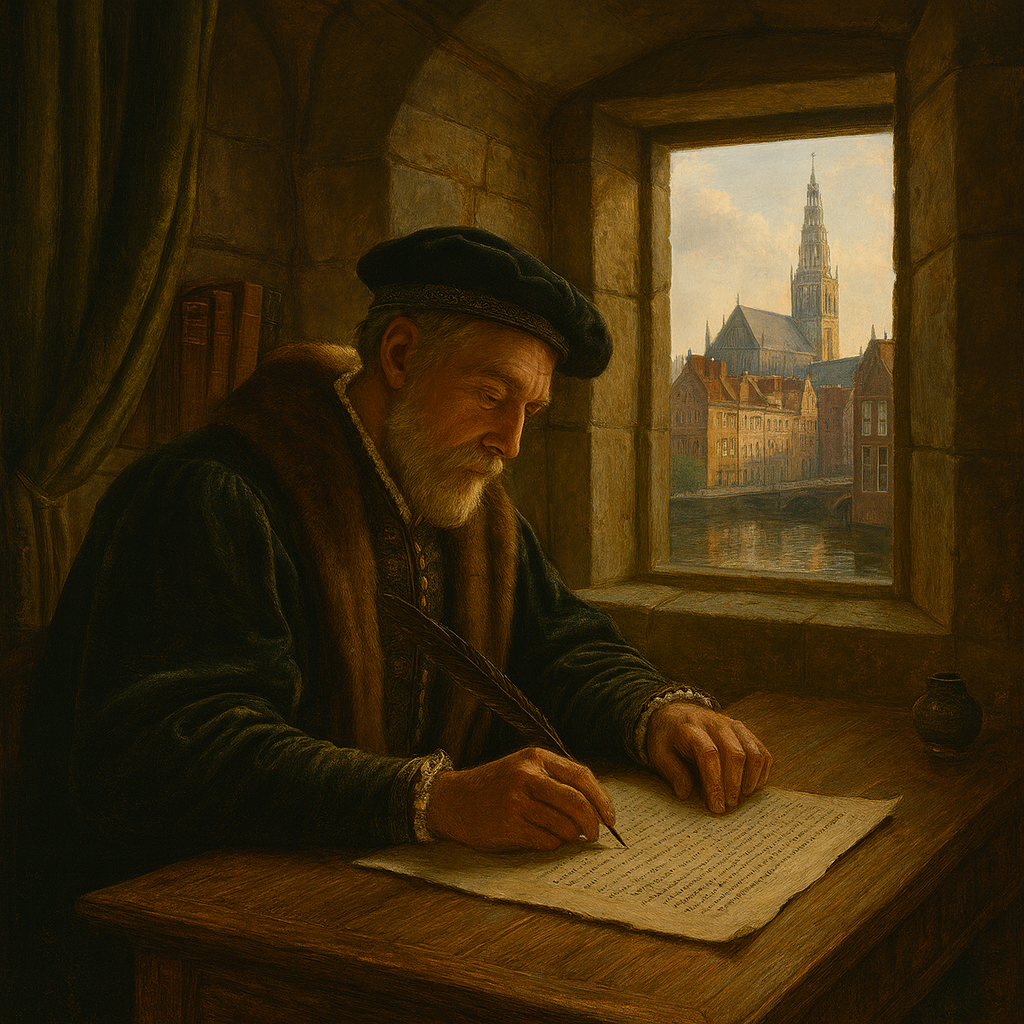
The story of Dutch is the story of a small corner of Europe that kept reinventing itself—in trade, in printing, in science, in city-making—and each reinvention left fingerprints on the language: sounds hardened and softened, spellings were tamed and then re-tamed, words sailed out across oceans and came back changed, and the result is a language that feels at once practical and poetic, compact yet inventive, rooted in the medieval Low Countries and intertwined with New York stoops, South African farms, Surinamese kitchens, and Indonesian markets. If you’ve ever wondered why Dutch looks so reassuring to an English speaker yet sounds like no English you’ve heard before, or why the same language is called Nederlands in the Netherlands but Vlaams in casual Belgian usage, or how “cookie,” “boss,” and “yacht” ended up in English, you’re already bumping into this history—because Dutch has never been just a code for communication; it’s a record of centuries of life on the waterline between land and sea, tradition and innovation, local pride and global reach.
This matters now because languages don’t sit in museums. Dutch shapes the way millions work, study, and belong across the Netherlands, Flanders (the Dutch-speaking north of Belgium), Suriname, and the Caribbean islands of Aruba, Curaçao, and Sint Maarten. It unlocks archives, policy debates, health-care conversations, lunch with colleagues, and bedtime stories with neighbors. It’s one of the official languages of the European Union, a gateway to Germanic language patterns, and a surprisingly direct path for English speakers into a new linguistic and cultural comfort zone. And precisely because Dutch grew out of a constant conversation between regions and peoples, understanding where it comes from helps you use it more confidently today—pronouncing that famous g, choosing between je and u, decoding ij vs. y, and appreciating why your Belgian colleague says goesting while your Dutch friend insists on zin.
Below is a guided tour: a concise history of Dutch from early roots to digital age, plus a practical take on what that history means for learners and professionals right now.
What Do We Mean by “Dutch”?
Dutch belongs to the West Germanic branch of the Indo-European family, alongside English and German. More specifically, it’s often described as a Low Franconian language. “Low” refers to the low-lying geography (in contrast to the “High” German areas in the uplands), and “Franconian” points to the tribe whose dialects seeded the language in the early Middle Ages. The key idea: Dutch sits on a dialect continuum—historically, speech varieties changed gradually from west to east and from north to south. Modern Standard Dutch smooths those differences, but traces remain in vowel quality, vocabulary, and intonation from Zeeland to Limburg and from West Flanders to Groningen.
Two important neighbors complete the picture:
Frisian, a close cousin of English spoken in Friesland, is a separate language with its own standard.
Afrikaans, developed from 17th-century Dutch in southern Africa, is now its own language, simplified in grammar and enriched by contact with Malay, Khoi, and Bantu languages.
From Proto-Germanic to Old Low Franconian (Before 1150)
The earliest ancestors of Dutch were part of the West Germanic dialect continuum spoken in the first millennium CE. As tribes moved and traded, sound changes rippled through the map. One famous boundary is the High German consonant shift, which dramatically altered consonants in the uplands (turning p into pf or f, for example). Dutch lies mostly northwest of that boundary, so it didn’t undergo the full shift—one reason it feels closer to English than to Standard German.
By the early Middle Ages, Old Low Franconian (often called Old Dutch) emerges in the historical record, mostly in glosses and short texts. It’s fragmentary, but you can already see Dutch’s profile: strong/weak verb patterns, case endings steadily eroding, and word order moving toward the verb-second habit Dutch keeps today in main clauses.
A tiny celebrity from this period (or the cusp of the next) is the line “Hebban olla vogala…”—often cited as an early sample of Middle Dutch. The exact dating and dialect are debated, but its fame speaks to a broader point: Dutch surfaces early in short, practical, and sometimes lyrical scraps that mirror its tight, economical style.
Middle Dutch (c. 1150–1500): Cities, Guilds, and a Literary Voice
As commerce boomed and cities like Bruges, Ghent, and later Antwerp flourished, Middle Dutch diversified into strong regional standards: Flemish, Brabantic, Hollandic, and Limburgish varieties. Spelling wasn’t standardized yet; scribes wrote what they heard, with local flavors. This was the era of vibrant literature:
Jacob van Maerlant wrote didactic and historical works, laying foundations for a learned prose style.
Van den vos Reynaerde (Reynard the Fox) showed how witty, satirical narrative could flourish in Dutch.
Religious lyric and urban theatre (the rederijkers, or chambers of rhetoric) shaped a civic language of persuasion and performance.
The Hanseatic trade network in the north and east linked Dutch with Low German, while the Burgundian court mixed Dutch and French elites in the south. The result: steady borrowing and stylistic cross-pollination. You can still feel this in modern Dutch’s comfort switching between down-to-earth directness and courtly politeness.
Early Modern Dutch (c. 1500–1800): Standardization and a National Voice
Two upheavals define this phase:
The Printing Press and the Reformation
Printing multiplied the need for consistent spelling. Religious debates demanded clear, widely understandable prose. Translators and printers began to smooth regional quirks into more uniform written Dutch.The Dutch Revolt and the Republic
The Eighty Years’ War led to the Dutch Republic in the north and Spanish-ruled territories in the south. Economic and intellectual life shifted north to Amsterdam and the provinces of Holland and Zeeland. With that shift came prestige for Hollandic/Brabantic forms that fed into the growing standard.
A landmark of this period is the Statenbijbel (States Bible), an officially commissioned 17th-century translation that did for Dutch what the King James Bible did for English: stabilized vocabulary and syntax and gave the language a ringing, shared reference point. Meanwhile, the Golden Age of science, trade, and art (think Rembrandt, Vermeer, Spinoza) required a language capable of finely grained description—of lenses and pigments, of stock exchanges and shipbuilding, of law, theology, and philosophy. Dutch delivered, and it kept borrowing where helpful, especially from French (the language of diplomacy) and Latin (scholarship).
Dutch Overseas: Loanwords, New Varieties, and Global Footprints
From the 17th century onward, Dutch traveled widely:
New Netherland (parts of present-day New York/New Jersey) left traces in English: cookie (koekje), coleslaw(koolsla), boss (baas), stoop (stoep), yacht (jacht), skipper (schipper), waffle (wafel), landscape (landschap).
In southern Africa, Dutch evolved into Afrikaans, streamlining verb morphology (no person endings), simplifying gender and case, and absorbing vocabulary from Malay and local languages.
In Indonesia, centuries of contact brought words into Dutch such as sambal, batik, ketjap (Indonesian soy sauce), and everyday culinary and household terms.
In Suriname and the Dutch Caribbean, Dutch coexists with Sranan Tongo and Papiamentu, respectively, creating multilingual ecosystems where Dutch carries government, education, and media roles while the local languages animate daily life.
These global adventures matter for learners: knowing Dutch opens doors to reading historical documents in New York archives, navigating multilingual contexts in Suriname and the Antilles, and understanding why Afrikaans feels both familiar and fresh to Dutch speakers.
The Long March to Spelling Peace (19th–21st Centuries)
Modern standardization accelerated in the 19th century. Scholars produced massive dictionaries and grammar guides; governments issued official spelling rules. The 20th century added periodic spelling reforms—tidying hyphens, compound words, and tricky endings—culminating in cross-border cooperation through the Nederlandse Taalunie(Dutch Language Union), which coordinates standard Dutch in the Netherlands, Flanders, and Suriname.
If you’ve ever heard about the Groene Boekje (the Green Booklet), that’s the Taalunie’s official spelling list, updated occasionally and discussed passionately. Belgium and the Netherlands sometimes differ in preference (and in how zealously rules are applied), but the shared standard remains robust. For learners, the message is reassuring: once you’ve mastered the current rules, you’re in sync with schools, media, and public life across countries.
Dutch Today: Where It’s Spoken and How It Works in Society
Speakers and Regions. Dutch is the primary language of the Netherlands and Flanders (Belgium’s northern region), an official language of Suriname and parts of the Caribbean Kingdom of the Netherlands (Aruba, Curaçao, Sint Maarten), and a working language of the European Union. There are over twenty-three million native speakers, with additional millions using it as a second language.
Varieties. You’ll encounter labels like Nederlands (the standard), Vlaams (colloquial Belgian Dutch), and ABN/AN(Algemeen Beschaafd/Algemeen Nederlands—older terms for the standard). Real-world speech blends standard forms with regional color: the warm vowels of West Flanders, the sing-song intonation of Limburg, the Rotterdam r, the Hague Hè? particle. Belgium’s tussentaal (“in-between language”) mixes standard Dutch with Brabantian features, especially in informal media. All of this is perfectly normal for a living language.
Language Policy and Education. Dutch enjoys strong institutional support in both the Netherlands and Belgium, with robust literacy, creative industries, and exportable media (think crime fiction, children’s books, design, theater). For migrants, learning Dutch is a key step in accessing education, health care, and skilled work; for international professionals, it’s a career multiplier and a community bridge.
Sound and Structure: What Makes Dutch… Dutch?
The Famous “G.”
Dutch g and ch can be pronounced with a raspy or velar fricative quality. Northern Dutch often has a harsher sound; many Belgian varieties soften it. Don’t worry: there’s a wide range of acceptable realizations, and yours will be understood.
Vowels and Diphthongs.
The ui (/œy/ or /ʌy/ depending on accent) is the classic challenge: huis (house), muur (wall), bruin (brown). The ij/eipair often sound similar in many accents. Historically, ij is a digraph treated like one letter in some contexts (you’ll see it capitalized as IJ).
Word Order.
Dutch loves verb-second (V2) in main clauses (Morgen ga ik…) and pushes non-finite verbs to the end in subordinate clauses (… omdat ik had willen gaan). It yields tidy, information-rich sentences once you get the hang of it.
Separable Verbs.
Opbellen (to call) splits into Ik bel je op in main clauses but clumps together in infinitives and subordinates (Ik wil je opbellen, … omdat ik je wil opbellen). This feature descends directly from the language’s Germanic heritage.
Diminutives and Particles.
The diminutive ending -je/-tje/-pje/-etje/-kje is famously productive and often expresses affection or informality rather than smallness: kopje koffie, huisje-boompje-beestje. Modal particles (hoor, nou, toch, even) give Dutch its conversational nuance.
Myths vs. Realities: “Everyone Speaks English, So Why Learn Dutch?”
It’s true that English proficiency in the Netherlands and Flanders is among the highest in the world. But bilingual hospitality is not the same as full participation. Dutch lets you:
Join teams more fully at work, especially in small and mid-sized firms where hallway talk, Slack channels, and client calls switch fluidly into Dutch.
Navigate the system—government forms, doctor’s appointments, school communications—without friction.
Build friendships that aren’t limited to the expat bubble; humor and warmth often travel on the native-language track.
Understand the news behind the headlines and the debates that shape local policy and culture.
Far from redundant, Dutch is a social, professional, and civic accelerator.
A Handy Timeline
Before 500 CE: West Germanic dialects differentiate in the Low Countries; Dutch avoids the full High German consonant shift.
c. 500–1150: Old Low Franconian (Old Dutch) in sparse texts; case endings start simplifying.
c. 1150–1500: Middle Dutch thrives in urban centers; literature expands; multiple written norms.
c. 1500–1800: Early Modern Dutch; printing and the States Bible stabilize usage; Dutch Republic elevates a standard.
17th–18th c.: Overseas expansion; Afrikaans diverges; English gains Dutch loanwords.
19th–20th c.: Standardization projects, big dictionaries, official spellings; education spreads a shared norm.
Late 20th–21st c.: Cross-border coordination via the Dutch Language Union; digital media and global Dutch communities.
Why This History Helps You Learn Faster
1) You can predict spelling and sound.
Once you know the historical pairing of ij/ei, or why g/ch vary regionally, you stop guessing and start recognizing patterns.
2) You’ll be kinder to yourself.
Dutch arose from a continuum, not a single royal decree. That explains why both pannenkoek and pannekoek coexist in different eras, why Belgium and the Netherlands differ on a few word choices, and why your accent is a respectable dot on a large map.
3) You’ll leverage English and German intelligently.
English helps with vocabulary and syntax; German helps with separable verbs and word order. Knowing the shared roots lets you transfer strengths without importing mistakes.
4) You’ll hear the global echoes.
From baas in New York to sambal at a Dutch snackbar, Dutch’s global back-and-forth will enrich your vocabulary with memorable stories.
5) You’ll situate politeness and style.
The tug-of-war between courtly traditions and urban directness explains why Dutch can be blunt in one context and ceremonially polite in another (u vs. je, Graag gedaan vs. a wry Geen probleem). You’ll choose the right register faster.
Practical Takeaways for Today’s Learner
Master the Core Sounds Early.
Invest time in ui, ij/ei, and the g/ch contrast. Record yourself, compare to Belgian and Dutch speakers, and decide on a target accent; both are perfectly valid.
Lock in Word Order with Sentence Frames.
Memorize templates:
Main clause: [Time] + [Verb] + [Subject] + [Rest] → Morgen ga ik met de trein.
Subordinate: … omdat [Subject] [Rest] [Non-finite Verbs] → … omdat ik morgen met de trein moet gaan.
Separable verbs: Ik neem het op → … omdat ik het op moet nemen.
Use Diminutives and Particles to Sound Natural.
Try even, maar, toch, hoor in low-stakes contexts. They soften imperatives and add warmth.
Read Across Borders.
Alternate Dutch and Flemish news sites or podcasts. You’ll gain ear training and vocabulary breadth (e.g., goesting vs. zin, frigo vs. koelkast).
Accept the Living Standard.
Follow the current spelling rules, yes—but don’t panic about debates you might see in the press. They’re signs of a healthy, engaged language community.
Dutch and Its Neighbors: English, German, Frisian, Afrikaans
English shares Germanic roots and centuries of two-way borrowing. Expect lots of cognates: water, hand, land, licht/light. False friends lurk too (eventueel ≠ eventually but potentially).
German feels more distant due to the High German sound shift and heavier case system, but it’s a treasure map for Dutch verb placement and separables.
Frisian charms with English-like words (e.g., tsiis for cheese), yet it remains its own planet.
Afrikaans offers a confidence boost: Dutch speakers can understand a lot after exposure, and Afrikaans can illuminate simplified grammatical routes through the Dutch jungle.
Culture in the Language: Canals, Calendars, and Coffee
Dutch is famously concrete and efficient, but it carries rich cultural metaphors:
Water imagery and compound words abound in a land of dikes, polders, and sluices.
Planning vocabulary is precise: afspraak, planning, regeling, overleg—a culture of calendars and consensus.
Coffee is social glue: zullen we even koffie doen? can mean a quick catch-up that oils the wheels of work and friendship.
Understanding these layers turns vocabulary into lived experience.
Frequently Asked Questions
Is Flemish a different language from Dutch?
Linguistically, Belgian Dutch and Netherlands Dutch are standard varieties of the same language, with differences in pronunciation, vocabulary, and some style. Informally, “Vlaams” can refer to Belgian regional speech or to Belgian Standard Dutch; context clarifies which.
Why does Dutch have both ij and ei?
Historically they represent different vowel developments, but in many modern accents they’re pronounced similarly. Spelling rules and word families help you learn which to use. Treat IJ as a digraph (often capitalized together).
What’s the deal with the harsh “g”?
There’s a spectrum. Northern Dutch accents often use a stronger velar/uvular fricative; many Belgian varieties and southern Dutch accents soften it. You don’t need to imitate any extreme—aim for a clear fricative; you’ll be understood.
Is Afrikaans just simplified Dutch?
Afrikaans descends from 17th-century Dutch but has evolved independently with its own grammar, sound system, and vocabulary. The relationship is like Spanish-Portuguese or Norwegian-Danish: close, but distinct.
How many people speak Dutch?
Over twenty-three million as a first language, plus additional second-language speakers across Europe, South America, and the Caribbean.
Do I need Dutch to work in the Netherlands or Belgium?
In some sectors and companies, English is enough. But Dutch unlocks more roles, more clients, and deeper social integration, especially outside major expat hubs.
Why so many long compound words?
Germanic languages love compounds because they pack meaning efficiently: zorgverzekering (health insurance), arbeidsongeschiktheidsverzekeringsmaatschappij (an extreme tongue-twister example). With practice, you’ll read them like LEGO: piece by piece.
Which Dutch should I learn—Netherlands or Belgian?
Learn Standard Dutch with exposure to both accents; then, adapt to your environment. Your ear will quickly learn local variants.
Final Thoughts: The Practical Power of a Historical Lens
Dutch history is not trivia; it’s a user manual. Knowing that the standard emerged from city networks explains the language’s nimble, pragmatic tone. Seeing how the States Bible and printing stabilized spelling helps you trust the rules. Recognizing Dutch’s global routes turns vocabulary lists into stories you’ll remember. And realizing how Dutch coexists with Frisian at home and with Sranan Tongo or Papiamentu abroad broadens your sense of what a “standard language” can be: stable enough to unite, flexible enough to welcome.
If you’re starting Dutch now—or returning after a break—let history be your ally. Learn the patterns that stuck; expect the exceptions that survived; enjoy the expressions that carry centuries of daily life. The result won’t be museum Dutch. It will be your Dutch: clear, confident, and connected.
Learn Dutch with Polyglottist Language Academy
Ready to turn insight into action? At Polyglottist Language Academy, we teach Dutch with exactly this blend of historical clarity and modern practicality. Our courses pair sound-system training and sentence “frames” with real cultural use—from workplace emails and meetings to café talk and neighborhood life. We offer:
Beginner to Advanced Dutch (group and private)
Pronunciation & Listening Clinics (master g/ch, ui, and ij/ei)
Dutch for Professionals (HR, tech, higher ed, healthcare)
Exam Prep (inburgering, Staatsexamen NT2)
Join a supportive cohort, learn from expert instructors, and get the tools to thrive in Dutch-speaking environments. Seats fill fast—sign up today!
Keep Reading: Related Articles You’ll Love
Explore more Dutch content on our blog:
The Fastest Way To Learn Dutch According To Language Teachers
Do You Really Need To Learn Dutch If You Live In The Netherlands?
Dutch Classes In Oakland: Learn Dutch Online With Local Instructors
How Long Does It Take To Learn Dutch – Realistic Timelines By Level
Best Online Dutch Classes In The Bay Area: Oakland, Berkeley, San Francisco & San Jose