
Why Dutch Pronunciation Trips Up So Many Learners (and How to Master It)
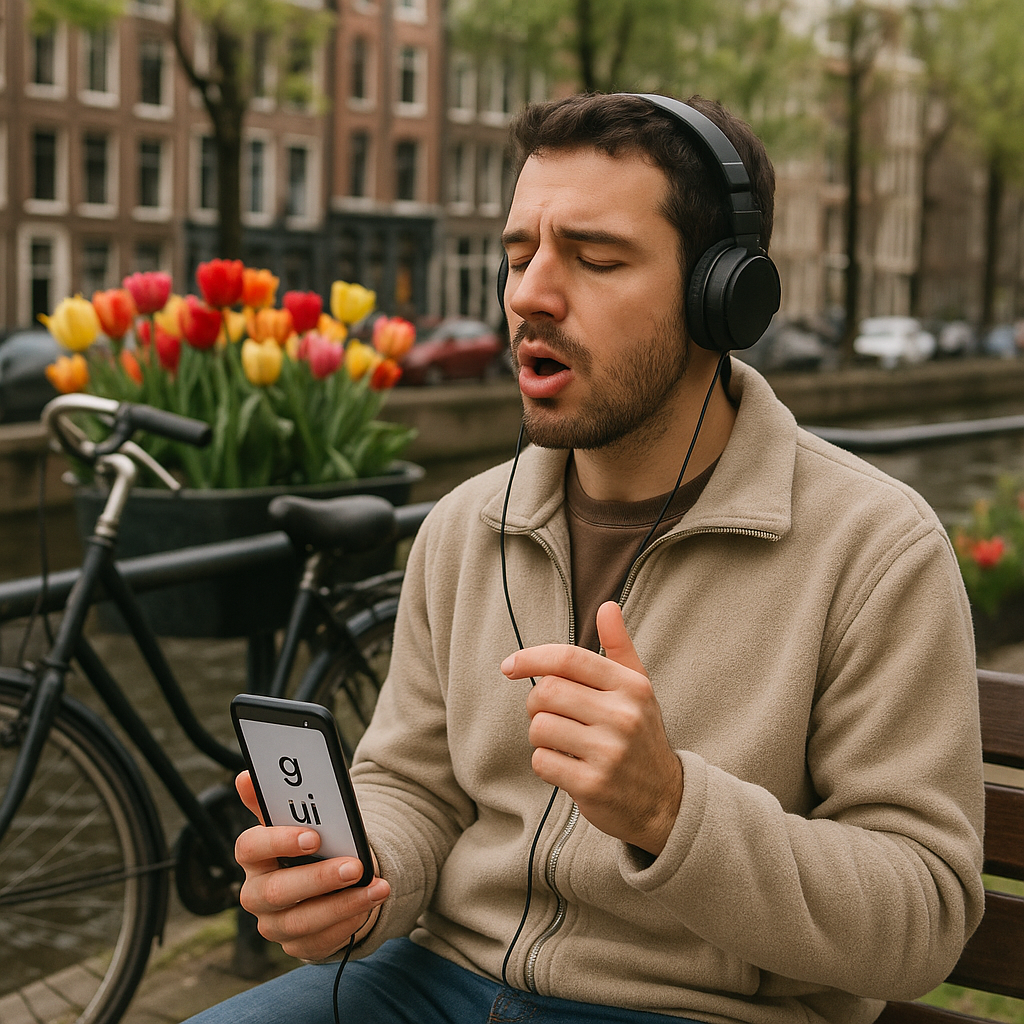
For many language learners, vocabulary and grammar feel like the main challenges—until they start speaking out loud. That’s when the smooth progress they imagined suddenly hits a wall, and for those learning Dutch, that wall often comes in the form of pronunciation. Even people who pick up Dutch quickly on paper often find themselves tongue-tied, puzzled by sounds they’ve never made before, and surprised when native speakers squint or politely ask “Wat zei je?”(“What did you say?”). Dutch pronunciation, while entirely logical to those who grew up with it, has a way of humbling learners in ways that are both frustrating and oddly motivating.
It’s not just that Dutch has a few tricky sounds. It’s that some of those sounds don’t exist in English, German, or even Afrikaans—the languages many learners come from. And it’s not just about individual letters or vowels, either; it’s about rhythm, stress, and the peculiar way Dutch blends and morphs words when spoken naturally. Learners often report that the Dutch they hear on the street sounds like an entirely different language than the one they read in their textbooks.
The infamous g and ch, with their guttural rasp from the back of the throat, are only the beginning. There’s also the mysterious ui vowel—one that sends shivers down the spines of beginners—and the subtle but essential difference between short and long vowels. Add in the way Dutch reduces unstressed syllables, swallows certain consonants, and pronounces seemingly familiar words in surprising ways, and you have a recipe for misunderstandings.
But here’s the good news: Dutch pronunciation is not impossible to master. In fact, with the right approach, you can turn it from your biggest obstacle into one of your strengths. The key lies in understanding why it’s so different, breaking it down into manageable parts, and practicing in ways that train your ear and your mouth at the same time. In this article, we’ll dig into exactly what makes Dutch pronunciation so challenging, where learners most often go wrong, and how to tackle it systematically until speaking Dutch feels natural.
1. Why Dutch Pronunciation Is So Different from What You Expect
1.1. It’s a Germanic Language—But Not Exactly Like Its Cousins
If you speak English or German, you might assume Dutch will sound halfway between the two. In a way, that’s true, but pronunciation often veers in directions you don’t expect. German has its own guttural ch sounds, but Dutch uses them more frequently and in different places. English doesn’t have them at all.
1.2. Written Dutch Doesn’t Always Match Spoken Dutch
Dutch spelling follows rules, but the sounds don’t always align neatly with what you might think from the letters. Leukdoesn’t sound like “lewk,” and goed isn’t pronounced like “good.”
1.3. Regional Accents Multiply the Challenge
A word in Amsterdam might sound quite different in Rotterdam or Groningen. Learners who train their ear to one accent can be thrown off when hearing another.
2. The Sounds That Cause the Most Trouble
2.1. The Hard and Soft “G”
In the north, g and ch are pronounced with a deep, throaty rasp.
In the south, they’re softer, closer to a French r.
Learners often either under-pronounce (making it sound like an English h) or over-pronounce in a harsh way.
Tip: Practice with minimal pairs like graag (gladly) vs. graan (grain).
2.2. The Infamous “UI” Vowel
Found in words like huis (house) and muur (wall—although uu is a related challenge).
Not quite like any vowel in English. It’s a blend of uh and ee, pronounced with rounded lips.
Tip: Think of it as starting to say “uh” while pushing your lips forward as if to say “oo.”
2.3. Long vs. Short Vowels
man (man) vs. maan (moon)—two very different meanings, distinguished only by vowel length.
Learners often miss the length difference, changing the meaning entirely.
2.4. The Rolled “R”
Some Dutch speakers roll their r (especially in the north), others use a throat r.
Learners must adapt depending on the region they’re in.
3. Why Learners Struggle So Much
3.1. Mouth Muscles and Habit
If you’ve never had to make guttural sounds or certain vowel shapes, your mouth and tongue will resist at first.
3.2. Over-Reliance on Spelling
Learners often try to pronounce words letter-by-letter instead of learning the sound rules.
3.3. Listening Gaps
If you only listen to slow, clear textbook recordings, you won’t be ready for the speed and blending of real-life Dutch.
4. How to Train Your Ear for Dutch
Immerse Early: Listen to Dutch radio, podcasts, and TV daily.
Listen for Patterns: Notice how en endings often become just -n or disappear in speech.
Shadowing Technique: Repeat immediately after a recording, matching speed and intonation.
5. How to Train Your Mouth for Dutch
Isolate Problem Sounds: Work on g/ch or ui separately before using them in full sentences.
Record Yourself: Compare your pronunciation to native audio.
Mimic, Don’t Read: Learn sounds from listening, not just from the written form.
6. Common Pronunciation Mistakes and How to Fix Them
Saying “good” for goed → Practice the Dutch g and remember it’s not an English g.
Flattening Vowels → Lengthen long vowels; don’t let maan become man.
Skipping the Throat Sounds → They’re essential for sounding natural in Dutch.
7. Building Pronunciation into Your Learning Routine
Start from Day One: Don’t “fix it later.”
Mix Listening and Speaking: One without the other slows progress.
Get Feedback: A tutor or language partner can correct mistakes you can’t hear yourself.
8. Regional Pronunciation and How to Handle It
Focus on Standard Dutch first, then adapt to regional variations.
Exposure to multiple accents early helps you avoid confusion later.
FAQs
Q1: Is Dutch pronunciation harder than German?
For many learners, yes—mainly because of unfamiliar vowels like ui and the frequency of guttural sounds.
Q2: Do I need to roll my r to sound native?
Not necessarily; many Dutch speakers use a throat r, and both are accepted.
Q3: How long does it take to master Dutch pronunciation?
With daily practice, noticeable improvement can happen in 2–3 months; mastery may take a year or more.
Q4: Should I learn Flemish pronunciation instead?
If you’re moving to Belgium, it’s worth adapting. Otherwise, start with Standard Dutch.
Q5: Can listening alone improve my pronunciation?
It helps, but active speaking practice is essential.
Keep Building Your Dutch Pronunciation
Learning Dutch pronunciation takes listening and regular speaking practice. Our current Dutch group listings are for complete and low beginners, with dates to be announced.
When practicing ui, g, or the rolled r, use careful listening and repetition to work toward clearer pronunciation.
👉 View current Dutch class options and check the listed levels and scheduling details.