
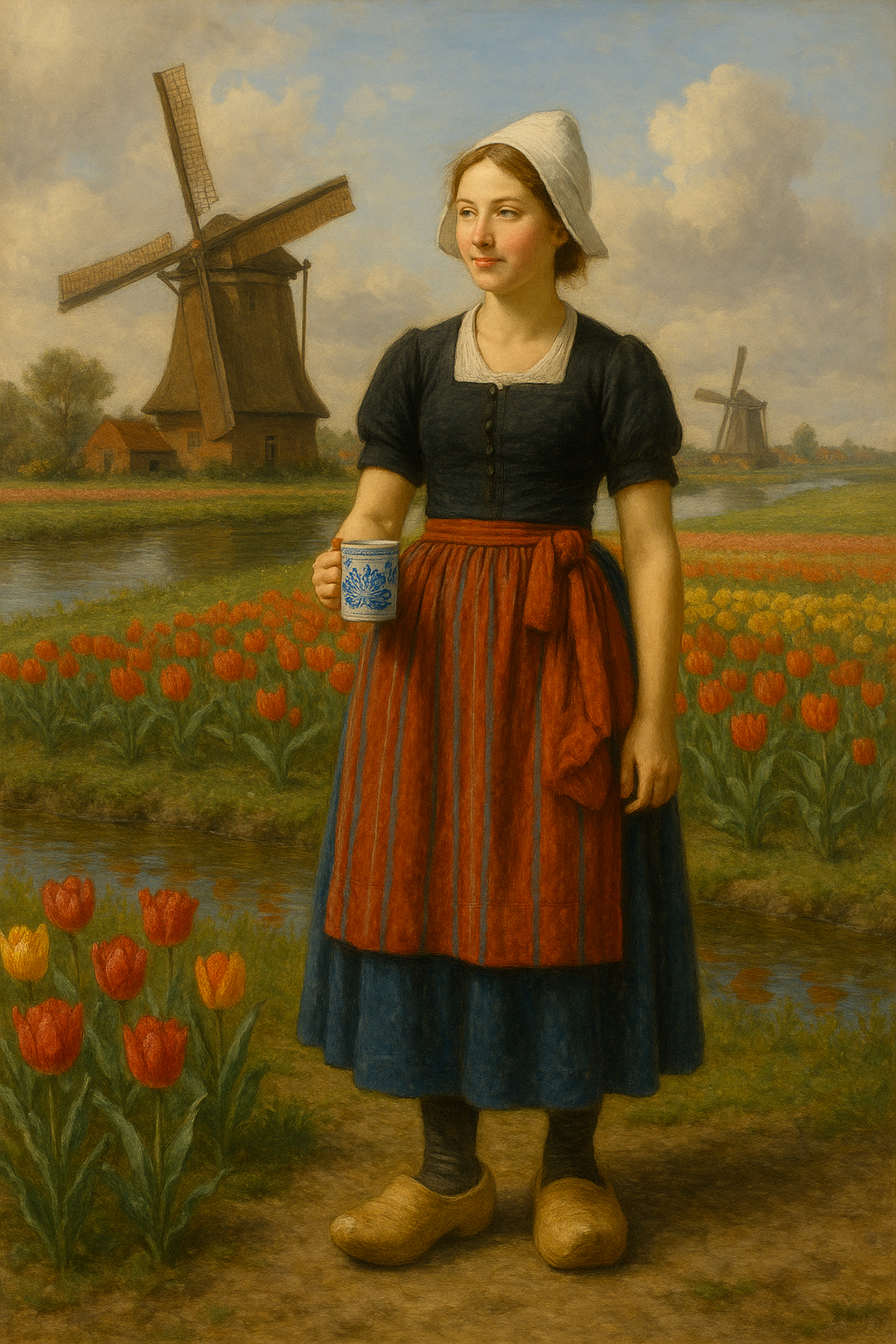
Learning Dutch can be a journey that feels both surprisingly familiar and unexpectedly puzzling: familiar because, as a Germanic language, Dutch shares many words and structures with English and German; puzzling because it has its own subtle complexities, sounds you’ve never made before, and a cultural context that shapes how it’s spoken. Many learners start out thinking they’ll pick it up quickly—after all, it’s not tonal like Mandarin, and it uses the Latin alphabet. Yet as weeks turn into months, they find themselves wrestling with unusual word order, strange vowel combinations, and phrases that simply don’t translate. Dutch has a way of pulling you in with its charm while testing your patience with its quirks, which is exactly why it’s so rewarding to master.
If you’ve decided to take on the challenge of learning Dutch—whether you’re preparing for life in the Netherlands or Belgium, connecting with family roots, or simply curious about the language—knowing what lies ahead can make the path smoother. Every learner, no matter their background, runs into certain hurdles. Some are linguistic, like pronunciation or grammar. Others are cultural, like understanding when a Dutch person’s bluntness is a sign of honesty rather than rudeness. And still others are psychological, like the dreaded “intermediate plateau” when your progress seems to stall.
In this article, we’ll look at the ten most common challenges learners face when studying Dutch, why they happen, and how to overcome them. Whether you’re just starting out or deep into your studies, you’ll likely recognize yourself in at least a few of these points. The goal here isn’t to scare you—it’s to give you a realistic map of the terrain so you can prepare, adapt, and keep moving forward with confidence.
1. Mastering Dutch Pronunciation
One of the first surprises learners face is just how different Dutch sounds compared to what they expected. Even though many letters look familiar, the way they’re pronounced is not always intuitive.
The challenge:
The guttural “g” and “ch” sounds can feel harsh to non-native throats.
Vowels can shift dramatically in sound depending on their combination—think ui, oe, and ij.
The subtle difference between long and short vowels (like man vs. maan) can completely change a word’s meaning.
Intonation patterns are flatter than English, making Dutch sound more monotone to some learners.
Why it’s tricky:
Pronunciation in Dutch often breaks the “what you see is what you say” expectation. English speakers tend to over-pronounce final consonants or add extra vowel sounds that Dutch doesn’t have.
How to overcome it:
Practice with native audio daily, focusing on listening before speaking.
Use minimal pairs exercises (e.g., tak vs. taak).
Record yourself and compare with native speakers.
Don’t be afraid to exaggerate the guttural sounds in the beginning—they’ll soften over time.
2. Understanding Word Order (Especially with Subordinate Clauses)
Dutch word order is logical—but it’s a logic that takes time to internalize.
The challenge:
In main clauses, Dutch word order looks fairly straightforward: subject, verb, object. But in subordinate clauses, the finite verb moves to the end:
Main clause: Ik lees een boek. (“I read a book.”)
Subordinate clause: Ik lees een boek omdat ik Nederlands leer. → … omdat ik Nederlands leer (with leer at the end).
Why it’s tricky:
English doesn’t require such a dramatic change in verb placement. Learners often default to English structure, producing sentences that sound unnatural or confusing.
How to overcome it:
Break sentences into “main clause” and “extra information” parts.
Practice rearranging sentences with conjunctions like omdat, hoewel, and als.
Read Dutch aloud to get a feel for the rhythm of end-placed verbs.
3. The “False Friends” Trap
Dutch shares many words with English, but not all of them mean what you think.
The challenge:
Words like winkel (shop), eventueel (possibly), or solliciteren (to apply for a job) can mislead learners who assume they have the English meaning.
Why it’s tricky:
False friends trick you into thinking you understand more than you do, leading to misunderstandings in conversations.
How to overcome it:
Keep a personal “false friends” list in your study notes.
Look up words even if you think you know them.
Read in context—news articles, social media posts—to reinforce accurate meanings.
4. Getting Used to Compound Words
Dutch loves compound words, and some can be impressively long.
The challenge:
Words like arbeidsongeschiktheidsverzekering (disability insurance) or treinmachinistopleiding (train driver training) can feel overwhelming.
Why it’s tricky:
Beginners often see these words as intimidating walls of letters. They may give up trying to read them, missing out on understanding.
How to overcome it:
Learn to “break” compounds into parts.
Recognize that each part has its own meaning, making the whole word more transparent.
Practice with everyday compound words to build confidence.
5. Dealing with “De” and “Het”
The two definite articles in Dutch (de and het) seem random at first.
The challenge:
There’s no universal rule to know which noun takes de or het—you simply have to memorize them.
Why it’s tricky:
Mistakes with articles don’t usually block understanding, but they instantly mark you as a learner.
How to overcome it:
Memorize nouns together with their article from day one.
Use color coding in your notes (blue for het, red for de).
Accept that some memorization is unavoidable.
6. The “Intermediate Plateau”
At some point, learners stop feeling like they’re making progress.
The challenge:
You can hold conversations, but you’re not improving as quickly. Motivation dips.
Why it’s tricky:
This plateau happens in all languages, but Dutch can feel especially frustrating because you understand so much but still make small, persistent mistakes.
How to overcome it:
Set specific goals beyond “get better at Dutch.”
Switch learning methods—try podcasts, discussion groups, or writing exercises.
Work on idiomatic expressions to sound more natural.
7. Navigating Regional Accents and Dialects
Dutch in Amsterdam sounds different from Dutch in Limburg or Flanders.
The challenge:
Learners often struggle when moving from the clean “standard” Dutch of textbooks to the real-life variety spoken by locals.
Why it’s tricky:
Pronunciation, vocabulary, and even grammar can vary regionally.
How to overcome it:
Expose yourself to multiple accents early on (news, YouTube, regional radio).
Ask locals to repeat or explain unfamiliar words.
Learn the most common regional differences if you plan to live in a certain area.
8. Understanding Dutch Humor and Directness
Dutch culture values direct communication, and humor can be dry or sarcastic.
The challenge:
What sounds blunt to you might be normal to a Dutch person. Jokes can be subtle or rely on wordplay you don’t yet understand.
Why it’s tricky:
Misreading tone can lead to awkward moments.
How to overcome it:
Listen closely to how locals interact in casual settings.
Don’t take bluntness personally—it’s cultural, not hostile.
Practice making light jokes in Dutch once you feel comfortable.
9. Verb Conjugations and Separable Verbs
Dutch verbs are generally simpler than French or Spanish, but they have their quirks.
The challenge:
You need to memorize irregular verbs.
Separable verbs (opstaan, meedoen) split apart in sentences, which confuses beginners.
Why it’s tricky:
It’s easy to lose track of the second half of a separable verb in a long sentence.
How to overcome it:
Practice with verb charts.
Highlight separable verbs in reading materials.
Build sentences from short to long so you get used to keeping both parts in mind.
10. Keeping Up with Native Speakers
Even with solid vocabulary, fast native speech can feel like a blur.
The challenge:
Dutch speakers may not slow down for learners unless asked. They also use filler words (zeg maar, dus, nou) that don’t appear in textbooks.
Why it’s tricky:
It’s hard to “hear” word boundaries at first.
How to overcome it:
Listen to podcasts or radio at normal speed, not just slowed audio.
Learn common filler words so you can mentally filter them out.
Ask friends to repeat or rephrase until you catch up.
FAQs About Learning Dutch
1. Is Dutch really that hard to learn?
It’s considered moderately difficult for English speakers—easier than German or Russian, but harder than Spanish or Italian.
2. How long does it take to become fluent?
With consistent study (5–7 hours a week), reaching conversational fluency (B2) can take 1.5–2 years.
3. Should I learn Flemish instead of Dutch?
They’re essentially the same language, but Flemish has some regional vocabulary and softer pronunciation.
4. What’s the best way to improve listening skills?
Daily listening to native content—TV, podcasts, conversations—is key.
5. How important is grammar in the beginning?
Important, but don’t let it stop you from speaking. Learn basic structures first, refine later.
Check Out Our Other Articles:
A Brief History Of The Dutch Language (And Why It Matters Today)
Is Dutch Easier To Learn If You Already Speak German Or Afrikaans?
Why Dutch Pronunciation Trips Up So Many Learners (And How To Master It)
How Similar Is Dutch To English? Surprising Linguistic Overlaps
Dutch Classes In Oakland: Learn Dutch Online With Local Instructors
How Long Does It Take To Learn Dutch – Realistic Timelines By Level