
How Long Does It Take to Learn Dutch – Realistic Timelines by Level
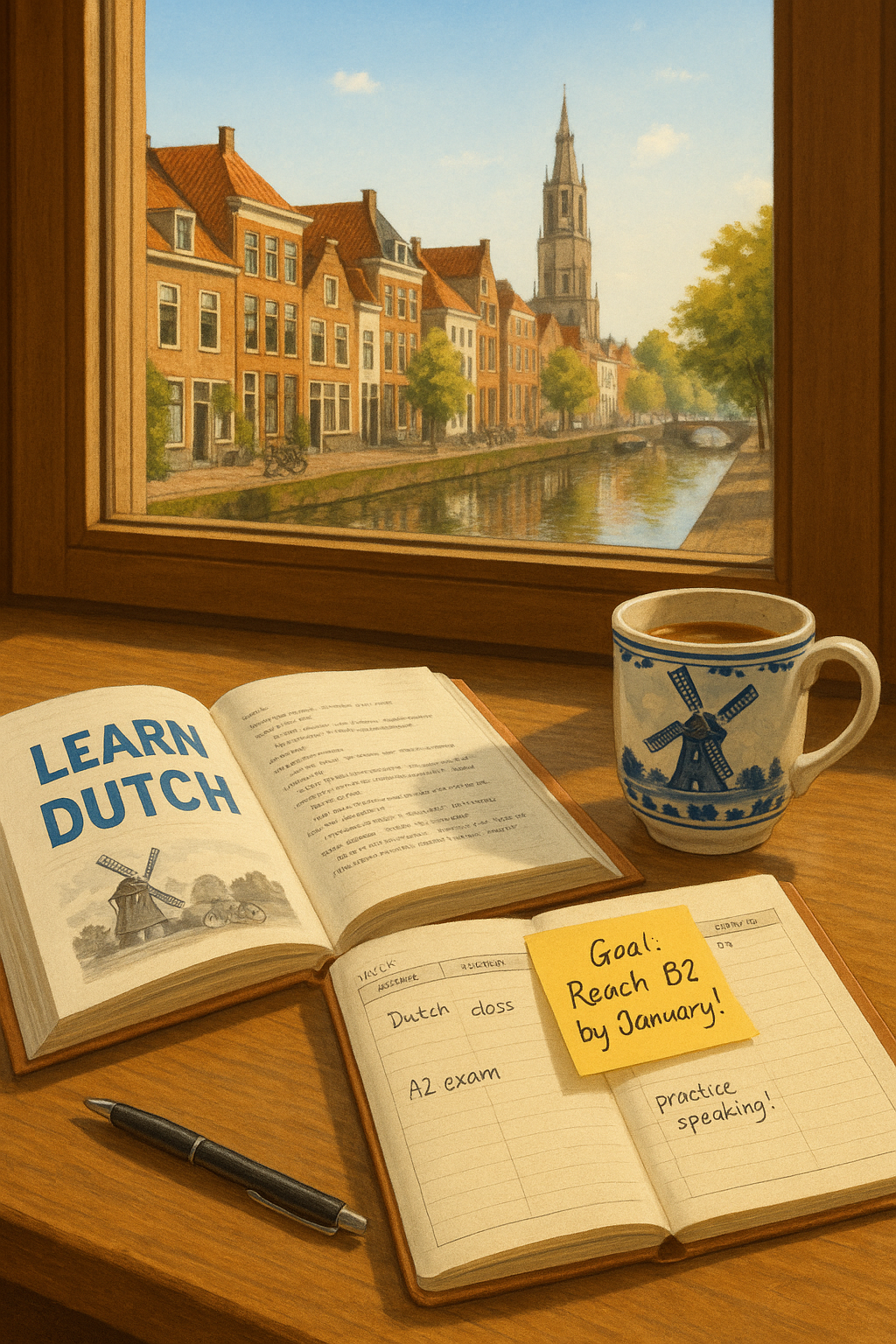
When people set out to learn Dutch, one of the first things they ask is, “How long will it take me to become fluent?” It’s a fair question. Time is a precious resource, and most learners want to set realistic expectations before diving in. Whether you’re relocating to the Netherlands, planning to study in Belgium, expanding your job prospects, or just curious about the language of Van Gogh, stroopwafels, and world-class bike lanes, knowing how long the journey will take can help you stay focused and motivated.
The trouble is, there’s no one-size-fits-all answer. Learning a language doesn’t work like baking a cake where you follow the recipe for 30 minutes and it’s done. Language learning is personal. Some people pick up pronunciation in weeks but struggle with grammar for months. Others memorize vocabulary quickly but freeze in conversations. Your starting level, native language, goals, learning method, and even your daily environment all play a role in how fast—or how slowly—you’ll progress.
Dutch, in particular, occupies a unique place on the language learning spectrum. For English speakers, it’s often seen as “not too hard,” but also not quite “easy.” It shares a common ancestry with English, which means you’ll spot lots of familiar words and sentence structures early on. But Dutch also has its own set of linguistic hurdles—like tricky vowel combinations, confusing verb placement, and the dreaded de vs. het article guessing game. So while it may feel friendly and familiar on the surface, Dutch has layers that take time and focus to master.
Still, compared to learning Japanese, Arabic, or Russian, Dutch is generally faster and more accessible—especially if you stick with it and use smart, structured strategies. That’s exactly what this article is here to help you do.
We’re going to walk you through a realistic timeline to learn Dutch, based on the official CEFR levels (from A1 to C2), and give you practical estimates of how long it typically takes to reach each milestone. Whether you’re aiming for survival Dutch to get by in Amsterdam, or advanced fluency for university or work, we’ll break down what each level looks like, how long it might take, and what factors speed things up (or slow them down). We’ll also answer some of the most frequently asked questions from learners and offer honest, experience-backed advice.
By the end of this guide, you won’t just have a rough answer to how long does it take to learn Dutch?—you’ll have a roadmap. One that’s clear, motivating, and most importantly, tailored to your real-life goals.
Let’s get started.
WHY DUTCH IS (RELATIVELY) EASY FOR ENGLISH SPEAKERS
Before diving into timelines, let’s establish why Dutch is often considered one of the easiest languages for English speakers to learn.
Shared Linguistic Roots
English and Dutch are both West Germanic languages, which means they share a significant amount of vocabulary and syntax. Words like boter (butter), appel (apple), and boek (book) will look instantly familiar. That gives you a head start when it comes to reading and listening.
No Case System
Unlike German or Latin, Dutch doesn’t require you to memorize different cases for nouns and adjectives. That simplifies grammar significantly, especially for beginners.
Logical Spelling
Once you learn Dutch pronunciation rules, you’ll find that spelling tends to follow logic. Unlike English, where spelling often feels chaotic, Dutch rewards learners with more consistency.
High English Proficiency in the Netherlands
Almost 90% of Dutch people speak English fluently. That means Dutch speakers are often forgiving and supportive of learners—and you'll rarely struggle to be understood when you're stuck.
HOW THE CEFR FRAMEWORK DEFINES LANGUAGE LEVELS
To structure this guide, we’ll use the Common European Framework of Reference for Languages (CEFR), which defines language ability from A1 (absolute beginner) to C2 (native-like fluency):
A1 – Basic phrases and everyday expressions
A2 – Simple conversations and routine tasks
B1 – Independent communication in familiar topics
B2 – Confident, fluent interaction and reading
C1 – Near-native fluency and deep understanding
C2 – Mastery (academic/native speaker level)
Now let’s go through each level and look at how long it realistically takes to reach each one.
A1 LEVEL – ABSOLUTE BEGINNER TO SURVIVAL DUTCH
What You Can Do at A1
Introduce yourself
Talk about where you live, your job, your family
Understand slow, clear speech
Ask and answer simple questions
How Long It Takes
Casual learners: 2–3 months (2–3 hours/week)
Intensive learners: 3–4 weeks (10+ hours/week)
Immersion learners: 2–3 weeks if in a Dutch-speaking environment
A1 is often the most rewarding level because progress is fast and tangible. You go from understanding nothing to holding short conversations and reading signs, menus, and basic texts.
A2 LEVEL – ESSENTIAL COMMUNICATION
What You Can Do at A2
Participate in basic conversations
Understand frequently used expressions
Handle routine tasks (ordering food, asking directions)
How Long It Takes
Casual learners: 4–6 months
Intensive learners: 8–10 weeks
Immersion learners: 1–2 months
Reaching A2 is a major milestone. You’re no longer just surviving—you can function. But Dutch pronunciation and article usage (de vs. het) might still throw you off. You’ll also start noticing how Dutch word order sometimes flips around in subordinate clauses.
B1 LEVEL – CONVERSATIONAL FLUENCY
What You Can Do at B1
Talk about work, school, hobbies, and current events
Handle travel situations and basic admin
Follow simple Dutch podcasts or shows with subtitles
How Long It Takes
Casual learners: 9–12 months
Intensive learners: 4–6 months
Immersion learners: 3 months (with consistent daily use)
At this stage, you can live in the Netherlands and handle most daily tasks in Dutch. You’ll still make mistakes—but Dutch speakers will now respond to you in Dutch instead of switching to English. That’s a huge win.
B2 LEVEL – UPPER INTERMEDIATE FLUENCY
What You Can Do at B2
Speak spontaneously and fluently on a wide range of topics
Watch Dutch TV shows and understand the main points
Work or study in a Dutch-speaking environment
How Long It Takes
Casual learners: 1.5 to 2 years
Intensive learners: 8–12 months
Immersion learners: 6–9 months
B2 is where you can say you "speak Dutch." It’s the level required for many jobs and university programs in the Netherlands. At this level, you understand nuances and can participate in fast-paced conversations.
C1 LEVEL – ADVANCED FLUENCY
What You Can Do at C1
Express yourself clearly, confidently, and in detail
Understand idioms, jokes, and abstract topics
Write formal letters and essays
How Long It Takes
Casual learners: 2.5 to 3 years
Intensive learners: 12–18 months
Immersion learners: 9–12 months
This level opens up full integration: professional settings, academic writing, and friendships without language gaps. But you’ll need to push yourself past your comfort zone to get here—especially with writing and formal vocabulary.
C2 LEVEL – NEAR-NATIVE FLUENCY
What You Can Do at C2
Understand virtually everything you hear or read
Express yourself spontaneously, precisely, and persuasively
Navigate high-level academic or professional Dutch
How Long It Takes
Casual learners: 4+ years
Intensive learners: 2–3 years
Immersion learners: 18 months to 2 years
Most learners don’t aim for C2 unless they plan to teach Dutch, translate, or work in academia. But if you love the language, it’s a worthy goal—and a real sign of mastery.
WHAT FACTORS AFFECT HOW LONG IT TAKES?
Your Native Language: English speakers have a head start, but if you already know German, you’ll pick up Dutch even faster.
Your Learning Strategy: Using a structured program (like a course at Polyglottist Language Academy) versus casual apps will drastically affect your progress.
Consistency: 30 minutes every day beats three hours once a week.
Speaking Practice: Passive knowledge isn’t enough. Real progress happens when you speak.
Environment: Living in the Netherlands or Belgium speeds up learning dramatically—especially if you commit to using Dutch daily.
FREQUENTLY ASKED QUESTIONS (FAQ)
❓Can I learn Dutch in 3 months?
You can reach A2 or even B1 with an intensive program or immersive experience. But reaching full fluency (B2 and above) takes longer—usually 6 months to 2 years.
❓How many hours a week should I study?
If you're serious, aim for 5–10 hours/week with regular speaking practice. The more hours you study consistently, the faster you'll progress.
❓Do I need to live in the Netherlands to learn Dutch?
It helps a lot—but it’s not required. Online courses and speaking partners can give you similar results if you stay committed.
❓Is Dutch worth learning if everyone speaks English?
Yes! You’ll gain access to Dutch culture, build better relationships, and feel more integrated in Dutch-speaking environments. People also appreciate the effort.
❓What level of Dutch do I need for work or university?
B2 is the minimum for most professional or academic settings.
Some jobs may only require A2 or B1 for basic communication.
LEARN DUTCH WITH US
At Polyglottist Language Academy, we specialize in helping English speakers learn Dutch in a structured, supportive, and results-driven environment. Whether you want to reach conversational fluency fast or are aiming for long-term integration in the Netherlands, we’ll help you create a personalized path based on your goals and timeline.
👨🏫 Small group and private online classes
🕒 Flexible scheduling for busy adults
🎯 Targeted courses by CEFR level (A1 through B2+)
🇳🇱 Native-speaking, experienced Dutch instructors
👉 Click here to explore our Dutch courses and start your language journey today.
KEEP LEARNING: READ MORE FROM OUR BLOG
If you found this guide helpful, you might enjoy these other popular Dutch-language articles: