
The Rise of Standard Dutch: How Holland Won the Language Battle
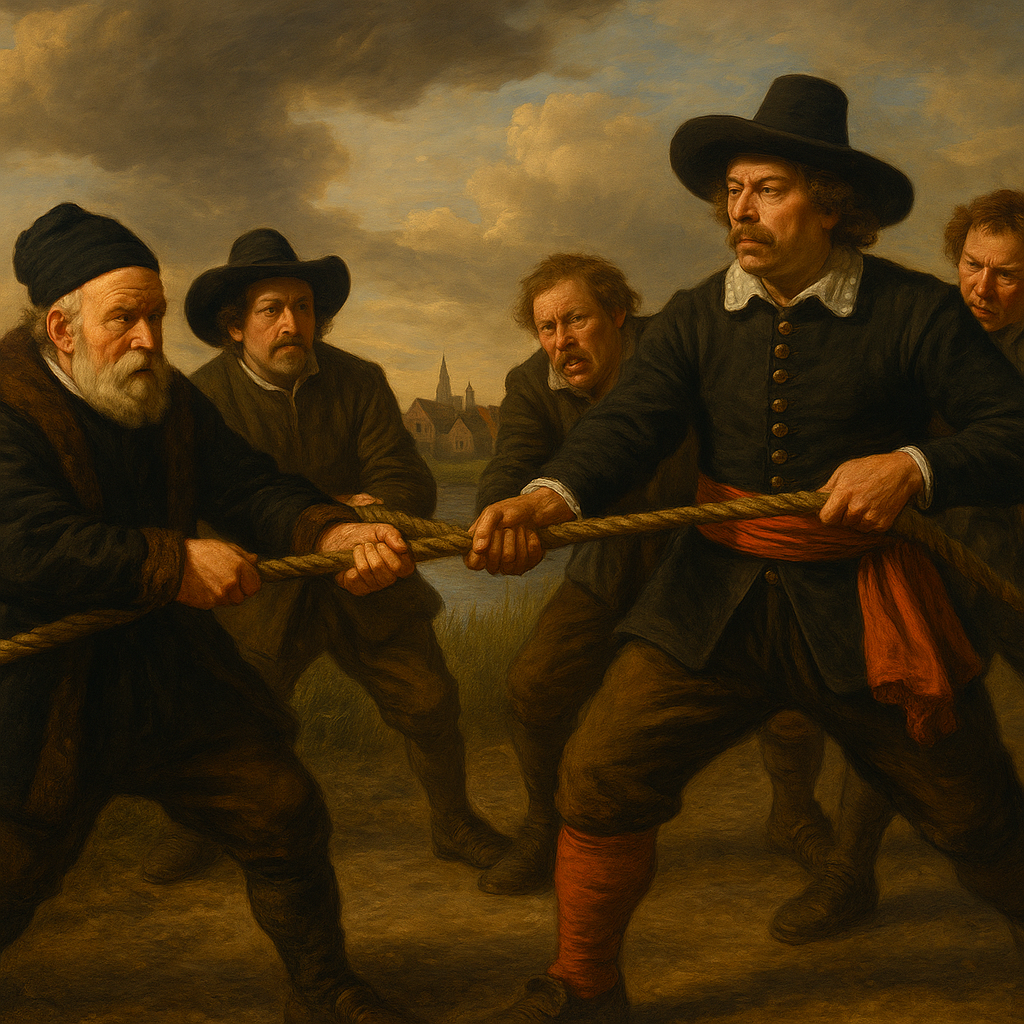
The story of Standard Dutch is not a tidy decree signed in a palace; it is a centuries-long tug-of-war between cities and regions, printers and preachers, merchants and mayors, in which the voices of wharves and workshops gradually overtook the voices of courts and countryside, and the speech of Holland—flush with trade money, flooded with migrants, and amplified by presses—quietly became the default way to read, teach, and govern across a much larger Dutch-speaking world. If you’ve ever wondered why the Dutch you learn in class sounds more like Amsterdam than Antwerp, why Belgian TV presenters speak a slightly different but fully compatible standard, or how a land of fiercely local dialects ended up with one shared “Algemeen Nederlands,” the answer lies in how history rewarded Holland’s variety with prestige at just the right moments.
This matters beyond trivia. A standard language opens access: to public institutions, higher education, professional life, and the media; it lets millions talk across regional lines. But a standard also hides a battlefield of choices—whose vowels, whose vocabulary, whose spelling rules? Understanding how Holland’s usage rose to standard status helps you approach modern Dutch with confidence: you’ll know why the g sounds “hard” in the north and “soft” in much of the south, why ij behaves like a single letter, why Belgium preserves gij in some contexts, and why official spelling sometimes changes in cautious waves instead of abrupt revolution.
In what follows, we map the long arc from a medieval dialect mosaic to today’s cross-border standard. We’ll follow the money (trade), the megaphone (printing), the migrants (southern talent heading north), the milestone texts (Bible, grammars, dictionaries), the ministries (schooling and spelling reforms), and the modern compromise (a binational standard stewarded by shared institutions). And because language is lived, not just legislated, we’ll close with the practical implications for learners and professionals who want to navigate Dutch in the Netherlands, Flanders, Suriname, and the Caribbean with grace.
1) Before “Standard Dutch”: A Low Countries Continuum
Long before anyone said “Algemeen Nederlands,” people in the Low Countries spoke a continuum of West Germanic dialects. If you’d walked from coastal Flanders to Utrecht around 1300, you would have heard gradual shifts rather than sharp borders—Flemish, Brabantic, Hollandic, Zeelandic, Limburgish, East Dutch varieties shading into Low Saxonto the northeast and High German farther southeast. Writing mirrored speech loosely: local scribes and poets wrote what sounded right to them, with spellings that changed from town to town.
And yet, even in this patchwork, two consistent forces were at work:
Urbanization and commerce. Growing cities needed a common written style for contracts, guild rules, and correspondence.
Networks of culture. Monasteries, courts, and later civic societies spread texts and habits across the map, seeding proto-standards.
The groundwork was laid: if one region later gained the loudest voice, the infrastructure to broadcast that voice was already humming.
2) Antwerp’s Moment—and the Shock That Followed
By the 1500s, Antwerp was a powerhouse: a port of Europe, a printing capital, and a cultural magnet. Its printers standardized practical spelling choices; its scholars and merchants forged a flexible written Dutch that could travel. Many arcane disputes about “what is correct” today trace back to pragmatic decisions born in typesetters’ workshops.
Then came a political and military shock: the religious wars culminating in the Dutch Revolt split the Low Countries. After the Fall of Antwerp (1585), a wave of merchants, artisans, printers, and intellectuals—many from Brabant and Flanders—left the southern cities for the safer, Protestant northern provinces, especially Holland (Amsterdam, Haarlem, Leiden). They carried their skills and their language habits with them. In the span of a generation, the economic center of gravity moved north.
This migration mattered more than any grammar book could. The people who produced books, ran schools, financed trade, and governed cities were now packed into the Holland provinces. Their Dutch—a Hollandic base seasoned with Brabantic and Flemish features—became the speech of power and publication.
3) The Statenbijbel and a Prestige Voice
If one book can bend a language, it’s a national Bible. The Statenbijbel (States Bible), the 17th-century Dutch translation commissioned by the States-General, was designed to be clear, dignified, and widely intelligible. It was printed and read everywhere—in church, at home, in schools. Like the King James Bible for English, it became both a linguistic modeland a cultural touchstone.
Two crucial effects:
It stabilized vocabulary and syntax for millions.
It popularized a written norm that felt Hollandic in flavor but wasn’t narrowly local.
At the same time, a Golden Age of Dutch art and science (Rembrandt, Vermeer, Spinoza, Huygens) created a ravenous market for precise prose: treatises on optics and law, shipbuilding manuals, stock exchange rules, city charters, plays, pamphlets. The language of Holland’s cities became the language of commerce and culture. Prestige hardened into habit.
4) Holland’s Koiné: How a Mixed Urban Speech Won
“Koiné” is a linguist’s word for a mixed, leveled variety that emerges when speakers of different dialects need a shared tongue. In 1600s Holland, you could hear it forming: Hollandic phonology and rhythm, Brabantic lexis and turns of phrase, Flemish idioms—all simplified where needed to ensure comprehension. This koiné fed the presses, courts, and schools. It was never “pure Hollandic” the way a dialectologist would define it; it was Holland-led and city-made.
Why did this urban koiné win?
Density of print. Printers in Amsterdam, Haarlem, and Leiden churned out Bibles, catechisms, grammars, almanacs, plays, travelogues—textual gravity that pulled spelling and style into orbit.
Money and migration. Merchants preferred what sold; migrants accepted what worked.
Institutions. City councils, guilds, and churches used similar forms; apprentices learned them.
By the late 17th century, anyone seeking a broad audience wrote in “general Dutch” that sounded remarkably like what we call Standard Dutch today.
5) South and North After the Split: Two Standards, One Language
The Revolt left the Low Countries politically split. In the south (today’s Belgium), French retained high prestige in courts and administration for a long time, even as Dutch thrived in towns and countryside. In the north (the Dutch Republic), Dutch dominated public life. The long-term result:
The Netherlands developed an explicit ideal of Algemeen (Beschaafd) Nederlands (ABN/AN), the “general (cultivated) Dutch,” taught in schools and used in media.
Flanders later cultivated its own standard Belgian Dutch—Algemeen Nederlands with subtly different pronunciation, register norms, and vocabulary.
These standards are mutually intelligible and officially recognized as one language. In everyday speech, regional flavors persist—goesting (Flanders) versus zin (Netherlands), frigo versus koelkast—but the shared standard ensures seamless communication.
6) Grammars, Dictionaries, and the 19th-Century Nation-Building
After the age of printers and preachers came the age of professors and policymakers. The 1800s saw governments and scholars codify what practice had already spread:
Early national grammars and spelling lists put weight behind a common schoolroom Dutch.
Monumental dictionary projects (think the multi-volume Woordenboek der Nederlandsche Taal) catalogued usage and, by choosing entries and spellings, subtly guided it.
Spelling reforms in the 19th and early 20th centuries aimed at simplifying and harmonizing: smoothing inconsistencies, clarifying long/short vowels, and balancing historical spellings with practical reading.
Debates could be fierce—etymology versus phonetics, tradition versus accessibility—but the trendline was clear: a shared standard across borders with room for regional identity.
7) The 20th Century: Schools, Radio, Television—and Cross-Border Stewardship
Nothing spreads a standard like compulsory education and mass media. In the Netherlands and Flanders:
Schools taught one orthography and one formal register (with locally colored pronunciation).
Radio and television favored presenters who modeled a broadly intelligible accent—no one’s village speech, everyone’s news voice.
Cross-border cooperation grew, culminating in a formal language union to coordinate spelling lists and language planning across the Netherlands and Flanders (with Surinamese partnership as the Dutch-speaking world expanded its self-awareness).
By the late 20th century, Dutch speakers on both sides of the state border could share textbooks, dictionaries, and most media without friction. The brand name for the standard simplified over time from ABN to AN to simply Nederlands—less about “cultivated” class markers, more about common usage.
8) What “Holland Won” Really Means (And What It Doesn’t)
Saying Holland “won the language battle” is a convenient shorthand. But to be fair:
It wasn’t a conquest of dialects, it was a selection of widely intelligible features whose amplifiers—printing, trade, governance, education—were concentrated in Holland at pivotal moments.
The standard that emerged is mixed, with deep southern DNA (migrants from Brabant/Flanders were formative), and many pan-regional features that predate Holland’s rise.
Regional Dutch and neighboring languages (Frisian, Low Saxon, Limburgish) remain vibrant; they simply occupy different niches (home, culture, local media) alongside the standard.
So yes, Holland’s koiné provided the backbone. But the standard is larger than Holland—a negotiated common ground polished by centuries of cross-border collaboration.
9) Spelling and Pronunciation: Why Your Teacher Insists on IJ and That “Hard G”
A few Standard Dutch quirks make immediate sense once you see their history:
The digraph IJ (ij). Historically a long vowel that behaves like one unit, ij is often capitalized together (IJsselmeer) and alphabetized in some traditions as if it were a single letter. This convention stabilized in print early and stuck.
Long/short vowel marking. Dutch orthography signals vowel length with double letters (maan vs. man, zoon vs. zon) and consonant doubling; printers pushed for systematic rules that readers could learn quickly.
G/CH. The famous “hard g” of much of the Netherlands (a strong velar/uvular fricative) contrasts with a softer gin the south. The standard tolerates the range; both sit under the same roof.
For learners, the takeaway is comforting: Dutch spelling maps to sound more reliably than English does, and Standard Dutch accepts accent variation within clear bounds.
10) Belgium’s Standard Dutch: The Same Language with Its Own Shine
Belgian Dutch is Standard Dutch—period. But it wears a different suit:
Pronunciation: Often softer, with a more conservative r and gentler g.
Vocabulary: A handful of common regional preferences—goesting (appetite, desire), frigo (fridge), kuisen (to clean), septante (70 in parts of Belgium, though not Dutch; that’s more about French in Belgium—but Dutch speakers know the local environment).
Register: Some politeness and formality choices differ across borders (e.g., u versus je in service contexts).
Media and schools on both sides teach to the shared standard; mutual intelligibility is complete. For professionals who cross the border, adjusting to house style and tone is the main task, not relearning the language.
11) Myths vs. Realities
Myth: Holland imposed its dialect on everyone else.
Reality: Holland’s urban koiné rose because print, trade, and migrants concentrated there; the standard that crystallized is mixed and negotiated.
Myth: Standard Dutch is “accentless.”
Reality: Every standard has an accent—newsreader Dutch mainly reflects Randstad norms (Netherlands) or VRTnorms (Flanders). Both are standard.
Myth: Spelling changes constantly.
Reality: Official spelling changes are infrequent and incremental, aiming at clarity and cross-border consistency.
Myth: Learning in Belgium will “give you the wrong Dutch.”
Reality: You’ll learn Standard Dutch. Your pronunciation will have a Belgian lilt—perfectly acceptable, and often admired in the Netherlands.
12) What This History Means for Learners
Choose a target model—then embrace the range. Pick Netherlands Dutch or Belgian Dutch as your home base for pronunciation and style. Exposure will give you the other.
Prioritize the “portable core.” Sounds (ui, ij/ei, g/ch), sentence frames (V2 main clauses; verb-final in subclauses), separable verbs, and particles (even, maar, toch, hoor) are the tools that work everywhere.
Read like a printer. Compounds are Dutch’s superpower: read zorgverzekering as zorg (care) + verzekering(insurance) and you’ll read fast.
Expect polite variation. Learn u/je choices and service formulas on both sides of the border; treat them as style, not grammar wars.
Relax about accent. Both “hard g” and “soft g” are standard; pick one consistently. Newsrooms survive just fine with both.
13) A Timeline of the Rise
Medieval period: Dialect continuum; local written norms.
1500s (Antwerp’s prime): Printing centers stabilize habits; Antwerp radiates influence.
Late 1500s: Fall of Antwerp → migration north; Holland’s cities surge.
1600s: Statenbijbel; Hollandic-led koiné becomes the prestige written norm; Golden Age creates demand for precise language.
1700s–1800s: First national grammars and spelling lists; schooling spreads a standard.
1800s–1900s: Major dictionary projects, incremental spelling reforms; both Netherlands and Belgium invest in a shared standard.
1900s: Mass education and broadcast media normalize a cross-border standard with local accents.
Late 1900s–today: Formal binational stewardship of spelling and standard; global Dutch community (Suriname, Caribbean) participates; digital media accelerate consensus and debate alike.
14) Case Studies: Three Features Through the Lens of Standardization
A. The Word Order Spine
From early texts onward, Dutch shows verb-second in main clauses and verb clustering at the end of subordinate clauses. Grammarians codified what usage favored; schools cemented it. Result: Ik ga morgen werken / … omdat ik morgen moet werken—the pattern you hear everywhere.
B. The Diminutive Habit
Dutch loves -je/-tje/-pje/-etje/-kje not just for size but for tone: kopje koffie, huisje-boompje-beestje. Standard Dutch never banished it; it embraced a living feature that signals warmth and informality across regions.
C. The Particle Toolkit
even, maar, toch, hoor—these “little words” are not slang; they’re part of the standard. They survived standardization because they carry pragmatic meaning you can’t replace with formal vocabulary.
15) The View from Today: A Standard with Wide Doors
Standard Dutch in 2025 is:
Cross-border. Shared by the Netherlands and Flanders (and used in Suriname and the Caribbean for administration and education), with agreed spelling lists and compatible norms.
Media-savvy. Newspapers, broadcasters, and streaming platforms reinforce a common core while showcasing regional tone.
Permeable. It borrows English in tech and business (updaten, streamen) but keeps Dutch grammar and morphology.
Inclusive. It tolerates a range of r sounds and g sounds, encourages clear prose, and values accessibility in public communication.
In short: a stable center with regional rings—exactly what you want in a language used by many communities.
Frequently Asked Questions
Q1: Is “Flemish” a separate language from Dutch?
No. In standard contexts, Belgian Dutch and Netherlands Dutch are varieties of the same language. They differ in accent, some vocabulary, and register preferences, but share the same grammar and orthography.
Q2: What exactly is ABN/AN?
ABN (Algemeen Beschaafd Nederlands) and later AN (Algemeen Nederlands) are older labels for the standard. Today people just say Nederlands or Standaardnederlands, reflecting a less class-loaded view of the standard.
Q3: Why did Holland’s variety dominate?
Because printing, trade, migration, and governance concentrated in Holland at decisive moments (late 16th–17th centuries). The resulting urban koiné became the most useful and thus the most prestigious.
Q4: Do spelling reforms mean I’ll learn rules that change next year?
No. Spelling updates are rare and gradual. Learn the current rules with confidence; you’ll be fine for decades.
Q5: Is the “hard g” mandatory to sound standard?
No. Both hard g (common in much of the Netherlands) and softer g (common in the south, including much of Belgium) are standard. Choose a model; be consistent.
Q6: Why is ij treated like a single letter?
Historically it functioned as one vowel; typesetters and educators treated it that way. You’ll see IJ capitalized together and special sorting conventions. It’s part of orthographic tradition.
Q7: What about Frisian, Low Saxon, Limburgish—are they “wrong” Dutch?
They are recognized regional languages or dialect groups with their own norms. They are not wrong; they simply serve different domains alongside Standard Dutch.
Q8: If I learn Dutch in Belgium, will the Netherlands understand me (and vice versa)?
Yes. You may carry a regional accent and a few regional words, but mutual intelligibility is complete. Professionals adjust tone and word choice by audience, just as in any shared language.
Q9: Why do newsreaders in the Netherlands and Flanders sound different?
Each has a broadcast standard accent—both are standard Dutch. Think of them as two elegant suits cut from the same cloth.
Q10: Does English threaten Standard Dutch?
English strongly influences terminology in tech and business, but Dutch structure and public presence remain robust. Style guides encourage clear Dutch in public communication; domains comfortably mix where useful.
Final Thoughts: Standard Dutch as a Commons, Not a Conquest
When people say Holland “won” the language battle, they’re acknowledging that Holland’s cities supplied the infrastructure—presses, schools, markets—that turned a pragmatic urban mix into a cross-regional standard. But the true victory belongs to the entire Dutch-speaking community, which has maintained a standard flexible enough to include regional voices and strong enough to power education, media, law, and science across borders.
For learners, that’s liberating. Aim for the portable core—sounds, sentence frames, spelling—and feel at home in Amsterdam and Antwerp, Utrecht and Ghent. For professionals, it’s strategic: the standard gives you reach; regional fluency gives you rapport. And for teachers and language lovers, the history offers a compass: it shows how clarity, usefulness, and cultural exchange—not purity—build a living standard.
Learn Dutch with Polyglottist Language Academy
Ready to master the portable core of Standard Dutch—and the regional finesse to use it anywhere? At Polyglottist Language Academy, we teach Dutch the way it’s actually used across the Netherlands and Flanders:
Join a supportive cohort, learn from expert instructors, and build the kind of Dutch that travels well—clear, confident, and culturally aware. Seats fill quickly—sign up today!
Keep Reading: Related Articles You’ll Love
A Brief History Of The Dutch Language (And Why It Matters Today)
Why Dutch Pronunciation Trips Up So Many Learners (And How To Master It)
How Similar Is Dutch To English? Surprising Linguistic Overlaps
The Fastest Way To Learn Dutch According To Language Teachers
Do You Really Need To Learn Dutch If You Live In The Netherlands?
How Long Does It Take To Learn Dutch – Realistic Timelines By Level