
San francisco Dutch Language Classes: Flexible Online Options for Busy Adults
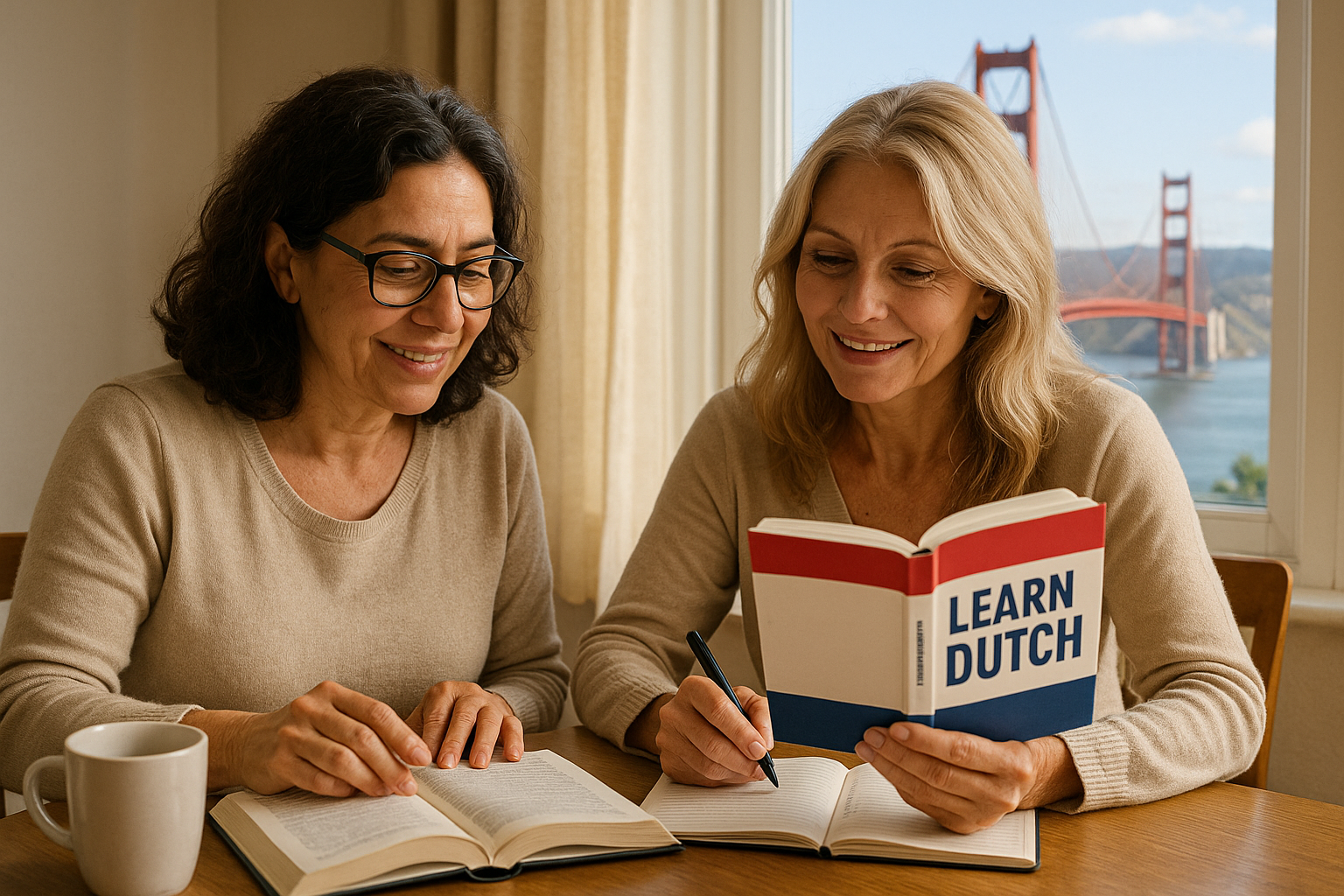
It’s a familiar feeling for many professionals in San Francisco: your calendar is overflowing, your evenings are unpredictable, and your weekends are split between catching up on rest and catching up on life. Yet somewhere in the middle of that daily chaos, there’s a spark — a curiosity for something new, something cultural, something that connects you to the wider world. Maybe you’ve traveled to Amsterdam or Rotterdam and felt drawn to the rhythm of the Dutch language, or perhaps you have Dutch roots, Dutch colleagues, or Dutch clients and want to engage with them more authentically. Whatever your reason, learning Dutch is no longer a dream reserved for those with endless free time — thanks to the rise of flexible online Dutch classes, it’s now perfectly possible to fit meaningful language learning into even the busiest San Francisco lifestyle.
At Polyglottist Language Academy, we’ve seen firsthand how working professionals, parents, graduate students, and entrepreneurs manage to master a new language while balancing full lives. The key isn’t about finding time — it’s about making the most of the time you already have. With interactive online Dutch courses designed specifically for adults, you can learn to speak confidently, connect with native speakers, and discover the cultural richness of the Netherlands — all from your laptop in San Francisco, Oakland, or wherever your Wi-Fi takes you.
This article will guide you through everything you need to know about learning Dutch online as a busy adult in San Francisco — from why Dutch is worth learning to how flexible scheduling, live instruction, and small-group environments make it accessible even for those with unpredictable routines.
1. Why Learn Dutch in San Francisco?
San Francisco may be known for tech innovation, global cuisine, and stunning bay views, but it’s also a city that thrives on multicultural connection. The Dutch language, spoken by over 25 million people worldwide, opens doors far beyond the Netherlands.
🌍 A Global Language of Culture and Commerce
Dutch is not only the language of Amsterdam’s canals and The Hague’s diplomats — it’s also a gateway to global business, innovation, and culture. The Netherlands consistently ranks among the world’s top economies, and Dutch companies like Philips, ING, Shell, Heineken, and Booking.com have strong ties to California’s business ecosystem.
If you work in tech, design, sustainability, or international business, understanding Dutch can deepen relationships with partners in Amsterdam, Rotterdam, or Eindhoven — Europe’s “Brainport.”
🛫 Travel and Personal Enrichment
For travelers, Dutch adds a whole new dimension to visiting the Netherlands and Belgium. Speaking even a few phrases transforms you from tourist to insider. Locals instantly warm up when they hear you greet them with Goedemorgen! or order your coffee with a polite Een cappuccino, alstublieft.
Beyond travel, Dutch also connects you with one of Europe’s most fascinating cultures — known for its openness, design sensibility, humor, and practicality. Learning the language offers insight into Dutch values like gezelligheid (cozy togetherness), nuchterheid (down-to-earth realism), and vrijheid (freedom).
🎓 Cultural and Academic Access
For those in the Bay Area’s academic world, Dutch opens access to some of Europe’s most respected universities and research institutes. The Netherlands is a leader in environmental science, urban planning, art history, and renewable energy — fields that align closely with the values of San Francisco’s progressive thinkers.
2. The Challenge of Learning a Language as an Adult
Let’s be honest: learning a new language as an adult is hard — not because you can’t do it, but because life gets in the way. Between work, commuting, family, and self-care, finding structured time for language study can feel impossible.
That’s why modern language education has shifted from rigid classroom schedules to flexible online formats that adapt to your reality.
At Polyglottist, we’ve built our Dutch program around the adult learner’s lifestyle. We know you might log in after a long day of work, during your lunch break, or even while traveling. That’s why every class is designed to be:
Flexible: Learn online from home or anywhere with Wi-Fi.
Efficient: Focused sessions that get you speaking from day one.
Interactive: Real conversation, not just memorizing vocabulary.
Supportive: Small class sizes and approachable instructors.
Instead of trying to “make time” for language learning, our students integrate it naturally into their existing schedules.
3. Why Online Dutch Classes Work So Well for San Francisco Professionals
The Bay Area is full of driven, curious people who thrive on self-improvement — but also deal with irregular schedules and packed lives. Online Dutch classes bridge that gap beautifully. Here’s why this model works especially well for San Francisco adults.
🖥️ 1. No Commute, No Problem
Traffic on the Bay Bridge, unpredictable BART schedules, parking near Market Street — none of that stands between you and your next lesson. Online classes cut out the commute entirely. You can learn from your living room, office, or even a quiet corner of your favorite café.
⏰ 2. Designed for Busy Schedules
Classes are offered in the evenings or weekends to fit around work hours, and our instructors understand flexibility. Miss a session? You can often review class materials or attend a make-up class.
🌐 3. A Global Classroom
Even though you’re learning from San Francisco, your classmates might include learners from across the Bay Area — or across the world. The diversity of perspectives enriches conversation and keeps the learning experience fresh.
💬 4. Real-Time Interaction
Our Dutch classes aren’t pre-recorded. They’re live, interactive sessions led by professional instructors — native speakers who know how to engage adults with humor, cultural context, and conversational practice.
🧠 5. Built for Motivation
Online learning platforms today are designed for engagement — breakout rooms, visual aids, quizzes, and even cultural mini-tours keep you invested. You’ll find yourself looking forward to class, not checking the clock.
4. What You’ll Learn in a Dutch Course
Our Dutch language program at Polyglottist is structured around real-world communication — you won’t just learn grammar; you’ll learn how to connect.
✏️ Beginner Level (A0–A1)
Perfect if you’re starting from scratch. You’ll learn:
Basic greetings and introductions
Ordering at cafés and restaurants
Talking about your work, hobbies, and daily life
Simple sentence structure and pronunciation
🗣️ Low Intermediate (A2–B1)
Ideal for those who already know a little Dutch and want to speak more naturally. You’ll learn:
Describing your opinions and experiences
Making plans and small talk
Understanding native speech in context
Expanding your grammar (past tense, word order)
💼 Upper Levels (B2–C1)
For advanced learners and professionals, classes focus on fluency, idioms, and specialized vocabulary — from Dutch culture to business communication and even informal social nuances.
Our teachers integrate real Dutch media — podcasts, news articles, short videos — so you get used to hearing the rhythm and humor of the language in its natural form.
5. How Dutch Language Reflects Dutch Culture
Learning Dutch is not just about vocabulary — it’s about seeing the world through a Dutch lens.
🪞 The Directness
The Dutch are famously direct. They say what they mean — and mean what they say. You’ll notice this reflected in the language itself: short, clear sentences, no unnecessary politeness. For Americans, it can feel refreshingly honest once you get used to it.
☕ Gezelligheid — The Untranslatable Word
This word means cozy togetherness, but it’s so much more. A café can be gezellig, a dinner party can be gezellig, even a classroom can be gezellig. It’s the Dutch approach to community and comfort — something we aim to bring into our online classes.
🚲 Simplicity and Practicality
Like their minimalist architecture and bike-friendly cities, Dutch language and culture value efficiency. No fluff, no overcomplication. That same philosophy makes learning Dutch surprisingly logical for English speakers.
6. How Long Does It Take to Learn Dutch?
Every learner’s journey is different, but for English speakers, Dutch is considered one of the easiest European languagesto learn. The grammar is straightforward, and the vocabulary overlaps significantly with English and German.
Here’s what you can expect with regular study:
After 3 months: You can hold short conversations, introduce yourself, and navigate travel situations.
After 6–9 months: You can describe your job, opinions, and daily life comfortably.
After 1 year: You can watch Dutch shows, read news, and have fluent conversations about a variety of topics.
Consistency matters more than intensity. Even just a few focused hours per week — with the right guidance — can make huge progress over time.
7. Success Stories from San Francisco Students
Many of our Dutch learners started right where you are — intrigued but unsure whether they had the time. Here’s what a few of them discovered:
“I travel to the Netherlands for work twice a year, and after taking Polyglottist’s online Dutch classes, I can finally have casual conversations with my colleagues in Amsterdam. It’s been a game changer professionally — and personally.”
— Mark, software engineer, San Francisco
“I thought I’d never fit language learning into my schedule, but the small classes and flexible sessions made it possible. I started with no Dutch at all and can now chat with my Dutch in-laws comfortably.”
— Sophie, product manager, Oakland
“The classes are genuinely fun. We learn culture, humor, and practical conversation — not just grammar. It’s like traveling every week without leaving home.”
— Brian, designer, Berkeley
8. Tips for Learning Dutch Effectively as a Busy Adult
Set small, achievable goals. Aim to master 10 new words a week or one short conversation topic per class.
Use your commute. Listen to Dutch podcasts or music on your way to work.
Engage daily, even briefly. Five minutes of Dutch every day beats two hours once a month.
Practice with classmates. Join our online meetups or chat groups to keep speaking between classes.
Celebrate progress. Don’t wait until you’re fluent to feel proud — celebrate every goed gedaan! moment.
FAQs
Q1: Do I need to know any Dutch before starting?
Not at all. Our beginner classes start from zero and guide you step by step.
Q2: Are the classes live or pre-recorded?
All Polyglottist classes are live and interactive — real instructors, real classmates, and real conversation.
Q3: What if I miss a class?
We offer flexible make-up options or class notes to keep you on track.
Q4: Can I join from outside San Francisco?
Yes! Many of our students join from across California — from Sacramento to San Jose — and even from abroad.
Q5: How many students are in each class?
We keep groups small (typically 3–6 students) to ensure everyone gets plenty of speaking time.
Q7: How long does each class term last?
Most terms run for 6 weeks, meeting once a week. You can continue to the next level right after.
Q8: How do I know which level to join?
We offer a free placement chat to match you with the right class based on your goals and experience.
Final Thoughts
Learning Dutch isn’t about mastering another grammar system — it’s about opening yourself to a culture that values clarity, creativity, and community. For busy adults in San Francisco, online Dutch classes are the perfect blend of practicality and enrichment: no commute, flexible schedule, and a friendly environment that makes progress feel natural.
At Polyglottist Language Academy, we’ve built our Dutch courses with professionals and lifelong learners in mind. Whether you’re preparing for a trip to Amsterdam, connecting with Dutch colleagues, or simply falling in love with the sound of goede morgen, our program gives you the tools and confidence to bring language learning into your real life.
Ready to start your Dutch journey?
Join our live online Dutch classes today and discover how language learning can fit — seamlessly — into your San Francisco routine.
Continue exploring Dutch culture and language through our other articles
A Brief History Of The Dutch Language (And Why It Matters Today)
Is Dutch Easier To Learn If You Already Speak German Or Afrikaans?
Why Dutch Pronunciation Trips Up So Many Learners (And How To Master It)
How Similar Is Dutch To English? Surprising Linguistic Overlaps
Dutch Classes In Oakland: Learn Dutch Online With Local Instructors
How Long Does It Take To Learn Dutch – Realistic Timelines By Level