
The Dutch Identity: A Culture Shaped by Land, Sea, and Trade
Introduction
Few nations in the world have been so literally shaped by their geography as the Netherlands—a country born from water, tamed by human hands, and defined by the tides of trade. Stretching below sea level and crisscrossed by canals, rivers, and dikes, the Dutch landscape has forced its people to live with, rather than against, nature. This delicate dance between land and sea has done more than mold the terrain—it has forged a national character built on resilience, pragmatism, and cooperation. Add to this a centuries-long tradition of global trade, seafaring adventure, and cultural openness, and you begin to understand why Dutch identity feels both deeply rooted and cosmopolitan, practical and visionary.
When you look at the Netherlands today—its orderly cities, its world-famous art, its bustling ports, its calm efficiency—it’s easy to forget that everything you see rests on an engineering miracle. Roughly a third of the country lies below sea level, protected only by human ingenuity: dikes, dunes, and the extraordinary Delta Works. Every square meter of dry land has been fought for, drained, and maintained, and that ongoing battle with water has left an indelible mark on the Dutch psyche. It’s a story of survival—but also of mastery, of transforming challenges into triumphs.
At the same time, geography blessed the Netherlands with something else: access to the sea. Its ports, from Amsterdam to Rotterdam, became gateways to the world, sending ships as far as Asia and the Americas. Trade brought immense wealth, but also ideas, languages, and cultural exchange. This openness—this outward gaze—became another cornerstone of Dutch identity. The result is a culture that balances small-country modesty with global reach, where tolerance and practicality go hand in hand, and where every decision, from art to politics, seems to carry the quiet confidence of a people who know how to build something out of nothing.
In this article, we’ll explore how land, sea, and trade have intertwined to shape Dutch identity from the Middle Ages to the modern day. We’ll uncover how geography gave rise to a culture of collaboration, how maritime exploration expanded horizons, and how centuries of commerce and exchange made the Dutch both fiercely local and effortlessly international.
Land: Living Below Sea Level
The Eternal Struggle With Water
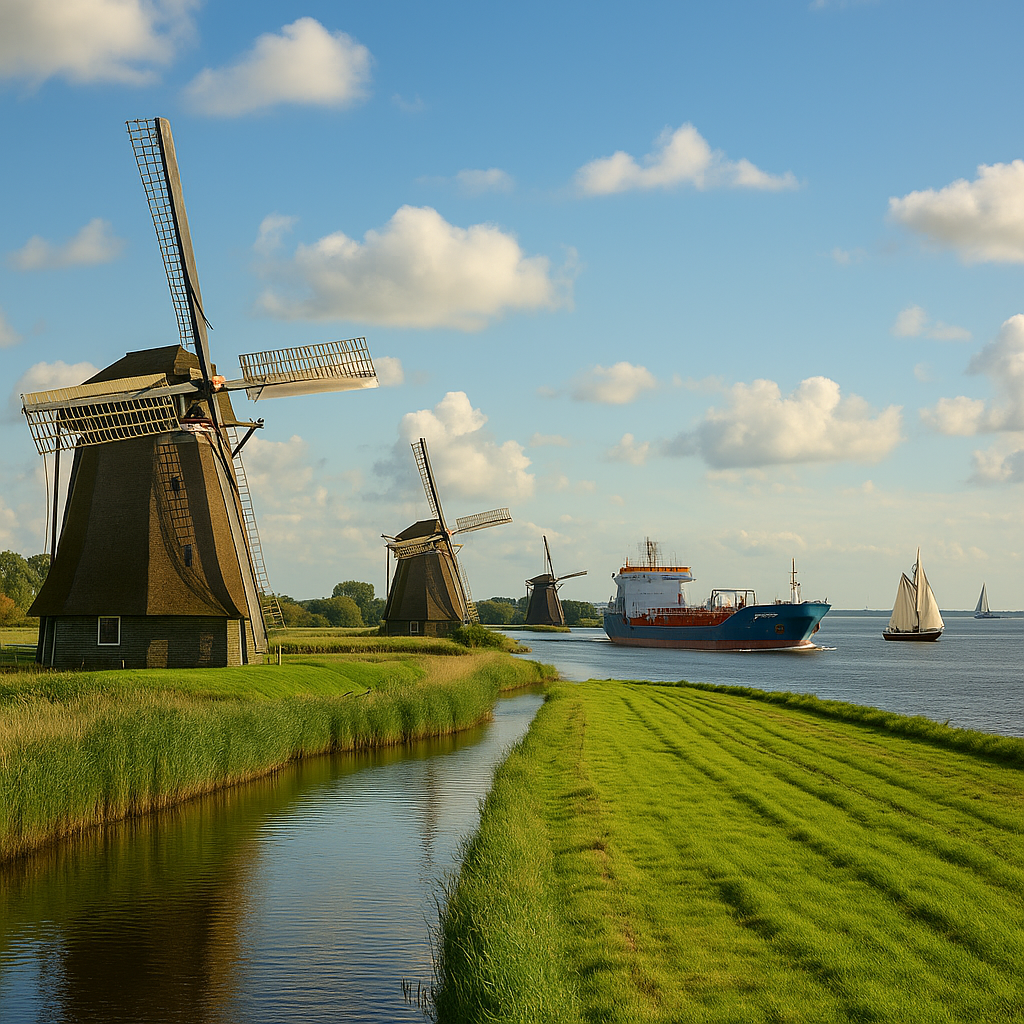
To understand the Dutch, you must start with the land—or rather, the lack of it. Much of the Netherlands was once underwater. As early as the 10th century, communities began building dikes to protect villages from flooding and reclaim usable land. Over time, these communities formed “polders,” areas of land surrounded by dikes and drained using windmills.
That process didn’t just create farmland—it created a mindset. The Dutch became masters of engineering, but also of collaboration. Keeping water out required everyone’s participation, from the richest merchant to the poorest farmer. The dike didn’t care about social class; if it broke, everyone got wet. This shared vulnerability gave birth to the concept of “polderen”—the Dutch habit of making collective decisions through negotiation and compromise. It’s still visible today in Dutch politics and business culture, where consensus is often valued over confrontation.
A Landscape Engineered by People
Nowhere else in the world does the landscape feel so deliberately designed. From the neat grid of fields in Friesland to the straight canals of North Holland, every part of the country bears the marks of human planning. Windmills—once used to pump water—still dot the countryside as symbols of that triumph over nature.
This engineered land fostered not only cooperation but also a love for order and efficiency. Dutch cities are tidy and logical, their infrastructure world-class, their streets and public spaces meticulously maintained. The national emphasis on “doe normaal” (just act normal) can be traced to the same ethos: stability, balance, and moderation are virtues in a land that literally depends on them.
The Cultural Meaning of Land
For the Dutch, land is not merely property—it’s a moral achievement. There’s pride in maintaining it, in building and rebuilding after floods, in keeping the dikes strong. Even today, environmental policy and urban planning are national passions, not abstract bureaucratic debates. The Dutch see themselves as custodians of their landscape, inheritors of a centuries-long project that blends science, art, and civic duty.
Sea: A Gateway to the World
From Fishermen to Navigators
The sea that once threatened the Netherlands also made it thrive. In the Middle Ages, Dutch fishermen harvested herring in the North Sea, their small ports buzzing with trade. But by the 16th and 17th centuries, Dutch maritime prowess transformed the country into a global power.
Amsterdam became the beating heart of world commerce. The Dutch East India Company (VOC), founded in 1602, was the world’s first multinational corporation, pioneering both global trade and modern capitalism. Its ships brought spices, silk, and porcelain from Asia, and its maps helped chart the modern world. The sea was no longer an enemy—it was a highway.
The Golden Age and Cultural Flourishing
The wealth generated by trade fueled the Dutch Golden Age, a period of extraordinary creativity and intellectual freedom. Artists like Rembrandt, Vermeer, and Frans Hals captured the prosperity and domestic life of the era. Scientists such as Christiaan Huygens and Antonie van Leeuwenhoek made groundbreaking discoveries. Amsterdam’s canals filled with merchants, philosophers, and immigrants from across Europe, drawn by the city’s reputation for tolerance.
This maritime expansion didn’t just enrich the Dutch financially—it enriched them culturally. Exposure to new peoples, goods, and ideas created a cosmopolitan outlook that still defines the Netherlands today. Dutch design, cuisine, and language all carry traces of global influence, from Indonesian rijsttafel to Surinamese roti.
The Sea as Identity
Ask any Dutch person about the sea, and you’ll hear both pride and respect. The sea gave the Netherlands its wealth and its worldview, but also its humility. Storm surges and floods serve as reminders that nature remains in charge. This duality—confidence and caution—runs deep in Dutch identity. It’s why the Dutch tend to balance ambition with realism, risk with planning.
Trade: The Engine of Dutch Prosperity
The Merchant Mentality
If land taught the Dutch to cooperate and the sea taught them to explore, trade taught them to innovate. Commerce lies at the heart of the Dutch national story. From the merchants of the Hanseatic League to the global companies of today, trade has shaped not only the economy but also the national character.
The Dutch developed a business culture marked by trust, efficiency, and pragmatism. Contracts mattered, but so did reputation. Dutch traders became known for reliability, a trait that still defines the country’s international image. The world’s first stock exchange opened in Amsterdam in 1602, and centuries later, the Netherlands remains a hub for finance and logistics.
Openness and Tolerance
Trade required openness—to new people, new ideas, and new customs. Dutch cities became melting pots of languages and faiths. When other European powers expelled religious minorities, the Netherlands often welcomed them. Sephardic Jews fleeing Iberia, Huguenots escaping France, and intellectuals banned elsewhere found refuge here. That legacy of tolerance remains visible in Dutch attitudes toward diversity and free expression.
This open-mindedness extended to thought and art as well. The Netherlands became a center of Enlightenment thinking. Philosophers like Spinoza challenged dogma, while printers in Amsterdam published works banned elsewhere in Europe. The link between trade and freedom runs deep: prosperity required not just goods but also ideas to flow freely.
Modern Trade and Globalization
In the 21st century, trade continues to define the Netherlands. Rotterdam is Europe’s largest port, handling vast volumes of global cargo. The country punches far above its size in exports—from flowers and cheese to high-tech machinery and microchips.
But beyond economics, trade has reinforced a sense of global citizenship. The Dutch are proud of their small-nation reach, and this global orientation shapes how they view education, sustainability, and foreign policy. It’s also why so many Dutch people speak multiple languages fluently—communication is part of their DNA.
The Interwoven Legacy of Land, Sea, and Trade
Dutch identity can’t be reduced to any single element; it’s a tapestry woven from all three. The battle with water taught resilience and teamwork. The open sea encouraged adventure and curiosity. Trade fostered prosperity and tolerance. Together, they created a people who are both grounded and outward-looking, pragmatic yet imaginative.
This synthesis is visible everywhere—from the meticulous organization of Dutch cities to their innovative architecture, from the democratic spirit of town meetings to the global outlook of Dutch businesses. Even everyday habits reflect it: direct communication, efficiency, and a sense that problems exist to be solved collectively.
Dutch Values and Modern Identity
Consensus and Cooperation
The “polder model,” born from centuries of managing water, still governs social life. In politics, it manifests as coalition governments and long negotiations. In workplaces, it means flat hierarchies and open discussion. Dutch consensus isn’t about avoiding conflict—it’s about ensuring stability through shared responsibility.
Tolerance and Freedom
Tolerance remains a defining trait. The Netherlands was the first country to legalize same-sex marriage and has long championed freedom of speech and religion. This tradition of liberalism doesn’t mean the Dutch agree on everything—it means they’ve learned to coexist peacefully in a small, densely populated space.
Pragmatism and Directness
Dutch directness can surprise foreigners. People say what they think, and efficiency often trumps formality. But this honesty is rooted in practicality—the same trait that built dikes and organized trade routes. To the Dutch, clarity is a form of respect.
Innovation and Sustainability
Today, the Netherlands channels its historical ingenuity into solving modern problems. From floating farms to circular cities, Dutch engineers and architects are designing the future of sustainable living. The mindset that once drained swamps now tackles climate change—a perfect continuity of the Dutch habit of turning obstacles into opportunities.
Cultural Expressions: Art, Language, and Daily Life
Dutch culture has always reflected its roots in geography and commerce. The art of the Golden Age celebrated ordinary life with extraordinary depth. The Dutch language, rich in maritime terms and practical expressions, reveals a worldview shaped by water and work. Even in humor and social norms, you see the same themes: understatement, cooperation, and realism.
In daily life, the Dutch value simplicity and quality. Homes are neat, bikes are ubiquitous, and community life thrives around local markets and neighborhood associations. Despite globalization, Dutch identity remains firmly grounded in these local, everyday habits.
The Netherlands Today: Global Yet Grounded
Modern Dutch society sits at the intersection of local tradition and global influence. Rotterdam’s skyline may be futuristic, but its heart still beats with the rhythm of maritime trade. Amsterdam remains a city of canals and history, yet also a center for tech startups and creative industries.
The Netherlands’ small size has never limited its impact. Instead, it has sharpened its focus: efficiency, innovation, and openness. Whether designing flood-resistant architecture or leading climate talks, the Dutch continue to act on the lessons their geography taught them centuries ago—that survival depends on collaboration, and progress depends on curiosity.
FAQs About Dutch Identity
Q: What does “polder model” mean?
The “polder model” refers to the Dutch approach to decision-making through consensus and negotiation, rooted in the historical need to manage water cooperatively.
Q: Why do the Dutch speak such good English?
Centuries of trade, a small domestic market, and an outward-looking education system have made multilingualism natural. English is seen as a practical tool, not a threat to identity.
Q: How much of the Netherlands is below sea level?
About 26% of the country lies below sea level, and around 60% is vulnerable to flooding without dikes and dunes.
Q: Are the Dutch still reclaiming land from the sea?
Yes. Projects like Flevoland (completed in the 20th century) show ongoing efforts, and new research focuses on climate-adaptive solutions like floating buildings.
Q: Why are the Dutch known for tolerance?
The tradition stems from centuries of trade and immigration—openness to diversity was both moral and economically useful.
Q: What role does trade play today?
Trade remains central to the economy. Rotterdam is Europe’s busiest port, and the Netherlands ranks among the world’s top exporters.
Q: How has geography shaped Dutch character?
Geography taught the Dutch to be cooperative, innovative, and realistic. The constant struggle with water fostered teamwork and long-term thinking.
Q: Are the Dutch individualistic or community-oriented?
Both. Dutch society values personal freedom but also collective responsibility—another inheritance from their shared efforts to control the land.
Conclusion: A Nation Built on Balance
The Dutch identity is a masterpiece of balance—between land and water, individuality and community, local pride and global vision. The same ingenuity that built dikes now drives innovation in technology and sustainability. The same open ports that welcomed merchants now welcome ideas and cultures.
To understand the Netherlands is to understand this harmony: a people who made peace with nature by reshaping it, who built prosperity through openness, and who learned that survival—and success—come from working together.
Learn Dutch With Polyglottist Language Academy
At Polyglottist Language Academy, we believe that to truly understand a culture, you must learn its language. Dutch isn’t just a set of words—it’s a window into the Dutch way of thinking: practical, direct, and beautifully nuanced. Whether you’re fascinated by the Netherlands’ history, planning to move there, or simply eager to connect more deeply with Dutch culture, our courses are designed to help you achieve fluency while exploring the stories that shape this remarkable nation.
🇳🇱 Join us today and start your journey into the Dutch language and the culture shaped by land, sea, and trade.
Explore More of Our Blog
If you enjoyed this article, don’t miss these other deep dives into Dutch culture and language: