
Introduction
Few countries have managed to strike the balance between simplicity and indulgence in their desserts as successfully as the Netherlands, a nation where sugar, butter, cinnamon, and syrup are transformed into creations that delight both locals and visitors alike. While Dutch cuisine is often associated with hearty, straightforward meals designed to keep bodies warm and strong in a damp, windswept climate, it is their sweets that reveal another side of the culture: playful, cozy, and irresistibly comforting. From the gooey caramel goodness of stroopwafels to the pillowy softness of poffertjes, Dutch sweets are as much about tradition and hospitality as they are about taste.
The Netherlands may not flaunt a reputation for haute cuisine like France, nor the elaborate confections of Austria, but what Dutch desserts offer is something deeper — a sense of gezelligheid. This untranslatable word refers to a uniquely Dutch concept of warmth, coziness, and togetherness, often created by sharing food with friends or family. When a fresh batch of speculaas cookies is pulled from the oven in December, or when a hot stroopwafel is pressed at a market stall, there is a sense of connection, nostalgia, and joy that goes beyond the sugar itself.
Dutch sweets also reflect the country’s history. From spices like cinnamon and nutmeg brought back by the Dutch East India Company to the use of dairy products from the nation’s world-class cheese and butter industry, every bite carries centuries of trade, tradition, and cultural blending. They’re not just treats — they’re edible reminders of a nation shaped by commerce, pragmatism, and community life.
In this article, we’ll take you on a journey through the world of Dutch sweets: from iconic classics like stroopwafels and poffertjes to seasonal specialties like oliebollen and speculaas, as well as the everyday favorites that Dutch children grow up with. You’ll discover not only what to eat but also the cultural stories behind these beloved delicacies. By the end, you may find yourself craving a trip to the Netherlands — or at least to your nearest Dutch bakery.
Stroopwafels: The Sweet Star of the Netherlands
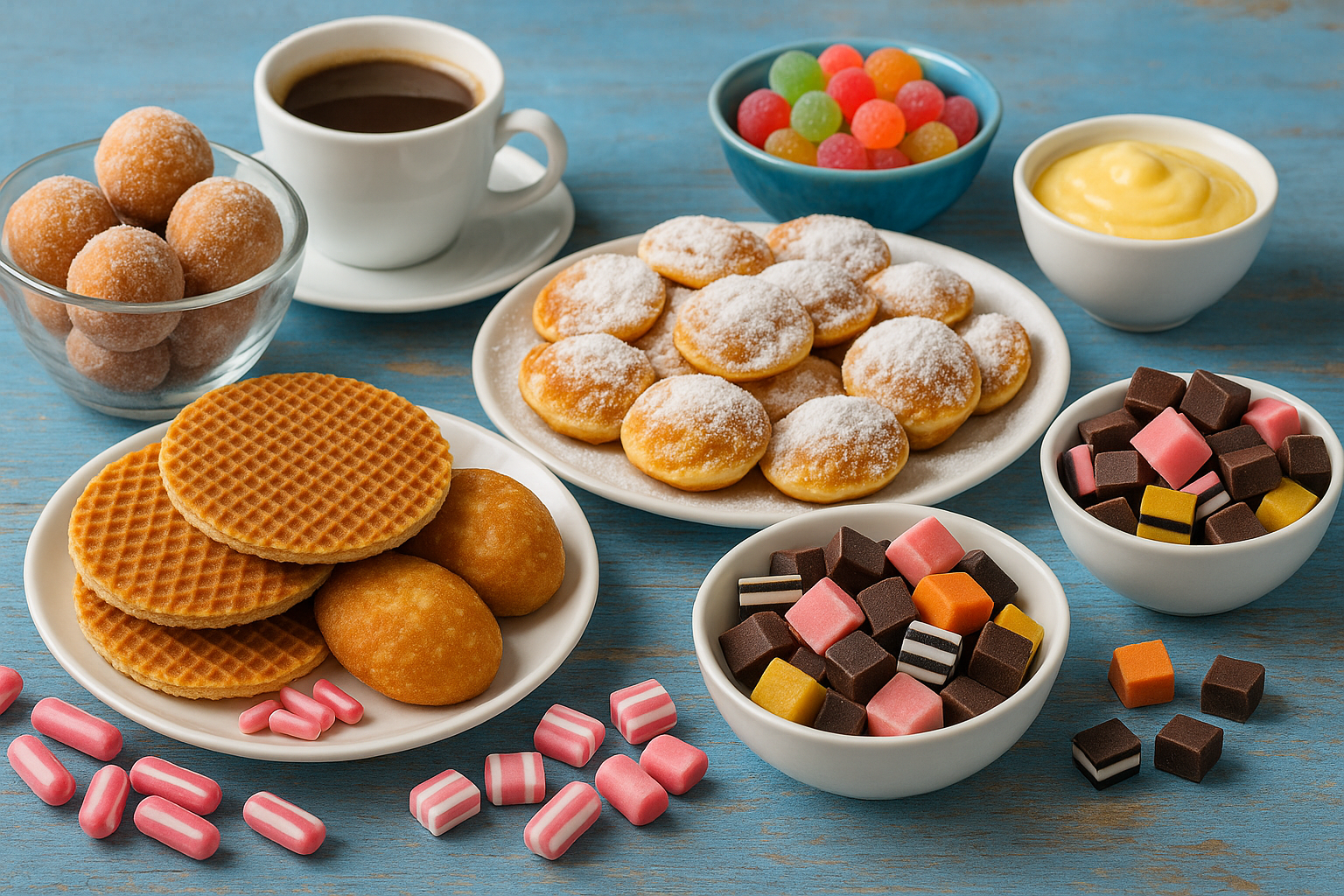
If there is one Dutch sweet that has conquered the world, it’s the stroopwafel. Originating in Gouda in the late 18th century, these thin, round waffle cookies are filled with a gooey layer of caramel syrup (stroop). Traditionally, stroopwafels were made from leftover crumbs pressed together, but today they are crafted with precision and enjoyed fresh at markets across the country.
How to Eat Them Properly: The classic Dutch way is to place a stroopwafel over a steaming cup of coffee or tea, letting the syrup soften and the waffle warm. This transforms a tasty snack into a melty, aromatic delight.
Cultural Significance: Stroopwafels are not just sweets; they’re part of the rhythm of Dutch life. You’ll find them in supermarkets, gift shops, and on corporate meeting tables. Offering a stroopwafel is almost shorthand for hospitality.
Poffertjes: Mini Pancakes, Maximum Joy
Poffertjes are small, fluffy pancakes made with yeast and buckwheat flour, cooked in a special cast-iron pan with shallow indentations. They are traditionally served with a dusting of powdered sugar and a knob of butter slowly melting on top.
Where to Find Them: You’ll see poffertjes at markets, fairs, and special festivals, often cooked right before your eyes. The sight of steam rising and powdered sugar falling like snow is part of the charm.
Why They Matter: Poffertjes embody Dutch simplicity: unpretentious, affordable, and fun to eat with family or friends. They also highlight the Dutch love for pancakes in all their forms, from pannenkoeken (large, thin pancakes) to these tiny treats.
Oliebollen: New Year’s Tradition
When the Dutch ring in the New Year, they do it with oliebollen, deep-fried dough balls dusted with powdered sugar. Often studded with raisins or currants, oliebollen are rich, satisfying, and associated with celebration.
Historical Note: Some historians argue that oliebollen are the ancestors of the American donut, brought over by Dutch settlers in New Amsterdam (now New York).
Cultural Moment: In December, oliebollen stalls pop up in cities across the Netherlands. Families line up, boxes in hand, ready to bring them home for festive gatherings.
Speculaas: Spices of the Golden Age
Speculaas (or speculoos in Belgium) are spiced cookies typically associated with St. Nicholas Day (December 5th). Made with cinnamon, cloves, nutmeg, and cardamom — spices imported during the Dutch Golden Age — these cookies are pressed into wooden molds with images of windmills, ships, or Sinterklaas himself.
Why They’re Special: Speculaas represent the deep intertwining of Dutch history and food. They are edible symbols of the Netherlands’ colonial past and its enduring festive traditions.
Appeltaart: The Dutch Apple Pie
Appeltaart, or Dutch apple pie, is deeper and denser than its American cousin. Typically, it has a buttery crust filled with spiced apples, raisins, and sometimes nuts, often topped with lattice pastry.
Serving Tradition: Dutch appeltaart is almost always served with whipped cream (slagroom). It’s the quintessential café treat, often enjoyed with coffee during an afternoon catch-up.
Cultural Role: In Dutch culture, offering apple pie to a guest is a sign of welcome. It’s a dessert with both everyday and ceremonial value.
Hagelslag: Chocolate for Breakfast
Perhaps the most surprising sweet for foreigners is hagelslag — chocolate sprinkles eaten on bread. For Dutch children (and many adults), breakfast often means a slice of buttered bread generously covered with hagelslag.
Why It Matters: While it may seem whimsical, hagelslag represents the Dutch approach to food: practical yet joyful. Bread remains central to the diet, but a touch of chocolate turns an ordinary breakfast into something delightful.
Other Dutch Sweet Favorites
Vla: A custard-like dessert, sold in cartons like milk. Flavors include vanilla, chocolate, and caramel.
Drop (Licorice): While technically candy rather than dessert, Dutch licorice is famous — and sometimes infamous to outsiders — for its salty, intense flavor.
Jan Hagel Cookies: Buttery cookies topped with sugar and almonds, often baked during holidays.
Banketstaaf: Puff pastry filled with almond paste, eaten during Sinterklaas celebrations.
The Cultural Meaning of Dutch Sweets
Dutch sweets are about more than flavor. They embody values of simplicity, community, and tradition. Many of these desserts are tied to specific holidays, seasons, or rituals, making them a thread in the fabric of daily life.
Simplicity: Dutch sweets rarely aim for extravagance. Instead, they focus on honest ingredients, butter-rich bases, and comforting flavors.
Seasonality: Speculaas in December, oliebollen in January, strawberries with poffertjes in summer — sweets follow the rhythm of the year.
Togetherness: Whether sharing stroopwafels in a meeting or gathering around a poffertjes stall, Dutch sweets create social bonds.
FAQs About Dutch Sweets
Q: What is the most famous Dutch sweet?
A: Stroopwafels are the most internationally recognized, often sold worldwide.
Q: Are Dutch sweets very sugary?
A: Many are sweet but not excessively so. Dutch desserts emphasize balance and comfort over overwhelming sugariness.
Q: Can I buy poffertjes outside the Netherlands?
A: Poffertjes pans are available internationally, so you can make them at home, but the festive market experience is uniquely Dutch.
Q: Why do the Dutch eat chocolate sprinkles for breakfast?
A: Hagelslag has been a tradition since the early 20th century and is culturally accepted as part of a balanced diet when eaten on bread.
Q: Are oliebollen really related to donuts?
A: Yes, Dutch settlers in America likely influenced the development of donuts from their oliekoeken.
Q: Are speculaas the same as Biscoff cookies?
A: Biscoff is a Belgian commercial version, but speculaas are the traditional Dutch spiced cookies.
Q: Do the Dutch eat desserts daily?
A: Dessert is often simple, like yogurt or fruit, but festive sweets play an important role during holidays and weekends.
Q: Where can I try Dutch sweets in San Francisco or abroad?
A: Dutch bakeries, international markets, or even festivals often carry stroopwafels and speculaas. Some brands export them widely.
Conclusion
From the warm, caramel-filled embrace of stroopwafels to the powdered-sugar-dusted joy of poffertjes, Dutch sweets are irresistible gateways into the heart of Dutch culture. They speak of history, trade, community, and the deep love of gezelligheid. Whether tied to holidays like Sinterklaas or shared casually over coffee, these desserts embody the Dutch way of balancing practicality with pleasure.
Explore More on Our Blog
If you enjoyed this article, you might also like: