
Why Dutch People Rarely Use Curtains (And What It Says About Them)
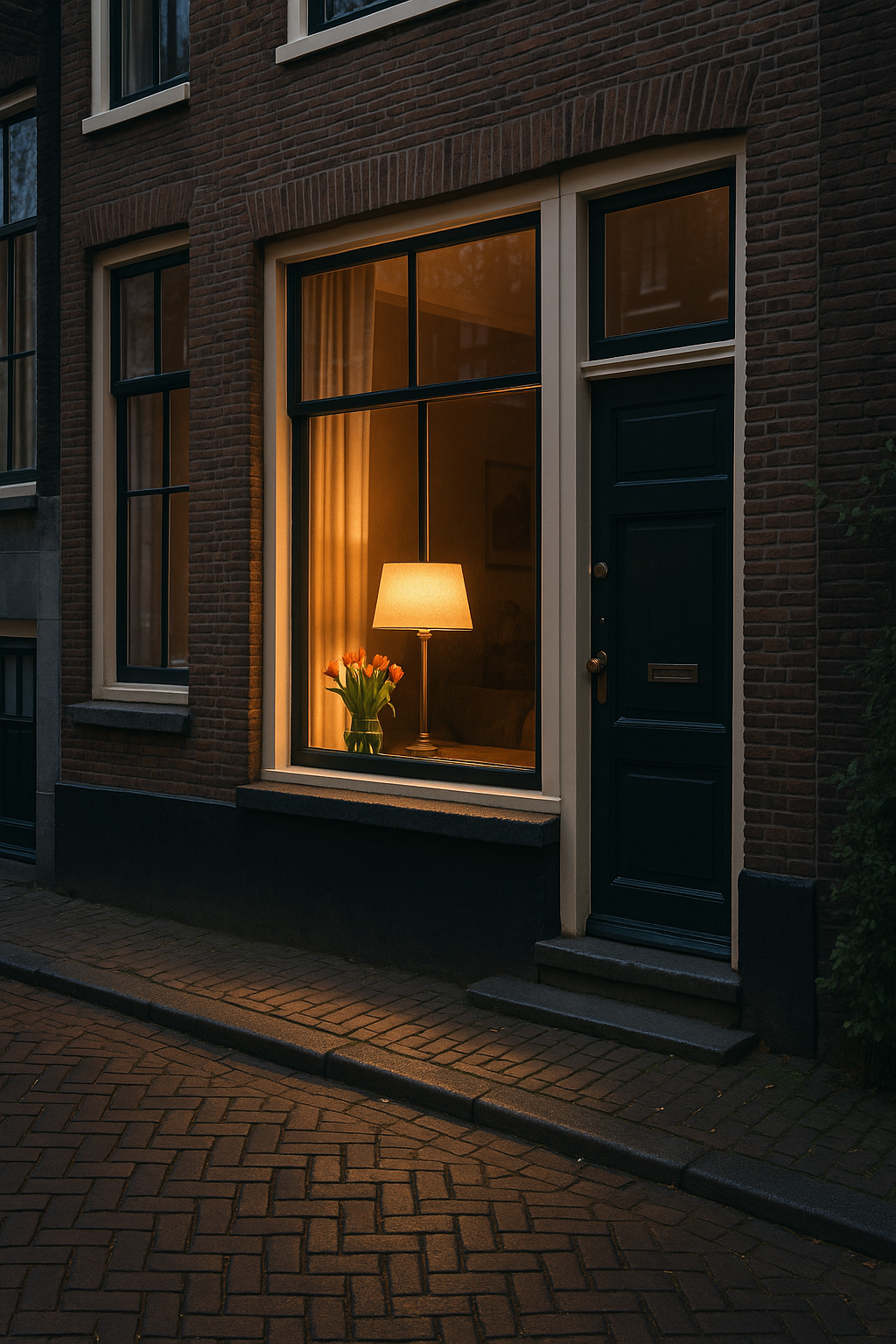
Walk down a residential street in Amsterdam, Utrecht, or Delft on a winter evening, and you might notice something surprising: the windows of Dutch houses are often wide open to the gaze of passersby, with little more than a simple sheer curtain or sometimes nothing at all separating the inside from the outside. You can glance straight into a warmly lit living room, see the family gathered around the table, or admire a carefully placed vase of tulips, and no one seems bothered by the visibility. For many foreigners, this lack of curtains—or the minimal way the Dutch use them—is one of the most striking cultural differences they encounter when first living in or visiting the Netherlands.
But this phenomenon is not just about interior design. It says something profound about Dutch culture, history, and values. In a country where egalitarianism is a cornerstone, where honesty is celebrated, and where practicality outweighs pretension, the choice to leave windows uncovered becomes a kind of cultural symbol. To outsiders, it may seem like a lack of privacy. To the Dutch, it’s an expression of transparency, openness, and even pride.
Why, then, do Dutch people rarely use curtains in the way many other cultures do? What does it reveal about their sense of community, their history of Calvinism, their urban architecture, and their attitudes toward privacy and social norms? And how does this everyday detail connect to the broader Dutch worldview that influences not only how they design their homes but also how they communicate, work, and live together?
In this article, we’ll explore the fascinating cultural meanings behind the Dutch habit of keeping their windows curtain-free. We’ll dig into the history, the symbolism, the psychological impact, and even the stereotypes that come with it. By the end, you’ll see why something as simple as a curtain—or its absence—can open a window (quite literally) into the Dutch way of life.
Historical Roots of Open Windows in Dutch Culture
Calvinist Simplicity and Transparency
The Netherlands was profoundly shaped by Calvinism, a branch of Protestantism that emphasized modesty, honesty, and moral integrity. One interpretation often cited is that uncovered windows were a sign that a family had nothing to hide—no indulgence in sinful behavior, no secrets that needed concealing. The message was clear: “Our lives are transparent, and you are welcome to see them.”
The Dutch Golden Age
In the 17th century, the Dutch Republic became one of the wealthiest and most powerful nations in Europe. At the same time, Calvinist ideals discouraged ostentatious displays of wealth. The result was subtle pride: instead of extravagant facades, Dutch homeowners might show their prosperity through a tidy, tastefully arranged living room visible from the street.
Urban Architecture
Dutch houses are famously narrow, with tall windows designed to maximize light. In the dense cities of the Netherlands, neighbors live close together. Open windows reinforced a sense of shared community while also letting much-needed daylight into often small or dark rooms.
A Modern Expression of Dutch Values
Egalitarianism
Dutch society values equality. Open windows symbolize the idea that one household is not hiding behind barriers of wealth or class. Everyone can see the same everyday life, reinforcing the cultural norm of sameness rather than hierarchy.
Honesty and Directness
Just as the Dutch are known for their straightforward communication style, their homes reflect a similar principle. Transparency in social life extends to physical transparency in the home.
Practicality Over Decoration
Curtains, especially heavy drapes, are seen by many Dutch as unnecessary. They block light in a country where gray skies and long winters already limit sunshine. Why add an extra barrier when natural light is so precious?
What Foreigners Notice
For many visitors, the first walk through a Dutch city at night is a revelation. The sight of brightly lit, uncurtained windows can feel like glimpsing into private lives. Some foreigners even interpret it as an invitation to stare, though in Dutch culture, staring is considered rude. The windows are open not for outsiders to look in but for the household to feel light, openness, and connection.
In fact, a subtle social contract exists: you can glance, but you don’t gawk. The openness of the windows is about the family’s values, not about encouraging outside attention.
Privacy, Public Life, and Dutch Norms
The Paradox of Openness
Interestingly, while Dutch windows are uncovered, Dutch people still value privacy in other ways. Personal questions may be considered intrusive, and friendships often take time to deepen. The open window does not mean “please come in”—it simply reflects the cultural comfort with visibility.
Social Policing and Order
Some cultural commentators argue that open windows historically also allowed for a kind of social policing. If your home was tidy, your curtains open, you were showing that you lived respectably. Disorder or drawn curtains might invite gossip.
How It Shapes Dutch Interior Design
The Dutch tendency toward minimal curtains has influenced how they design interiors. Living rooms often feature tidy arrangements near the window, with plants, books, or lamps carefully displayed. There’s often a sense of order and balance, even in small spaces. The window becomes almost like a public stage where the family’s sense of harmony is gently showcased.
Cross-Cultural Comparisons
United States/UK: Curtains and blinds are often drawn at night for privacy. A lit window without curtains may feel exposed.
Southern Europe: Shutters and blinds are common for keeping out sun and heat, making closed windows more about practicality.
Scandinavia: Similar to the Dutch, open windows are also common, reflecting shared cultural values of simplicity and openness.
Psychological Interpretations
Psychologists suggest that the Dutch comfort with open windows reflects a deeper cultural confidence. A society that trusts its neighbors and values equality feels less need to shield itself. In contrast, cultures with stronger hierarchies or greater fear of crime tend to emphasize closed curtains and locked doors.
The Stereotypes and Myths
There are plenty of clichés about Dutch windows:
“They want to show off their tidy homes.”
“They don’t care about privacy.”
“They’re all Calvinists still proving they’re not sinful.”
The truth is more nuanced. While history and religion played a role, today many Dutch people leave their windows bare simply because they prefer light, simplicity, and an uncluttered lifestyle.
Practical Reasons: It’s Not All Symbolic
It’s worth noting that sometimes the explanation is purely practical:
Curtains are expensive, and Dutch practicality avoids unnecessary spending.
Heavy curtains collect dust and block air in small, humid homes.
Sheer curtains are enough for soft privacy without blocking sunlight.
How to Adapt as a Foreigner
If you live in the Netherlands, you may feel exposed at first if your windows are bare. Over time, many expats report adjusting, even enjoying the openness. Some choose sheer curtains or blinds for a compromise. The key is understanding that in Dutch culture, your neighbors are not judging you for uncovered windows—they are simply living by a norm that feels natural to them.
FAQs: Dutch Windows and Curtains
Q: Do all Dutch people really avoid curtains?
A: Not all. Some do use curtains, especially in newer apartments or suburban areas. But in traditional city homes, minimal or no curtains are very common.
Q: Is it rude to look into Dutch windows when walking by?
A: Yes, staring is considered impolite. A casual glance is fine, but prolonged looking is frowned upon.
Q: Is this tradition still connected to Calvinism?
A: The origins are, but today it’s more about practicality, design, and cultural habit.
Q: Do Dutch people value privacy?
A: Absolutely, but they separate physical visibility from personal privacy.
Q: Why do Dutch people decorate their window sills?
A: It’s part of the cultural pride in tidiness and aesthetics. Windows often serve as a kind of display space.
Q: Is it safe to leave windows uncovered in Dutch cities?
A: The Netherlands is generally safe, and burglary rates are relatively low, contributing to comfort with open windows.
Q: Do other countries have similar traditions?
A: Yes, especially in Scandinavia, where light and openness are also valued.
Conclusion: A Window into Dutch Culture
The absence of curtains in Dutch homes is more than a quirk—it’s a cultural signature. It reflects the Dutch love of openness, their egalitarian spirit, their historical roots in Calvinism and practicality, and their deep appreciation for light and order. What seems strange to outsiders becomes, with understanding, a powerful insight into how the Dutch see themselves and their place in society.
At Polyglottist Language Academy, we believe that learning Dutch is not just about grammar and vocabulary—it’s about opening the windows (sometimes literally!) into a culture that values honesty, simplicity, and connection. By taking Dutch classes, you don’t just learn words; you gain the keys to understanding traditions, habits, and worldviews that shape the daily life of millions.
👉 Sign up today for Dutch classes with Polyglottist Language Academy and discover how language learning can open new cultural windows for you.
And if you enjoyed this article, don’t stop here—explore more about Dutch life and language in our other blog posts: