
A Beginner’s Guide to Dutch Food: More Than Just Cheese
Introduction
The Netherlands may be a small country on the map, but its food culture is a fascinating blend of simplicity, comfort, and global influences that reflect its history as a seafaring and trading powerhouse. While many outsiders think of Dutch cuisine and immediately picture giant wheels of cheese — Edam, Gouda, Leyden, Maasdam — the truth is that Dutch food is much more diverse, playful, and satisfying than stereotypes suggest. From street snacks like herring and stroopwafels to hearty winter stews and elaborate Indonesian rice tables, Dutch food tells a story of resourcefulness, trade, colonial encounters, and everyday family life.
Unlike France or Italy, where cuisine has often been wrapped in ceremony and fine dining traditions, Dutch food has historically been practical, straightforward, and geared toward nourishment and efficiency. Yet within that practicality lies charm: warm croquettes pulled fresh from a vending machine wall in Amsterdam, a crispy cone of fries served with mayonnaise on a rainy day, or the cinnamon-scented comfort of speculaas cookies at Christmastime. For the Dutch, food has always been about balance — balancing work with pleasure, frugality with indulgence, and local traditions with international flavors.
This article will take you on a journey through the Dutch table: the staples every beginner should know, the cultural habits that shape mealtimes, the unexpected global connections, and the comfort dishes that make Dutch cuisine unique. Whether you’re planning a trip to the Netherlands, exploring Dutch heritage, or simply curious about what lies beyond the cheese platter, this guide will show you that Dutch food is hearty, diverse, and full of personality.
The Foundations of Dutch Food
Bread and Dairy: Everyday Staples
Bread (brood) is central to the Dutch diet. Breakfast and lunch often consist of slices of bread topped with cheese, cold cuts, or hagelslag (chocolate sprinkles — yes, eaten on bread, and yes, beloved by both children and adults). Dairy is another cornerstone, not just in the form of famous cheeses but also buttermilk (karnemelk), yogurt, and cream.
Potatoes and Vegetables
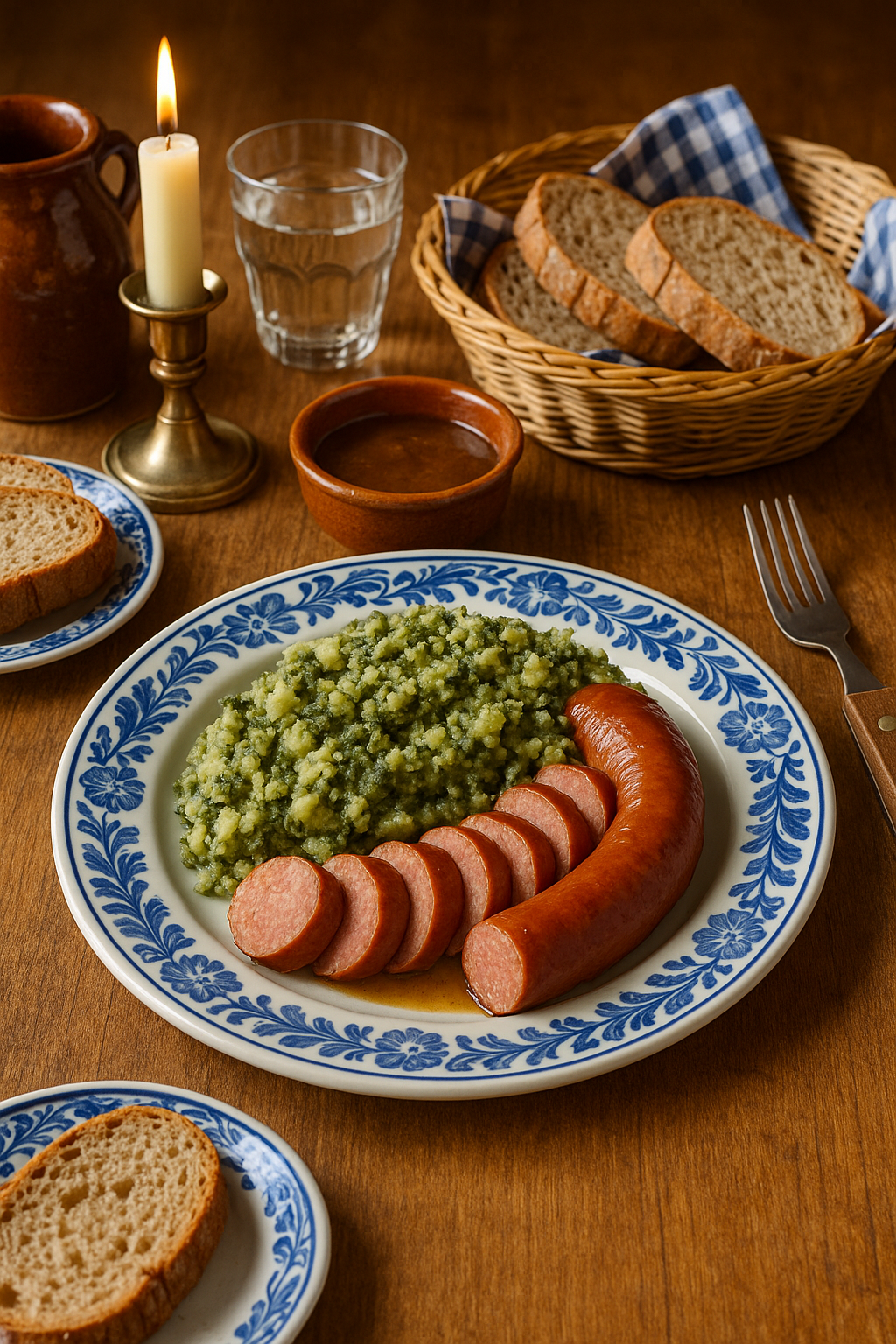
The Netherlands embraced potatoes in the 18th century, and they became a cornerstone of meals. Mashed potato dishes like stamppot (mashed potatoes with kale, sauerkraut, or other vegetables, served with smoked sausage) are the ultimate comfort food. Vegetables like cabbage, carrots, and endive also appear frequently, often boiled or mashed.
Soups and Stews
Hearty soups (erwtensoep or split pea soup, for example) sustain Dutch families through cold winters. This thick soup, also known as snert, is almost a meal in itself, traditionally served with rye bread and bacon.
Dutch Snacks and Street Food
The Dutch are famous for their snacking culture, especially foods designed for sharing with friends or grabbing on the go.
Bitterballen: Crispy, deep-fried meat-based snacks served with mustard. Perfect with a beer.
Kroketten: Similar to bitterballen, but larger and often eaten as a sandwich filling.
Patat: Thick-cut fries, usually served with mayonnaise, curry ketchup, or peanut satay sauce (patat oorlog, or “fries war”).
Haring: Raw herring, typically eaten by holding the fish by the tail and sliding it into your mouth, often with onions and pickles.
Stroopwafels: Thin waffle cookies sandwiched with caramel syrup. Delicious fresh from a market stall.
Poffertjes: Miniature fluffy pancakes, dusted with powdered sugar and butter.
The Indonesian Influence: Rijsttafel
One of the most surprising elements of Dutch food is its Indonesian connection, a legacy of colonial history. The rijsttafel(“rice table”) is a feast of small dishes inspired by Indonesian cuisine — satays, curries, sambals, fried bananas, and more — served with rice. While not an everyday meal, it’s one of the most distinctive culinary experiences you can have in the Netherlands.
Seasonal and Festive Foods
Oliebollen: Dutch donuts eaten on New Year’s Eve.
Speculaas: Spiced cookies, often in festive shapes, eaten around St. Nicholas Day (December 5th).
Appeltaart: Dutch apple pie, deep and spiced, often topped with whipped cream.
Asparagus (White Gold): In spring, white asparagus is celebrated with special menus and simple dishes showcasing the vegetable’s delicate flavor.
Dutch Cheese: The Icon and Beyond
Yes, cheese deserves its place in any Dutch food guide. The Netherlands is one of the largest cheese exporters in the world, and cheese markets in towns like Alkmaar, Edam, and Gouda remain major attractions. Popular varieties include:
Gouda: Perhaps the most famous, mild to aged varieties.
Edam: Mild and slightly nutty, often coated in red wax.
Leyden: Flavored with cumin or caraway.
Boerenkaas: “Farmers’ cheese,” traditionally made raw and farmhouse-style.
But cheese is more than export — it’s part of daily life. The Dutch enjoy slices on bread, cubes with mustard as snacks, and in countless casual meals.
The Dutch Meal Rhythm
Dutch food culture is shaped by structure and regularity.
Breakfast (Ontbijt): Bread with cheese, cold cuts, jam, or chocolate sprinkles. Sometimes muesli or yogurt.
Lunch (Lunch): Often similar to breakfast — bread, cheese, and simple toppings. Soups are also common.
Dinner (Avondeten): Usually hot and hearty, with potatoes, meat or fish, and vegetables.
Coffee Time: The Dutch take their coffee seriously, often with a cookie on the side (koffie met een koekje).
Food as Reflection of Dutch Values
Dutch food reflects a culture that values practicality, community, and moderation. Meals are less about elaborate presentation and more about nourishment, efficiency, and social connection. Yet food is also tied to Dutch gezelligheid — a sense of coziness and togetherness. Sharing snacks in a pub, gathering for a hearty winter meal, or eating cake during a birthday celebration — all of these moments reflect the Dutch balance between simplicity and joy.
FAQs About Dutch Food
Q: Is Dutch food really just cheese and potatoes?
A: No. While cheese and potatoes are staples, Dutch cuisine also includes seafood, Indonesian influences, pastries, and hearty stews.
Q: What is the most famous Dutch dish?
A: Probably stamppot with sausage in winter or stroopwafels as a snack.
Q: Are Dutch people big on sweets?
A: Yes! From hagelslag (chocolate sprinkles on bread) to pancakes, poffertjes, and pastries, sweets play a major role.
Q: What drinks are common in the Netherlands?
A: Coffee is essential, as is beer. Dutch gin (jenever) is also a traditional spirit.
Q: What is a must-try street food in the Netherlands?
A: Bitterballen in a pub or fresh stroopwafels at a market.
Q: Is Dutch cuisine vegetarian-friendly?
A: Increasingly, yes. While many traditional dishes feature meat, Dutch cities today offer strong vegetarian and vegan options.
Q: How do the Dutch eat herring?
A: Traditionally by holding it by the tail and lowering it into the mouth, often with onions and pickles.
Q: What’s unique about Dutch apple pie?
A: It’s deeper and denser than American apple pie, often with cinnamon and raisins, and served with whipped cream.
Conclusion
Dutch food is so much more than cheese. It’s a story of a nation that has balanced pragmatism with pleasure, tradition with global influence, and simplicity with flavor. From everyday bread and dairy to festive pastries and Indonesian-inspired feasts, Dutch cuisine is as layered as the culture itself.
At Polyglottist Language Academy, we know that learning a language is inseparable from exploring the food, traditions, and values of the culture behind it. Our Dutch classes in San Francisco, the Bay Area, and online will not only teach you how to say stroopwafel correctly but also help you understand the cultural importance of sharing one. Whether you’re planning to travel, connect with Dutch friends, or simply enrich your worldview, our Dutch classes are the perfect way to start.
✦ Sign up today for Dutch classes with Polyglottist Language Academy and discover a world of culture, history, and flavor — one word, one dish, and one tradition at a time.
Explore More on Our Blog
If you enjoyed this article, you might also like: